
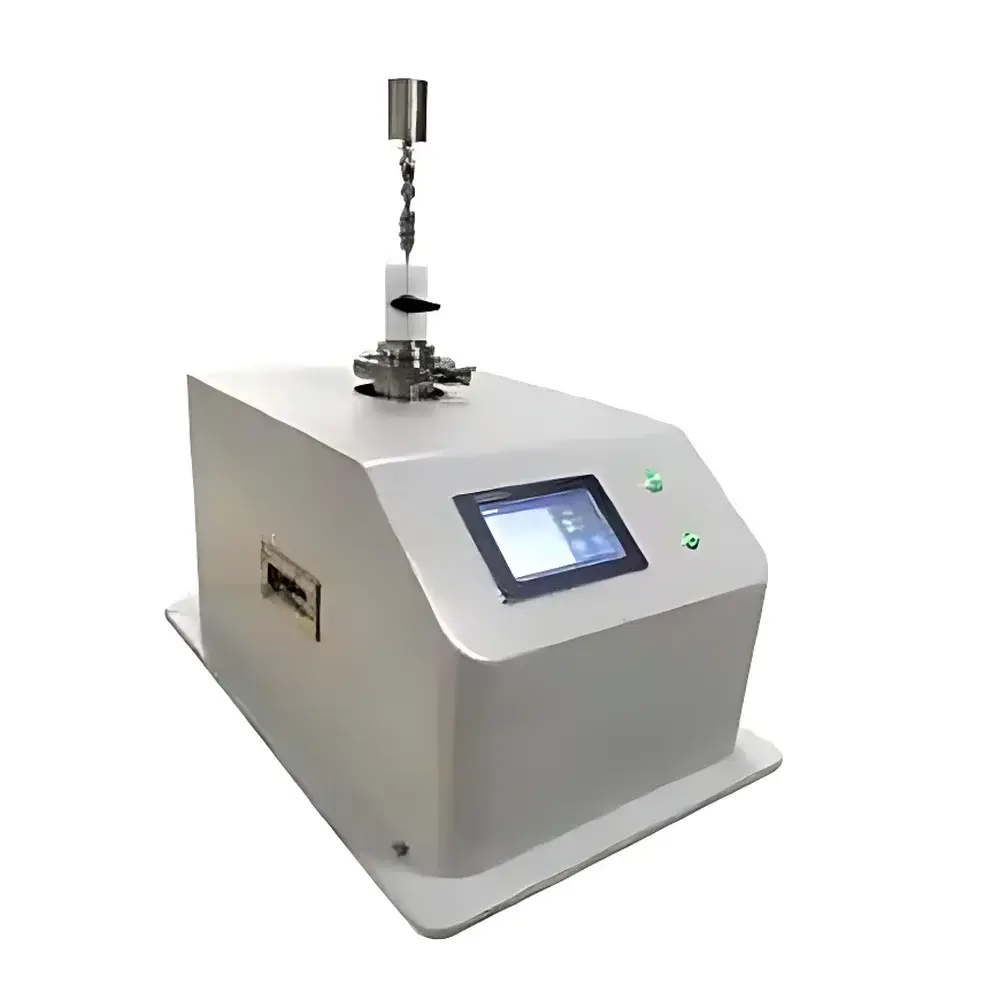
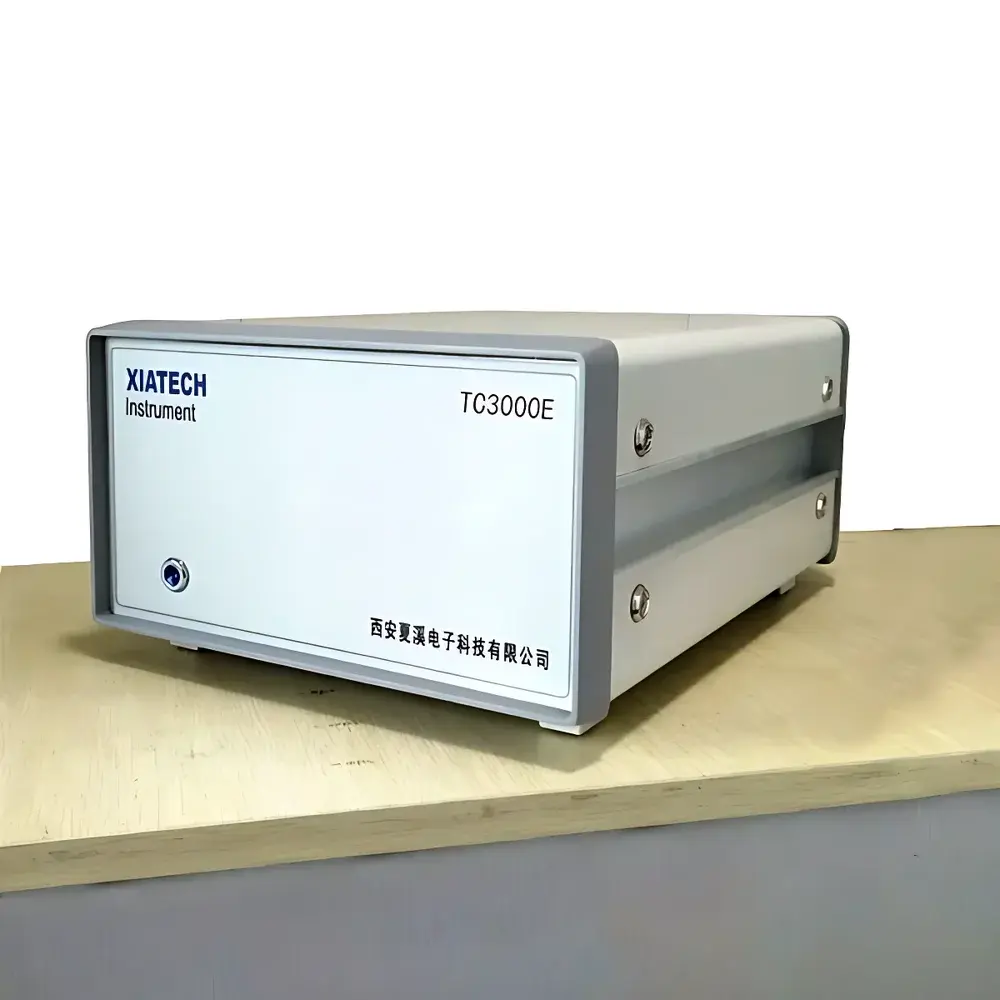
Xiatech ST5100 Dual-Capillary Surface Tensiometer
| Brand | Xiatech |
|---|---|
| Origin | Shaanxi, China |
| Model | ST5100 |
| Measurement Range | 0.1–100 mN/m |
| Measurement Resolution | < 0.02 mm (meniscus height uncertainty) |
| Accuracy | ±3% |
| Temperature Range | −30 to 100 °C |
| Temperature Stability | < ±0.05 K over 30 min |
| Pressure Rating | Up to 5 MPa |
| Measurement Method | Dual-capillary rise method |
| Sample Volume | 15 mL |
| Interface | USB 2.0 |
| Power Supply | 220 V, 50 Hz |
| Operating Environment | 0–40 °C, ≤65% RH |
Overview
The Xiatech ST5100 Dual-Capillary Surface Tensiometer is an engineered solution for high-accuracy surface tension measurement of liquids under controlled temperature and pressure conditions. It operates on the fundamental principle of the capillary rise method—specifically, the dual-capillary comparative technique—where the differential meniscus height between two vertically aligned, precisely calibrated capillaries immersed in the same sample is measured optically. This relative approach eliminates systematic errors associated with absolute meniscus positioning, ambient evaporation, or thermal drift in single-capillary configurations. The instrument integrates a high-resolution CCD imaging system with real-time image processing algorithms to quantify meniscus displacement at sub-millimeter precision (< 0.02 mm height uncertainty), enabling traceable surface tension determination across a broad range (0.1–100 mN/m). Designed as a sealed, pressure-rated cell (up to 5 MPa), the ST5100 supports thermodynamic characterization of fluids—including refrigerants, hydrocarbons, ionic liquids, and supercritical CO₂—across −30 °C to 100 °C, making it suitable for both academic interfacial science research and industrial formulation development under non-ambient conditions.
Key Features
- Dual-capillary comparative geometry: Mitigates baseline drift and gravitational misalignment effects by referencing one capillary against the other; eliminates reliance on absolute zero-level calibration.
- Mercury-line calibrated capillaries: Capillary inner diameters certified via mercury intrusion metrology with uncertainty < ±0.0005 mm—ensuring compliance with ISO 1409 and ASTM D971 requirements for geometric parameter traceability.
- High-stability thermostatic control: Integrated Peltier-assisted jacket and PID-regulated feedback maintain temperature fluctuations below ±0.05 K over 30 minutes—critical for minimizing thermal convection artifacts during meniscus height acquisition.
- Pressure-compatible measurement cell: Stainless-steel, ASME-coded vessel rated to 5 MPa enables surface tension studies under elevated pressure, supporting phase-equilibrium investigations and enhanced oil recovery (EOR) fluid screening.
- USB 2.0 interface with open API: Supports direct integration into automated lab workflows; SDK documentation allows custom scripting for batch testing, data logging, and synchronization with external environmental chambers or rheometers.
Sample Compatibility & Compliance
The ST5100 accommodates aqueous solutions, organic solvents, molten salts, polymer melts, and low-volatility ionic liquids—provided sample viscosity remains compatible with capillary wicking dynamics (typically < 1000 mPa·s). With only 15 mL required per test, the system minimizes material consumption while maintaining statistical repeatability (±3% RSD across replicate runs). All hardware and firmware adhere to IEC 61000-6-3 (EMC emissions) and IEC 61010-1 (electrical safety for laboratory equipment). Data integrity protocols align with GLP principles: timestamped raw images, metadata-tagged measurement logs, and uneditable audit trails support regulatory submissions under FDA 21 CFR Part 11 when paired with validated software environments.
Software & Data Management
The bundled SurfaceTension Studio software provides real-time image capture, dynamic meniscus edge detection, and automatic height-difference calculation using centroid-based sub-pixel interpolation. Each measurement session exports structured CSV files containing raw pixel coordinates, calibrated height values, temperature/pressure timestamps, and calculated surface tension (mN/m) with propagated uncertainty estimates. Export formats include PDF reports compliant with ISO/IEC 17025 documentation standards. For enterprise deployment, the software supports Windows Active Directory authentication and optional SQL Server backend integration for centralized data governance and cross-instrument trending.
Applications
- Thermodynamic modeling of surface excess concentration in binary and ternary mixtures (e.g., surfactant–water–oil systems)
- Quality control of pharmaceutical emulsions and liposomal formulations under accelerated stability conditions
- Interfacial property benchmarking for novel CO₂-capturing solvents at reservoir-relevant T/P conditions
- Surface energy estimation of polymer melts prior to film casting or fiber spinning
- Validation of molecular dynamics (MD) simulations predicting surface tension vs. temperature gradients
FAQ
What capillary calibration method does the ST5100 use, and how is traceability ensured?
The instrument employs mercury-line calibration per ISO 1409 Annex B. Certified capillary sets are supplied with individual calibration certificates stating inner diameter (ID) and expanded uncertainty (k = 2), directly traceable to NIM (National Institute of Metrology, China) reference standards.
Can the ST5100 operate continuously at 100 °C and 5 MPa simultaneously?
Yes—the pressure vessel and thermal jacket are jointly rated for full-range operation up to 100 °C and 5 MPa, with safety interlocks preventing exceedance of either limit.
Is third-party software integration supported beyond the native GUI?
Yes. A documented C++/Python SDK enables bidirectional communication via USB HID protocol, allowing integration with LabVIEW, MATLAB, or custom LIMS platforms.
Does the system meet ASTM D1331 or ISO 1409 requirements for surface tension measurement?
The dual-capillary methodology satisfies the core physical principles outlined in both standards; however, full compliance requires user-defined validation per Section 8 of ASTM D1331, including reference material verification using certified standards such as water (72.75 mN/m at 20 °C).
How is condensation managed inside the optical chamber during low-temperature operation (e.g., −30 °C)?
The viewing window incorporates a heated anti-fog coating (maintained at +5 °C above ambient dew point), and the internal chamber is purged with dry nitrogen during sub-zero testing to prevent ice formation on optics.



