
SRS-SD2000 Portable Soil Respiration System
| Origin | UK |
|---|---|
| Manufacturer Type | Distributor |
| Origin Category | Imported |
| Model | SRS-SD2000 |
| Pricing | Upon Request |
Overview
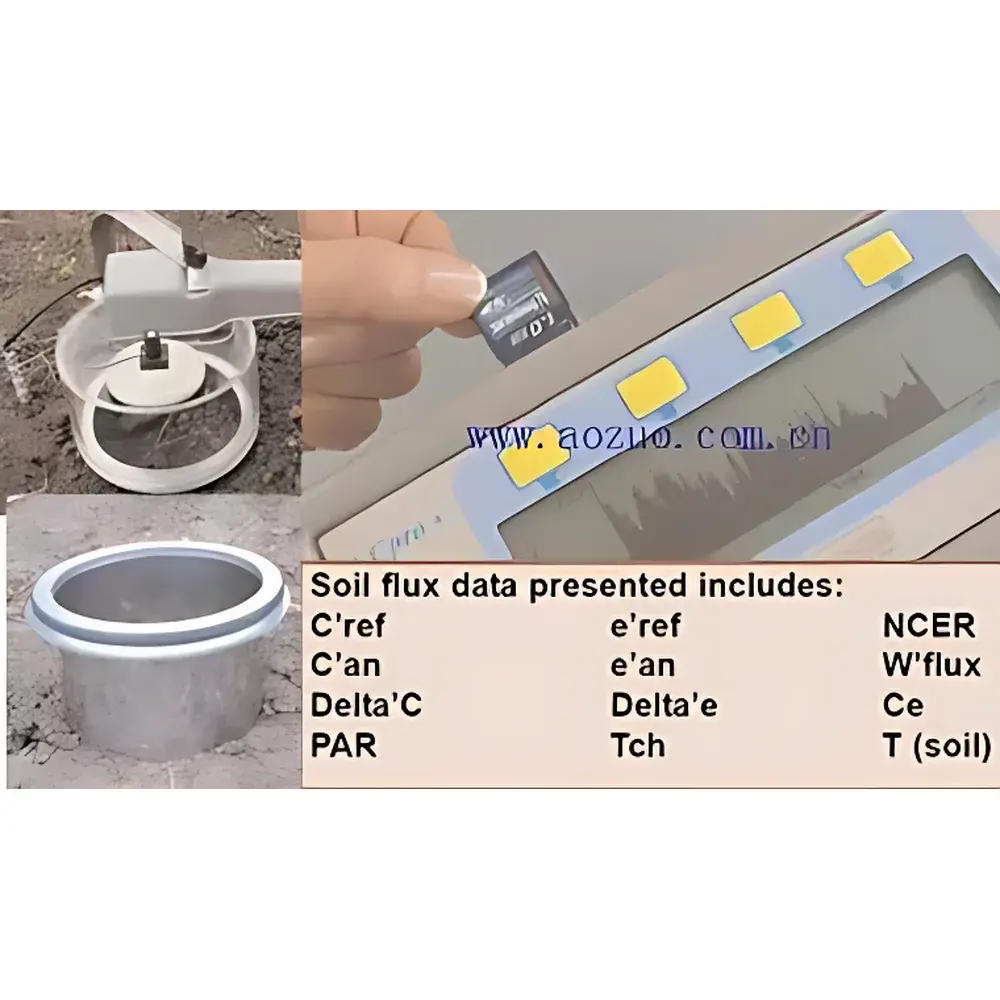
The SRS-SD2000 Portable Soil Respiration System is a field-deployable, battery-powered instrument engineered for high-temporal-resolution measurement of soil CO2 efflux and coupled gas exchange parameters under natural environmental conditions. It operates on an open-system principle, maintaining near-ambient CO2 and H2O partial pressures within the measurement chamber to prevent physiological suppression of microbial and root respiration—critical for ecological validity in carbon flux studies. At its core lies an integrated, miniature non-dispersive infrared gas analyzer (NDIR IRGA) mounted directly inside the 1-L stainless-steel-and-polypropylene soil chamber, minimizing sample transport lag and ensuring sub-second response to dynamic CO2 concentration changes. The system’s lightweight architecture (4.4 kg total system mass) and self-contained 12 V / 6.8 Ah lead-acid battery enable uninterrupted operation for up to 16 hours in remote field settings, with rapid thermal stabilization (<5 min at 20 °C) supporting efficient multi-point survey protocols.
Key Features
- Integrated NDIR CO2 sensor with 1 ppm resolution and dual fast-response H2O sensors (0.1 mbar resolution)
- Programmable, independent control of chamber CO2 (0–2000 ppm) and H2O vapor pressure via built-in chemical humidification/drying modules
- Real-time environmental monitoring: chamber temperature (0–50 °C), soil temperature (5–50 °C), and photosynthetically active radiation (PAR: 0–3000 μmol·m−2·s−1)
- Adjustable gas flow rate (0–500 mL·min−1) with precision mass flow control
- Non-volatile 2 GB flash memory and removable SD card supporting >16 million data points
- 240 × 64 pixel backlit LCD display with intuitive menu navigation and real-time graphing capability
- Ruggedized chamber design: 130 mm diameter, 1 L volume, stainless steel base ring (325 g) + polypropylene upper chamber (320 g)
- Full USB interface and SD card export for post-processing in MATLAB, R, or Python-based flux analysis pipelines
Sample Compatibility & Compliance
The SRS-SD2000 is validated for in situ measurement across diverse soil types—including sandy, loamy, clay-rich, and organic-rich substrates—as well as low-stature vegetation such as turfgrass, mosses, and seedling canopies. Its open-system configuration aligns with ISO 16634-2:2021 (soil carbon determination) and ASTM D5092-22 (field methods for soil gas sampling). All firmware and data logging routines comply with GLP principles, including time-stamped audit trails, user-access logs, and immutable raw-data storage—facilitating traceability in long-term ecosystem monitoring programs subject to national or international reporting frameworks (e.g., IPCC Tier 2/3 inventories, LTER network protocols).
Software & Data Management
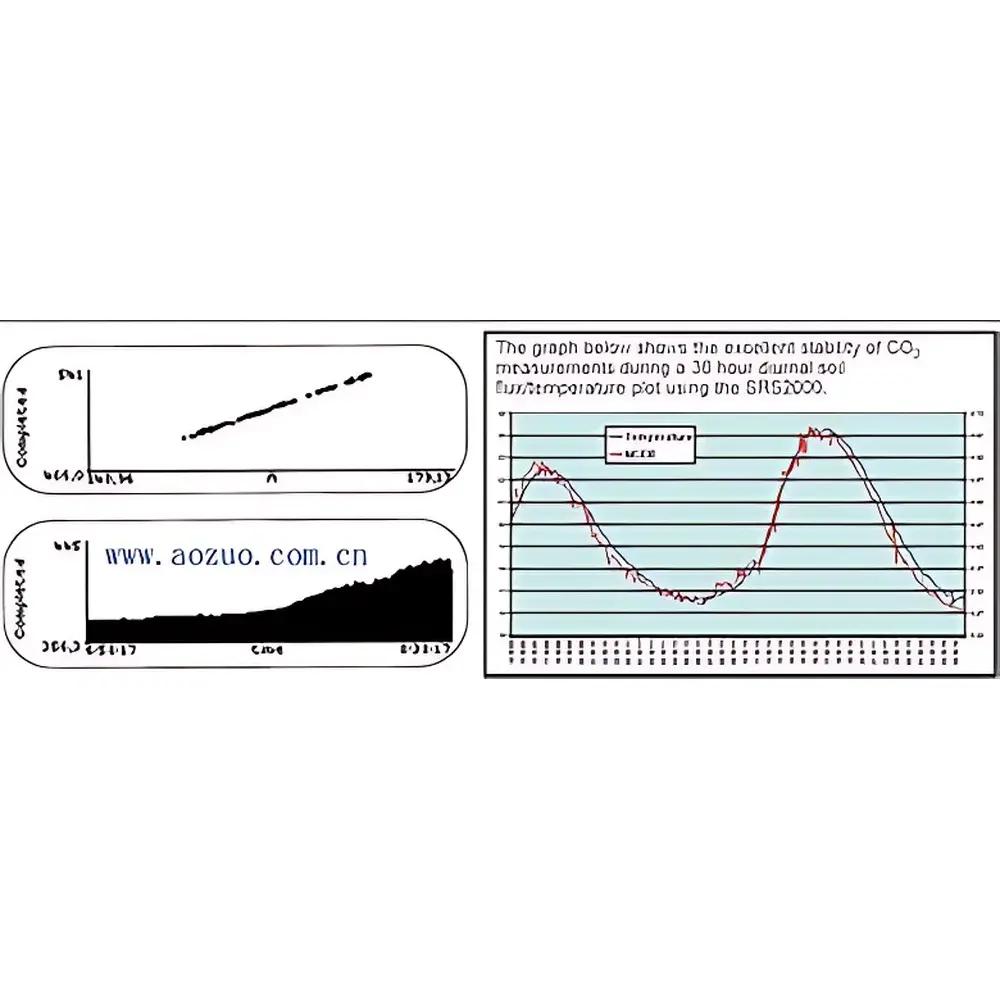
Data acquisition is managed through embedded firmware supporting configurable measurement intervals (1 s to 60 min), automated zero/span calibration sequences, and conditional triggering based on PAR or soil temperature thresholds. Raw output includes synchronized timestamped arrays of CO2, H2O, chamber T, soil T, PAR, flow rate, and calculated net CO2 flux (μmol·m−2·s−1). Exported CSV files conform to FAO’s Global Soil Laboratory Network (GLOSOLAN) metadata standards. Optional desktop software provides batch processing, Q10 temperature response modeling, outlier detection via robust regression, and direct export to FluxNet-compatible formats. No cloud dependency or proprietary file locking is implemented—ensuring full researcher ownership and reproducibility.
Applications
- Quantification of diel and seasonal soil respiration dynamics across gradients of land use, moisture, and vegetation cover
- Spatial mapping of carbon efflux using GPS-synchronized transect measurements
- Root vs. heterotrophic respiration partitioning via trenching or root exclusion experiments
- Evaluation of climate change impacts on belowground C cycling (e.g., warming, drought, elevated CO2)
- Soil health assessment in agricultural systems, including responses to organic amendments, tillage regimes, and cover cropping
- Short-term photosynthetic gas exchange in low-canopy species where traditional leaf chambers are impractical
FAQ
What is the minimum detectable CO2 flux under field conditions?
The system achieves a typical detection limit of ±0.05 μmol·m−2·s−1 (1σ) over 60-second averaging intervals, contingent on stable flow and ambient CO2 background.
Can the chamber be used for sealed-chamber measurements?
No—the SRS-SD2000 is strictly configured for open-system operation; sealed-mode functionality is not supported due to hardware and firmware design constraints.
Is firmware update capability available via USB?
Yes—field-upgradable firmware is distributed as signed binary packages with version-controlled release notes and backward-compatible configuration migration.
Does the system meet FDA 21 CFR Part 11 requirements for electronic records?
While not certified for regulated pharmaceutical applications, its audit trail, electronic signature support, and data integrity safeguards meet baseline requirements for environmental research compliance under EPA and EU EEA guidelines.
What is the recommended calibration frequency for field deployments?
We recommend zero/span calibration before each deployment day using certified CO2 and H2O standards traceable to NIST SRMs; factory recalibration is advised annually or after 500 operational hours.







