
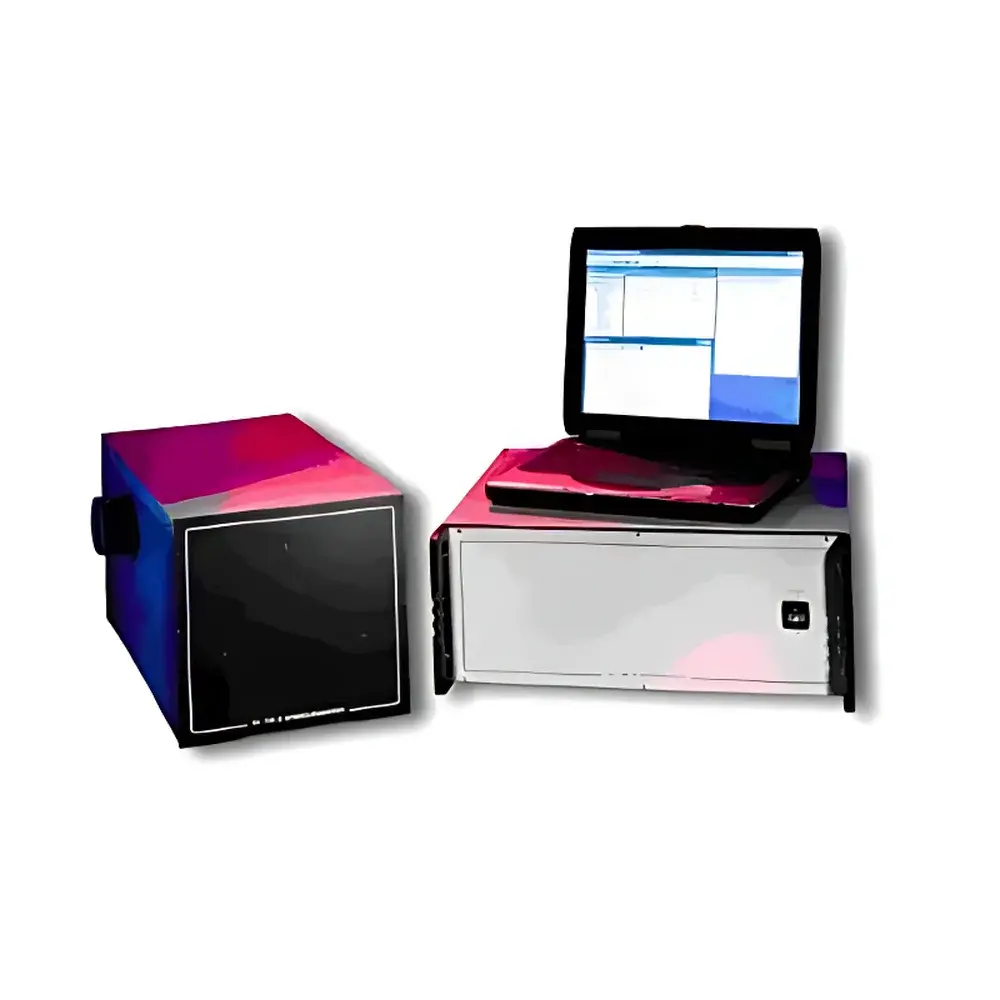
Optronic Laboratories OL750 Mechanical Scanning Grating Spectroradiometer
| Brand | Optronic Laboratories |
|---|---|
| Origin | USA |
| Model | OL750 |
| Spectrometer Type | Dual-grating monochromator |
| Wavelength Range | 200 nm – 30 µm |
| Spectral Resolution | 0.25 nm – 10 nm (adjustable) |
| Dispersion | 2 nm/mm |
| F/# | F/4 |
| Wavelength Accuracy | ±0.01% of reading |
| Stray Light | ≤10⁻⁸ |
| Optical Configuration | Modular scanning monochromator system |
Overview
The Optronic Laboratories OL750 Mechanical Scanning Grating Spectroradiometer is a high-precision, modular spectroradiometric measurement system engineered for absolute spectral irradiance, radiance, and transmittance characterization across an exceptionally broad electromagnetic spectrum—from deep ultraviolet (200 nm) through visible light to mid- and far-infrared (up to 30 µm). Unlike fixed-detector array spectrometers, the OL750 employs a precision mechanical scanning architecture with dual diffraction gratings, enabling wavelength-selective optical filtering via physical grating rotation and exit slit positioning. This design ensures superior signal-to-noise ratio, minimal detector nonlinearity effects, and long-term calibration stability—critical for metrology-grade applications in national laboratories, photometric standards facilities, and R&D centers validating optical components under ISO/CIE-defined conditions. Its F/4 optical throughput balances resolution, speed, and étendue constraints, while the dual-grating configuration allows optimized selection between high-resolution UV/VIS measurements and high-throughput IR operation.
Key Features
- Dual-grating monochromator architecture with independently selectable gratings—enabling seamless optimization for UV/VIS (e.g., 1200 g/mm holographic grating) or IR (e.g., 150 g/mm blazed ruled grating) spectral regions
- Continuous mechanical wavelength scanning with closed-loop encoder feedback, delivering ±0.01% wavelength accuracy traceable to NIST-certified reference lines
- Stray light suppression ≤10⁻⁸—achieved via optimized baffling, double-monochromator mode capability, and off-axis parabolic collimation—ensuring reliable measurement of low-intensity signals adjacent to strong spectral peaks
- Modular mechanical interface supporting interchangeable input optics (integrating spheres, collimators, fiber couplers), output detectors (Si, InGaAs, PbS, DTGS, MCT), and auxiliary accessories (polarizers, beam splitters, filter wheels)
- Thermally stabilized optical bench with low-expansion materials to minimize drift during extended spectral scans (>1 hr)
- Compliance with CIE Publication No. 69 (Radiometry), ISO 13406-2 (display measurement), and ASTM E308 (computing colorimetric data from spectral data)
Sample Compatibility & Compliance
The OL750 accommodates diverse sample geometries and illumination configurations—including point sources, extended-area emitters, reflective surfaces (specular and diffuse), transmissive filters, and optical coatings. Its flexible input port accepts direct beam coupling, integrating sphere outputs (e.g., Labsphere ISF-2000), or fiber-optic delivery (with SMA 905 or FC/PC termination). All measurement modes support radiometric calibration traceable to NIST Standard Reference Materials (SRMs), including spectral irradiance (W·m⁻²·nm⁻¹), spectral radiance (W·sr⁻¹·m⁻²·nm⁻¹), and bidirectional reflectance distribution function (BRDF) via optional goniometric stages. System validation protocols align with ISO/IEC 17025 requirements for testing laboratories, and firmware supports audit trails compliant with FDA 21 CFR Part 11 when paired with validated software environments.
Software & Data Management
The OL750 operates under Optronic’s proprietary SpectraWin™ v6.x platform—a Windows-based application offering real-time spectral acquisition, multi-channel detector synchronization, and automated calibration workflow management. The software implements GLP-compliant data handling: all raw spectra are stored with embedded metadata (grating ID, slit width, integration time, calibration file timestamp, operator ID), and supports export in ASTM E131, ISO 11146, and ICS format for third-party analysis (MATLAB, Python SciPy, OriginLab). Optional SpectraWin IQ module adds instrument qualification reporting per IQ/OQ/PQ protocols, electronic signatures, and version-controlled calibration certificate archiving—fully auditable for GMP-regulated photobiological safety testing (IEC 62471) or LED lighting certification (ENERGY STAR, DLC).
Applications
- Calibration and verification of spectral irradiance standards (e.g., deuterium lamps, tungsten halogen standards, synchrotron beamlines)
- Characterization of LED, OLED, and laser diode spectral power distribution (SPD) for color rendering index (CRI), TM-30 metrics, and photobiological hazard assessment
- Measurement of detector spectral responsivity (A/W vs. λ) across UV–IR ranges, supporting calibration of radiometers and spectroradiometers
- Quantitative analysis of material optical properties: spectral transmittance (T(λ)), directional-hemispherical reflectance (R(λ)), and angle-resolved BRDF using motorized goniometers
- Validation of optical thin-film coatings, anti-reflective layers, and interference filters used in aerospace, semiconductor lithography, and remote sensing systems
- Support for CIE S 026/E:2015 photobiological safety assessments requiring high-fidelity UV-C (200–280 nm) spectral weighting
FAQ
What wavelength calibration standards are supported by the OL750?
The system supports internal calibration using Hg, Ne, and Ar spectral lamp lines; external calibration against NIST SRM 2031 (tungsten halogen) and SRM 2032 (deuterium) is recommended for primary radiometric traceability.
Can the OL750 operate in double-monochromator mode?
Yes—when configured with two cascaded monochromator modules (OL750D base + optional second stage), stray light performance improves to ≤10⁻¹⁰, suitable for fluorescence background rejection and Raman excitation line suppression.
Is the OL750 compatible with cryogenic detectors?
The system’s vacuum-compatible flange options and cold-stage mounting interfaces support integration with liquid-nitrogen-cooled MCT or Si:As detectors for low-noise far-IR measurements (up to 30 µm).
How is spectral resolution selected and verified?
Resolution is set via entrance/exit slit widths and grating groove density; it is empirically verified using the full width at half maximum (FWHM) of known atomic emission lines (e.g., Hg 253.65 nm) and documented in the instrument’s calibration report.
Does the OL750 meet requirements for ISO/IEC 17025 accreditation?
Yes—the hardware design, calibration documentation, uncertainty budgeting tools in SpectraWin, and audit-trail functionality satisfy Clause 6.4 (Equipment) and Clause 7.7 (Ensuring validity of results) of ISO/IEC 17025:2017.




