
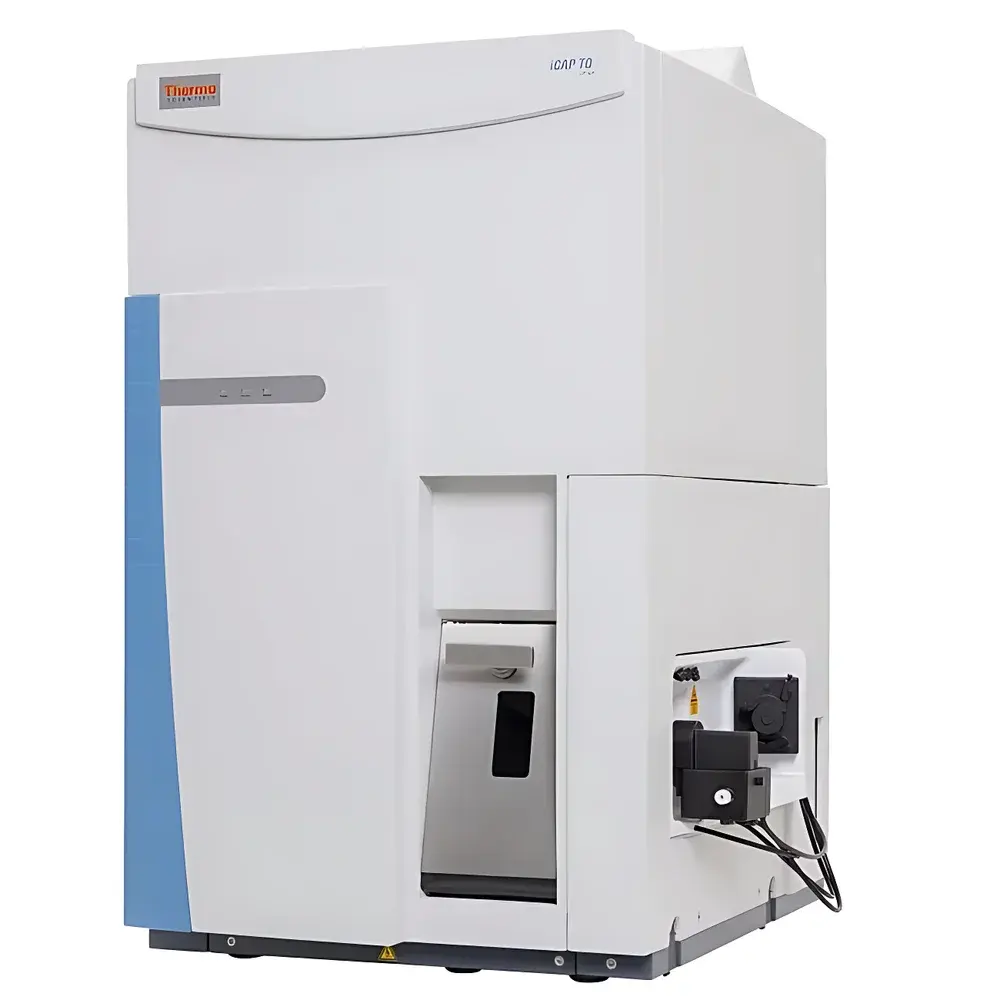
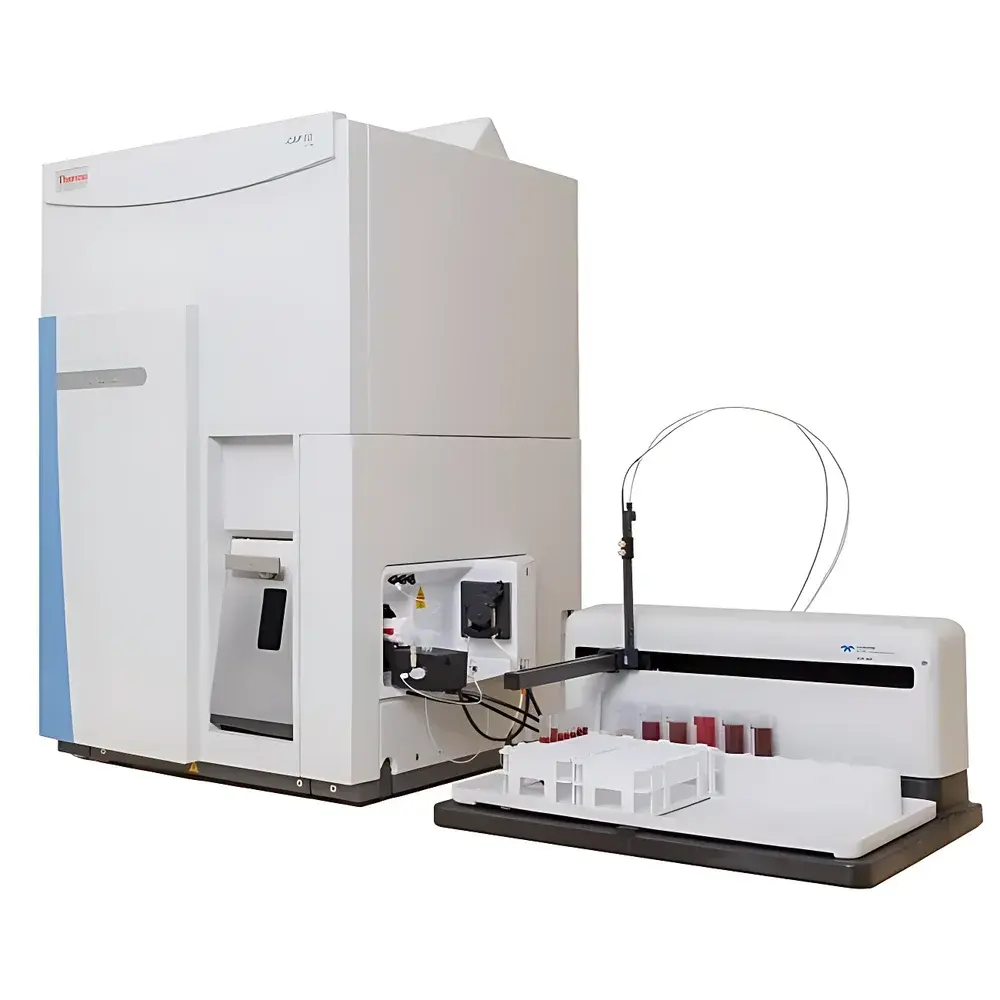
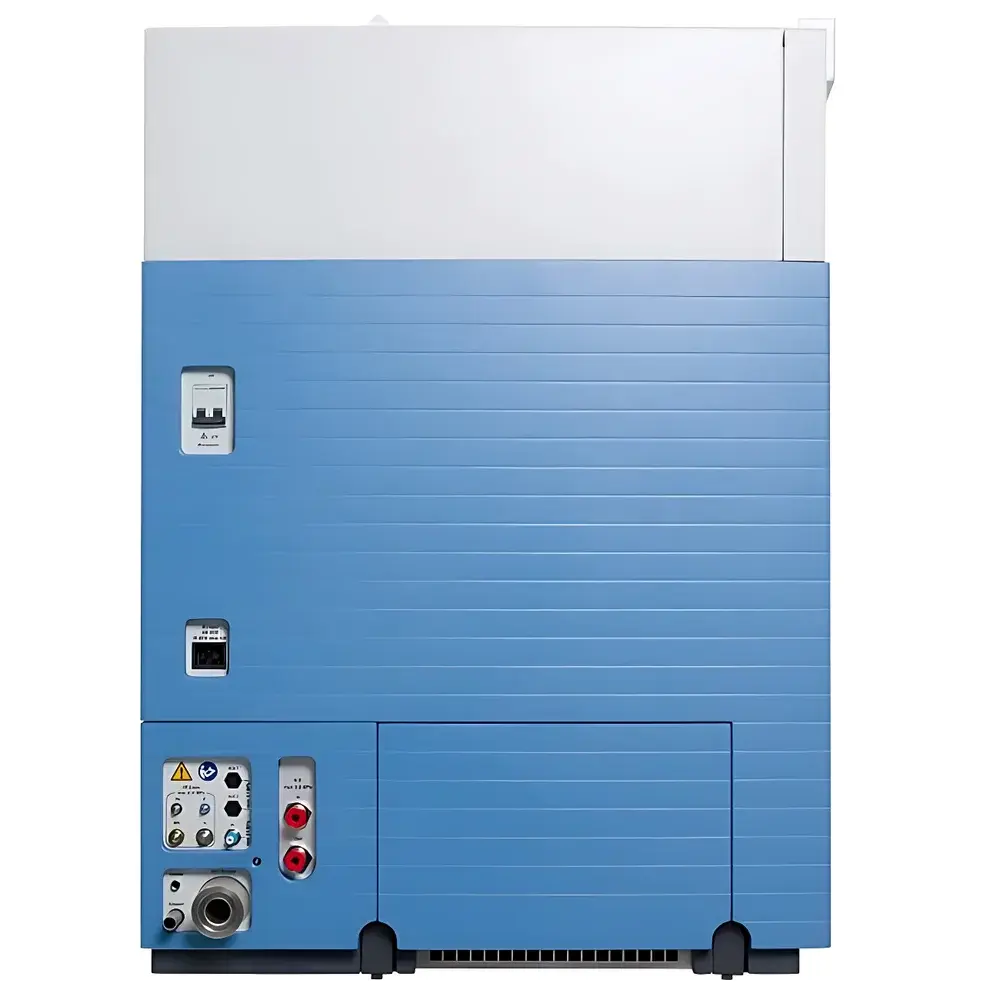
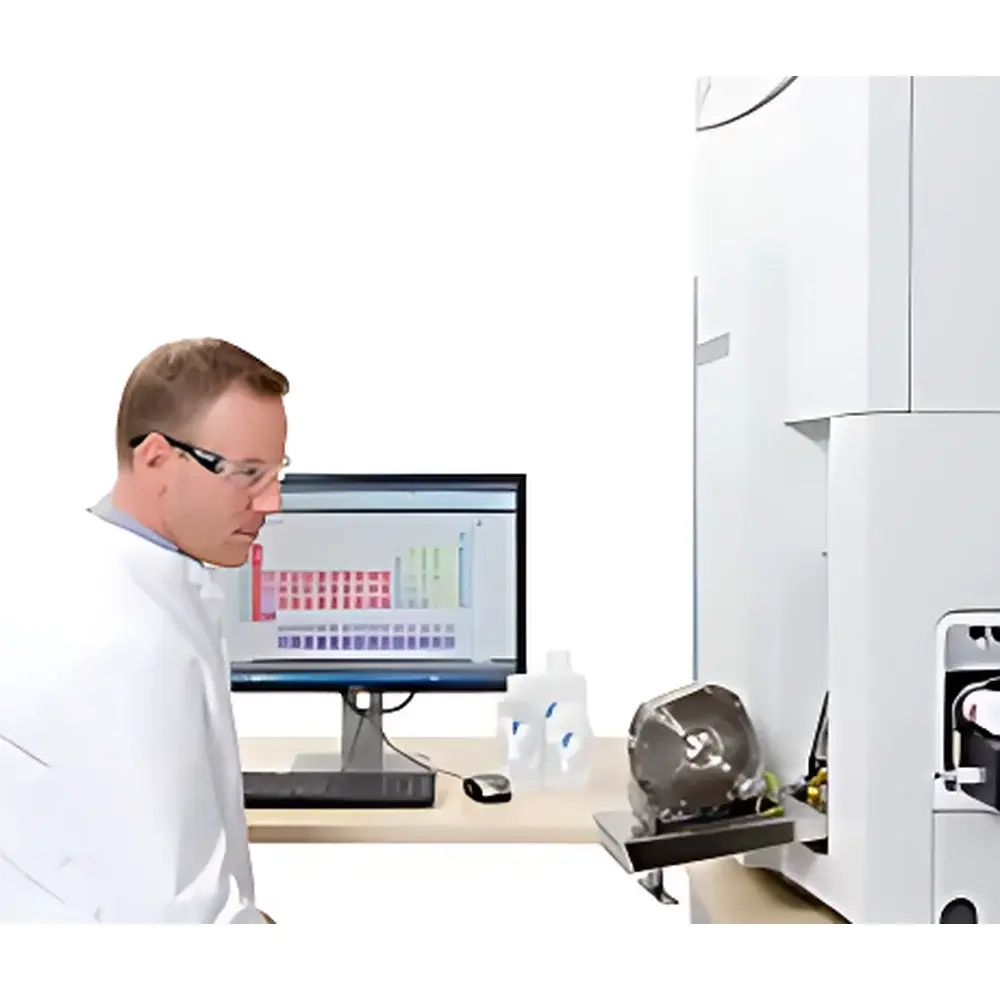
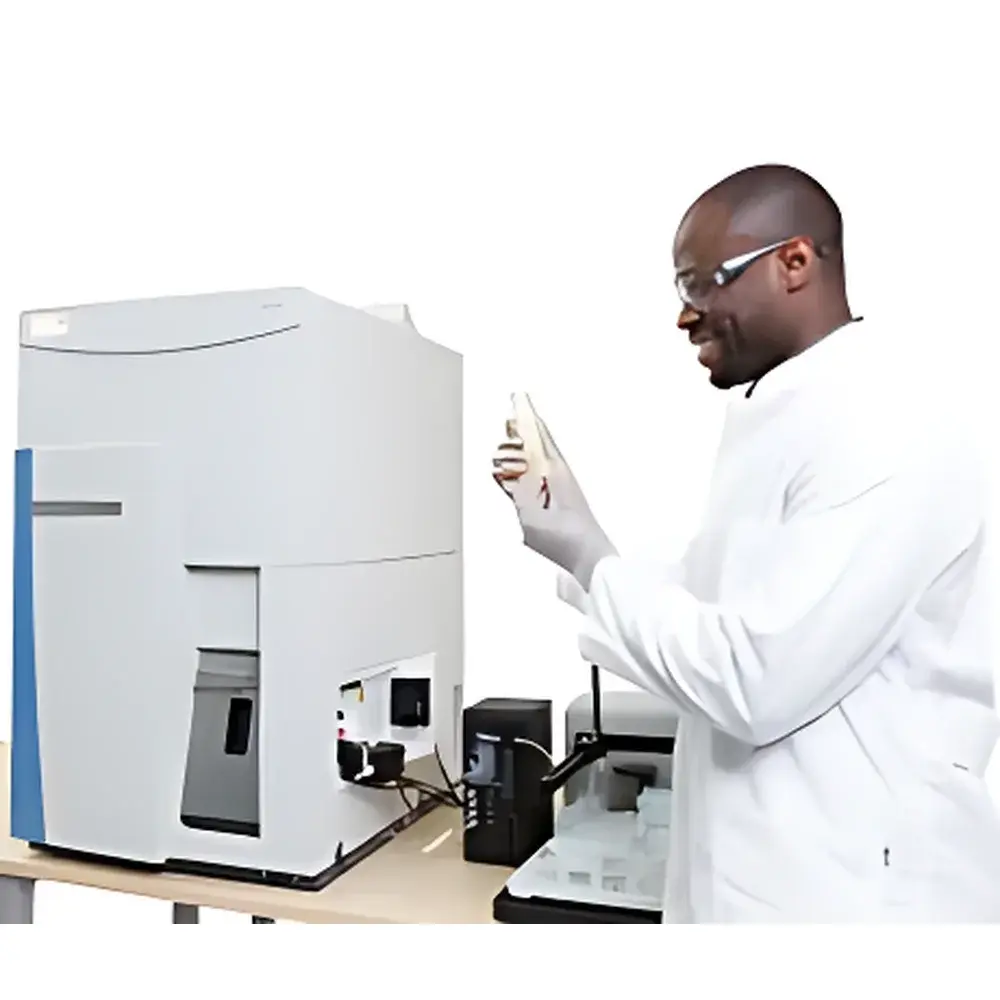
Thermo Fisher iCAP TQ Inductively Coupled Plasma Triple Quadrupole Mass Spectrometer
| Brand | Thermo Fisher |
|---|---|
| Origin | Germany |
| Manufacturer Type | Original Equipment Manufacturer (OEM) |
| Origin Category | Imported |
| Model | iCAP TQ |
| Instrument Type | Triple Quadrupole ICP-MS |
| Quadrupole Configuration | Three Sequential Quadrupole Mass Filters |
Overview
The Thermo Fisher iCAP TQ is a research-grade inductively coupled plasma triple quadrupole mass spectrometer (ICP-QQQ-MS), engineered for ultra-trace elemental and isotopic analysis in complex matrices. Unlike conventional single-quadrupole ICP-MS systems, the iCAP TQ employs a true triple quadrupole architecture—comprising Q1 (mass-selective filter), Q2 (collision/reaction cell with controlled gas chemistry), and Q3 (mass-resolving analyzer)—to enable on-mass and mass-shift reaction modes with high specificity and sensitivity. This configuration allows targeted removal of polyatomic interferences (e.g., 40Ar16O+ on 56Fe+, 40Ar35Cl+ on 75As+) via kinetic energy discrimination or selective ion-molecule reactions, delivering sub-pictogram-per-gram (sub-pg g−1) detection limits in real-world samples such as seawater, biological fluids, geological digests, and high-purity chemicals. The instrument operates at standard RF power (1.5 kW) with a robust, water-cooled RF generator and a high-efficiency nickel sampler/skimmer cone interface optimized for long-term stability and low oxide formation (<1.5% CeO+/Ce+).
Key Features
- Triple quadrupole mass filtering architecture with independently controlled Q1 and Q3 for precursor ion selection and product ion detection
- Reaction cell (Q2) equipped with dual-gas capability (He, H2, O2, NH3, CH4, NO) and dynamic bandpass tuning for interference suppression across the full mass range (5–280 u)
- Integrated Thermo Scientific Qtegra ISDS software with embedded Reaction Finder™—a knowledge-based method development assistant that recommends optimal reaction gases and cell parameters based on analyte, interference, and matrix composition
- Automated mass calibration and sensitivity optimization routines reducing operator dependency and method transfer time
- Modular vacuum system with dual-stage turbomolecular pumping (≥300 L s−1 on Q3) ensuring stable base pressure (<1 × 10⁻⁸ mbar) during extended acquisition
- Front-panel touchscreen interface with guided workflows for daily startup, tuning, and maintenance procedures
Sample Compatibility & Compliance
The iCAP TQ supports liquid sample introduction via standard nebulizers (e.g., MicroMist, PFA-ST), desolvation systems (Aridus III, Apex Q), and laser ablation (with compatible 193 nm ArF excimer or 213 nm solid-state lasers). It complies with ISO/IEC 17025:2017 requirements for testing laboratories and supports audit-ready data integrity features aligned with FDA 21 CFR Part 11, including electronic signatures, user role-based access control, and immutable audit trails for all method changes and result modifications. Routine performance verification follows ASTM D5673 (trace metals in water) and USP / (elemental impurities in pharmaceuticals), with built-in QC protocols for internal standardization, drift correction, and carryover assessment.
Software & Data Management
Qtegra ISDS serves as the unified platform for instrument control, data acquisition, processing, and reporting. Its modular architecture includes validated plug-ins for automated dilution series generation, hyphenated techniques (e.g., HPLC-ICP-MS for speciation), nanoparticle size distribution analysis (via time-resolved pulse counting), and LA-ICP-MS quantitative imaging. All raw data are stored in vendor-neutral .raw format compliant with ASTM E1955 and accessible via SQL-based query tools. The software enforces ALCOA+ principles (Attributable, Legible, Contemporaneous, Original, Accurate, Complete, Consistent, Enduring, Available) and integrates seamlessly with LIMS environments through ASTM E1482-compliant APIs.
Applications
- Environmental monitoring: Quantification of regulated elements (As, Cd, Pb, Hg, U) in drinking water, wastewater, and soil extracts at regulatory compliance levels (e.g., EPA Method 6020B)
- Pharmaceutical quality control: Elemental impurity screening per ICH Q3D guidelines, including catalyst residue analysis (Pd, Pt, Rh) in active pharmaceutical ingredients
- Geochemical research: High-precision isotope ratio measurements (e.g., 87Sr/86Sr, 207Pb/206Pb) with interference-corrected multi-collector acquisition
- Materials science: Trace contaminant profiling in semiconductor-grade silicon wafers, battery cathode materials, and nuclear fuel cycle samples
- Clinical and nutritional research: Multi-element quantitation in serum, urine, and tissue homogenates with matrix-matched calibration and species-specific detection (e.g., SeMet vs. inorganic Se)
FAQ
What distinguishes the iCAP TQ from single-quadrupole ICP-MS instruments?
The iCAP TQ uses three physically separate quadrupoles to isolate precursor ions (Q1), induce controlled reactions (Q2), and detect product ions (Q3), enabling interference-free measurement where conventional ICP-MS fails due to isobaric or polyatomic overlaps.
Is the iCAP TQ compliant with GLP/GMP requirements?
Yes—the system meets key regulatory expectations for data integrity, including 21 CFR Part 11-compliant electronic records, secure user authentication, and full audit trail functionality within Qtegra ISDS.
Can the iCAP TQ perform isotope ratio analysis?
It supports high-precision isotope ratio measurements in single-collector mode with interference correction algorithms; for multi-collector applications requiring highest precision, Thermo Fisher’s Neptune Plus MC-ICP-MS is recommended.
What maintenance intervals are recommended for routine operation?
Daily autotune and weekly cone cleaning are standard; the RF generator and vacuum pumps require annual preventive maintenance by certified service engineers, with typical uptime exceeding 95% in high-throughput labs.
Does the system support automated sample preparation integration?
Yes—Qtegra ISDS provides native drivers for robotic autosamplers (e.g., Cetac ASX-560), online dilutors, and chromatography systems, enabling fully unattended batch processing with adaptive dilution logic.







