
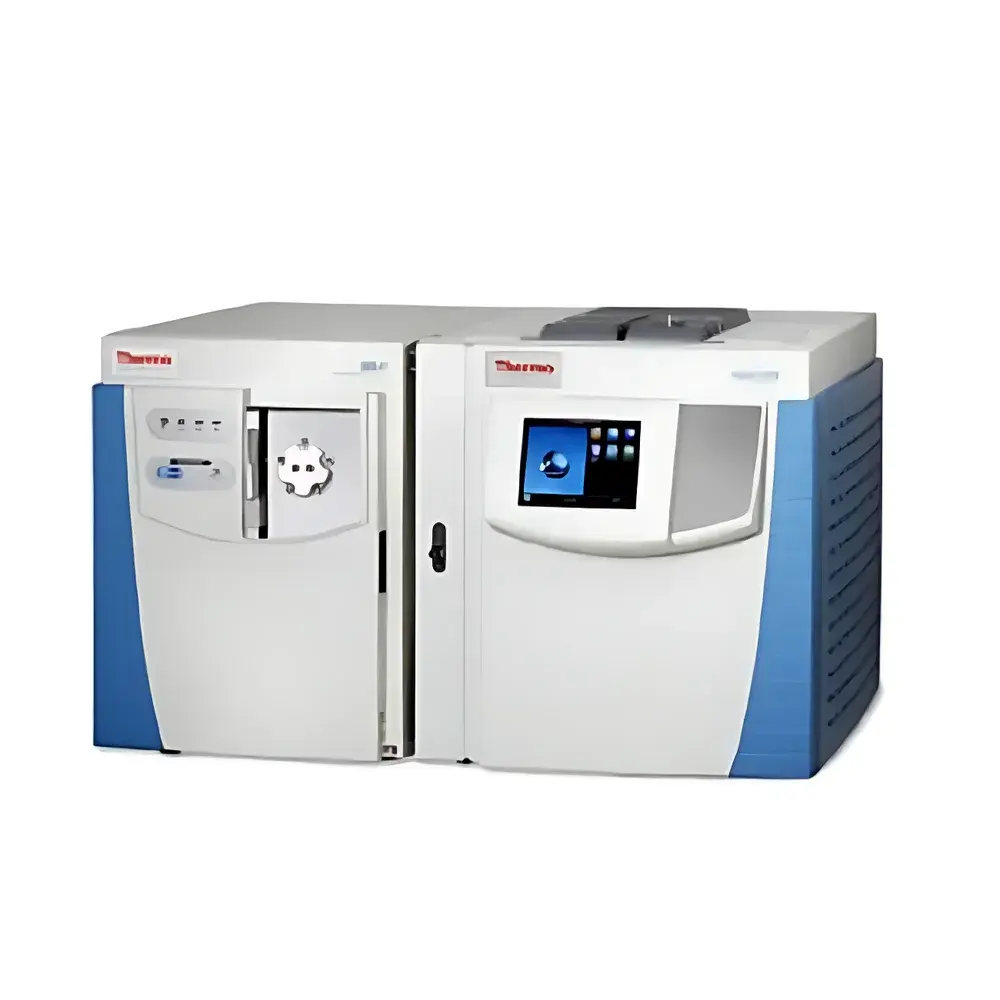
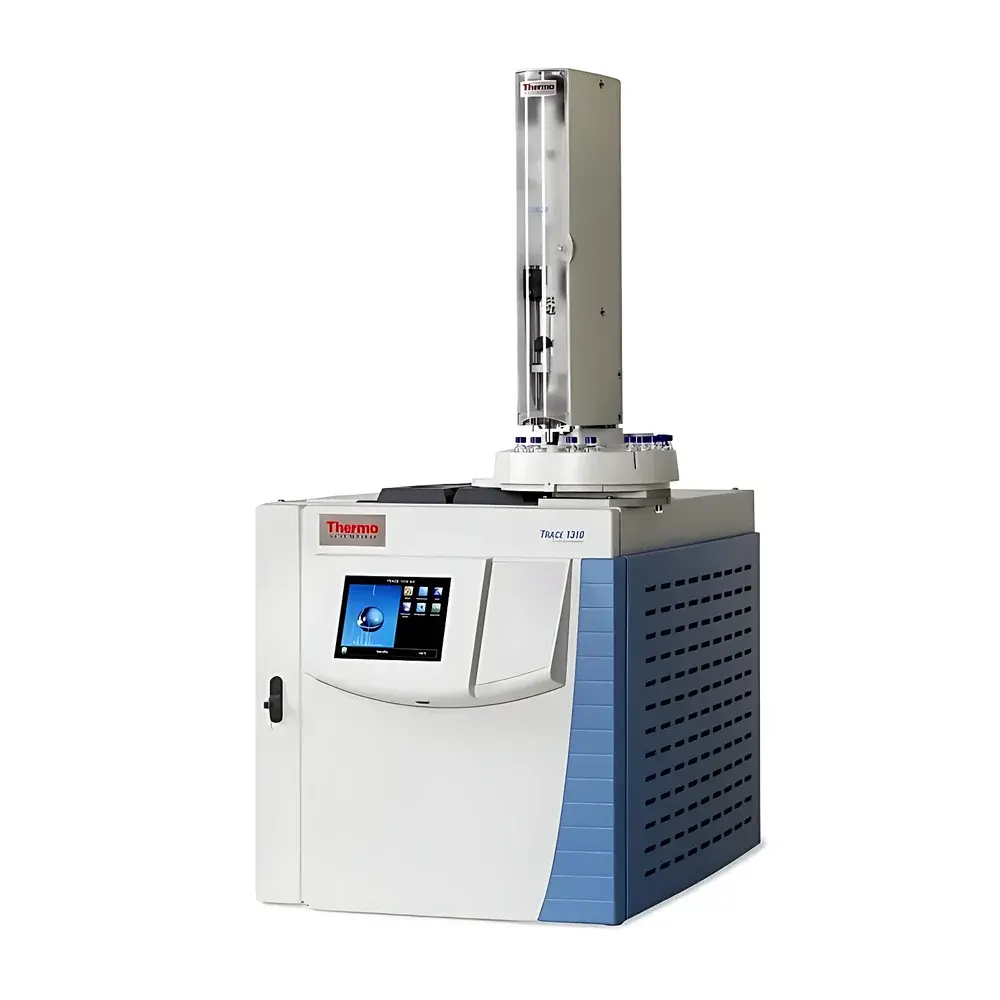
Thermo Scientific TRACE 1310 Gas Chromatograph
| Brand | Thermo Fisher |
|---|---|
| Origin | Italy |
| Manufacturer Type | Original Equipment Manufacturer (OEM) |
| Product Category | Imported Instrument |
| Model | TRACE 1310 |
| Instrument Type | Laboratory Gas Chromatograph |
| Application Scope | General-Purpose |
| Oven Temperature Range | +3 °C to 450 °C |
| Injector Maximum Operating Temperature | 450 °C |
Overview
The Thermo Scientific™ TRACE™ 1310 Gas Chromatograph is a modular, high-performance benchtop GC system engineered for precision, flexibility, and operational efficiency in regulated and research-intensive laboratory environments. Built upon proven capillary gas chromatography principles—separation based on differential partitioning of analytes between a mobile phase (carrier gas) and stationary phase (column coating)—the TRACE 1310 delivers robust retention time reproducibility, baseline stability, and peak resolution across diverse sample matrices. Its architecture supports both standalone GC operation and seamless integration with mass spectrometric detection (GC-MS), including compatibility with Thermo Scientific ISQ™, TSQ™ series triple quadrupole systems, and DFS™ high-resolution magnetic sector platforms. Designed and manufactured in Italy under Thermo Fisher’s global quality management system, the instrument meets stringent requirements for method transferability, long-term calibration stability, and multi-user laboratory deployment.
Key Features
- Modular, tool-free inlet and detector interchange—enabling reconfiguration in under two minutes without technician certification or mechanical tools
- Low thermal mass (LTM) inlet and detector modules, coupled with rapid oven ramp rates (up to 120 °C/min), significantly reduce cycle time and energy consumption
- Full touchscreen interface for real-time instrument status monitoring, method development, and sequence control directly at the GC console
- Advanced inlet technologies: Split/splitless (SSL) and programmable temperature vaporizing (PTV) inlets, both optionally equipped with backflush capability to extend column and detector lifetime
- Multi-detector support: Flame Ionization Detector (FID), Thermal Conductivity Detector (TCD), Electron Capture Detector (ECD), Nitrogen Phosphorus Detector (NPD), and Flame Photometric Detector (FPD)
- Helium conservation module for carrier gas optimization, compliant with evolving regulatory guidance on noble gas usage
- Integrated cold trap and micro-volume injection capability for trace-level analysis with minimal sample and solvent consumption
- Compatibility with TriPlus™ RSH, TriPlus 300 headspace, TriPlus 100 LS liquid, and AI/AS 1310 autosamplers for end-to-end workflow automation
Sample Compatibility & Compliance
The TRACE 1310 accommodates volatile and semi-volatile organic compounds (VOCs/SVOCs), residual solvents, hydrocarbons, pesticides, environmental pollutants, and pharmaceutical impurities across matrices including water, soil extracts, biological fluids, polymers, and food commodities. It complies with international safety and electromagnetic compatibility standards, including IEC 61010-1:2001, IEC 61010-2-010:2003, IEC 61010-2-081:2001+A1:2003; CAN/CSA C22.2 No. 61010-1 and UL 61010-1; EN 61010-1:2001, EN 61010-2-010:2004, EN 61010-2-081:2002; and EMC/RFI standards CISPR 11/EN 55011 (Group 1, Class A) and IEC/EN 61326-1:2006. While not inherently 21 CFR Part 11–compliant, its integration with Chromeleon CDS enables audit-trail-enabled data acquisition, electronic signatures, and role-based access control required for GLP and GMP environments.
Software & Data Management
Control and data acquisition are managed through Thermo Scientific™ Dionex™ Chromeleon™ Chromatography Data System (CDS) v7.3 or later. Chromeleon provides method editor with gradient programming, retention time locking, peak integration with customizable baselines, and automated calibration curve generation. The software supports secure user authentication, full audit trail logging (including parameter changes, sequence edits, and report generation), and electronic signature workflows aligned with FDA 21 CFR Part 11 expectations. Raw data files (.RAW) are stored in vendor-neutral formats compatible with third-party spectral libraries and LIMS interfaces. Optional Chromeleon Connect enables remote monitoring, alarm notifications, and centralized fleet management across multiple GC installations.
Applications
The TRACE 1310 serves as a core analytical platform in environmental testing labs (EPA Methods 502.2, 624, 8021B, 8260D), pharmaceutical QC/QA (ICH Q2(R2), USP ), petrochemical analysis (ASTM D3606, D5503), food safety (AOAC 2007.01, EN 15662), and forensic toxicology. Its modularity supports method development for complex mixtures requiring multidimensional separation (e.g., heart-cutting or comprehensive GC×GC when paired with appropriate modulators), while its sensitivity and dynamic range accommodate both routine quantitation and low-abundance biomarker screening. The system is routinely deployed in contract research organizations (CROs) where method portability, instrument uptime, and consumables cost control are critical success factors.
FAQ
Is the TRACE 1310 compatible with GC-MS systems from other vendors?
No—while the TRACE 1310 features standard GC interfaces (e.g., 1/8″ or 0.25 mm ID transfer lines), optimal performance and firmware-level synchronization are guaranteed only with Thermo Scientific MS detectors.
Does the system support unattended overnight operation?
Yes—when configured with a compatible TriPlus autosampler and Chromeleon CDS, the TRACE 1310 supports fully automated sequences, including valve switching, column backflushing, and conditional run logic.
Can I use non-Thermo consumables such as columns or septa?
Yes—the instrument accepts industry-standard 0.1–0.53 mm ID fused-silica capillary columns and universal GC inlet components; however, Thermo-certified consumables are recommended for warranty validation and method reproducibility.
What is the minimum detectable amount for ECD analysis of chlorinated pesticides?
Detection limits depend on column selection, injection volume, and matrix effects; typical instrument detection limits (IDL) for α-HCH on an ECD-equipped TRACE 1310 range from 0.1–0.5 pg on-column under optimized conditions.
Is preventive maintenance documentation included?
Yes—Thermo Fisher provides a complete Preventive Maintenance Guide (PMG), service manuals, and factory-recommended calibration schedules accessible via the Thermo Fisher Support Portal.
Related Products





