Optronic Laboratories OL 752-10 and OL 752-12 Plug-and-Play Radiometric Standard Lamps
| Brand | Optronic Laboratories |
|---|---|
| Origin | USA |
| Model | OL 752-10 / OL 752-12 |
| Spectral Range (OL 752-10) | 250–2500 nm |
| Spectral Range (OL 752-12) | UV-dominated, optimized for 200–400 nm |
| Lamp Type | Tungsten-halogen (OL 752-10), Deuterium (OL 752-12) |
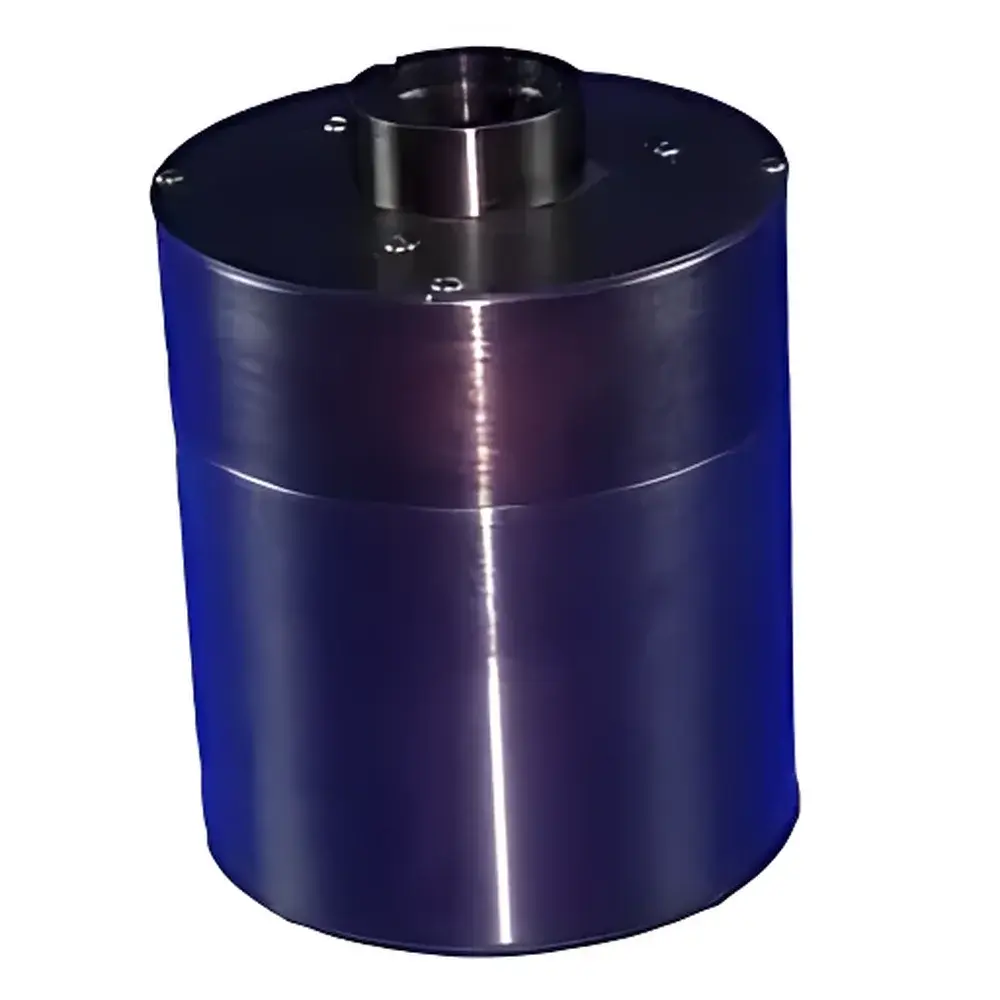
| Mounting | Integrated, factory-aligned collimated output with protective shutter cap |
| Compliance | NIST-traceable calibration certificates supplied per unit |
Overview
The Optronic Laboratories OL 752-10 and OL 752-12 are precision-engineered, plug-and-play radiometric standard lamps designed for high-fidelity calibration of broadband radiometers, spectroradiometers, and UV-VIS-NIR detector systems. Each unit integrates a stabilized, pre-aligned light source within a thermally managed, mechanically rigid housing—eliminating the need for user-performed optical alignment during routine calibration workflows. The OL 752-10 employs a calibrated tungsten-halogen lamp delivering continuous spectral irradiance from 250 nm to 2500 nm, traceable to NIST Standard Reference Materials (SRMs) and certified in accordance with ISO/IEC 17025-accredited procedures. The OL 752-12 utilizes a deuterium arc lamp optimized for stable, low-noise ultraviolet output between 200 nm and 400 nm, with minimized visible/NIR leakage and spectral structure validated per ASTM E275 and CIE S 014/E:2006. Both models feature an integrated mechanical shutter and protective cap to safeguard the lamp window and maintain long-term spectral stability by minimizing dust accumulation and accidental exposure.
Key Features
- Factory-aligned collimated output port—no user alignment required; enables direct coupling to radiometer input optics or integrating sphere ports via standardized SMA905 or FC/PC fiber adapters (optional)
- Thermally stabilized lamp housing with active temperature monitoring and drift-compensated power supply to ensure irradiance stability ≤ ±0.3% over 30 minutes (OL 752-10) and ≤ ±0.5% (OL 752-12)
- NIST-traceable calibration certificate included with each unit, specifying absolute spectral irradiance (W·m⁻²·nm⁻¹) at 1.00 m distance, referenced to NIST SRM 1931c (tungsten-halogen) and SRM 2032 (deuterium)
- Integrated mechanical shutter with manual actuation lever and position feedback indicator—prevents lamp degradation during idle periods and supports automated calibration sequences
- Rugged aluminum enclosure with EMI-shielded electronics, conformal-coated PCBs, and MIL-STD-810G compliant thermal cycling performance (−20 °C to +50 °C ambient operating range)
- Compliant with IEC 61000-4-3 (radiated immunity) and IEC 61000-4-6 (conducted immunity) for use in regulated metrology laboratories
Sample Compatibility & Compliance
These standards are compatible with all radiometric detectors accepting collimated or fiber-coupled inputs—including silicon photodiodes, thermopiles, CCD/CMOS-based spectroradiometers, and scanning monochromator systems. The OL 752-10 is routinely used for calibration of UV-Vis-NIR reference instruments under ISO/IEC 17025 quality management systems and supports GLP/GMP audit requirements when paired with documented calibration intervals and uncertainty budgets. The OL 752-12 meets the spectral purity and stability criteria specified in USP Analytical Instrument Qualification for UV spectrophotometer verification. Both units ship with full compliance documentation packages including uncertainty budgets (k = 2), calibration history logs, and environmental conditioning records.
Software & Data Management
While the OL 752 series operates as a hardware-only standard, Optronic Laboratories provides downloadable calibration data files in ASCII and CSV formats, structured per CIE TN 006:2021 conventions. These files include wavelength-indexed irradiance values, expanded uncertainties (k = 2), and spectral deviation envelopes. Users may import datasets directly into common metrology software platforms such as Ocean Insight OceanView, Labsphere SpectraSuite, or custom Python/Matlab analysis pipelines using the provided spectral metadata headers. Audit trail functionality is supported when integrated with laboratory information management systems (LIMS) that enforce 21 CFR Part 11-compliant electronic signatures and change control for calibration record archiving.
Applications
- Primary calibration of field-deployable UV index meters and solar irradiance sensors (e.g., for NOAA/NASA ground station networks)
- Verification of spectral responsivity in aerospace-grade spectroradiometers used in Earth observation satellite sensor ground truthing
- Traceable irradiance transfer between national metrology institutes (NMIs) and accredited calibration labs
- Validation of optical safety measurements per IEC 62471 (Photobiological Safety of Lamps) and ANSI RP-27.3
- Reference source for inter-laboratory comparison exercises organized under BIPM CCPR key comparisons
- Support of ISO 15312-1 (Underwater radiometry) and ISO 11664-3 (CIE colorimetry) traceability chains
FAQ
Are the OL 752-10 and OL 752-12 NIST-traceable out-of-the-box?
Yes—each unit ships with an individual NIST-traceable calibration certificate, issued by Optronic Laboratories’ ISO/IEC 17025-accredited calibration laboratory.
Can these lamps be used with integrating spheres?
Yes—both models are routinely coupled to 2″–12″ integrating spheres via optional adapter kits (e.g., OL-ISA-752 series), enabling uniform irradiance field generation for detector spatial uniformity testing.
What is the recommended recalibration interval?
Optronic Laboratories recommends recalibration every 12 months or after 200 hours of cumulative lamp operation—whichever occurs first—to maintain stated uncertainty specifications.
Do the lamps require external power supplies or controllers?
No—the OL 752 series includes fully integrated, microprocessor-controlled lamp drivers with soft-start, current regulation, and thermal foldback protection. Only a standard 100–240 VAC input is required.
Is spectral stray light correction applied in the calibration data?
Yes—certified spectral irradiance values account for instrument-specific grating scatter and detector quantum efficiency non-uniformity, as validated against Optronic’s primary cryogenic radiometer facility.