
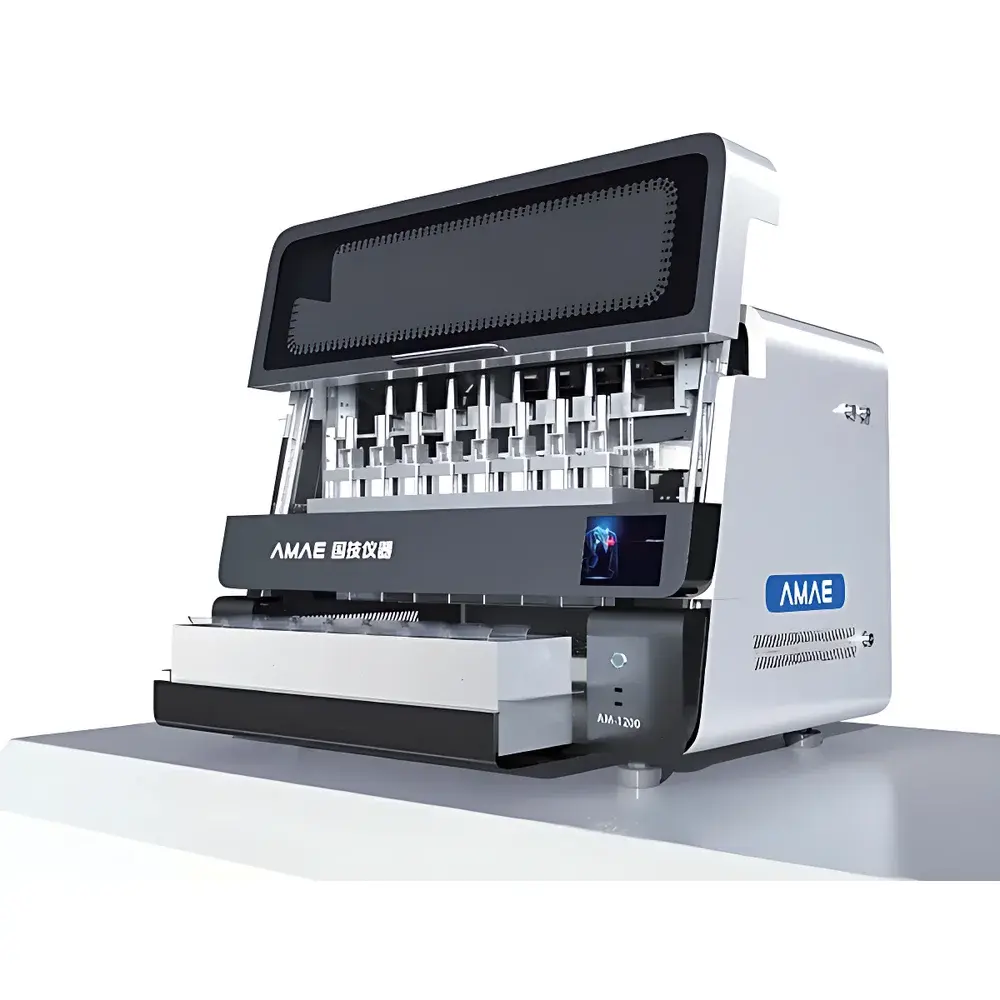
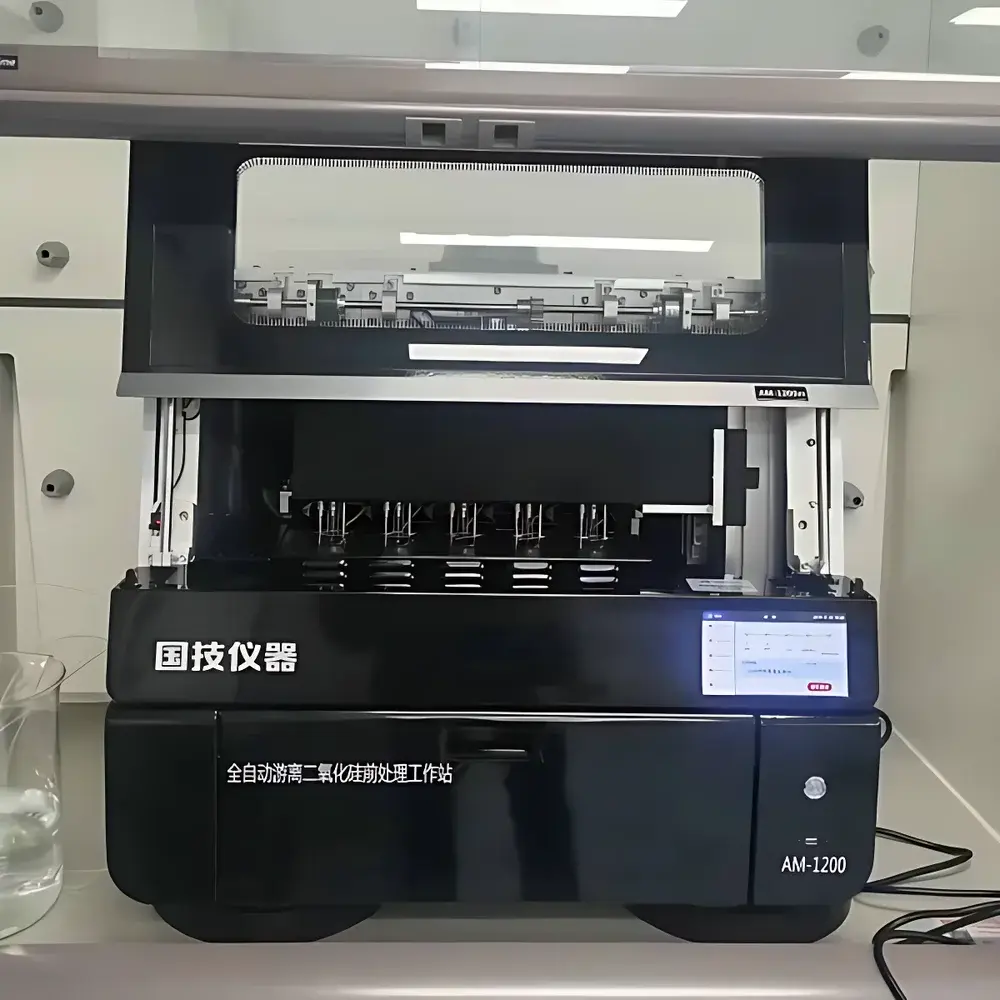
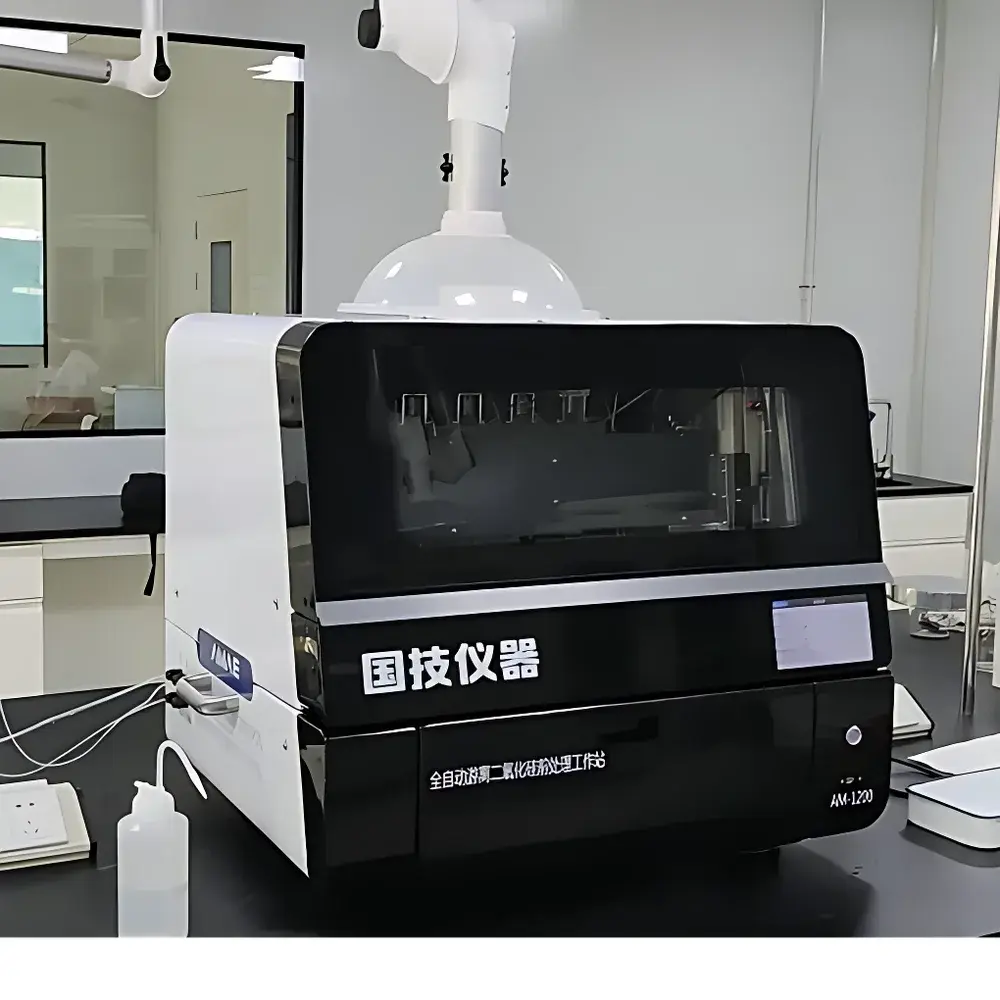
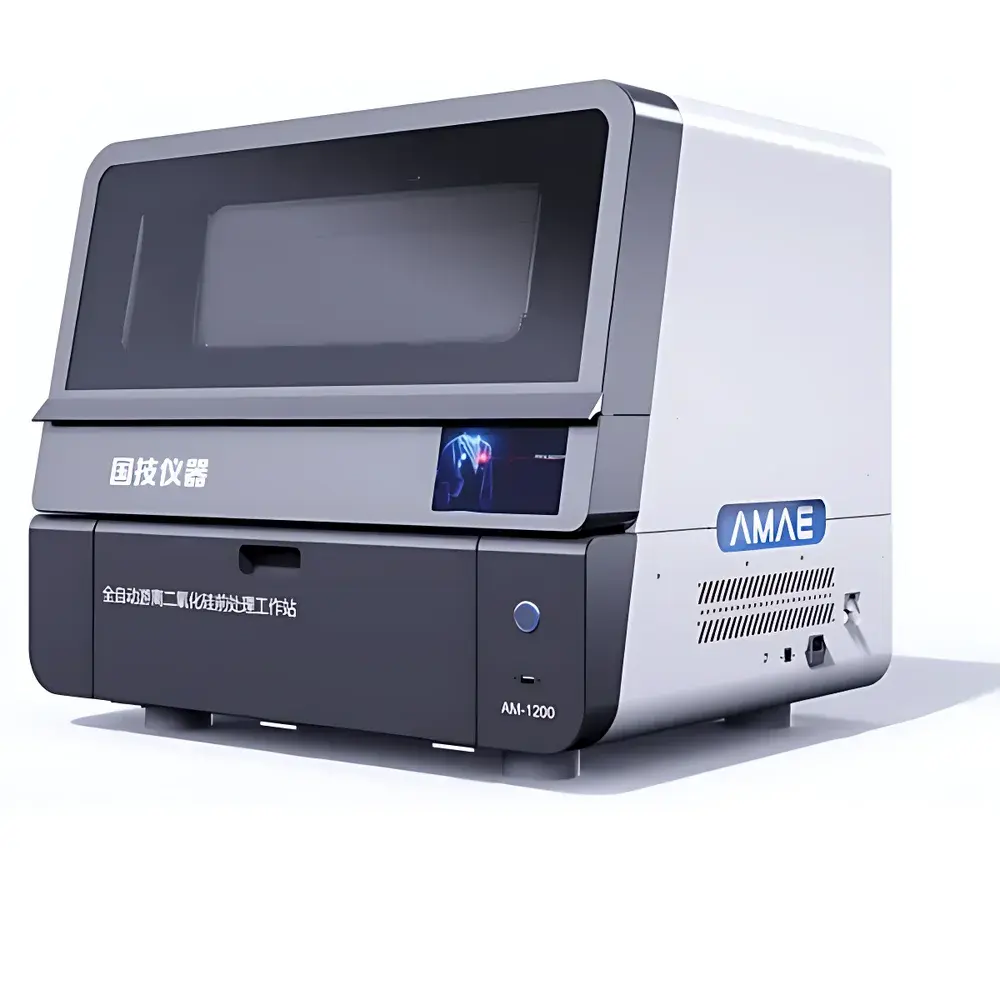
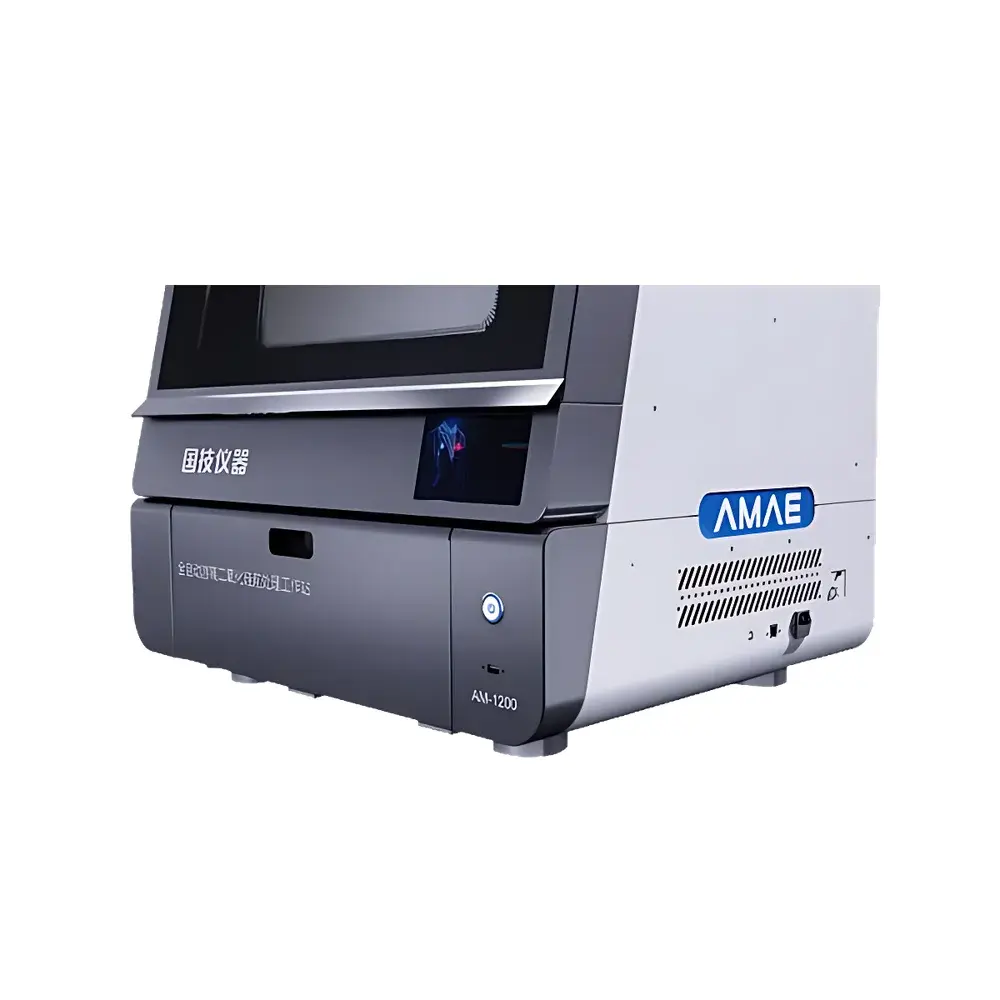
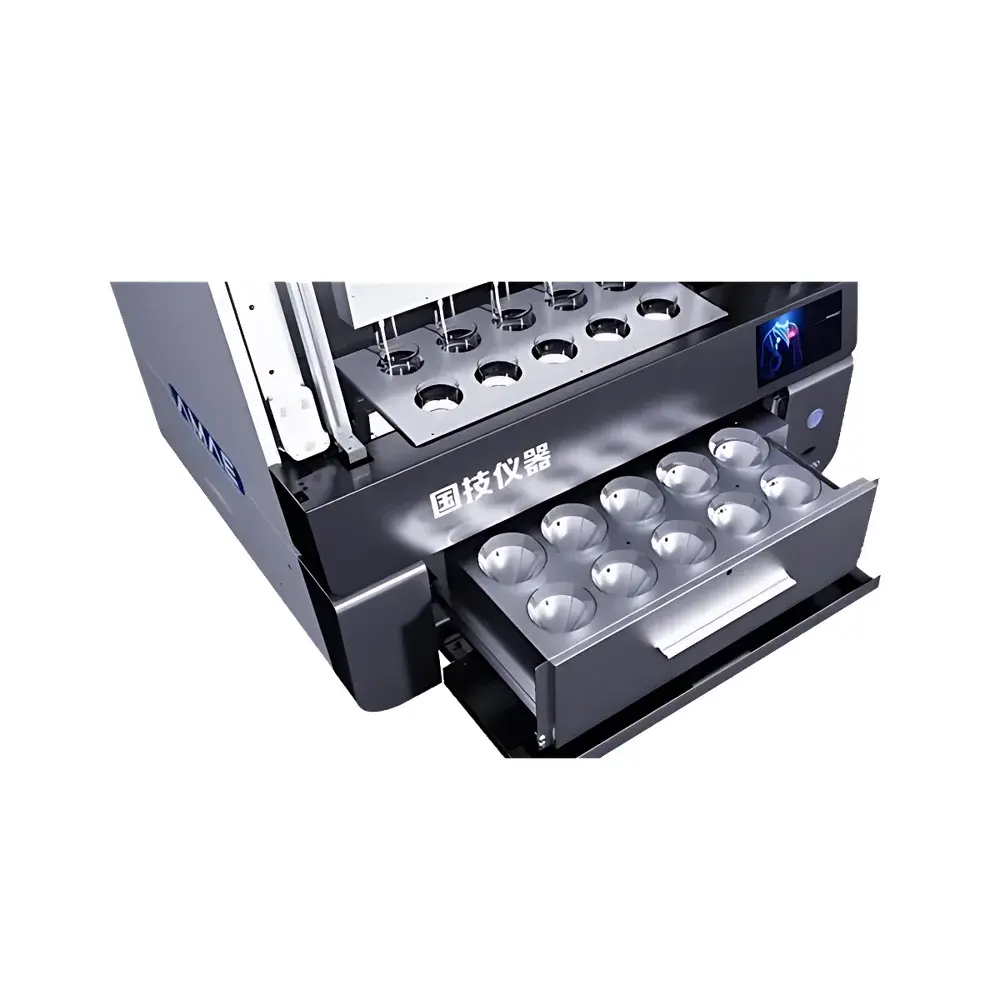
AM-1200 Automated Free Silica (Crystalline SiO₂) Sample Preparation Workstation
| Brand | AMAE |
|---|---|
| Origin | Guangdong, China |
| Model | AM-1200 |
| Type | Integrated Acid Digestion & Vacuum Filtration Workstation for ASTM D7687 / GBZ/T 192.4–2018 Compliant Free Silica Analysis |
Overview
The AM-1200 Automated Free Silica Sample Preparation Workstation is an integrated, benchtop laboratory system engineered for standardized determination of respirable crystalline silica (quartz, cristobalite, tridymite) in airborne dust and bulk industrial samples via the pyrophosphoric acid digestion method (per GBZ/T 192.4–2018, OSHA ID-142, and NIOSH 7500). Unlike manual or semi-automated workflows, the AM-1200 executes the complete pre-analytical sequence—acid digestion, high-temperature ashing (up to 900 °C), controlled vacuum filtration, and post-filtration drying—under programmable, closed-loop thermal and fluidic control. Its core architecture implements Couette-style vacuum-assisted liquid transfer to eliminate pipetting errors and surface adhesion losses, ensuring quantitative recovery of insoluble silica residues. Designed for regulatory compliance laboratories, occupational hygiene testing facilities, and industrial hygiene QA/QC departments, the workstation delivers traceable, auditable, and repeatable sample conditioning without operator intervention during run cycles.
Key Features
- Fully automated digestion–filtration sequence: single-touch initiation of acid addition, ramped heating (ambient to 260 °C), 2-hour pyrophosphoric hold, ashing at 900 °C, vacuum-driven filtration through pre-weighed 0.8 µm mixed cellulose ester (MCE) membranes, and final infrared-assisted drying.
- 5×2 dual-zone sample carousel: accommodates up to 10 positions (5 active + 5 standby); each channel operates as an independent thermofluidic module with individual temperature sensors, pressure transducers, and peristaltic pump control.
- High-fidelity process control: ±0.5 °C thermal stability across all zones; vacuum regulation from 0.02 to 0.09 MPa absolute; residual liquid transfer rate <0.5% (validated using ¹⁸O-labeled H₃PO₄ tracer studies).
- 7-inch capacitive touchscreen HMI: real-time visualization of temperature profiles, vacuum status, reagent levels, door interlock state, and elapsed time per sample; supports multi-language UI (English, Chinese, Spanish) and GLP-compliant electronic signature capture.
- Integrated safety subsystems: forced-air exhaust ducted to external fume hood (flow rate ≥120 m³/h); auto-shutdown on lid open, overtemperature (>910 °C), or vacuum loss; Peltier-based active cooling to ≤45 °C surface temperature post-run.
- Firmware extensibility: USB-based field updates; RS-485 and Ethernet (TCP/IP) interfaces for bidirectional communication with LIMS, analytical balances (METTLER TOLEDO XSR series compatible), and ICP-OES/ICP-MS platforms.
Sample Compatibility & Compliance
The AM-1200 accepts standard 50 mL high-purity quartz or ceramic crucibles rated for continuous operation at 900 °C. It is validated for use with air filter media (mixed cellulose ester, polyvinyl chloride), bulk ore powders, concrete dust, refractory ceramics, and foundry sand matrices. All process parameters align with the metrological requirements of ISO/IEC 17025:2017 for testing laboratories and support full audit readiness for OSHA, MSHA, and EU REACH enforcement. The system generates timestamped, immutable digital logs—including setpoints, actuals, alarm events, and user actions—that satisfy FDA 21 CFR Part 11 data integrity criteria when deployed with optional electronic signature modules. Calibration certificates for onboard PT100 sensors and vacuum gauges are traceable to NIM (China National Institute of Metrology).
Software & Data Management
Embedded firmware v3.2+ includes a built-in data logger that records ≥20 process variables per second per channel. Raw logs export in CSV and PDF formats via USB or network share; metadata fields include analyst ID, SOP version, sample ID, digestion lot number, and QC reference material codes (e.g., NIST SRM 1878a). Optional PC software (AM-Suite Pro) enables batch report generation compliant with CNAS-CL01:2018 reporting clauses, automatic RSD calculation (n = 10 replicates), uncertainty budgeting per GUM (JCGM 100:2008), and trend analysis of digestion efficiency over time. Audit trails retain all modifications with user attribution and rationale fields.
Applications
- Occupational exposure assessment: quantification of respirable crystalline silica in personal and area air sampling filters per OSHA 1910.1200 and EU Directive 2004/37/EC.
- Industrial hygiene monitoring: routine analysis of cement, brick, tile, and abrasive blasting materials for compliance with ACGIH TLV® and ICNIRP guidelines.
- Regulatory submission support: generation of GLP-compliant datasets for REACH registration dossiers and EPA TSCA Section 8(e) notifications.
- Method validation studies: interlaboratory comparison trials under ISO 5725-2:2019 for precision and trueness evaluation.
- Research applications: kinetic profiling of silica dissolution behavior under varying acid concentration, temperature, and dwell time parameters.
FAQ
Does the AM-1200 comply with GBZ/T 192.4–2018 mandatory procedural requirements?
Yes—the workstation implements all critical control points specified in Clause 7.2–7.5, including mandatory 260 °C digestion temperature tolerance (±2 °C), 2-hour minimum hold time, and gravimetric verification of residue mass before and after ashing.
Can the system handle HF-containing digestions for silicate matrix dissolution?
No—AM-1200 is designed exclusively for pyrophosphoric acid (H₄P₂O₇) chemistry. HF-based protocols require separate PTFE-lined systems due to material compatibility constraints.
Is remote monitoring supported during unattended overnight runs?
Yes—via Ethernet connection, users can access live status dashboards, receive SMS/email alerts on cycle completion or fault conditions, and initiate emergency abort commands from any authenticated workstation.
What maintenance intervals are recommended for vacuum pumps and heating elements?
Vacuum diaphragm pumps require oil-free service every 1,200 operating hours; ceramic heating blocks are rated for ≥10,000 thermal cycles with no scheduled replacement under normal use.
How is method traceability ensured across multiple operators and shifts?
Each run generates a unique 12-digit audit ID linked to instrument serial number, firmware hash, calibration certificate expiry, and operator biometric or smartcard login record—fully reconstructible for inspection by CNAS or ILAC-accredited assessors.



