
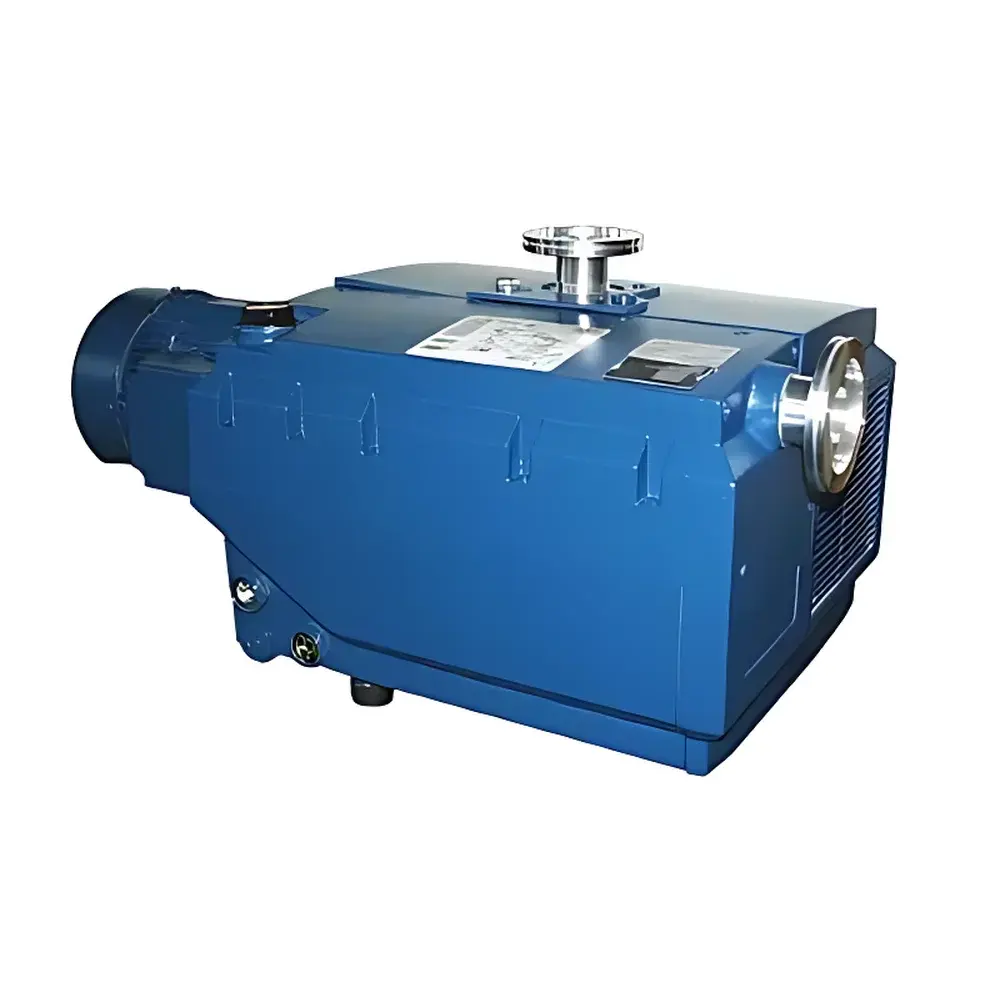
ILMVAC PS 100 Single-Stage Rotary Vane Vacuum Pump
| Origin | Germany |
|---|---|
| Type | Imported |
| Model | PS 100 |
| Power Supply | 3×220/400 V, 50 Hz |
| Ultimate Pressure | < 0.5 mbar |
| Pumping Speed | 100 m³/h (1666 L/min) |
| Weight | 77 kg |
| Oil Level Indicator | Integrated Strip-Type Window |
| Noise Level | Low (typ. ≤ 62 dB(A)) |
| Motor Protection | IP54 |
| Compliance | CE, RoHS |
Overview
The ILMVAC PS 100 is a single-stage rotary vane vacuum pump engineered for reliable, continuous operation in demanding laboratory and light industrial environments. Based on proven Couette-flow displacement principles, it achieves stable ultimate vacuum pressures below 0.5 mbar through precision-machined vanes rotating within an eccentrically mounted rotor chamber. The pump operates via oil-sealed compression: incoming gas is trapped between the rotor, stator, and sliding vanes, then compressed and expelled through the exhaust port after passing through the oil-lubricated compression zone. This architecture ensures high volumetric efficiency, low internal leakage, and robust tolerance to transient vapor loads—particularly advantageous when handling water vapor or mildly aggressive process gases common in freeze-drying, solvent recovery, or vacuum distillation workflows.
Key Features
- Precision-cast aluminum alloy housing with integrated cooling fins for thermal stability during extended duty cycles
- Self-adjusting carbon-graphite vanes with optimized radial clearance control, minimizing wear and maintaining pumping speed consistency over time
- Built-in gas ballast valve enabling controlled admission of atmospheric air during compression to reduce condensable vapor accumulation and prevent oil emulsification
- Transparent strip-type oil level indicator positioned for ergonomic, at-a-glance verification without tools or disassembly
- Non-return check valve integrated into the exhaust path to prevent backstreaming of oil into the vacuum chamber upon shutdown
- Low-noise motor assembly (IP54-rated) with vibration-damped mounting and acoustic enclosure design, achieving ≤62 dB(A) at 1 m distance
- Oil mist separator filter standard-equipped, reducing hydrocarbon emissions and improving ambient air quality in shared lab spaces
Sample Compatibility & Compliance
The PS 100 is compatible with a broad range of non-corrosive and mildly aggressive vapors encountered in routine analytical and preparative applications—including aqueous solutions, alcohols, acetone, ethyl acetate, and low-concentration organic acid vapors. It is not intended for use with halogenated solvents, strong oxidizers (e.g., nitric oxide, chlorine), or highly polymerizing monomers. All wetted materials—including vanes, stator lining, and shaft seals—are selected for chemical resistance per DIN 53479 and ISO 2812-2 test protocols. The unit complies with EU Machinery Directive 2006/42/EC, Electromagnetic Compatibility Directive 2014/30/EU, and RoHS 2011/65/EU. CE marking confirms conformity with essential health and safety requirements for laboratory equipment under EN 61000-6-2 (immunity) and EN 61000-6-4 (emissions).
Software & Data Management
As a standalone mechanical vacuum source, the PS 100 does not incorporate embedded digital controls or firmware. However, it is fully compatible with external vacuum monitoring systems via analog 0–10 V or 4–20 mA pressure transducer interfaces (optional accessories). When integrated into automated platforms—such as lyophilizers, vacuum ovens, or custom-built vacuum manifolds—the pump supports GLP/GMP-aligned operational traceability when paired with validated data loggers compliant with FDA 21 CFR Part 11 requirements. Maintenance records—including oil change intervals, filter replacements, and performance verification tests—can be tracked using standard laboratory asset management software (e.g., LabWare LIMS, Thermo Fisher SampleManager).
Applications
- Primary vacuum source for benchtop and floor-standing freeze dryers (lyophilizers) in pharmaceutical and biotech labs
- Pre-vacuum stage for diffusion pumps, turbomolecular pumps, and cryopumps in high-vacuum systems
- Vacuum-assisted filtration (vacuum suction filtration) across chemistry, environmental, and food testing laboratories
- Rotary evaporation and short-path distillation setups requiring stable rough vacuum (1–10 mbar range)
- Leak detection systems using helium or tracer gas methods where consistent base pressure is critical
- Thin-film deposition processes including thermal evaporation and sputtering in R&D cleanrooms
- Gas purging and inert atmosphere preparation for gloveboxes and reaction vessels
FAQ
What is the recommended oil change interval for the PS 100 under continuous operation?
Under typical laboratory usage (≤8 h/day, moderate vapor load), ILMVAC recommends oil replacement every 3,000 operating hours or annually—whichever occurs first. For high-water-vapor applications (e.g., frequent freeze-drying), oil should be changed every 500–1,000 hours.
Can the PS 100 be operated vertically or mounted on its side?
No. The PS 100 must be installed horizontally on a rigid, level surface with adequate ventilation. Non-horizontal orientation compromises oil distribution, vane lubrication, and exhaust separation efficiency.
Is the pump suitable for use with corrosive gases such as HCl or Cl₂?
No. The PS 100 is not chemically resistant to strong acids, halogens, or oxidizing agents. For such applications, stainless-steel-bodied dry scroll or diaphragm pumps with fluoropolymer components are required.
Does the PS 100 include an exhaust filter as standard equipment?
Yes. A replaceable oil mist separator cartridge is factory-installed and located downstream of the exhaust port to meet local occupational hygiene standards for airborne oil aerosol exposure.
How is ultimate pressure verified during factory calibration?
Each unit undergoes ISO 21360-1-compliant testing using a calibrated capacitance manometer traceable to PTB (Physikalisch-Technische Bundesanstalt) standards, with measurement conducted at the inlet flange under oil-saturated conditions at 23 °C ambient.
Related Products



