
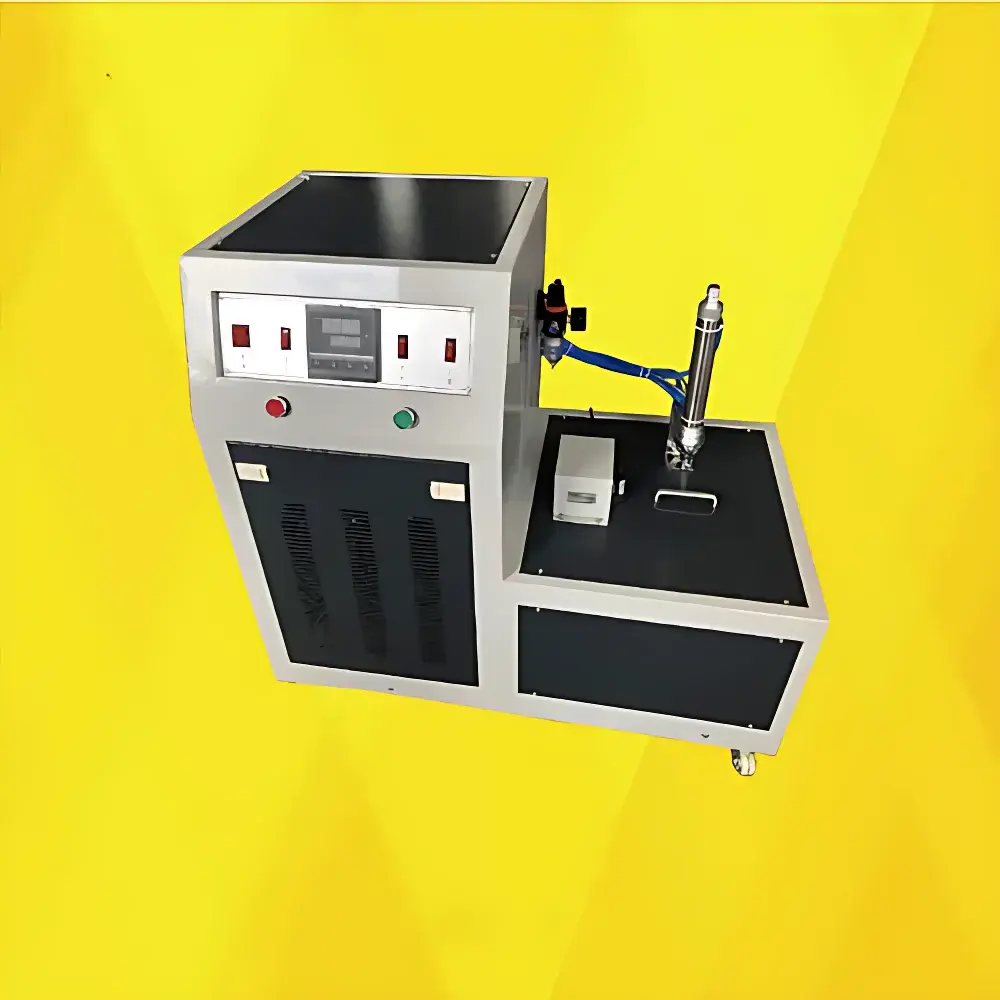
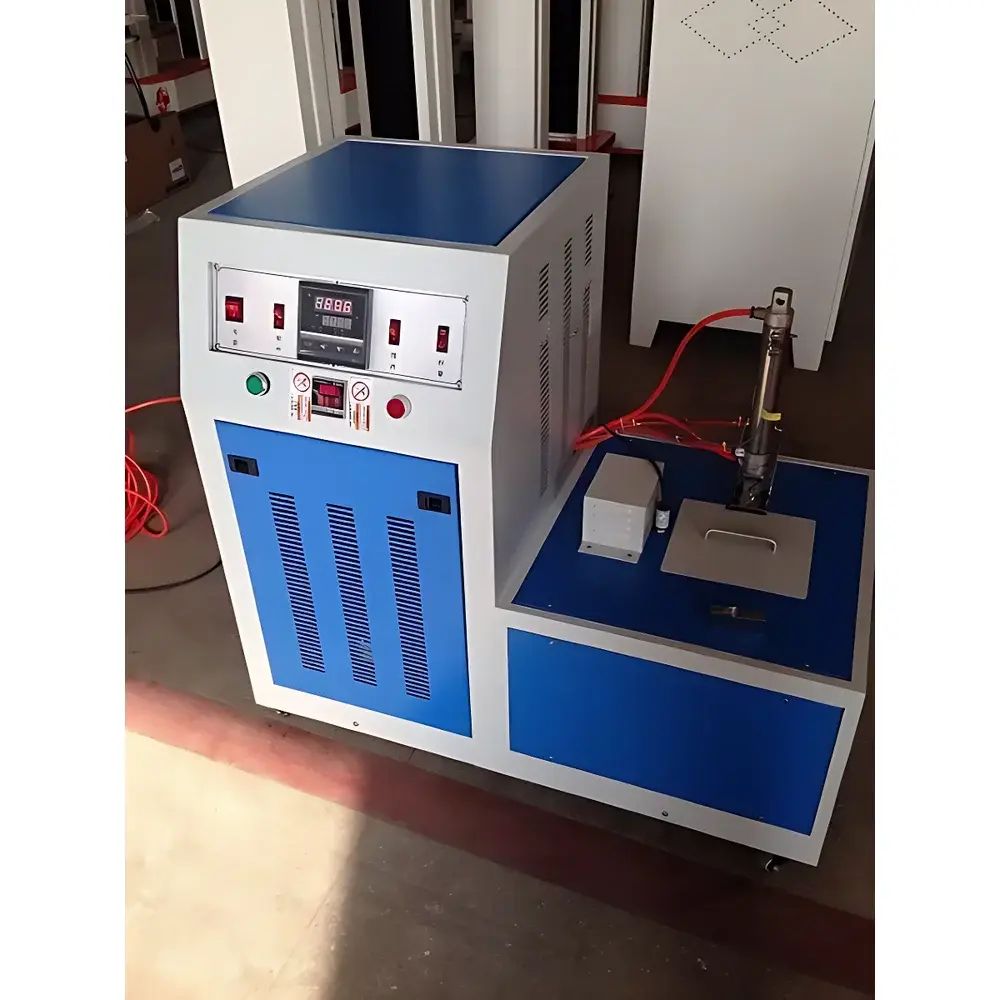
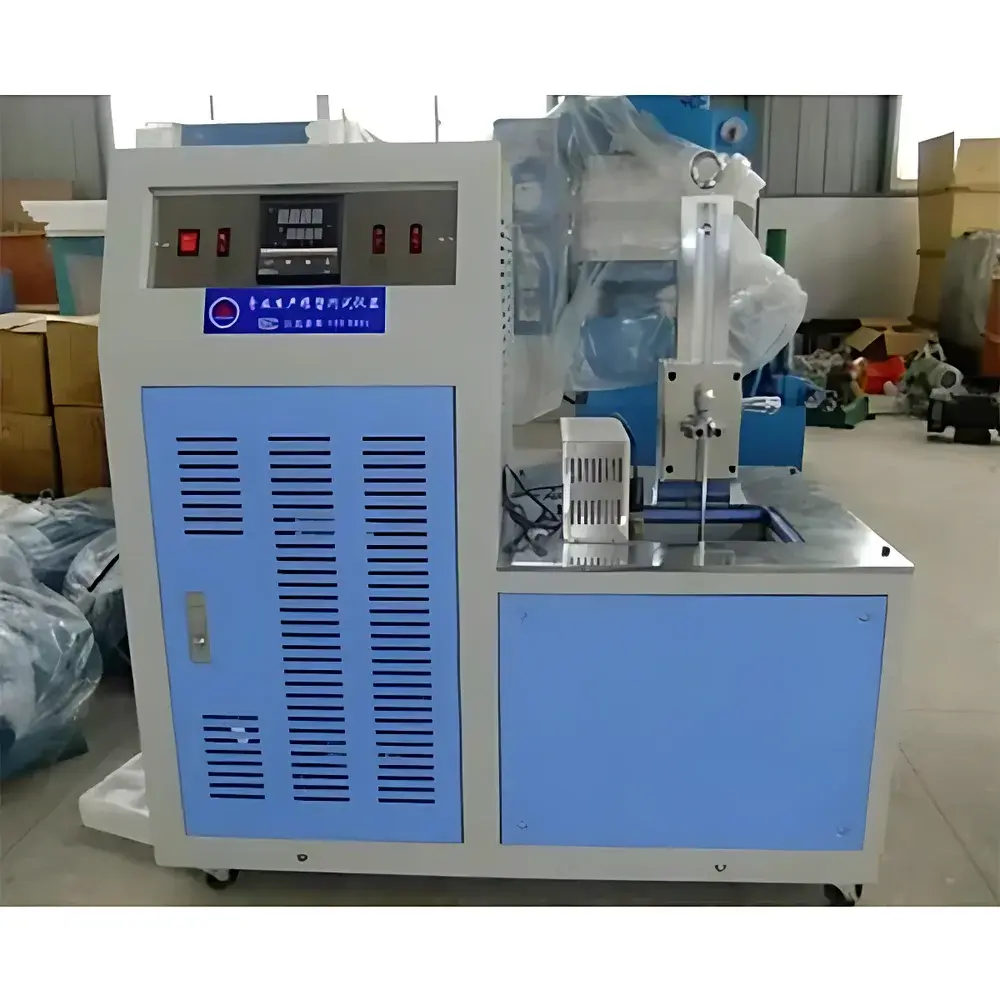
Beiguang Jingyi BWD-C1 Low-Temperature Brittleness Tester
| Brand | Beiguang Jingyi / All Precision Instrument |
|---|---|
| Origin | Beijing, China |
| Manufacturer Type | Manufacturer |
| Product Origin | Domestic (China) |
| Model | BWD-C1 |
| Price | USD 2,250 (approx.) |
| Temperature Range | Ambient to −70 °C (ambient ≤ 25 °C) |
| Temperature Stability | ±0.3 °C |
| Cooling Rate | ~2.5 °C/min (0 to −30 °C), ~2.5 °C/min (−30 to −40 °C), ~2.0 °C/min (−40 to −70 °C) |
| Internal Chamber Dimensions | 280 × 170 × 120 mm (L×W×H) |
| External Dimensions | 900 × 500 × 800 mm (L×W×H) |
| Sample Capacity | 17 specimens (4 rubber + 13 plastic, or configurable per standard) |
| Timer Range | 0–99 min, 1-s resolution |
| Cooling Medium | Industrial ethanol or non-freezing liquid |
| Stirring Motor Power | 8 W |
| Power Supply | 220–240 V AC, 50 Hz, 1.5 kW |
| Operating Ambient | ≤25 °C |
| Impact Head Radius | 1.6 ± 0.1 mm |
| Impact Gap (head to holder) | 6.4 ± 0.3 mm |
| Horizontal Offset (centerline to holder) | 8 ± 0.3 mm |
Overview
The Beiguang Jingyi BWD-C1 Low-Temperature Brittleness Tester is a precision-controlled thermal impact apparatus engineered for the determination of the brittle temperature (Tb) of polymeric materials—including thermoplastics, elastomers, vulcanized rubbers, and flexible composites—under standardized cryogenic conditions. It operates on the principle of controlled thermal conditioning followed by single-point pendulum-type impact, in accordance with the fundamental mechanics of low-temperature fracture initiation. The instrument cools specimens uniformly within a thermally insulated cold well using a closed-loop refrigeration system integrated with proportional heating compensation and mechanical agitation. This architecture ensures stable thermal equilibrium during the critical 3.0 ± 0.5 min dwell period, minimizing transient gradients that could compromise test reproducibility. Designed explicitly for compliance-driven laboratories, the BWD-C1 supports deterministic pass/fail evaluation at discrete temperatures, enabling precise identification of the highest temperature at which ≥50% of tested specimens exhibit brittle fracture upon impact—a metric directly traceable to GB/T 5470–2008, GB/T 1682–2014, and HG/T 2–162–1965. Its robust construction and calibrated mechanical actuation make it suitable for routine QC testing, formulation screening, and comparative material qualification under ISO/IEC 17025-aligned workflows.
Key Features
- High-stability dual-mode thermal control: Hermetic compressor-based cooling combined with PID-regulated auxiliary heating maintains ±0.3 °C chamber uniformity during the 3-minute conditioning phase.
- Precision-machined impact assembly: Stainless steel impactor with certified radius (1.6 ± 0.1 mm), fixed gap (6.4 ± 0.3 mm), and lateral offset (8 ± 0.3 mm) ensures mechanical repeatability across >10,000 cycles.
- Dual-sample configuration flexibility: Modular holder accommodates either 4 rubber specimens (per GB/T 1682) or up to 13 plastic specimens (per GB/T 5470), with independent clamping force optimization to prevent deformation or slippage.
- Integrated safety interlocks: Automatic alarm triggers upon coolant level deviation (>±10 mm from reference), temperature excursion beyond ±1 °C during dwell, or power interruption to the circulation pump.
- Low-noise, maintenance-free agitation: 8 W brushless motor drives continuous axial mixing of ethanol-based coolant, achieving <0.2 °C spatial gradient across the 280 × 170 × 120 mm working volume.
- EMC-compliant electronics: CE-marked control board with isolated I/O, surge-protected mains input, and fail-safe relay logic for emergency shutdown.
Sample Compatibility & Compliance
The BWD-C1 is validated for use with ASTM D746–22 (Standard Test Method for脆性温度 of Plastics and Elastomers Under Simple Beam Impact), ISO 974:2022 (Plastics — Determination of the Brittle Temperature of Rigid Plastics), and JIS K 6261–2017 (Rubber — Determination of Brittle Point). Specimen geometry must conform to specified dimensions: rectangular bars (e.g., 25.4 × 6.4 × 3.2 mm per GB/T 5470) or dumbbell-shaped strips (per GB/T 1682). Materials tested include EPDM, NBR, SBR, PVC, ABS, PC, PP, and TPE compounds. The instrument’s thermal performance has been verified against NIST-traceable RTD probes and meets the thermal uniformity requirements of CNAS-CL01:2018 for accredited testing laboratories. All mechanical clearances and timing functions are subject to annual calibration per manufacturer-recommended procedures, supporting GLP documentation and internal audit readiness.
Software & Data Management
While the BWD-C1 operates as a standalone benchtop instrument with analog-digital hybrid controls, its timer and temperature readouts are compatible with external data acquisition systems via RS-232 or optional USB-to-serial interface (available as accessory kit). Timestamped temperature logs (sampled at 1 Hz) and manual pass/fail entries can be exported to CSV for integration into LIMS platforms. For regulated environments, the unit supports 21 CFR Part 11-compliant electronic records when paired with validated third-party software (e.g., LabArchives or Empower). Audit trails record operator ID, test date/time, setpoint, actual chamber temperature at impact, and specimen ID—enabling full traceability from raw data to final brittle temperature report. Calibration certificates include as-found/as-left data with uncertainty budgets per ISO/IEC 17025 Annex A.3.
Applications
- Quality control of incoming polymer resins and compounded elastomers in automotive, wire & cable, and medical device manufacturing.
- Formulation development for low-temperature sealants, gaskets, and cryogenic O-rings requiring Tb < −55 °C.
- Comparative assessment of plasticizer efficacy in PVC formulations under winter-service conditions.
- Validation of material substitutions in aerospace components subjected to stratospheric thermal cycling.
- Academic research on glass transition–brittle transition relationships in amorphous thermoplastics.
- Supplier qualification audits where brittle temperature is a contractual release criterion (e.g., MIL-DTL-23705E).
FAQ
What cooling medium is recommended, and why?
Industrial-grade anhydrous ethanol (≥99.5% purity) is specified due to its low viscosity at −70 °C, minimal vapor pressure, and compatibility with stainless steel wetted parts. Alternatives such as propylene glycol–water mixtures may be used but require recalibration of cooling rate profiles.
Can the BWD-C1 be used for dynamic mechanical analysis (DMA)?
No. The BWD-C1 performs static thermal conditioning followed by single-event impact; it lacks oscillatory actuation, force transduction, or strain measurement capability required for DMA.
Is periodic recalibration required, and what does it cover?
Yes. Annual calibration includes verification of temperature sensor accuracy (±0.15 °C), timer resolution (±0.5 s), impact velocity consistency (<±2% variation), and mechanical clearance tolerances using certified gauge blocks and optical comparators.
Does the instrument support automated temperature ramping between successive tests?
Not natively. Temperature adjustment between trials is manual via front-panel setpoint entry. However, programmable external controllers (e.g., Omega CNi16D) can be integrated for unattended multi-step protocols.
What is the maximum allowable ambient temperature for reliable operation?
The unit must be installed in an environment ≤25 °C with ≥0.5 m clearance on all sides for heat dissipation. Operation above 25 °C ambient risks failure to reach −70 °C and invalidates test compliance per GB/T 5470 Clause 5.2.



