
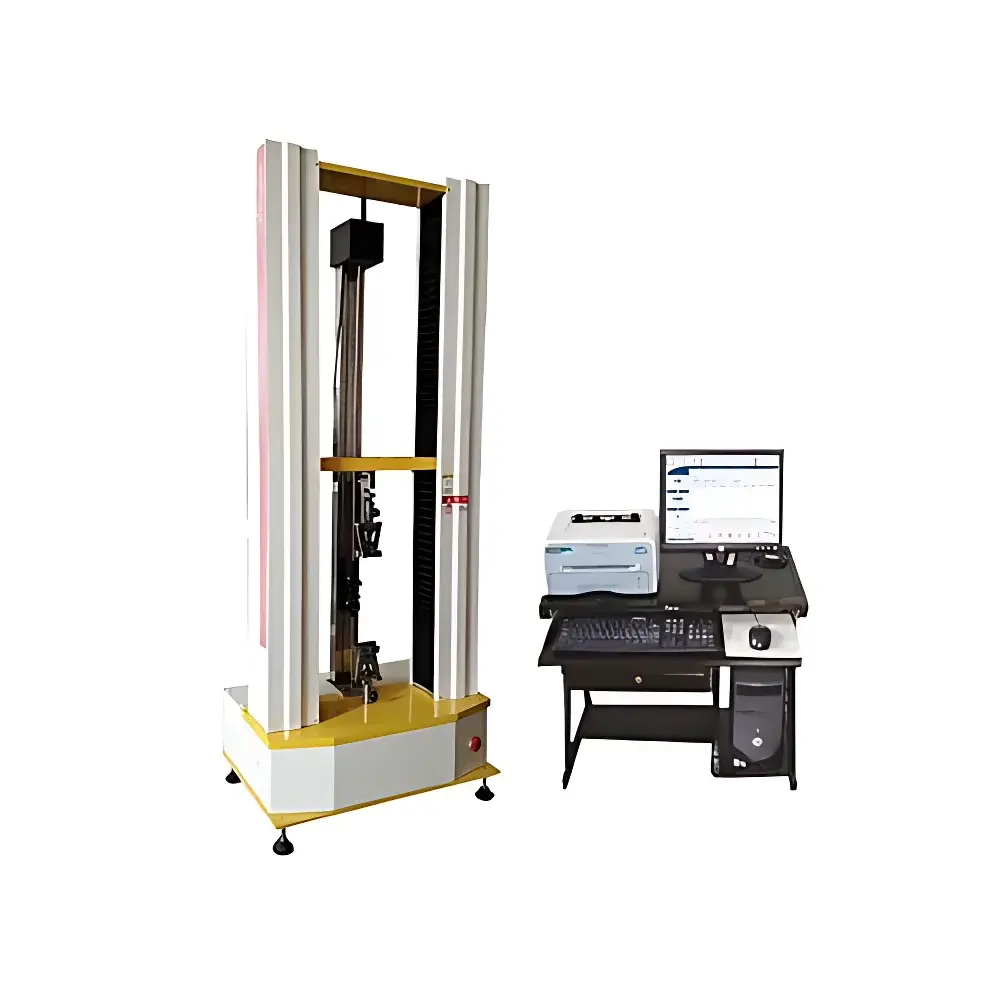
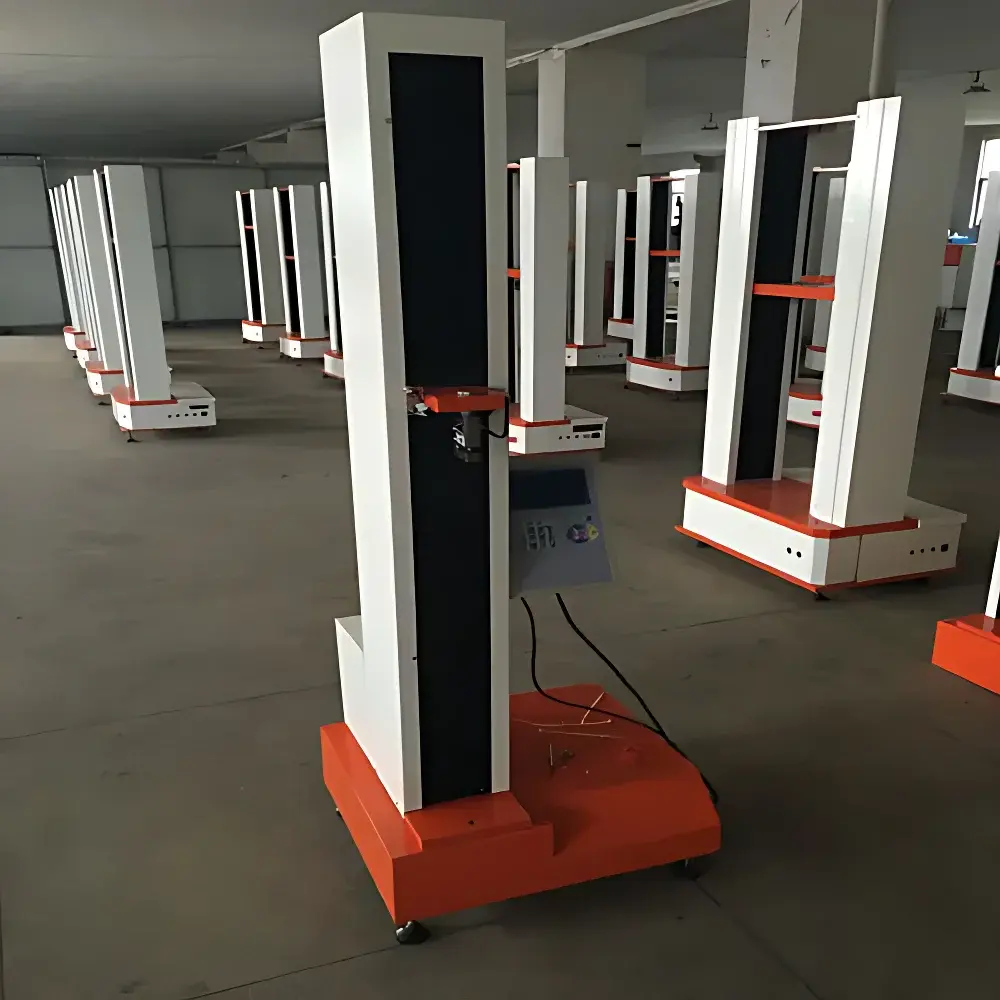
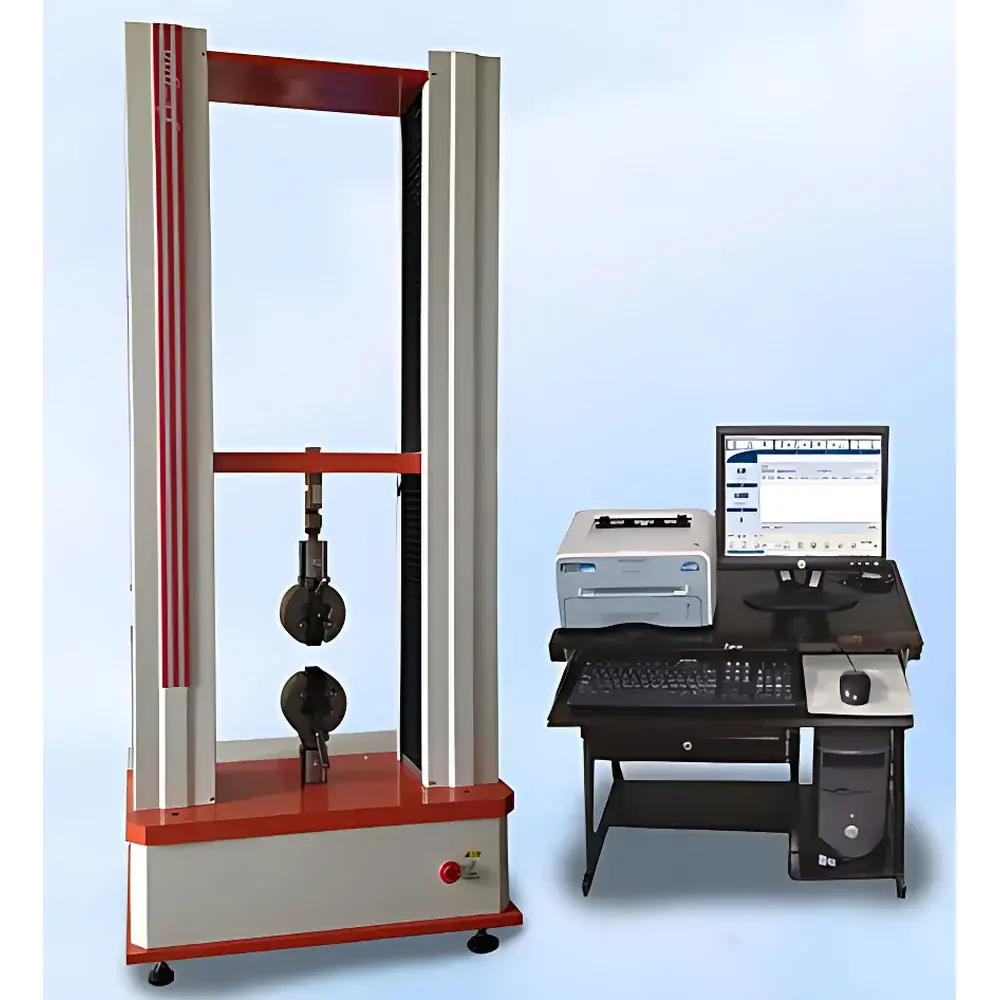
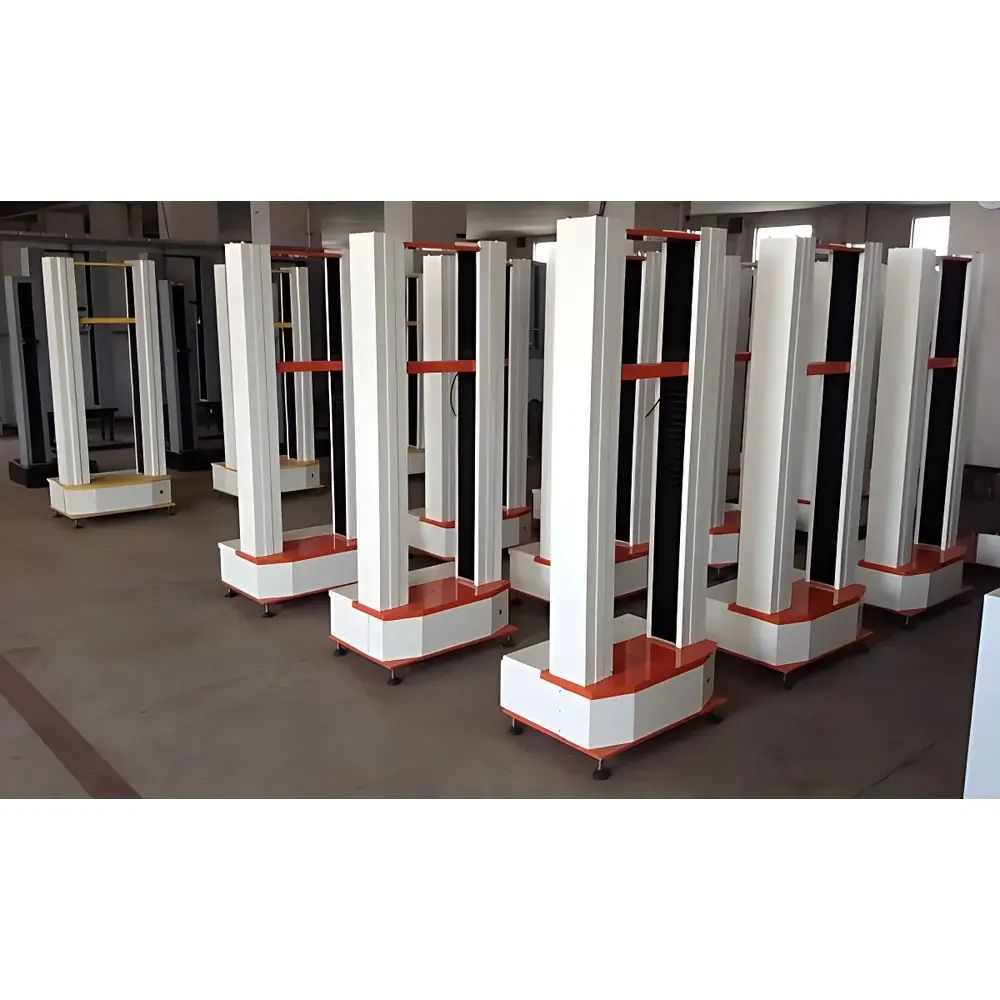
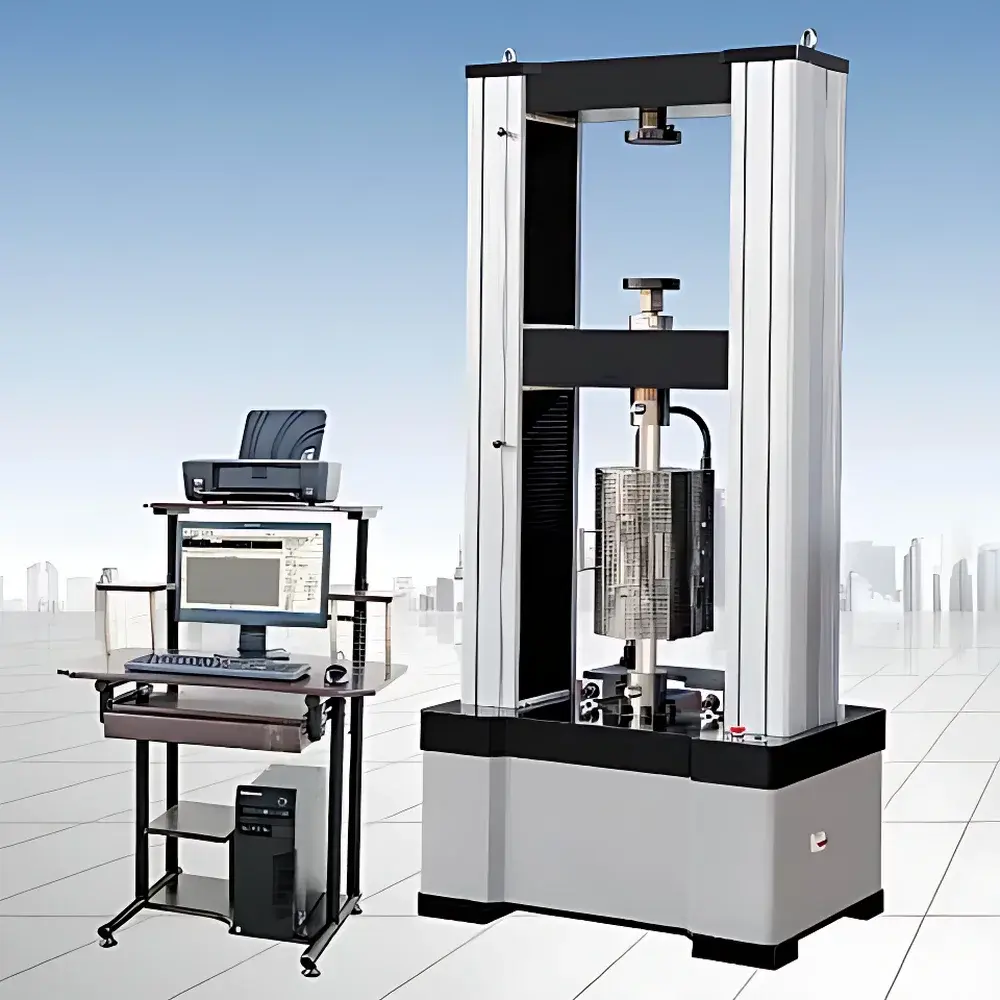
Beiguang Jingyi BWN-10N Electronic Tensile Testing Machine for Yarn and Filament Materials
| Brand | Beiguang Jingyi / All Precision Instrument |
|---|---|
| Origin | Beijing, China |
| Manufacturer Type | Direct Manufacturer |
| Product Category | Domestic (China-made) |
| Model | BWN-10N |
| Max Test Force | 100 N, 200 N, 500 N, 1000 N, 2000 N, 3000 N, 5000 N |
| Force Measurement Range | 2–100% of Full Scale (FS) |
| Force Accuracy | ≤ ±1% FS |
| Displacement Resolution | 0.01 mm |
| Crosshead Travel | 700 mm |
| Test Speed Range | 0.05–500 mm/min |
| Speed Accuracy | ≤ ±1% |
| Power Supply | AC 220 V ±10%, 50 Hz, 0.5 kW |
| Dimensions (W×D×H) | 400 × 400 × 1300 mm |
Overview
The Beiguang Jingyi BWN-10N Electronic Tensile Testing Machine is a precision-engineered instrument designed specifically for mechanical property evaluation of fine fibrous materials—including monofilaments, multifilament yarns, spun fibers, and textile strands—under uniaxial tension. Based on servo-controlled electromechanical actuation and high-fidelity load cell transduction, the system complies with fundamental principles of static tensile testing per ISO 6892-1, ASTM D5035 (Standard Test Method for Breaking Force and Elongation of Textile Fabrics), and GB/T 3923.1 (Chinese national standard for textile tensile properties). Its modular force capacity configuration (100 N to 5000 N) enables scalable application across R&D labs, QC departments in fiber manufacturing, and third-party certification laboratories requiring traceable, repeatable force-displacement data under controlled strain rates.
Key Features
- Modular dual-range load cell architecture supporting seven selectable full-scale capacities (100 N to 5000 N), each independently calibrated to ≤ ±1% FS accuracy per ISO 7500-1 Class 1 requirements.
- High-resolution displacement measurement system with 0.01 mm resolution and 700 mm effective test stroke, ensuring precise elongation tracking for low-elongation synthetic filaments and high-ductility natural fibers alike.
- Programmable crosshead speed control from 0.05 to 500 mm/min, with verified speed stability ≤ ±1% across the full range—critical for compliance with strain-rate-sensitive standards such as ASTM D2061 (for tire cord) and ISO 2062 (yarn tensile testing).
- Dual-axis mechanical alignment verification protocol compliant with ISO 6892-1 Annex C and GB/T 16491: includes dedicated coaxiality assessment using calibrated test specimens and deformation sensors to ensure <Φ2 mm/500 mm alignment tolerance—minimizing bending moment artifacts during yarn rupture.
- Integrated microprocessor-based controller with embedded A/D conversion, zero-drift compensation, and floating-point arithmetic; eliminates manual potentiometer adjustment and ensures long-term signal stability independent of line voltage fluctuation (±10% tolerance).
- Full-color LCD interface with PDA-style navigation keys, real-time graphical display of stress–strain curves, automatic peak detection, and on-device storage of up to 200 test records with timestamping and operator ID tagging.
Sample Compatibility & Compliance
The BWN-10N accommodates standardized specimen geometries defined in ISO 2062 (yarn clamping length 500 mm), ASTM D1445 (filament bundles), and GB/T 3923.1 (woven/knitted fabric strips). Optional pneumatic or wedge-action grips with serrated jaws are available for low-slip gripping of smooth monofilaments (e.g., PET, nylon 6, PP) and textured yarns. The system meets mechanical and metrological requirements of GB/T 16491 (Electronic Universal Testing Machines), GB/T 2611 (General Requirements for Testing Machines), and ISO 7500-1 (Static Calibration of Force Measuring Systems). It supports audit-ready documentation per GLP/GMP environments when paired with optional PC-based software enabling 21 CFR Part 11-compliant electronic signatures and audit trails.
Software & Data Management
While the embedded controller provides standalone operation, optional Windows-compatible software (BWN-DataLink v3.2) enables advanced post-test analysis—including modulus calculation at specified strain offsets (e.g., 0.1%, 2%), breaking tenacity (cN/tex), work-to-break integration, and statistical reporting (mean, SD, CV%) across batched samples. Raw ASCII data export (.csv) facilitates integration with LIMS platforms or MATLAB/Python-based custom modeling workflows. All calibration parameters—including load cell sensitivity, displacement encoder scaling, and speed correction factors—are digitally stored and password-protected to prevent unauthorized modification.
Applications
- Breaking strength and elongation-at-break determination for staple fiber yarns (cotton, wool, viscose) per GB/T 3923.1 and ISO 2062.
- Tensile property validation of industrial filaments used in tire cord (rayon, nylon 66), conveyor belts (aramid), and medical sutures (polyglycolic acid).
- Quality conformance testing of technical textiles including geotextiles (ISO 10319), filtration media (ISO 9073-3), and protective fabrics (EN ISO 13934-1).
- R&D evaluation of novel bio-based fibers (PLA, PHA) and recycled polyester blends under variable humidity and temperature conditions (when integrated with environmental chamber).
- Raw material acceptance testing per supplier specifications aligned with ASTM D5035, ASTM D2256 (single-yarn tester), and JIS L1013.
FAQ
What standards does the BWN-10N comply with for yarn tensile testing?
It fully supports GB/T 3923.1, ISO 2062, ASTM D5035, ASTM D2256, and JIS L1013 for single-yarn and fabric strip testing—including mandatory requirements for grip separation, extensometer use (if applicable), and data sampling frequency.
Can the machine perform cyclic loading or creep tests?
No—the BWN-10N is configured exclusively for static uniaxial tensile testing. For dynamic or time-dependent characterization (e.g., creep, stress relaxation), a servo-hydraulic or electrodynamic system with closed-loop strain control is recommended.
Is mechanical calibration traceable to national standards?
Yes—each unit ships with a factory calibration certificate traceable to CNAS-accredited reference standards (equivalent to ISO/IEC 17025), and field recalibration can be performed using certified deadweight sets per ISO 376.
What maintenance is required to sustain metrological integrity?
Monthly visual inspection of grip surfaces and lubrication of lead screws with lithium-based grease; annual verification of load cell linearity and displacement encoder accuracy using NIST-traceable reference artifacts.
Does the system support automated report generation for ISO/IEC 17025 accreditation?
When used with the optional BWN-DataLink software and configured with user role management, electronic signatures, and immutable audit logs, it satisfies documentation requirements for ISO/IEC 17025 Clause 7.8 and GLP Principle 5.



