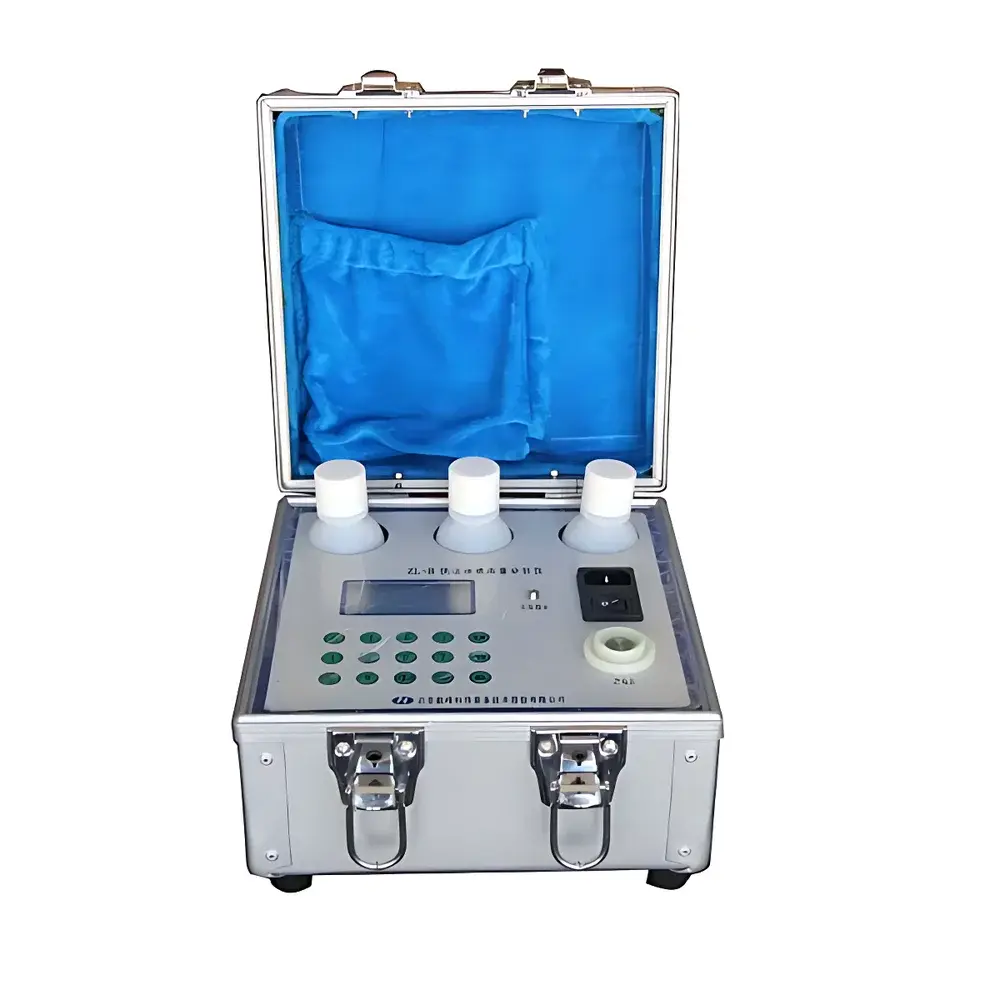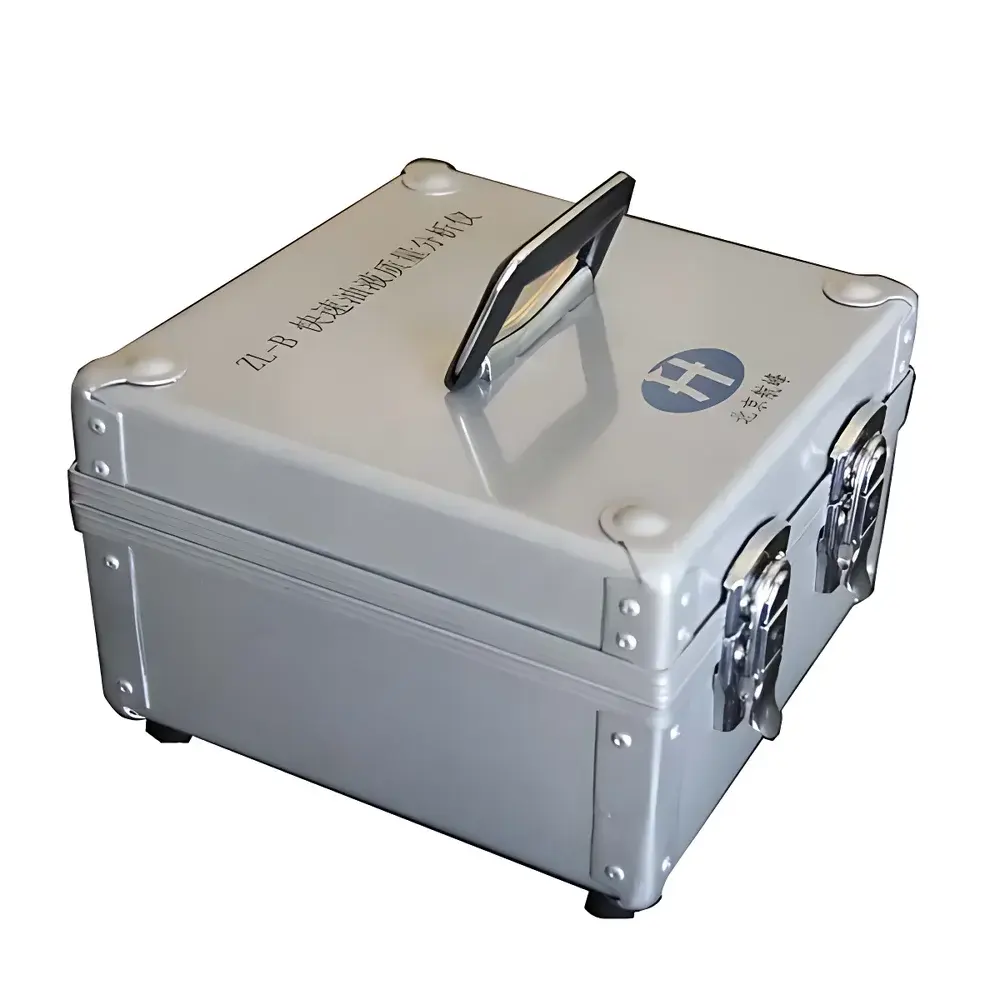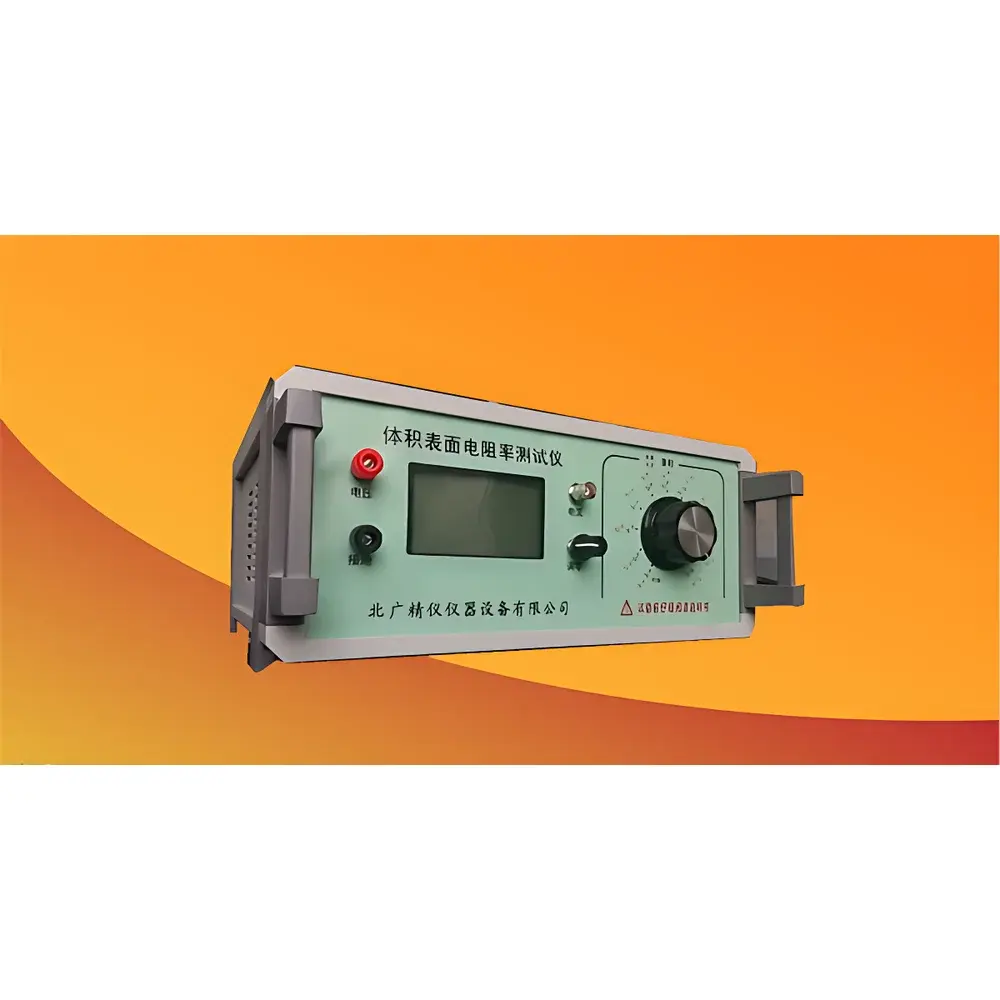
North Guang Precision Instruments BEST-121 Volume & Surface Resistivity Tester for Vulcanized Rubber
| Brand | North Guang Precision Instruments |
|---|---|
| Origin | Beijing, China |
| Manufacturer Type | Direct Manufacturer |
| Model | BEST-121 |
| Test Voltage Range | DC 10 V, 50 V, 100 V, 250 V, 500 V, 1000 V |
| Resistance Measurement Range | 1×10⁴ Ω to 1×10¹⁸ Ω |
| Current Measurement Range | 2×10⁻⁴ A to 1×10⁻¹⁶ A |
| Accuracy | ±1% (10⁴–10⁹ Ω), ±5% + 2 digits (10¹⁰–10¹¹ Ω), ±5% + 5 digits (10¹²–10¹³ Ω), ±10–15% + 5 digits (>10¹⁴ Ω) |
| Compliance | GB 4386-84, GB 6650-86, GB 1410, GB 10580 |
Overview
The North Guang Precision Instruments BEST-121 Volume & Surface Resistivity Tester is a precision digital instrument engineered for high-accuracy measurement of electrical resistivity in vulcanized rubber, elastomers, plastics, and other insulating or antistatic materials. Based on the constant-voltage, direct-current (DC) method with simultaneous dual-parameter acquisition, the system measures both resistance and current across a defined electrode configuration—enabling calculation of volume resistivity (ρ, in Ω·m) and surface resistivity (σₛ, in Ω/sq) per IEC 62631-3-1 and ASTM D257. The instrument employs a six-range programmable test voltage source (10 V to 1000 V DC), high-impedance input circuitry, and proprietary low-noise analog front-end design to ensure stable, low-drift readings over extended polarization periods. Its 18-decade resistance range (10⁴–10¹⁸ Ω) and sub-femtoampere current resolution (down to 1×10⁻¹⁶ A) make it suitable for characterizing both moderately conductive antistatic polymers and ultra-high-resistivity insulators—such as silicone rubber compounds, EPDM, nitrile, and halogen-free flame-retardant thermoplastics—under controlled environmental conditions.
Key Features
- Simultaneous digital display of resistance value and corresponding current magnitude—eliminating manual calculation and reducing operator error
- Six selectable DC test voltages (10 V, 50 V, 100 V, 250 V, 500 V, 1000 V) optimized for material-specific polarization behavior and compliance with GB 1410 and ASTM D257 test protocols
- Full-scale resistance range from 1×10⁴ Ω to 1×10¹⁸ Ω; current measurement range from 2×10⁻⁴ A to 1×10⁻¹⁶ A
- Integrated guard terminal architecture supporting three-electrode (ring-electrode) configurations for accurate volume resistivity determination—minimizing surface leakage and edge effects
- Auto-zeroing and residual charge discharge function to mitigate electrostatic interference and ensure repeatable baseline stability
- Compact benchtop form factor (280 × 245 × 120 mm), lightweight design (<2.5 kg), and low-power consumption for laboratory and QC floor deployment
Sample Compatibility & Compliance
The BEST-121 is validated for use with standardized geometries per national and international standards: two-electrode configurations for bulk resistance screening (e.g., footwear soles per GB 4386-84), concentric ring electrodes for surface resistivity (per IEC 61340-2-3), and guarded three-electrode fixtures for volume resistivity (per GB 1410 / ASTM D257). It supports testing of vulcanized rubber sheets (≥1 mm thickness), molded elastomeric components, conductive/antistatic flooring tiles (per GB 6650-86), and polymer films. Environmental preconditioning—per GB 10580—is required: samples must be conditioned at 23 °C ± 2 °C and 50 % RH ± 5 % for ≥48 h prior to measurement. All measurements shall be performed within a controlled environment (10–40 °C, 40–70 % RH), with specified electrification times (1 min for surface resistivity; up to 60 min for volume resistivity in high-resistivity materials). The instrument meets electromagnetic compatibility (EMC) requirements for Class II laboratory equipment and supports traceable calibration against NIST-traceable high-resistance standards.
Software & Data Management
While the BEST-121 operates as a stand-alone hardware instrument without embedded PC software, its analog output (0–2 V) and RS-232 interface enable integration into GLP-compliant data acquisition systems. When connected to validated third-party software (e.g., LabVIEW or custom Python-based DAQ platforms), users may implement full audit trails—including operator ID, timestamp, test voltage, electrification duration, ambient temperature/humidity logs, and raw resistance/current values—in accordance with FDA 21 CFR Part 11 requirements. All measurement results are stored in non-volatile memory with timestamp and parameter metadata. For GMP-regulated environments, external validation documentation (IQ/OQ/PQ) is supported through documented test protocols aligned with ISO/IEC 17025 and ASTM E2500.
Applications
- Quality control of vulcanized rubber products: verification of volume resistivity in automotive seals, conveyor belts, and cable insulation per ISO 3901 and GB/T 1692
- Compliance testing of antistatic footwear: verification of sole resistance (0.5×10⁵–1.0×10⁸ Ω for ESD-safe shoes; ≤1.5×10⁵ Ω for conductive footwear) per GB 4386-84
- Characterization of computer room flooring systems: point-to-point and point-to-ground resistance measurements per GB 6650-86
- Insulation integrity assessment of polymeric enclosures, gaskets, and medical device housings—supporting risk-based evaluation under ISO 14971
- Research-grade leakage current analysis: dark current measurement in photodetectors, OLED substrates, and dielectric thin films
FAQ
What electrode configuration should I use for volume resistivity measurement?
Use a three-electrode (guarded) fixture per GB 1410. The guard electrode surrounds the measuring electrode to divert surface leakage current away from the measurement path.
How long must samples be conditioned before testing?
Per GB 10580, preconditioning at 23 °C ± 2 °C and 50 % RH ± 5 % for minimum 48 hours is mandatory for reproducible volume resistivity results.
Can the BEST-121 measure resistivity above 10¹⁴ Ω?
Yes—by measuring current directly (e.g., 1.234 × 10⁻⁸ A at 1000 V) and applying Ohm’s Law (R = V/I), resistivity up to 10¹⁸ Ω is quantifiable with appropriate guarding and shielding.
Is calibration traceable to national standards?
Yes—calibration uses certified reference resistors traceable to CNAS-accredited laboratories, with full uncertainty budgets provided per ISO/IEC 17025.
Does the instrument support automated test sequences?
No built-in automation; however, RS-232 enables remote command control (SCPI-like syntax) and integration into automated test stands via external scripting.