
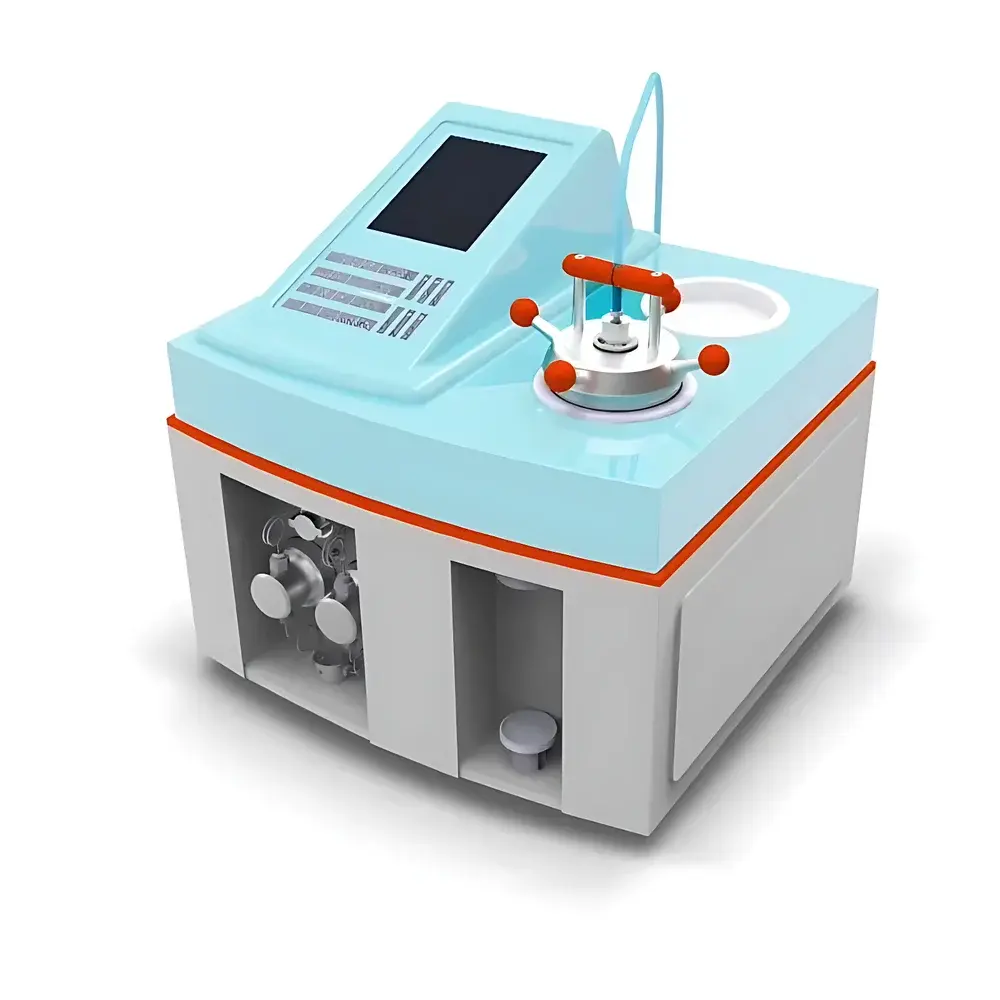
Shanghai Spectrum QSE-100 Automated Accelerated Solvent Extractor
| Brand | Shanghai Spectrum |
|---|---|
| Origin | Shanghai, China |
| Model | QSE-100 |
| Instrument Type | Solid-Liquid Extraction System |
| Sample Throughput | Up to 12 positions (standard configuration) |
| Operating Temperature Range | Ambient to 200 °C |
| Maximum System Pressure | 200 bar |
| Extraction Cell Volume Options | 1 mL, 5 mL, 10 mL, 22 mL, 34 mL, 66 mL, 100 mL |
| Typical Extraction Time per Sample | 12–25 min (including heat-up, static extraction, flush, and purge cycles) |
| Solvent Compatibility | Polar and non-polar organic solvents (e.g., hexane, acetone, methanol, dichloromethane), water, and solvent mixtures |
| Dimensions (W×D×H) | 580 mm × 620 mm × 650 mm |
| Net Weight | ~75 kg |
| Safety Compliance | CE-marked |
Overview
The Shanghai Spectrum QSE-100 Automated Accelerated Solvent Extractor is an engineered solid-liquid extraction platform that leverages elevated temperature and controlled pressure to enhance mass transfer kinetics between solvent and matrix. Based on the principle of accelerated solvent extraction (ASE®—a registered methodology aligned with ASTM D7699, EPA Method 3545A, and ISO 14507), the QSE-100 applies programmable heating (up to 200 °C) and hydraulic pressure (up to 200 bar) to reduce diffusion barriers in complex solid or semi-solid samples. This enables rapid, reproducible isolation of target analytes—including PAHs, PCBs, pesticides, pharmaceutical residues, lipids, and natural product compounds—while maintaining analyte integrity and minimizing thermal degradation. Unlike conventional Soxhlet or ultrasonic extraction, the QSE-100 operates via static-dynamic cycling: a defined volume of solvent is delivered under pressure, held at set temperature for a user-defined static phase, followed by automated cell flushing and nitrogen purging. Its modular architecture supports walk-away automation for unattended batch processing.
Key Features
- High-pressure, high-temperature extraction capability (0–200 bar, ambient–200 °C) with ±1 °C thermal stability and ±2 bar pressure regulation
- Multi-volume stainless-steel extraction cells (1–100 mL), precision-machined for leak-tight sealing and chemical resistance to aggressive solvents
- Independent fluidic pathways for extraction cell and collection vial—eliminating cross-contamination and enabling sequential solvent delivery
- Integrated safety subsystem including dual redundant pressure transducers, real-time thermal profiling, automatic emergency depressurization, and hardware-enforced door interlock
- Intuitive 7-inch capacitive touchscreen interface with preloaded method templates (EPA, ASTM, USP), customizable step sequencing, and audit-trail-enabled parameter logging
- Reduced solvent consumption (typically 15–30 mL per extraction vs. >200 mL in Soxhlet), lowering disposal costs, exposure risk, and downstream concentration time
Sample Compatibility & Compliance
The QSE-100 accommodates diverse sample matrices without homogenization pretreatment: soil, sediment, sludge, plant tissue, animal feed, pharmaceutical tablets, polymer composites, and food products (e.g., cereals, spices, oils). It complies with internationally recognized analytical frameworks including EPA SW-846 Methods 3545A and 3546, ASTM D7699-19 (Standard Guide for ASE), ISO 14507:2019 (Soil quality — Determination of organochlorine pesticides), and pharmacopeial guidelines (USP <2021>, Ph. Eur. 2.2.27). All system logs—including temperature/pressure profiles, solvent delivery volumes, cycle timestamps, and operator IDs—are timestamped and exportable in CSV format to support GLP/GMP documentation requirements and FDA 21 CFR Part 11 compliance when deployed with validated networked software.
Software & Data Management
The embedded control firmware supports method creation, scheduling, and remote monitoring via Ethernet or USB. Optional PC-based SpectrumExtrac™ software (v3.2+) provides advanced features: multi-instrument fleet management, electronic signature workflows, PDF report generation with embedded chromatograms (when coupled to HPLC/GC), and integration with LIMS via ASTM E1384-compliant data exchange. All extraction events are recorded with immutable metadata (user, date/time, method ID, cell ID, solvent lot, calibration status), ensuring full traceability for regulatory audits.
Applications
- Environmental labs: extraction of persistent organic pollutants (POPs) from contaminated soils and sediments prior to GC-MS analysis
- Food safety testing: determination of mycotoxins, pesticide residues, and fat-soluble vitamins in raw and processed commodities
- Pharmaceutical QC: dissolution testing support, excipient screening, and active ingredient recovery from solid dosage forms
- Petroleum geochemistry: asphaltene and resin fractionation from crude oil and bitumen samples
- Academic research: method development for green extraction optimization (e.g., ethanol/water blends, low-toxicity solvent systems)
FAQ
What extraction standards does the QSE-100 support out-of-the-box?
Preconfigured methods include EPA 3545A, ASTM D7699, ISO 14507, and USP <2021>, with editable parameters for custom validation.
Can the system handle corrosive solvents such as concentrated acids or halogenated media?
Yes—extraction cells and fluid paths utilize Hastelloy C-276 wetted materials and chemically resistant seals compatible with HCl, HF (dilute), TFA, and chlorinated solvents.
Is method transfer from legacy ASE instruments feasible?
Fully supported: identical pressure/temperature ramp profiles, static time definitions, and flush volumes ensure direct comparability with Thermo Dionex ASE™ or similar platforms.
How is calibration verified and documented?
Built-in pressure and temperature self-test routines generate calibration certificates; optional NIST-traceable external sensor verification kits are available for IQ/OQ protocols.
Does the system require external cooling or compressed air?
No external chiller required—the integrated thermoelectric cooler maintains safe ambient housing temperatures; nitrogen purge is supplied via standard lab-grade N₂ (≥99.998% purity, 6–8 bar supply).



