
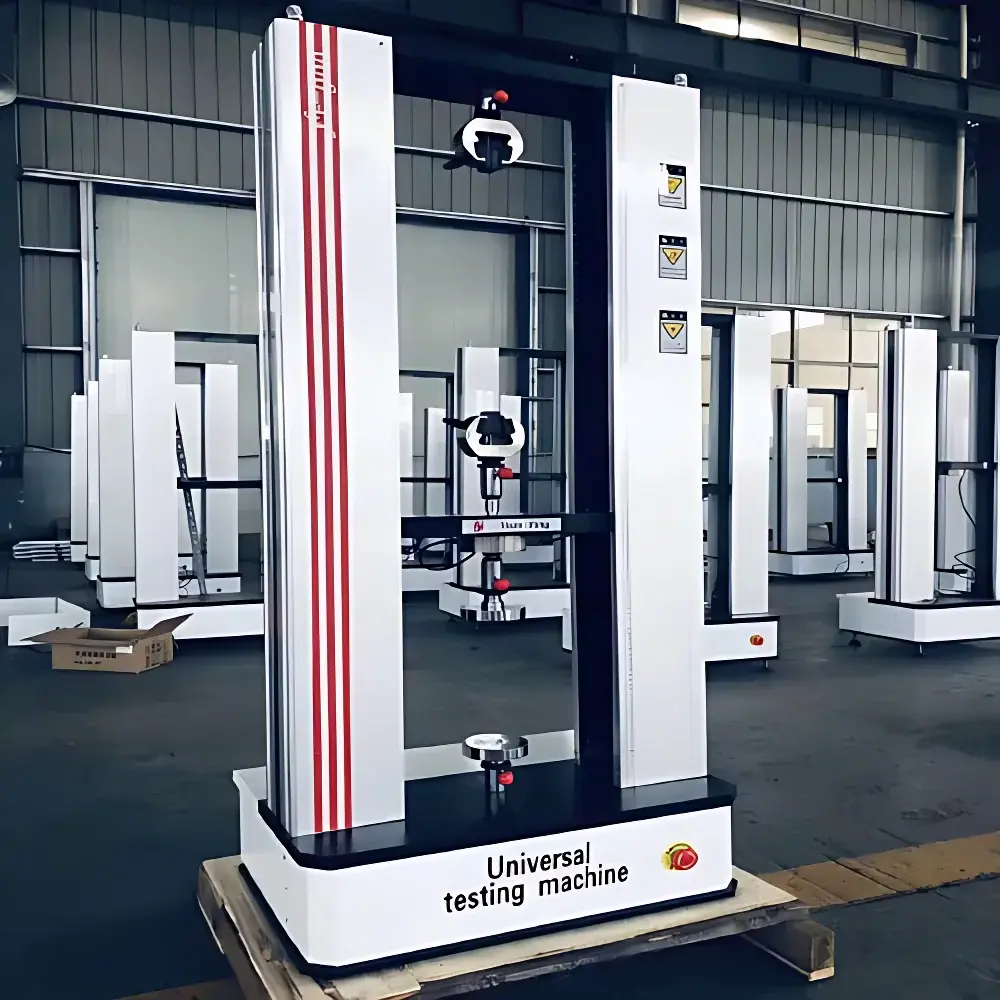
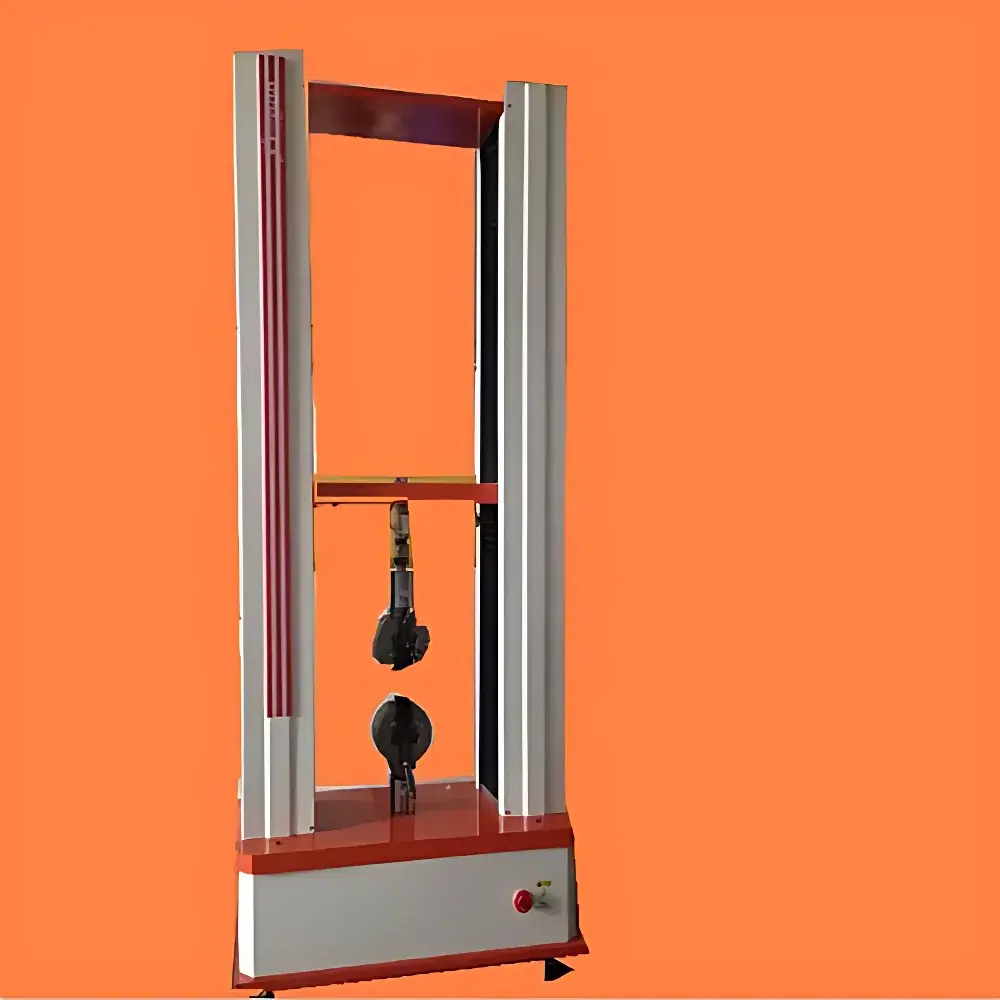
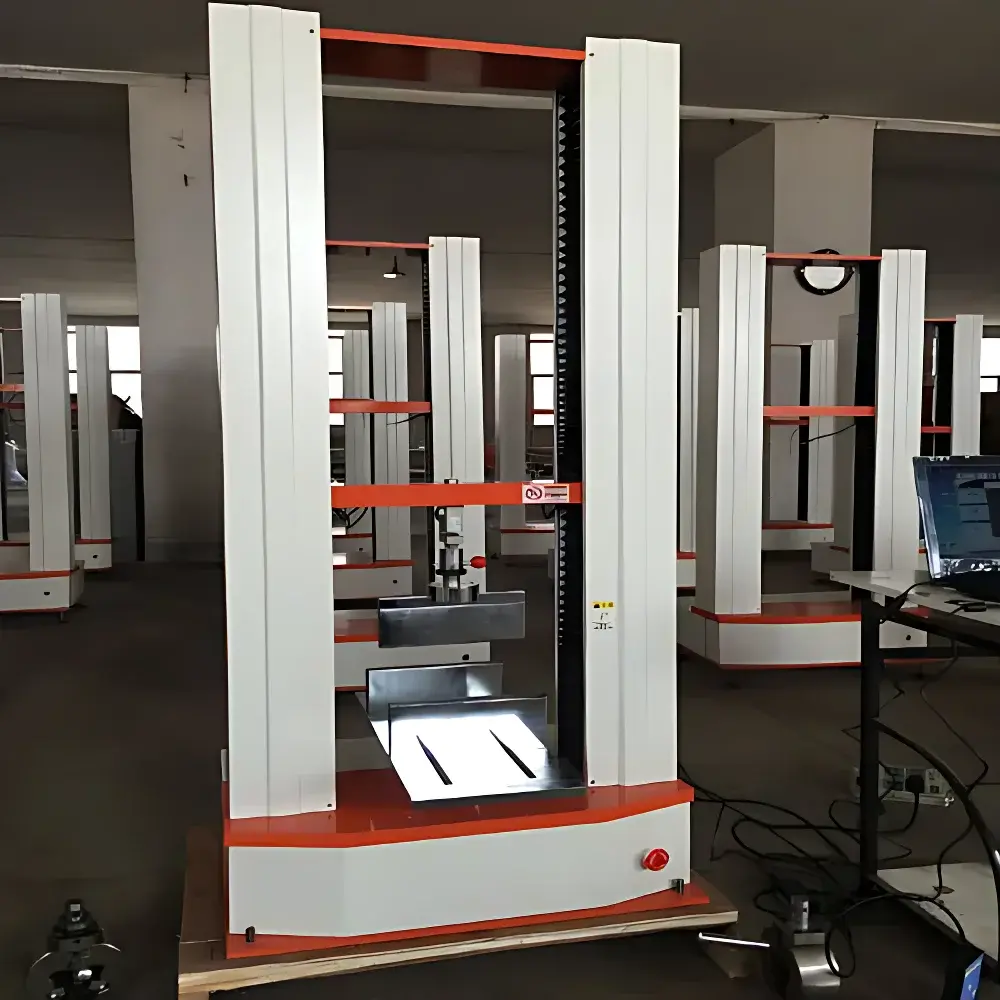
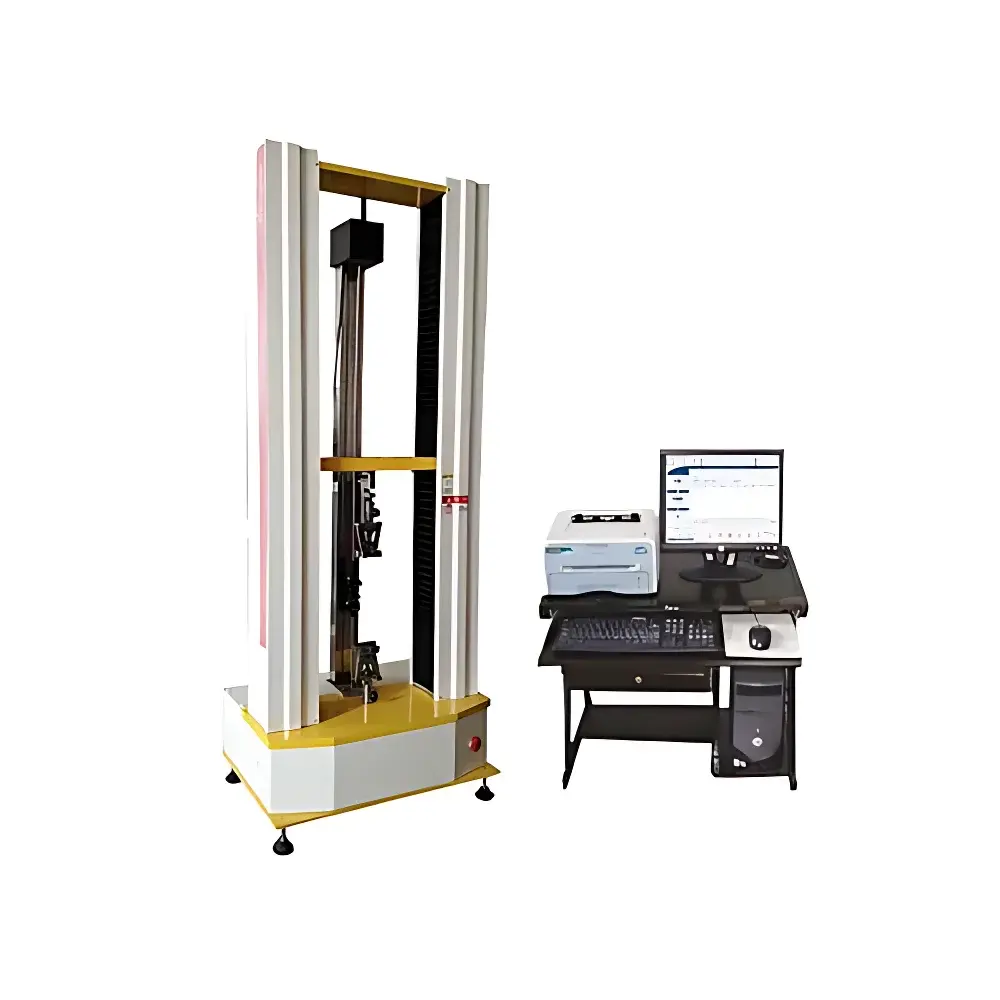
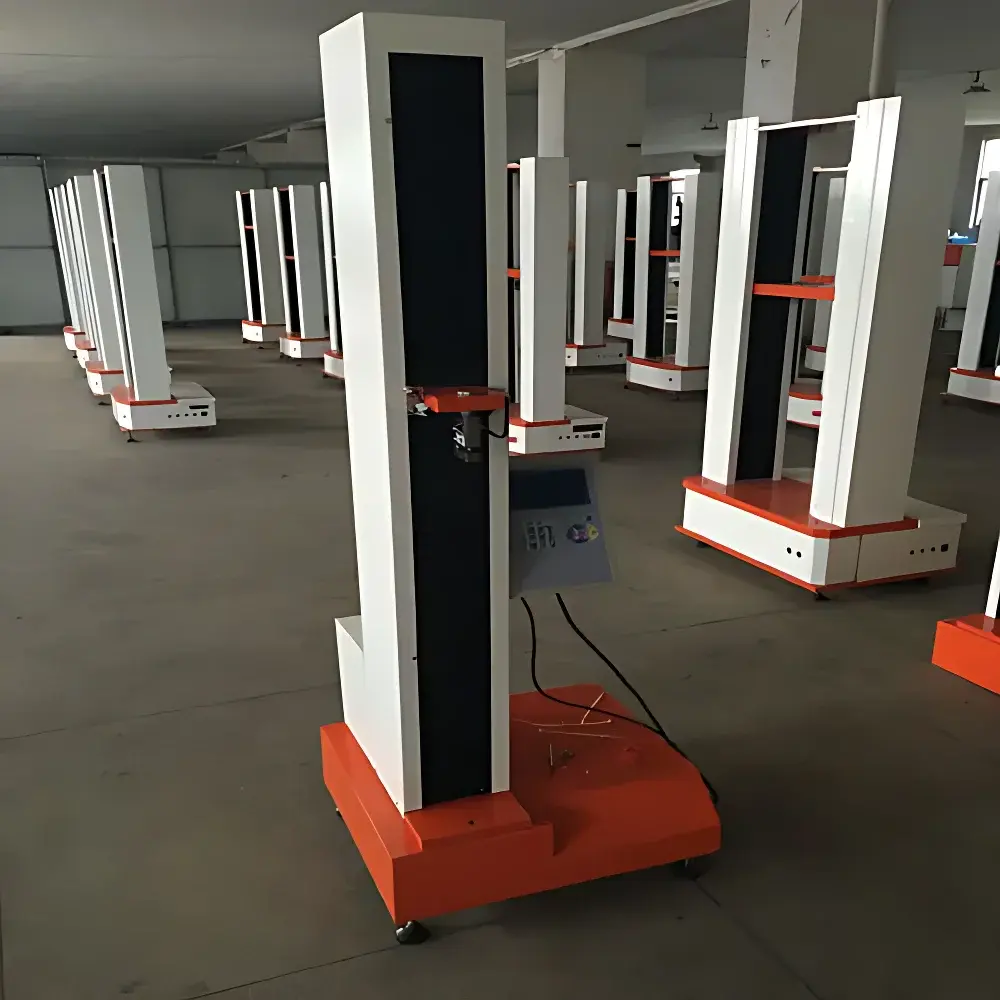
Beiguang Jingyi BWN-100N Electronic Universal Testing Machine for Rubber Tear Strength Measurement
| Brand | Beiguang Jingyi / All Precision Instrument |
|---|---|
| Origin | Beijing, China |
| Manufacturer Type | Manufacturer |
| Product Origin | Domestic (China) |
| Model | BWN-100N |
| Instrument Type | Electronic Universal Testing Machine |
| Maximum Test Force | 100 N |
| Force Measurement Accuracy Class | Class 1 (per GB/T 228.1 & ISO 6892-1) |
| Effective Force Range | 2–100% FS |
| Force Resolution | 1/300,000 full scale |
| Force Accuracy | ±1% of indicated value |
| Force Control Rate Range | 0.05–5% FS/s |
| Displacement Measurement Range | 0–999 mm |
| Displacement Resolution | 0.001 mm |
| Displacement Accuracy | ±1% of indicated value |
| Crosshead Speed Range | 0.05–500 mm/min (infinitely variable) |
| Power Supply | AC 220 V ±10%, 50 Hz, 0.5 kW |
| Weight | 120 kg |
| Operating Temperature | 10–35 °C |
| Relative Humidity | 30–85% RH |
Overview
The Beiguang Jingyi BWN-100N Electronic Universal Testing Machine is a precision-engineered system designed specifically for standardized tear strength evaluation of elastomeric materials—including natural rubber, synthetic rubbers (e.g., SBR, EPDM, NBR), thermoplastic elastomers (TPE), and vulcanized compounds—according to ASTM D624, ISO 34-1, GB/T 529, and other internationally recognized tear testing protocols. The instrument operates on the principle of controlled uniaxial tensile loading applied to notched specimens (e.g., Trouser, Angle, or Crescent geometries), with real-time acquisition of force-displacement data to determine tear resistance in units of kN/m or N/mm. Its load frame features a rigid dual-column architecture, servo-controlled crosshead actuation, and integrated high-stability load cell technology compliant with ISO 7500-1 Class 1 verification requirements. The system is calibrated traceably to national standards (GB/T 13634) using certified reference force instruments with ±0.1% accuracy, ensuring metrological integrity across its entire 100 N capacity range.
Key Features
- Class 1 force measurement accuracy per GB/T 228.1 and ISO 7500-1, validated across 2–100% of full scale (FS)
- High-resolution displacement sensing with 0.001 mm resolution and ±1% relative error, supporting precise crack propagation tracking
- Infinitely variable crosshead speed control (0.05–500 mm/min), enabling compliance with low-speed tear initiation and high-speed propagation test conditions
- Digital force indication with zero-point stabilization, auto-zeroing function, and real-time graphical display of load vs. displacement, load vs. time, and stress–strain curves
- Integrated hardware-based overload protection and sensor fault detection to prevent damage during specimen rupture or misalignment
- Preheat stabilization protocol: ≤30 min warm-up time; zero drift ≤ specified limits per GB/T 228.1 Annex F after 15 min operation
Sample Compatibility & Compliance
The BWN-100N accommodates standard rubber tear specimens per ASTM D624 (Trouser Tear), ISO 34-1 (Angle Tear), and GB/T 529 (Crescent Tear), with optional pneumatic or mechanical wedge-type grips for consistent clamping pressure and minimal slippage. Specimen thickness ranges from 1.0 to 6.0 mm; width tolerance conforms to ±0.1 mm per ISO 23529. The machine supports both dumbbell-shaped and notched configurations, and is compatible with extensometers (e.g., clip-on or video-based) meeting JB/T 6146–2007 Class 0.5 or Class 1 specifications for strain measurement. Full compliance includes adherence to GLP-relevant documentation practices, audit-ready calibration records, and traceable verification against national standard force instruments (GB/T 13634–2000). Mechanical alignment is verified using concentricity testers (±2% max error) and surface roughness gauges per ISO 4287, ensuring minimal bending moment during tear loading.
Software & Data Management
The Windows-based control and analysis software (compatible with Windows 2000 through Windows 10) provides fully automated test execution, real-time dynamic plotting, and post-test parametric reporting. It supports automatic storage of test parameters (gauge length, preload, speed), raw data streams (force, displacement, time), and derived metrics (tear strength, elongation at tear, energy to tear). Multi-curve overlay functionality enables comparative analysis of replicate specimens or material batches on a single graph. Reporting templates are customizable per user-defined formats and include embedded metadata (operator ID, calibration date, environmental conditions). The software enforces data integrity through timestamped audit trails, electronic signatures, and password-protected configuration changes—features aligned with FDA 21 CFR Part 11 readiness when deployed in regulated QC environments. All data exports comply with ASTM E1447 and ISO/IEC 17025 documentation requirements.
Applications
This testing system is routinely deployed in rubber compound development labs, tire manufacturing QA departments, conveyor belt producers, medical device elastomer suppliers, and academic polymer research facilities. Typical use cases include: evaluating the effect of filler type (e.g., carbon black vs. silica) and loading level on tear resistance; assessing aging-induced degradation after heat, ozone, or UV exposure per ASTM D573 and ISO 1431; validating batch-to-batch consistency in extruded or molded rubber profiles; supporting failure analysis of rubber seals and gaskets under dynamic loading; and generating input data for finite element modeling of crack propagation in viscoelastic media. The BWN-100N also serves as a platform for method development in emerging standards such as ISO 20028 (torn edge strength of rubber-coated fabrics).
FAQ
What tear test standards does the BWN-100N support?
It fully supports ASTM D624 (Trouser Tear), ISO 34-1 (Angle Tear), GB/T 529 (Crescent Tear), and JIS K6252, with configurable test profiles for each.
Can the system be used for non-rubber materials?
Yes—it is applicable to thin flexible polymers, elastomeric films, coated textiles, and soft composites where tear initiation and propagation behavior must be quantified within the 100 N force range.
Is external extensometry required for tear strength calculation?
No—the standard configuration calculates tear strength directly from peak force and specimen thickness; however, optional extensometers enable strain-controlled tear initiation studies per ISO 34-2.
How is calibration traceability maintained?
Calibration is performed using NIST-traceable or CNAS-accredited standard force instruments (±0.1% accuracy) and documented per ISO/IEC 17025 requirements, with certificates retained in the software audit log.
Does the software meet regulatory data integrity requirements?
The software includes role-based access control, electronic signatures, immutable audit trails, and exportable raw data files—supporting compliance with FDA 21 CFR Part 11 and EU Annex 11 in GMP environments.



