
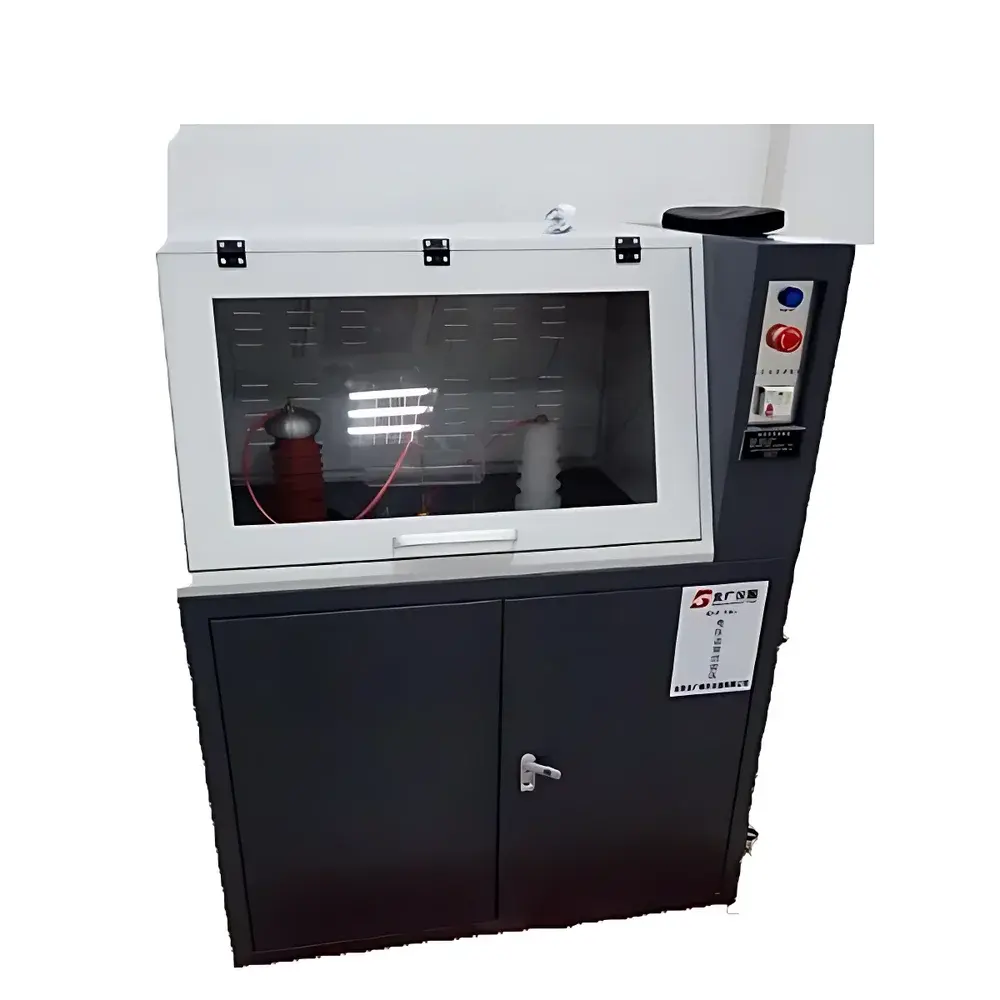
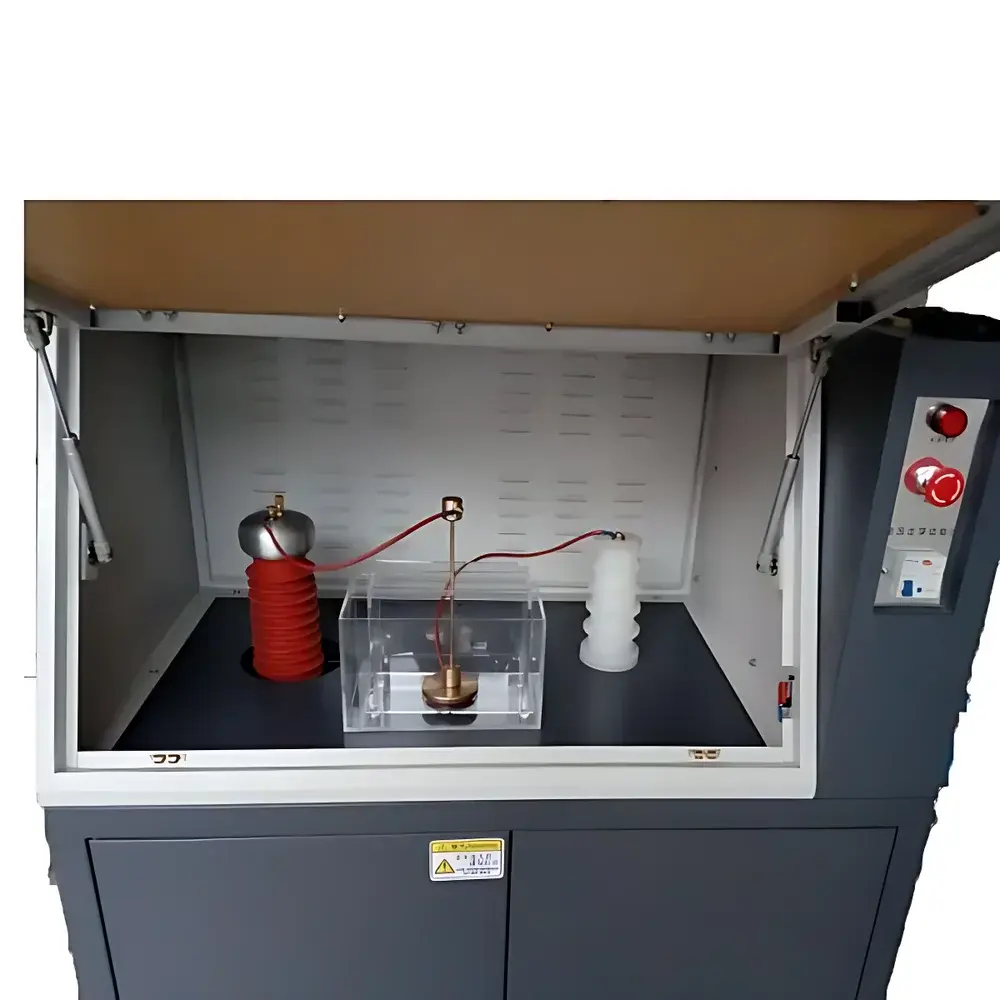
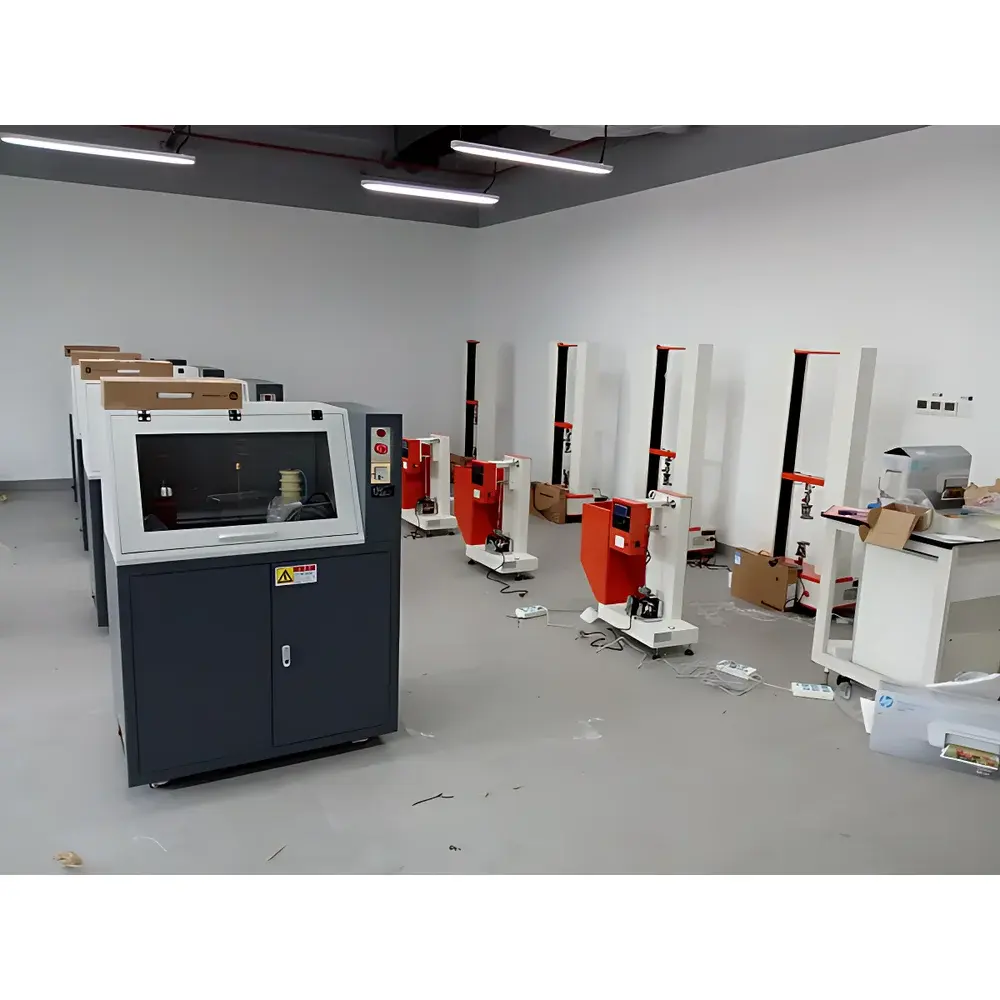
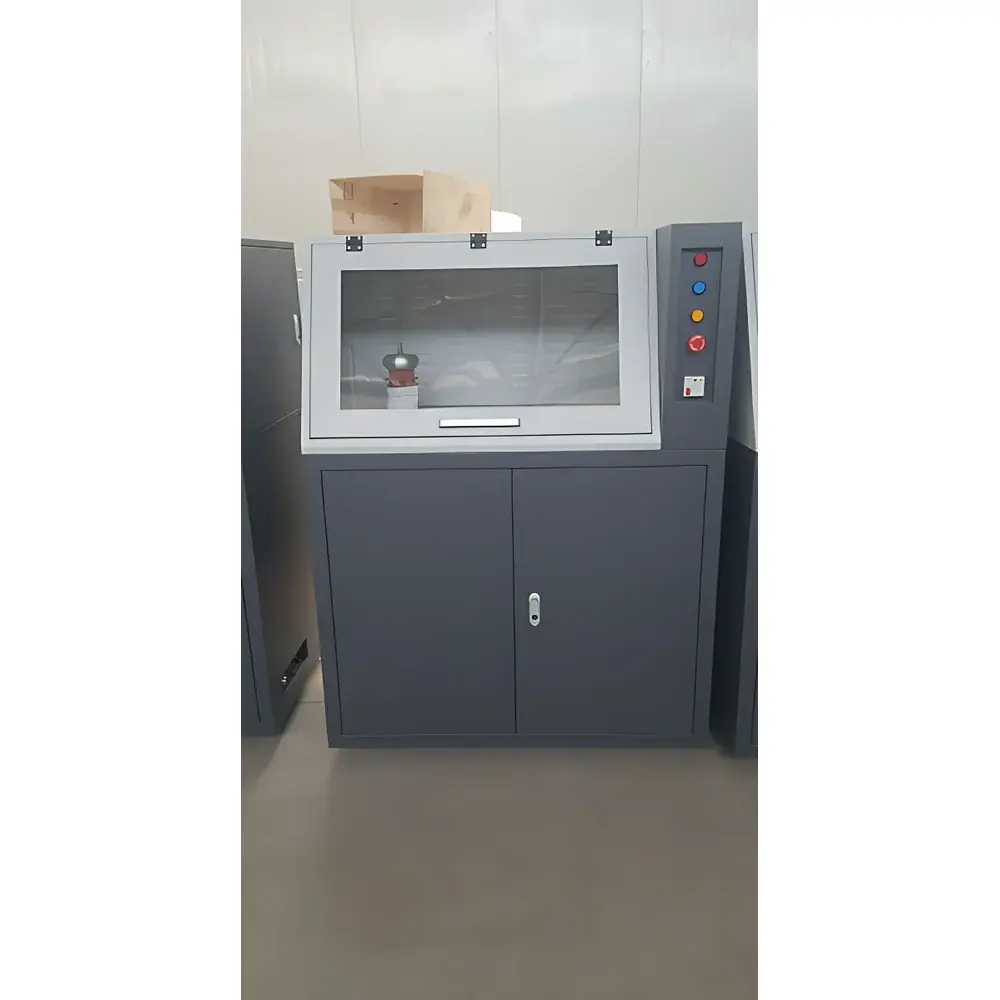
North Guang Precision BDJC-50KV Dielectric Breakdown Tester for Rubber and Solid Insulating Materials
| Brand | North Guang Precision Instrument |
|---|---|
| Origin | Beijing, China |
| Manufacturer Type | Direct Manufacturer |
| Voltage Output | AC 0–50 kV / DC 0–70 kV |
| Maximum Breakdown Voltage | 50 kV |
| Voltage Accuracy | ≤1% |
| Rise Rate Options | 100–3000 V/s (adjustable) |
| Compliance | ASTM D149, IEC 60243-1, GB/T 1408.1-2006 |
| Electrode Sets Included | Ø25 mm × 2, Ø75 mm × 1 (disk), tube electrodes set |
| Safety Interlocks | 6-level high-voltage cutoff system |
| Software | Windows-based control with real-time curve plotting, data export to Excel/Word, user access management, audit trail logging |
Overview
The North Guang Precision BDJC-50KV Dielectric Breakdown Tester is a fully automated, microprocessor-controlled high-voltage testing system engineered for precise determination of dielectric strength and voltage endurance in solid insulating materials—including natural and synthetic rubbers, elastomers, plastics, laminates, ceramics, glass, insulating varnishes, and composite dielectrics. Operating on the principle of controlled voltage ramping under standardized electrode configurations, the instrument measures the minimum electric field intensity (kV/mm) at which catastrophic electrical failure—characterized by conductive channel formation, carbonization, or mechanical fracture—occurs across a specimen under either AC (50/60 Hz) or DC stress. The system implements true electrostatic and thermal isolation via grounded shielded test chamber architecture, ensuring operator safety and measurement repeatability in compliance with international test standards. Its dual-mode capability (AC/DC), programmable rise rates, and integrated real-time waveform acquisition enable rigorous evaluation of both intrinsic material breakdown mechanisms (electronic, thermal, and electrochemical) and application-relevant performance under service conditions.
Key Features
- Full-range adjustable output: AC 0–50 kV / DC 0–70 kV, with continuous linear regulation eliminating traditional stepwise voltage grading
- Precision servo-motor-driven autotransformer for stable, jitter-free voltage ramping across 6 preset rise rates (100–3000 V/s), meeting ASTM D149 Annex A2 and IEC 60243-1 rapid-rise requirements
- Real-time oscillographic recording: Dynamic plotting of voltage vs. time during test; multi-color overlay support for comparative analysis of up to 16 sequential trials
- Comprehensive safety architecture: Six independent hardware interlocks—including door-safety switch, key-operated HV cutoff, zero-position reset lockout, current-limiting breaker, ground-fault detection, and DC discharge alarm
- Integrated discharge system: Built-in electrostatic discharge rod with copper sphere contact tip; automatic audible/visual alert until residual DC charge falls below 50 V
- High-fidelity measurement: Digitally sampled voltage feedback using precision resistive dividers and isolated analog-to-digital converters, delivering ≤1% full-scale accuracy per IEC 61000-4-30 Class A
- Continuous-duty design: Industrial-grade transformer and cooling system rated for unattended 24/7 operation without thermal derating or mandatory downtime
Sample Compatibility & Compliance
The BDJC-50KV accommodates standard and custom geometries per ISO 293, ASTM D149, and GB/T 1408.1-2006. Supplied electrode sets include two 25 mm diameter disk electrodes (for thin films and sheets), one 75 mm disk electrode (for bulk rubber compounds), and a matched tube-electrode pair for cylindrical specimens such as hoses and seals. Specimen thickness range: 0.1–10 mm (recommended); minimum surface area: 100 cm². Environmental conditioning is supported via optional humidity/temperature chambers (not included). The system conforms to electromagnetic compatibility (EMC) requirements per EN 61326-1 and functional safety principles aligned with IEC 61010-1. All test sequences, parameter logs, and result exports comply with FDA 21 CFR Part 11 electronic record integrity requirements when configured with timestamped audit trails and role-based user authentication.
Software & Data Management
The proprietary Windows-based control software provides full lifecycle test management: from protocol definition (AC/DC mode, ramp profile, hold duration, pass/fail criteria) through execution, visualization, and reporting. Each test session captures voltage, current, time, and derivative parameters (dV/dt, peak current magnitude) at ≥10 kHz sampling rate. Data is stored in encrypted SQLite databases with immutable metadata tags (operator ID, calibration status, environmental readings, electrode ID). Export functions support CSV, Excel (.xlsx), and Word (.docx) formats with customizable report templates—including ASTM-compliant summary tables, statistical summaries (mean, SD, CV%), and annotated breakdown curves. User permissions are enforced via hierarchical accounts (Administrator, Technician, Viewer), each with configurable access to calibration modules, historical archives, and report generation tools. Audit trail records all critical events—including parameter changes, manual aborts, and software updates—with SHA-256 hashing for forensic integrity verification.
Applications
This tester serves quality assurance laboratories in rubber compounding, automotive sealing systems, aerospace insulation manufacturing, medical device packaging validation, and power cable R&D. Typical use cases include: qualification of EPDM, silicone, nitrile, and fluoroelastomer formulations for high-voltage gaskets; comparative screening of nanofilled rubber composites for improved dielectric stability; accelerated aging studies correlating voltage endurance with thermal/oxidative degradation; verification of conformal coating integrity on PCB assemblies; and compliance testing of insulating boots, mats, and gloves per ASTM F1506 and IEC 60903. Its ability to distinguish between intrinsic (electric-field-driven) and extrinsic (defect-mediated) breakdown enables root-cause analysis of field failures in rotating machinery insulation and EV battery module barriers.
FAQ
What standards does the BDJC-50KV support out-of-the-box?
ASTM D149 (Standard Test Method for Dielectric Breakdown Voltage of Solid Electrical Insulating Materials), IEC 60243-1 (Electrical Strength of Insulating Materials – Part 1: Tests at Power Frequencies), and GB/T 1408.1-2006 (Method of Test for Electric Strength of Solid Insulating Materials). Custom test protocols can be scripted upon request.
Can the system perform step-stress (staircase) and withstand (hold-time) tests?
Yes. Three test modes are embedded: (1) Ramp-to-failure, (2) Step-stress (programmable voltage increments and dwell times), and (3) Constant-voltage endurance (up to 8 hours with auto-termination on breakdown or leakage current threshold exceedance).
Is remote operation or network integration possible?
The system supports TCP/IP communication via Ethernet port. OPC UA and Modbus TCP drivers are available as optional add-ons for integration into MES/SCADA environments.
How is calibration traceability maintained?
Voltage and current sensors are calibrated annually against NIST-traceable reference standards (Fluke 8508A, Keysight B2902B). Calibration certificates, including uncertainty budgets and as-found/as-left data, are stored within the software’s secure archive.
Does the instrument meet GLP/GMP documentation requirements?
When operated with enabled audit trail, electronic signatures, and locked-down report templates, the system satisfies core GLP (21 CFR Part 58) and GMP (21 CFR Part 211) data integrity expectations for regulated pharmaceutical and medical device testing labs.



