
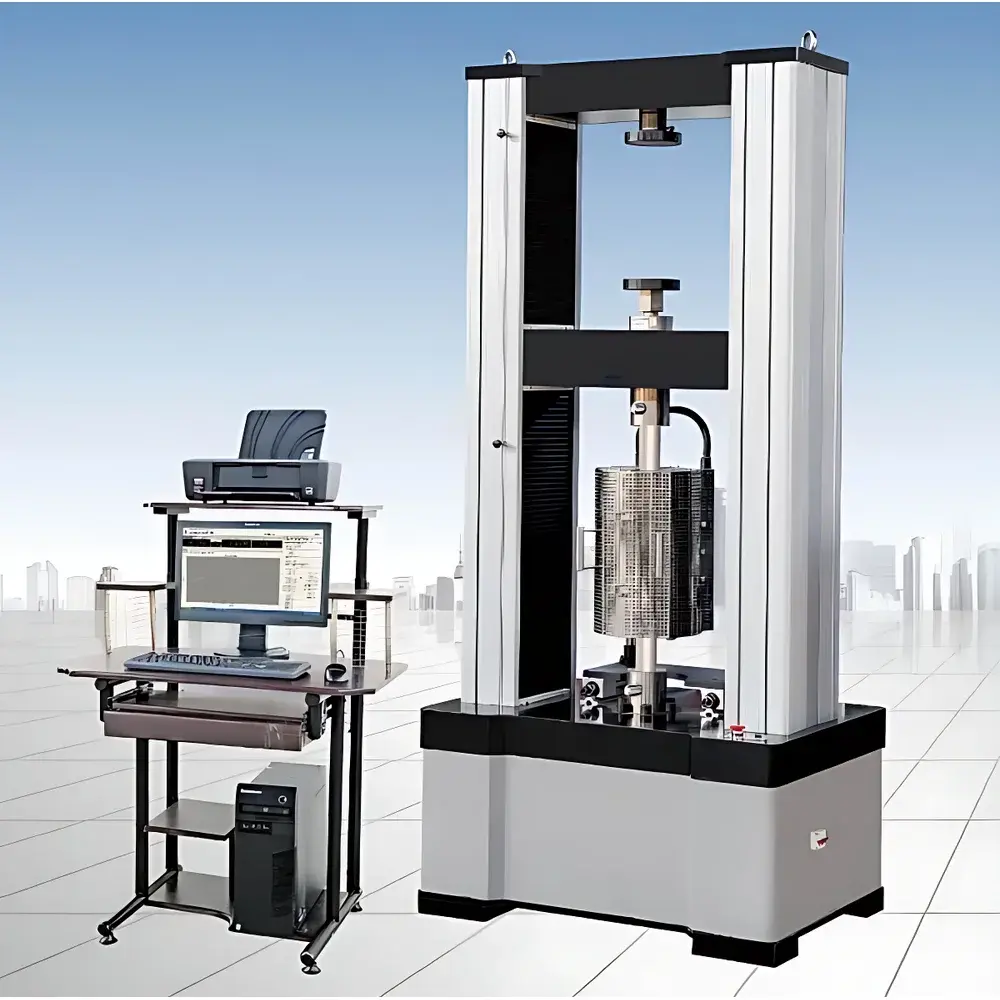
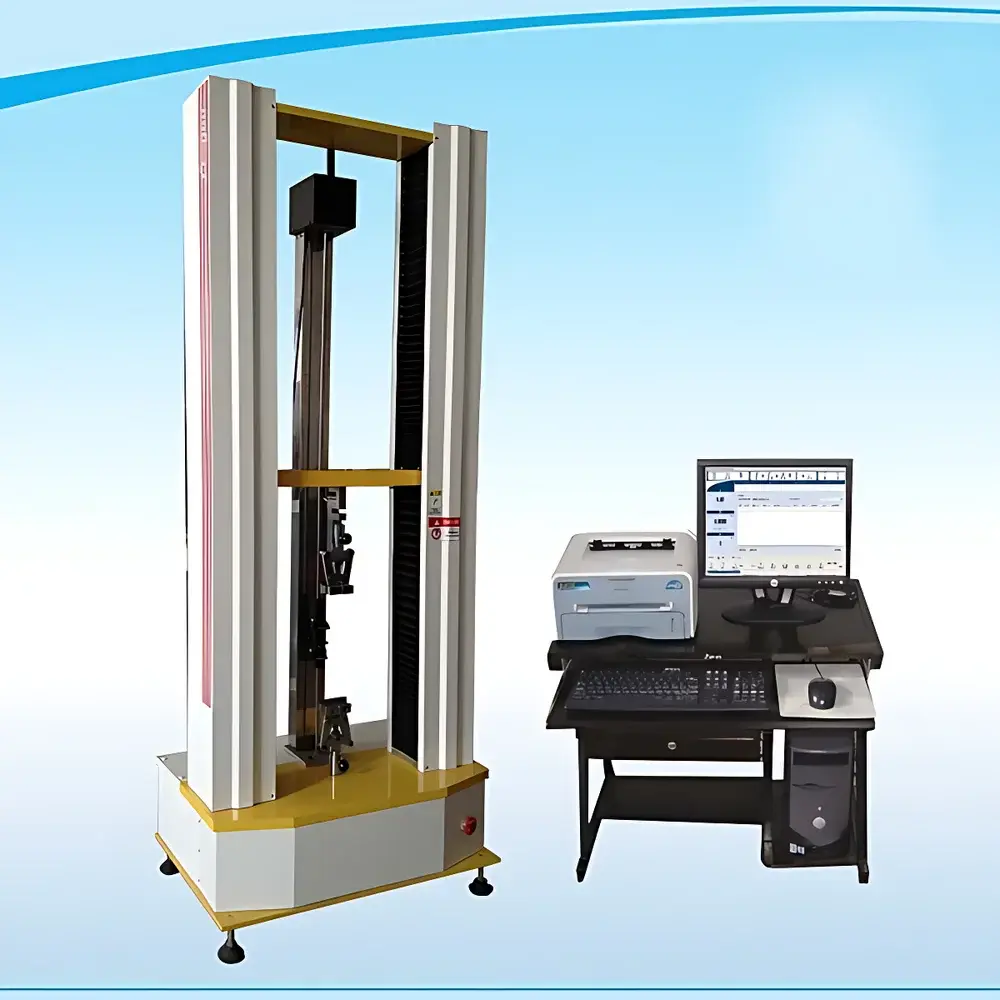
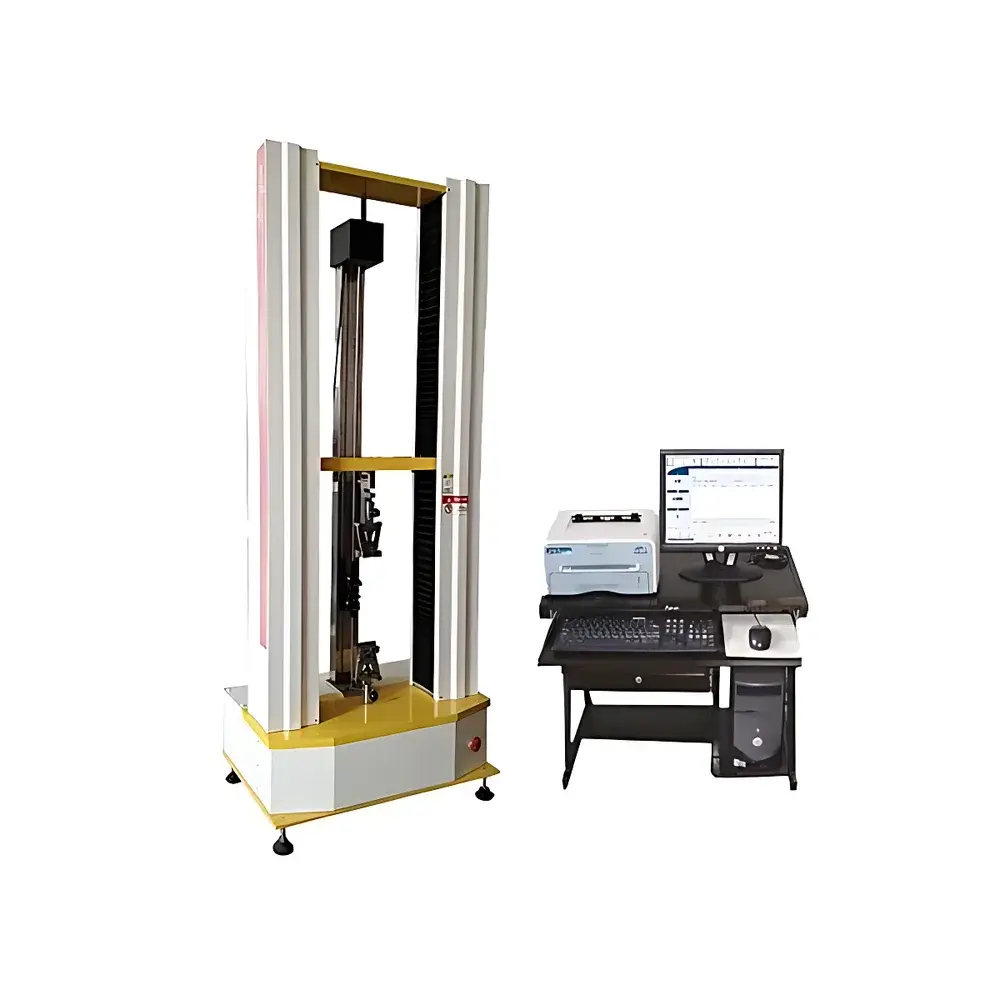
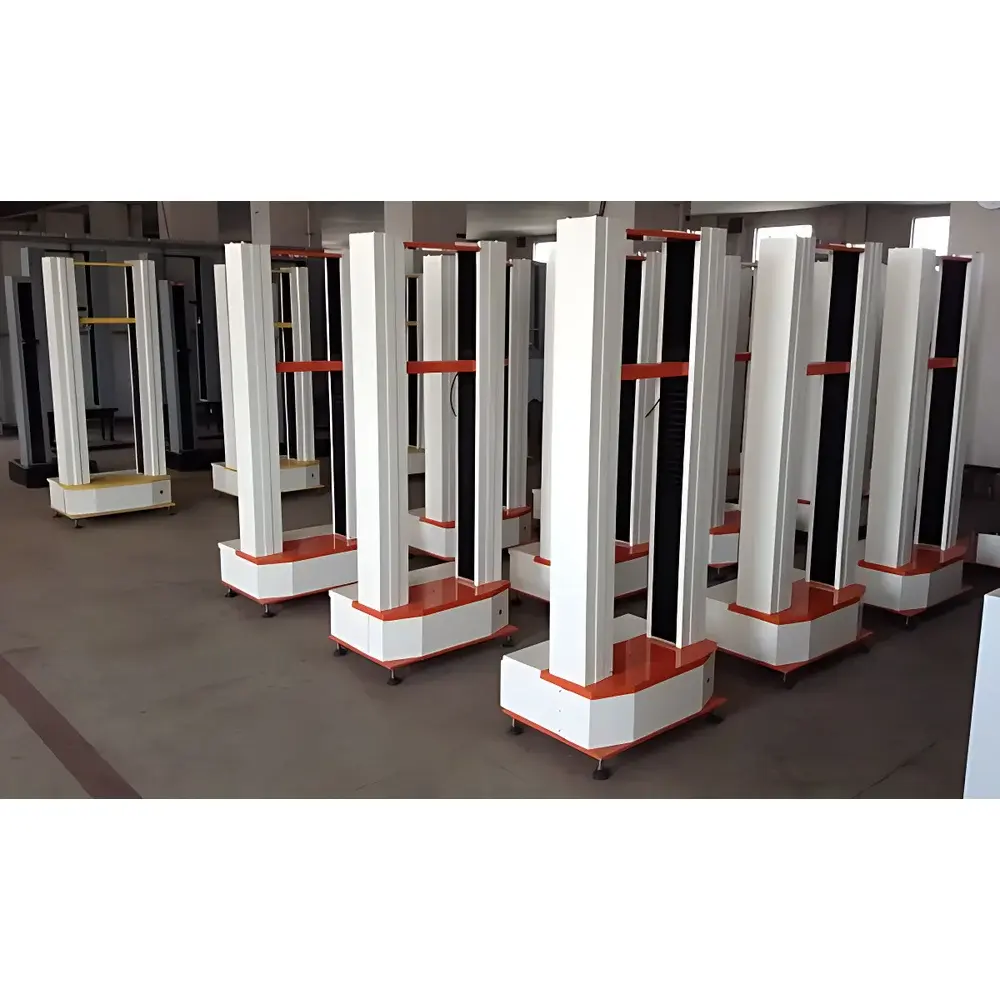
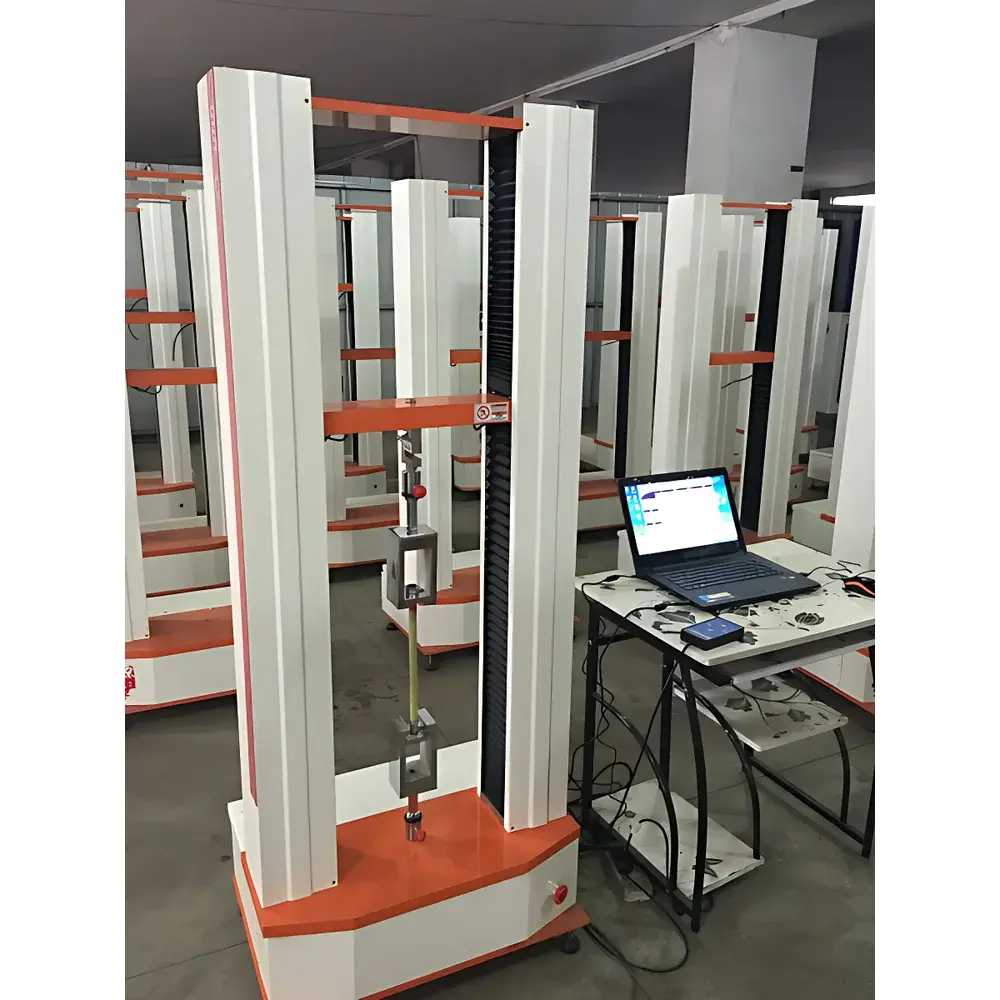
Beiguang Jingyi BWN Series Electronic Tensile Testing Machine for Fiber Materials
| Brand | Beiguang Jingyi / All Precision Instrument |
|---|---|
| Origin | Beijing, China |
| Manufacturer Type | Direct Manufacturer |
| Instrument Type | Electronic Tensile Testing Machine |
| Model | BWN |
| Maximum Test Load | 6000 kN |
| Force Measurement Range | 1%–100% FS |
| Force Accuracy | ±1% of reading |
| Crosshead Travel | 1 mm |
| Displacement Resolution | 1 mm |
| Force Resolution | 1/300,000 of full scale |
| Speed Range | 0.05–500 mm/min (infinitely variable) |
| Speed Accuracy | ±1% of set value |
| Displacement Measurement Accuracy | ±1% of reading |
| Effective Tensile/Compression Space | 700 mm (customizable) |
| Effective Test Width | 400 mm (customizable) |
| Operating Temperature | 10–35 °C |
| Relative Humidity | 20–80% RH |
Overview
The Beiguang Jingyi BWN Series Electronic Tensile Testing Machine is a precision-engineered mechanical testing system designed specifically for the quantitative mechanical characterization of fibrous materials—including synthetic fibers, natural fibers, nonwovens, yarns, filaments, geotextiles, and fiber-reinforced composites. It operates on the principle of uniaxial static tensile loading in accordance with standardized force-displacement transduction, utilizing high-precision load cells, optical encoder-based displacement sensing, and closed-loop servo-controlled electromechanical actuation. The system complies with international mechanical testing standards including ISO 37, ASTM D412, ASTM D5035, GB/T 3923.1, and ISO 1798, enabling traceable, repeatable, and auditable measurements required for R&D, quality control, and regulatory documentation in textile, polymer, biomedical, and composite material laboratories.
Key Features
- Robust dual-column or single-arm structural configuration, optimized for axial alignment and lateral rigidity during high-load fiber tensile testing up to 6000 kN.
- High-resolution force measurement system with ±1% accuracy across 1–100% of full scale (FS), supported by a 1/300,000 internal resolution analog-to-digital converter.
- Variable-speed crosshead drive with infinitely adjustable test speeds from 0.05 to 500 mm/min, maintaining ±1% speed fidelity under dynamic load conditions.
- Integrated high-precision ball-screw transmission and arc-synchronous timing belt reduction system ensuring minimal backlash and long-term positional repeatability.
- Optical encoder-based displacement measurement with 0.001 mm resolution and ±1% linearity over 0–999 mm travel range.
- Comprehensive suite of standardized fixtures—including pneumatic, wedge-type, and self-tightening grips—designed for secure clamping of low-modulus, high-slippage fiber specimens without premature slippage or jaw-induced failure.
Sample Compatibility & Compliance
The BWN series accommodates a broad spectrum of fibrous geometries: monofilaments (diameter ≥ 10 µm), multifilament yarns (linear density 10–10,000 dtex), woven/nonwoven fabrics (grammage 10–1000 g/m²), braided cords, and fiber-matrix composites. Specimen gripping is adaptable via interchangeable jaw profiles (flat, serrated, rubber-coated) and optional environmental chambers (not included) for humidity- or temperature-controlled testing per ISO 554 or ASTM D618 conditioning protocols. The instrument satisfies mechanical verification requirements of ISO 7500-1 (Class 1), ISO 5893 (displacement and speed), and GB/T 16491 (Chinese national standard for universal testing machines). Full compliance documentation—including factory calibration certificates traceable to NIM (National Institute of Metrology, China)—is provided with each unit.
Software & Data Management
The Windows-based control and analysis software supports multilingual UI (English/Chinese), GLP-compliant audit trails, and 21 CFR Part 11–ready electronic signatures when deployed with validated IT infrastructure. Core functionalities include real-time plotting of load–displacement, stress–strain, load–time, and extension–time curves; automatic peak detection and hold; multi-curve overlay for inter-batch comparison; dynamic auto-scaling of axes; and customizable report generation compliant with ISO 10360 and ASTM E29. Test parameters (gauge length, preload, break criteria, rate transitions) are stored with metadata (operator ID, timestamp, environmental log) and exportable in CSV, PDF, or XML formats. Software updates are provided free-of-charge for the lifetime of the instrument, with version-controlled release notes and validation support packages available upon request.
Applications
This system delivers quantitative mechanical data essential for fiber development and quality assurance workflows: tensile strength and modulus determination per ASTM D3822; elongation at break and yield point identification for elastomeric fibers; tear resistance evaluation (ASTM D1117); peel adhesion and bond strength assessment of laminated fiber structures; creep and relaxation profiling under sustained load; and cyclic loading fatigue analysis for technical textiles. It is routinely deployed in ISO/IEC 17025-accredited textile testing labs, polymer R&D centers, academic fiber science programs, and medical device manufacturers validating suture tensile performance per USP . The platform also supports custom method development for emerging applications such as electrospun nanofiber mats, biodegradable cellulose derivatives, and carbon nanotube-reinforced yarns.
FAQ
Does the BWN series comply with ISO/IEC 17025 calibration requirements?
Yes—the system includes factory calibration certificates traceable to national metrological standards, and all critical subsystems (load cell, encoder, speed controller) are calibrated in accordance with ISO/IEC 17025 clause 6.5.
Can the software generate reports compliant with FDA 21 CFR Part 11?
Yes—when installed on a validated Windows domain environment with role-based access control, electronic signatures, and audit trail logging enabled, the software meets baseline Part 11 technical controls.
Is environmental chamber integration supported?
Yes—the machine frame includes standardized mounting interfaces and I/O ports compatible with third-party temperature/humidity chambers meeting ASTM D618 and ISO 291 conditioning specifications.
What maintenance intervals are recommended for long-term accuracy?
Load cell verification and encoder alignment checks are recommended annually; lubrication of ball screws and inspection of grip surfaces every 6 months; full mechanical recalibration every 24 months or after 10,000 test cycles.
Are test method templates preloaded for common fiber standards?
Yes—the software ships with validated templates for ASTM D412, ISO 37, GB/T 3923.1, and ISO 13934-1, including automatic calculation of breaking tenacity (cN/tex), initial modulus, and work-to-break.



