
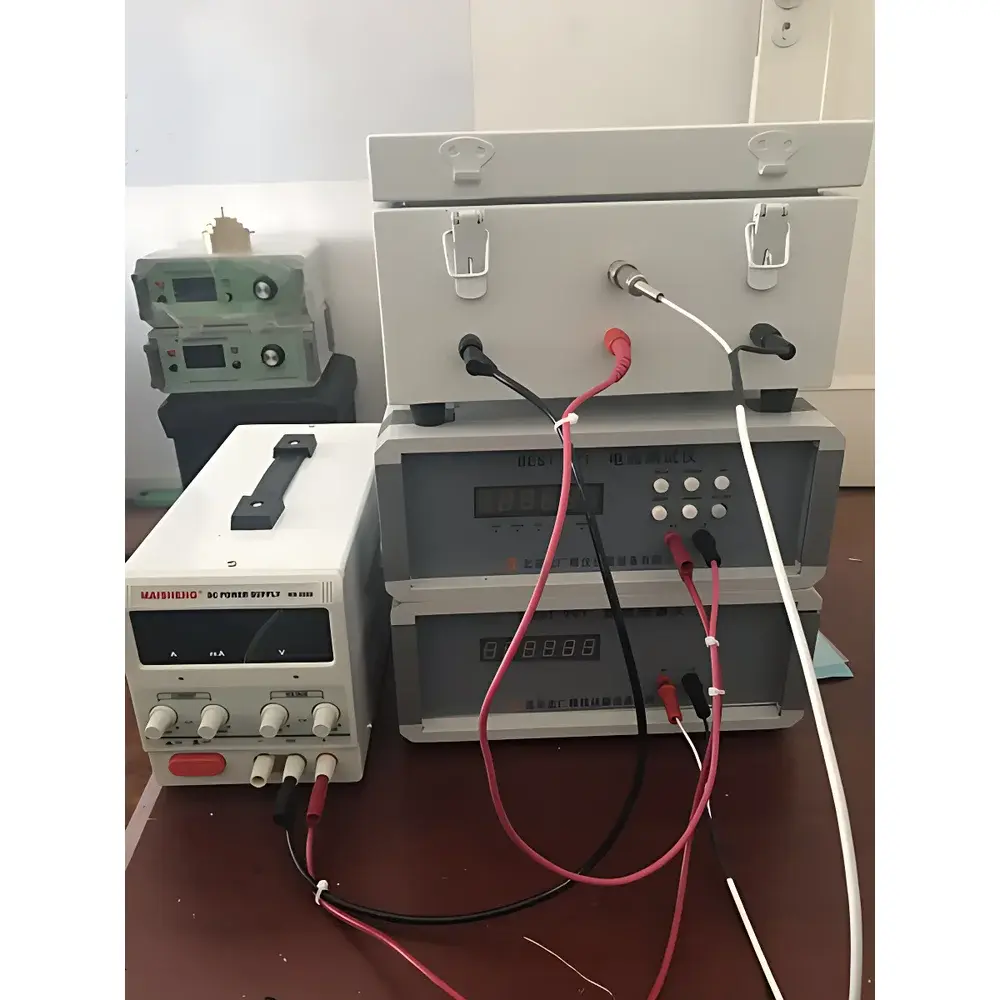
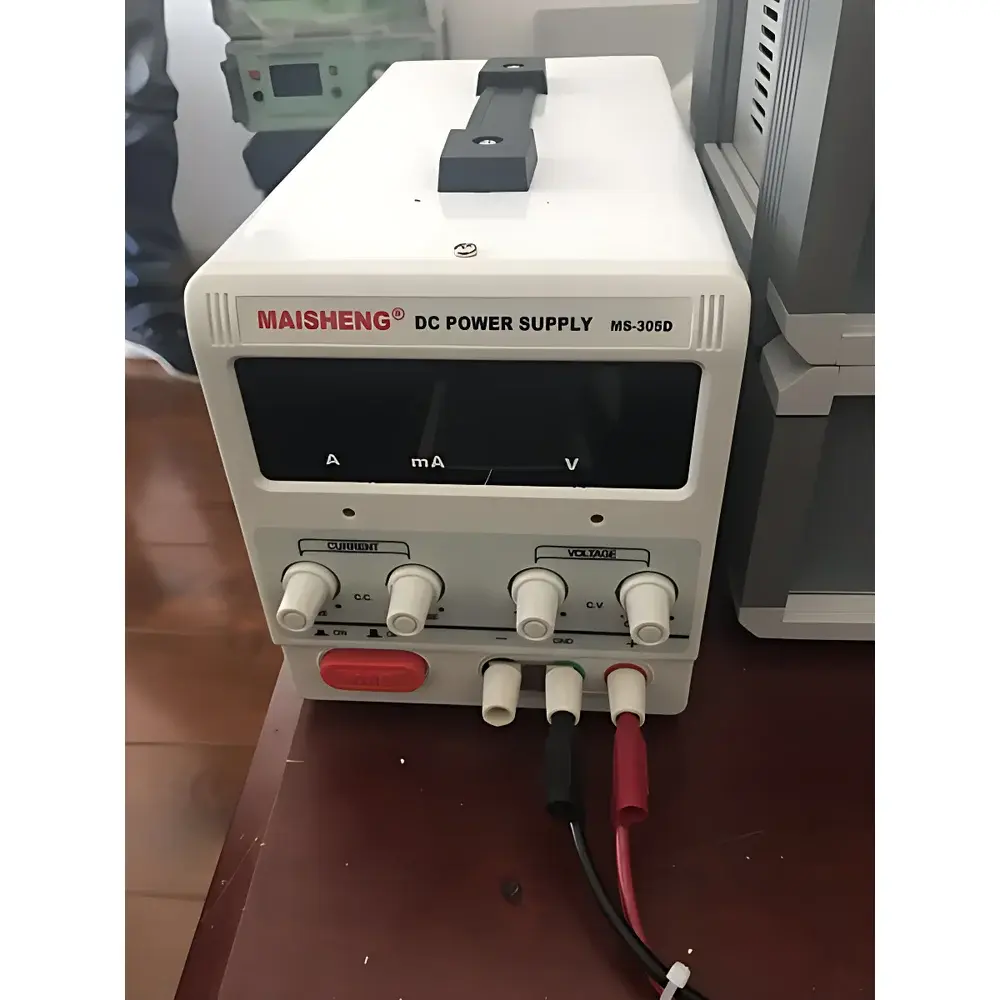
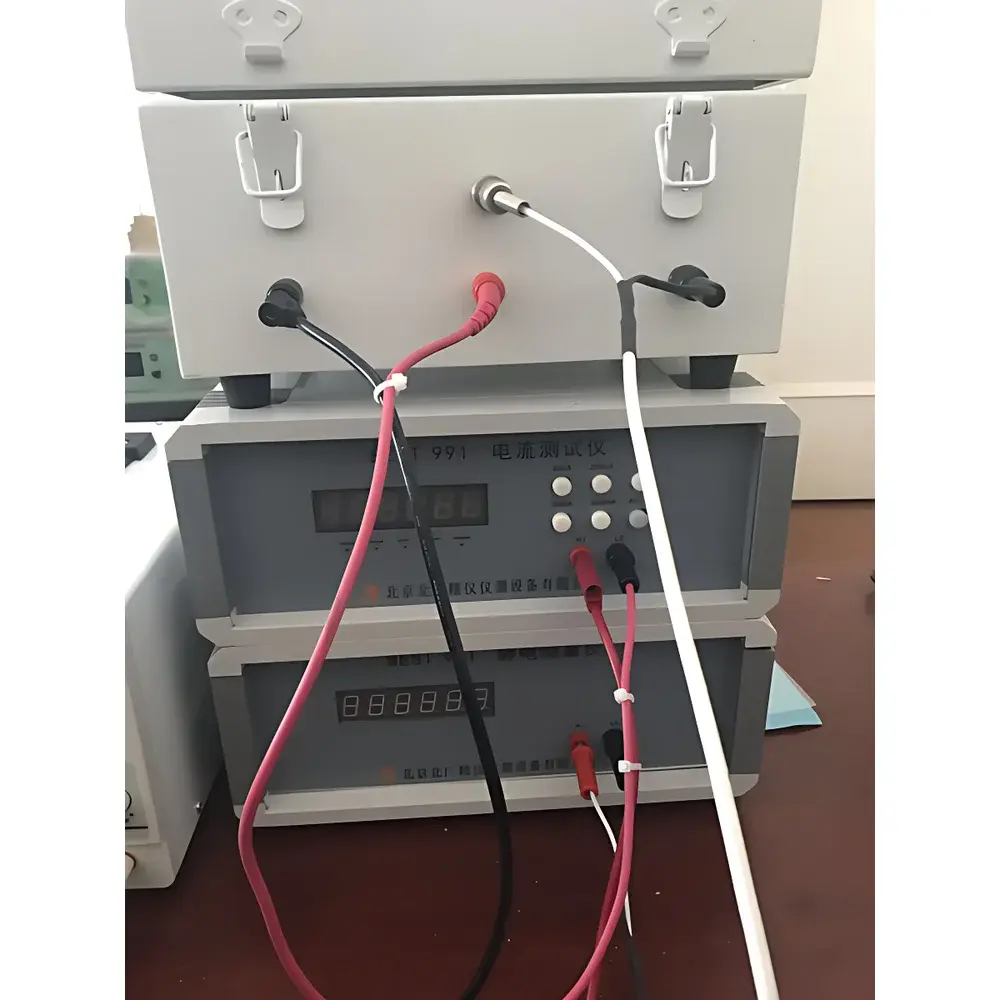
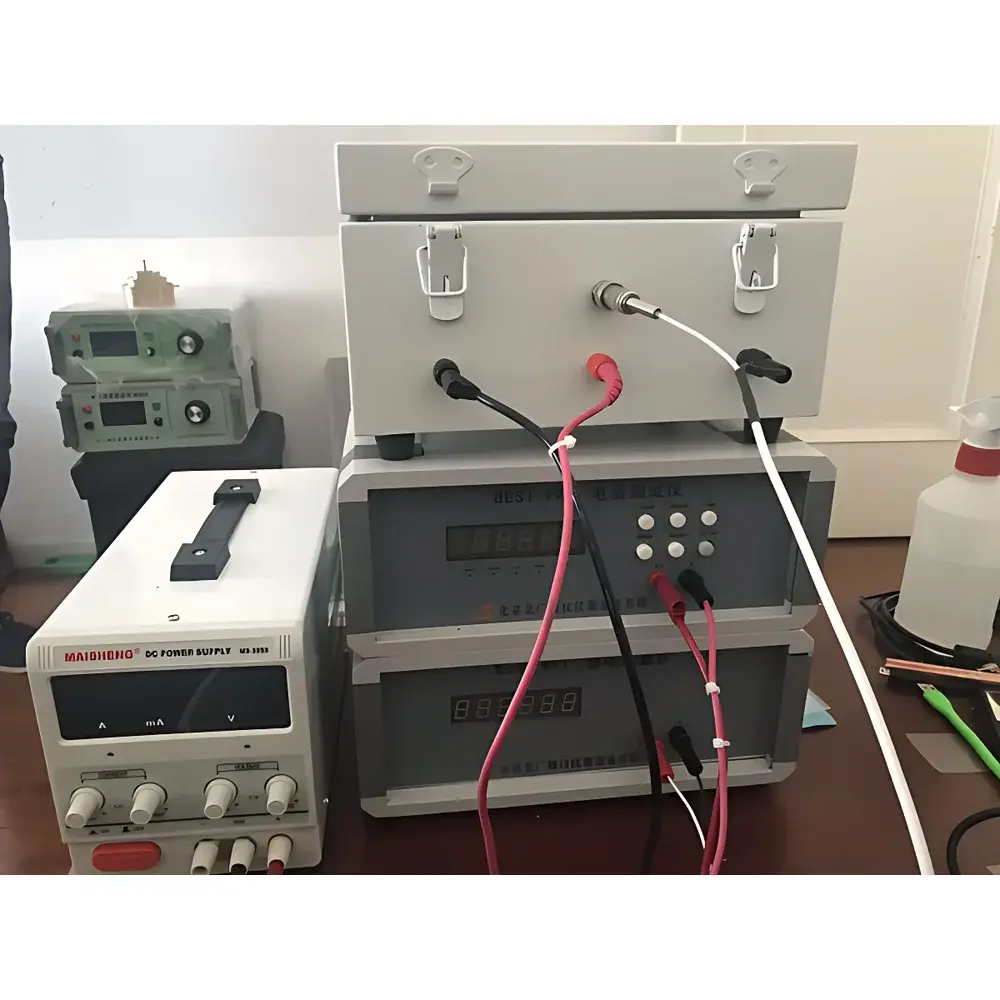
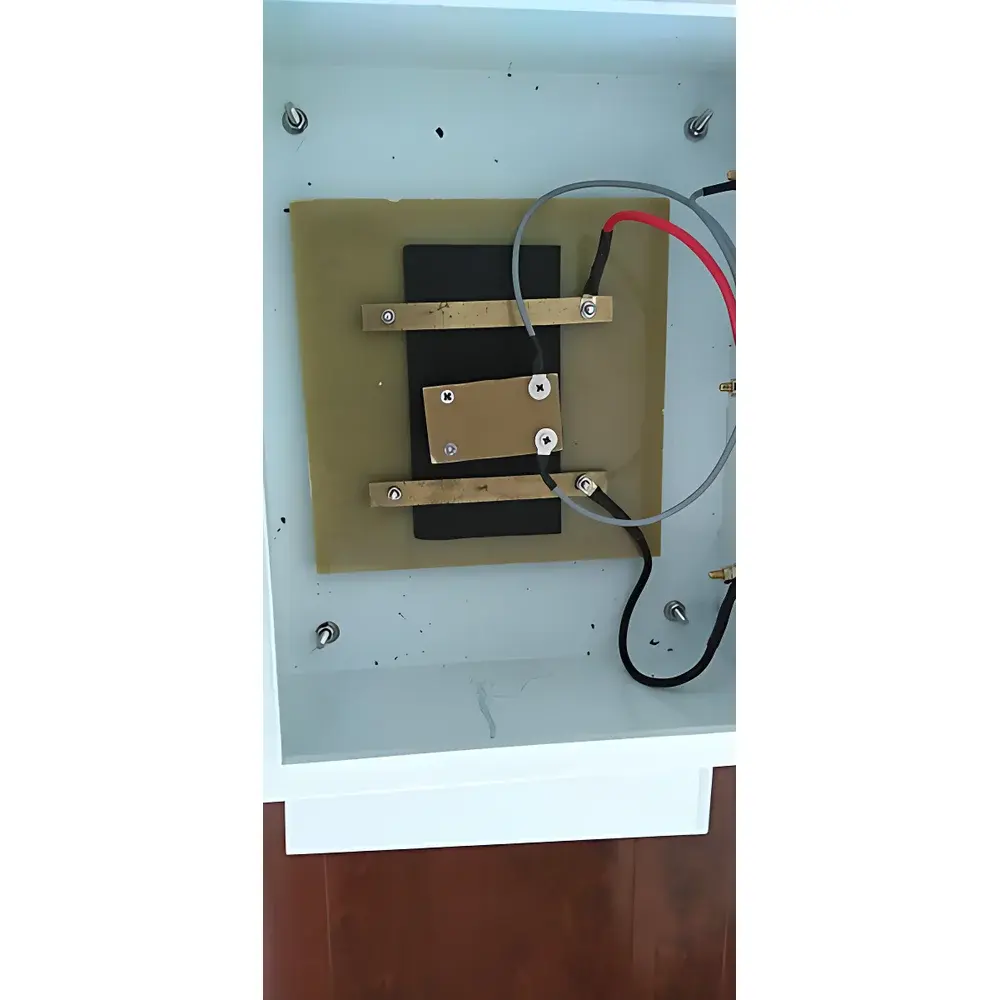
Beijing North Guang Precision Instrument BEST-911 Four-Electrode Volume Resistivity Tester for Conductive and Antistatic Elastomers & Plastics
| Brand | Beijing North Guang Precision Instrument |
|---|---|
| Origin | Beijing, China |
| Manufacturer Type | Direct Manufacturer |
| Product Origin | Domestic (China) |
| Model | BEST-911 |
| Price | USD 3,500 (FOB Beijing) |
| Measurement Range | 10⁻⁹ Ω·m to 10¹¹ Ω·m |
| Accuracy | ±1% to ±5% |
| Electrometer Input Resistance | ≥10¹⁴ Ω |
| Electrometer Voltage Range | ±100 mV to ±200 V |
| Picoammeter Sensitivity | 1 fA (1×10⁻¹⁵ A) |
| Adjustable DC Voltage Source Accuracy | ±1% |
| Electrode Configuration | Standard Four-Electrode Fixture Included |
| Current Electrode Spacing | 100 mm |
| Potential Electrode Spacing | 20 mm |
| Insulating Base Resistivity | ≥10¹⁴ Ω·m |
| Applied Test Pressure | 3.25 N |
| Net Weight | 331 g |
Overview
The Beijing North Guang Precision Instrument BEST-911 Four-Electrode Volume Resistivity Tester is a precision metrology system engineered for the quantitative characterization of bulk electrical resistivity in conductive, antistatic, and dissipative elastomeric and polymeric materials. It operates on the four-terminal (Kelvin) measurement principle—eliminating parasitic contact resistance and lead-wire voltage drop errors inherent in two- or three-electrode configurations. This architecture ensures traceable, reproducible volume resistivity (ρ) determination across an exceptionally wide dynamic range—from metallic conductors (10⁻⁹ Ω·m) to highly insulating polymers (10¹¹ Ω·m)—spanning 20 orders of magnitude. The instrument complies with core international standards governing electrostatic performance evaluation, including ISO 1853, ISO 3915, ASTM D991, GB 11210, GB 2439, GB/T 15662, and JT 230–95, making it suitable for R&D laboratories, quality control departments, and certification testing facilities engaged in ESD-safe material development and validation.
Key Features
- Four-electrode (Kelvin) configuration with precisely spaced current (100 mm) and potential (20 mm) electrodes to isolate bulk resistivity from interfacial contact effects
- Integrated high-impedance electrometer (input resistance ≥10¹⁴ Ω) capable of stable ±100 mV to ±200 V measurement with ≤0.5–2% uncertainty
- Femtoampere-level current detection (1 fA resolution) via a calibrated picoammeter, enabling accurate low-current measurement in high-resistivity regimes
- Digitally regulated DC voltage source (±1% accuracy) for controlled, repeatable bias application during resistivity sweeps
- Shielded test enclosure with certified insulating base (ρ ≥10¹⁴ Ω·m) to minimize environmental leakage paths and electromagnetic interference
- Standardized four-electrode fixture supplied—conforming to GB 11210 and ASTM D991 geometries—with optional electrode sets available for alternate standard compliance
- Fixed mechanical loading system applying 3.25 N nominal pressure to ensure consistent sample-electrode contact without deformation-induced artifacts
Sample Compatibility & Compliance
The BEST-911 is validated for use with vulcanized rubber compounds, carbon-black-filled elastomers, conductive thermoplastics, antistatic polyurethanes, ESD-safe packaging films, and automotive static-dissipative拖地带 (grounding straps). Its measurement methodology satisfies regulatory and industry requirements for materials used in electronics manufacturing cleanrooms (per ANSI/ESD S20.20), medical device packaging (ISO 10993-1), aerospace component shielding (SAE ARP5316), and transportation safety applications (JT 230–95). All test procedures align with Good Laboratory Practice (GLP) documentation protocols and support audit-ready data integrity when paired with external logging systems compliant with FDA 21 CFR Part 11 requirements.
Software & Data Management
While the BEST-911 operates as a stand-alone hardware platform, its analog outputs (voltage, current) and digital control interface support integration with third-party DAQ systems (e.g., National Instruments PXI, Keysight U2300A) for automated test sequencing, multi-point resistivity mapping, and statistical process control (SPC) reporting. Raw measurements are traceable to NIST-traceable calibration certificates for the electrometer, picoammeter, and voltage source—each issued annually per ISO/IEC 17025-accredited calibration schedules. Data export formats include CSV and ASCII-compatible text files, facilitating import into LIMS platforms and statistical analysis tools such as JMP or Minitab.
Applications
- Volume resistivity qualification of ESD-safe flooring, workbench mats, and wrist strap materials per ANSI/ESD STM11.11
- Development and QC of conductive rubber gaskets for RF-shielded enclosures
- Validation of antistatic additives in injection-molded automotive interior components
- Research on percolation thresholds in carbon nanotube- or graphene-loaded polymer composites
- Compliance testing of grounding straps for fuel tankers and aircraft refueling equipment (JT 230–95)
- Stability assessment of resistivity under thermal cycling or humidity exposure (when used inside environmental chambers)
FAQ
Why does the BEST-911 use a four-electrode method instead of two- or three-electrode configurations?
The four-electrode technique separates current injection and voltage sensing functions, eliminating errors caused by contact resistance at electrode–sample interfaces—critical for accurate volume resistivity determination in heterogeneous or surface-contaminated elastomers.
Can this instrument measure surface resistivity?
No—the BEST-911 is specifically configured for volume resistivity (ρ) per ASTM D991 and ISO 3915. Surface resistivity (σₛ) requires concentric ring electrodes per ASTM D257 and is outside the scope of this system’s mechanical and electrical design.
Is calibration documentation provided with shipment?
Yes—each unit ships with factory calibration reports for the electrometer, picoammeter, and voltage source, including uncertainty budgets and traceability statements to national metrology institutes.
What sample dimensions are required for valid measurement?
Samples must be rectangular slabs ≥100 mm long × ≥20 mm wide × ≥2 mm thick to accommodate electrode spacing and ensure uniform current distribution; thickness variation must not exceed ±0.1 mm across the measurement zone.
Does the system meet GLP or GMP data integrity requirements?
The hardware itself supports ALCOA+ principles (Attributable, Legible, Contemporaneous, Original, Accurate) when operated with validated external data acquisition software featuring electronic signatures, audit trails, and role-based access control per 21 CFR Part 11.



