
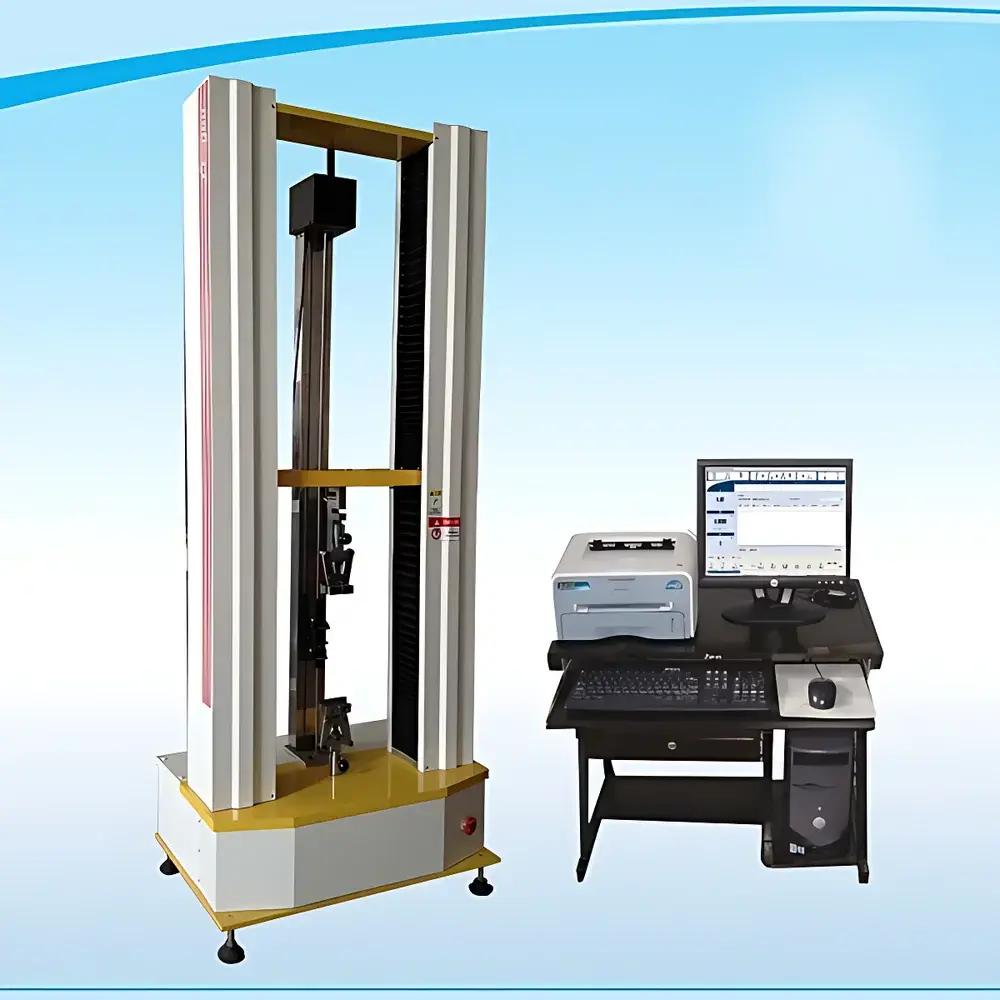
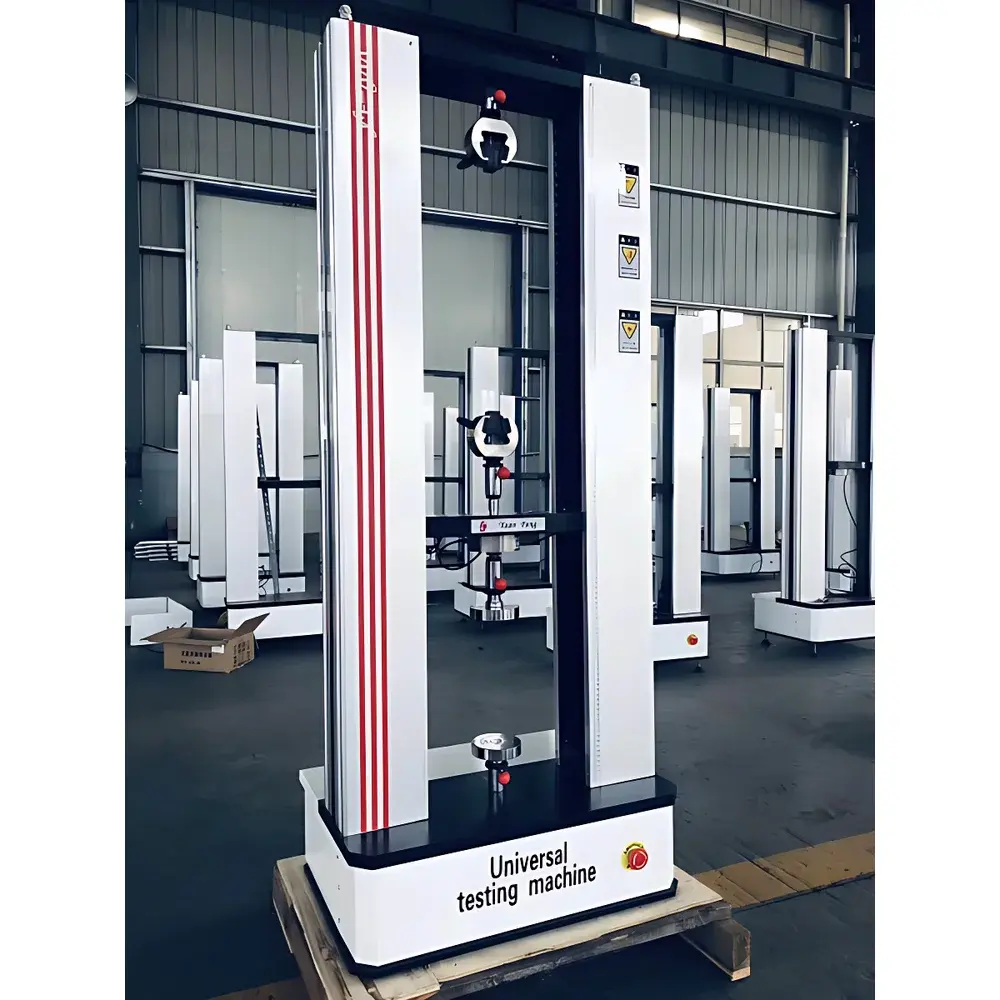
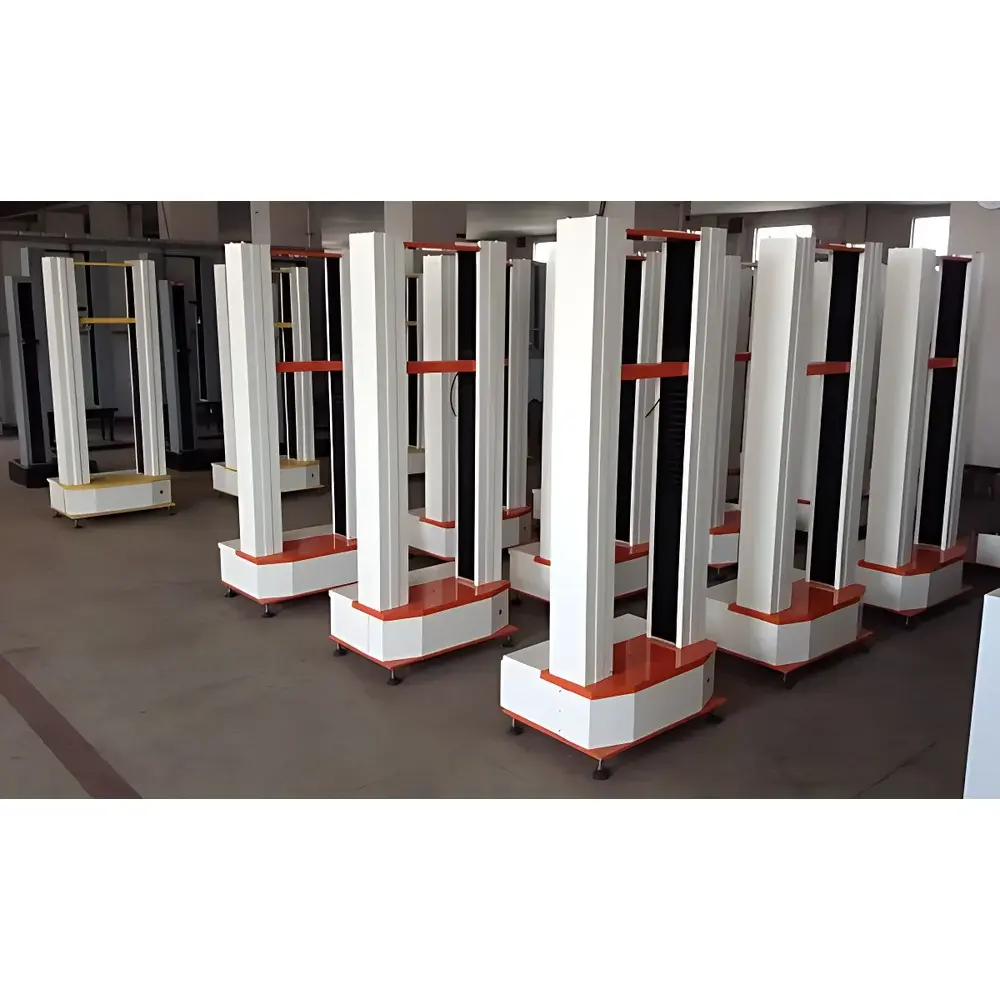
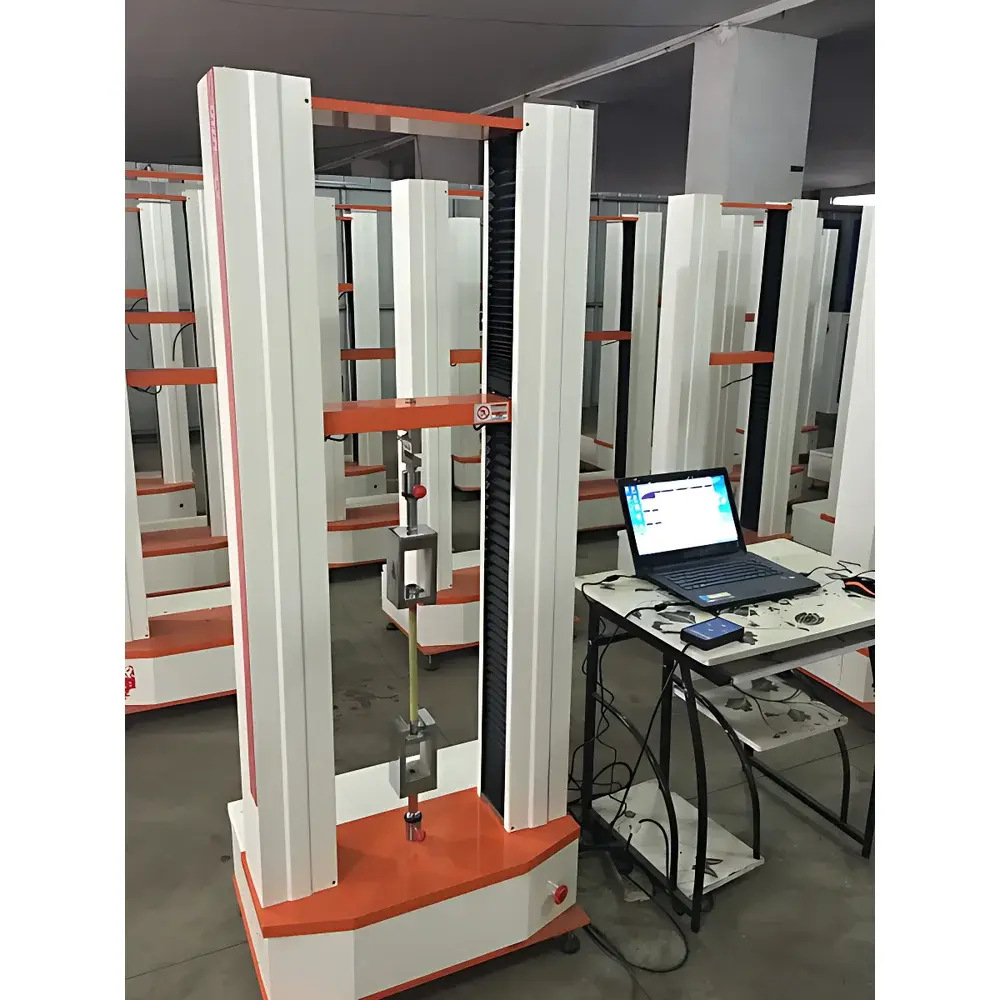
Beiguang Jingyi BWN Series 5 kN Electromechanical Tensile Testing Machine for Plastic-Steel Strapping and General Material Characterization
| Brand | Beiguang Jingyi / All Precision Instrument |
|---|---|
| Origin | Beijing, China |
| Manufacturer Type | Direct Manufacturer |
| Model | BWN |
| Max. Test Load | 5 kN |
| Force Measurement Range | 0.4%–100% FS |
| Force Accuracy | ±1% of reading (Class 1 according to GB/T 16491 & ISO 7500-1) |
| Displacement Resolution | 0.001 mm |
| Displacement Accuracy | ±1% of reading |
| Crosshead Speed Range | 0.05–500 mm/min (infinitely variable) |
| Effective Travel | ≥999 mm |
| Power Supply | AC 220 V ±10%, 50 Hz, 0.5 kW |
| Weight | 120 kg |
| Operating Environment | 10–35 °C, 30–85% RH |
Overview
The Beiguang Jingyi BWN Series 5 kN electromechanical tensile testing machine is a precision-engineered universal material testing system designed for static mechanical property evaluation of plastic-steel strapping, polymers, metals, textiles, composites, and thin-section components. It operates on the principle of controlled uniaxial force application via a high-rigidity load frame, servo-controlled AC motor, precision preloaded ball screw drive, and calibrated load cell—enabling compliant measurement of tensile strength, yield point, elongation at break, modulus of elasticity, peel adhesion, tear resistance, and compression/bending behavior per standardized test protocols. The system conforms to fundamental metrological requirements defined in GB/T 16491 (Chinese national standard), ISO 7500-1 (metallic materials—calibration of static uniaxial testing machines), ASTM E4 (load verification), and ISO 527 (plastics—determination of tensile properties). Its fully digital closed-loop control architecture supports simultaneous load, displacement, and strain rate regulation—meeting essential criteria for GLP-compliant laboratories engaged in quality assurance, R&D validation, and regulatory submission support.
Key Features
- High-fidelity force measurement using a calibrated 5 kN S-type load cell with ±1% accuracy across 0.4–100% full scale (FS), traceable to national standards.
- Ultra-precise motion control: crosshead speed adjustable from 0.05 to 500 mm/min with <0.1% speed stability under load; displacement resolution of 0.001 mm and repeatability better than ±0.5%.
- Dual-mode operation: manual jog control for specimen alignment and automated programmable test sequences for batch consistency.
- Integrated overload protection: hardware-based electronic safeguards against overcurrent, overvoltage, and mechanical overtravel—preventing damage during abnormal loading or misalignment.
- Ergonomic universal grip design with optional wedge-action or pneumatic clamping; accommodates flat strips, wires, films, and irregular geometries while minimizing stress concentration and slippage.
- Modular software architecture supporting real-time multi-curve plotting (load–displacement, stress–strain, load–time), automatic peak detection, and dynamic axis scaling for optimal data visualization.
Sample Compatibility & Compliance
The BWN series accommodates specimens ranging from 0.1 mm thick polymer films to 12 mm diameter metal rods and 30 mm wide plastic-steel strapping. Standard fixtures include tensile jaws (flat and serrated), 90°/180° peel fixtures, shear plates, compression platens, and bending supports. All mechanical configurations comply with dimensional tolerances specified in ISO 527-2 (plastics), ASTM D882 (thin plastic sheeting), ASTM D638 (tensile properties of plastics), ASTM D2256 (tensile properties of yarns), and GB/T 228.1 (metallic materials). The system meets Class 1 accuracy requirements per ISO 7500-1 and supports audit-ready documentation including calibration certificates, uncertainty budgets, and raw data export logs—fully compatible with internal QA workflows and external accreditation audits (e.g., CNAS, ISO/IEC 17025).
Software & Data Management
The Windows-based control software (compatible with Windows 10/11, 64-bit) provides full compliance with data integrity principles outlined in FDA 21 CFR Part 11. Key capabilities include user-level access control with role-based permissions, electronic signature capture, immutable audit trails recording all parameter changes and test events, and time-stamped raw data archiving in binary + CSV formats. Test reports are customizable in Word or Excel templates—including embedded stress–strain curves, statistical summaries (mean, SD, CV%), pass/fail flags against specification limits, and metadata such as operator ID, environmental conditions, and calibration status. All data files retain native timestamps and checksums to ensure forensic traceability—critical for pharmaceutical packaging validation, automotive component certification, and ISO 9001 process audits.
Applications
This instrument is routinely deployed in industrial QC labs for routine verification of plastic-steel strap tensile performance (e.g., yield strength ≥280 MPa, elongation ≥5% per GB/T 22239), cable jacket adhesion strength, nonwoven fabric burst resistance, rubber gasket compression set, and medical device suture pull-out force. In academic settings, it supports teaching modules on Hooke’s law, viscoelastic modeling, and fracture mechanics. Additional validated use cases include: ASTM D1876 T-peel testing of laminated packaging, ISO 1133 MFR correlation studies, EN 13432 biodegradable film tensile degradation monitoring, and IEC 60811 insulation tensile retention after aging. Its modular design permits integration with environmental chambers (−40 to +150 °C) and video extensometers for non-contact strain measurement—extending utility into advanced material science research.
FAQ
What international standards does this machine support?
It natively executes test methods per GB/T 228.1, GB/T 1040, ISO 527, ASTM D638, ASTM D882, ASTM D1445, and ISO 1798—with configurable parameters for strain rate, preload, and sampling frequency aligned to each standard.
Is the force sensor calibrated and traceable?
Yes. Each unit ships with a factory calibration certificate issued by an accredited metrology lab, referencing China NIM (National Institute of Metrology) standards; annual recalibration is recommended per ISO/IEC 17025 guidelines.
Can the system be integrated into a LIMS or MES environment?
The software supports ODBC-compliant database export and XML/JSON API interfaces for seamless bidirectional data exchange with laboratory information management systems (LIMS) and manufacturing execution systems (MES).
What maintenance intervals are required for long-term accuracy?
Critical maintenance includes annual third-party force calibration, biannual lubrication of ball screws and guideways with ISO VG 68 mineral oil, quarterly inspection of encoder coupling integrity, and replacement of grease in reduction gearboxes every 3–5 years.
Does the machine meet safety requirements for CE or UL marking?
While not CE-marked out-of-box, the BWN series complies with core mechanical safety principles of ISO 12100 and electrical safety per IEC 61000-6-2/6-3; final conformity assessment and labeling must be performed by an EU-authorized Notified Body or UL-certified test lab based on end-user installation context.
Related Products



