
North Guangjingyi BEST-19 Four-Electrode Volume Resistivity Tester for Conductive and Antistatic Materials
| Brand | North Guangjingyi / All Precision Instrument |
|---|---|
| Origin | Beijing, China |
| Manufacturer Type | Direct Manufacturer |
| Country of Origin | China |
| Model | BEST-19 |
| Pricing | Upon Request |
Overview
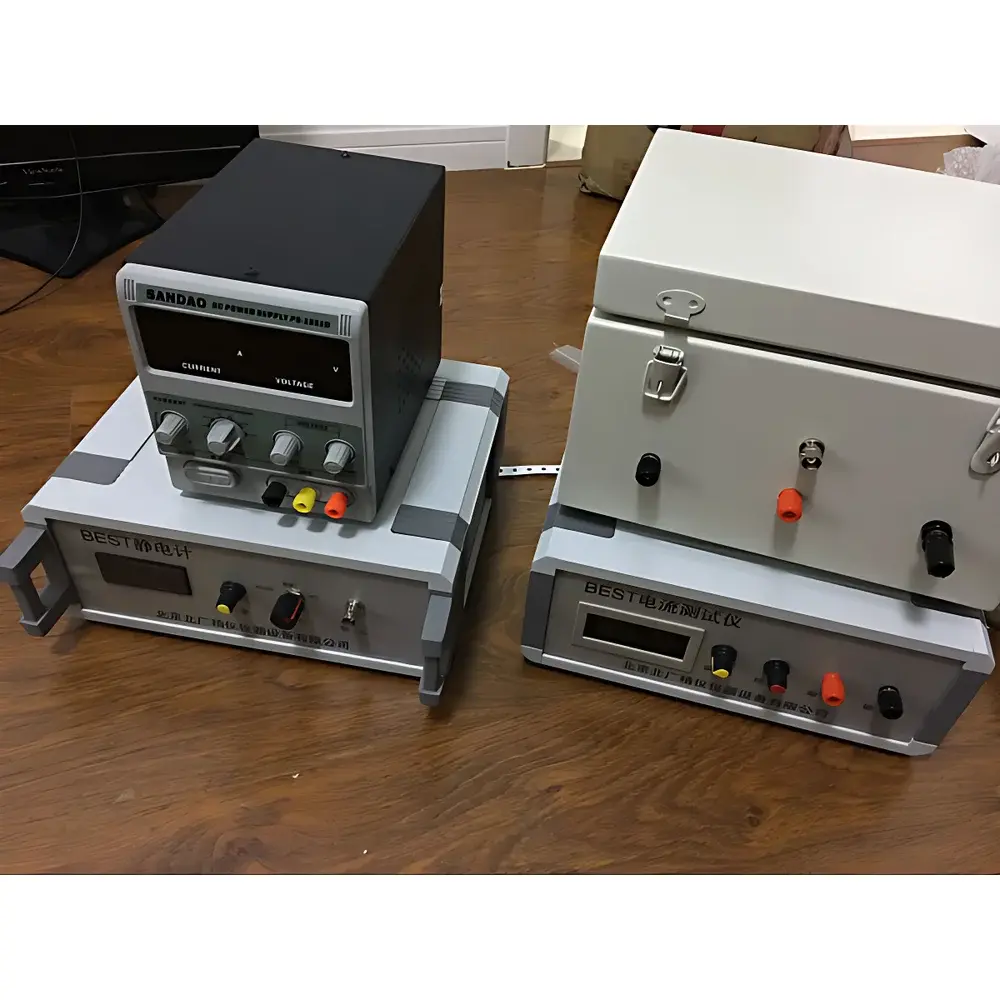
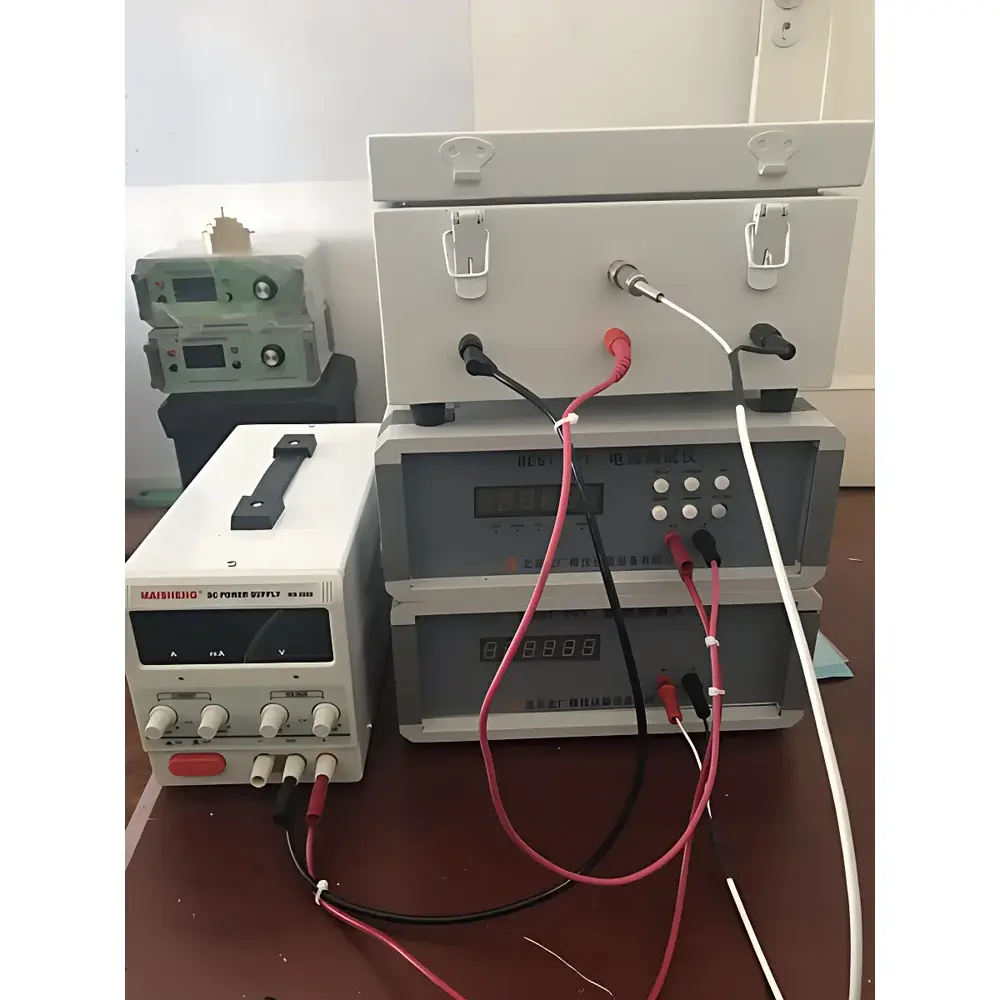
The North Guangjingyi BEST-19 Four-Electrode Volume Resistivity Tester is a precision metrology system engineered for traceable, high-accuracy measurement of volume resistivity (ρ) across an exceptionally broad dynamic range—from metallic conductors (10−9 Ω·m) to highly insulating antistatic polymers (up to 1011 Ω·m). It operates on the four-terminal (four-probe) collinear electrode principle, eliminating errors induced by contact resistance, interfacial polarization, and surface leakage—common limitations of two- or three-electrode configurations. This method ensures compliance with fundamental physical definitions of volume resistivity per Ohm’s law in homogeneous isotropic materials: ρ = R × (A / L), where R is the measured resistance, A is the cross-sectional area perpendicular to current flow, and L is the distance between voltage-sensing electrodes. The instrument integrates a high-input-impedance electrostatic voltmeter (EST103/FS3), a femtoampere-class picoammeter (EST122), a digitally regulated DC voltage source, and a shielded test enclosure housing standardized four-electrode fixtures conforming to GB, ISO, and ASTM geometries.
Key Features
- Four-electrode measurement architecture compliant with ASTM D991, ISO 1853, ISO 3915, GB 11210, GB/T 15662, and GB 2439—ensuring traceability to international standards
- Ultra-high input impedance electrostatic voltmeter (≥1014 Ω, 0.5% accuracy) enabling minimal circuit loading during low-current sensing
- Femtoampere-resolution current measurement (1 × 10⁻¹⁵ A, ±0.5%) supporting quantitative evaluation of extremely low conduction currents
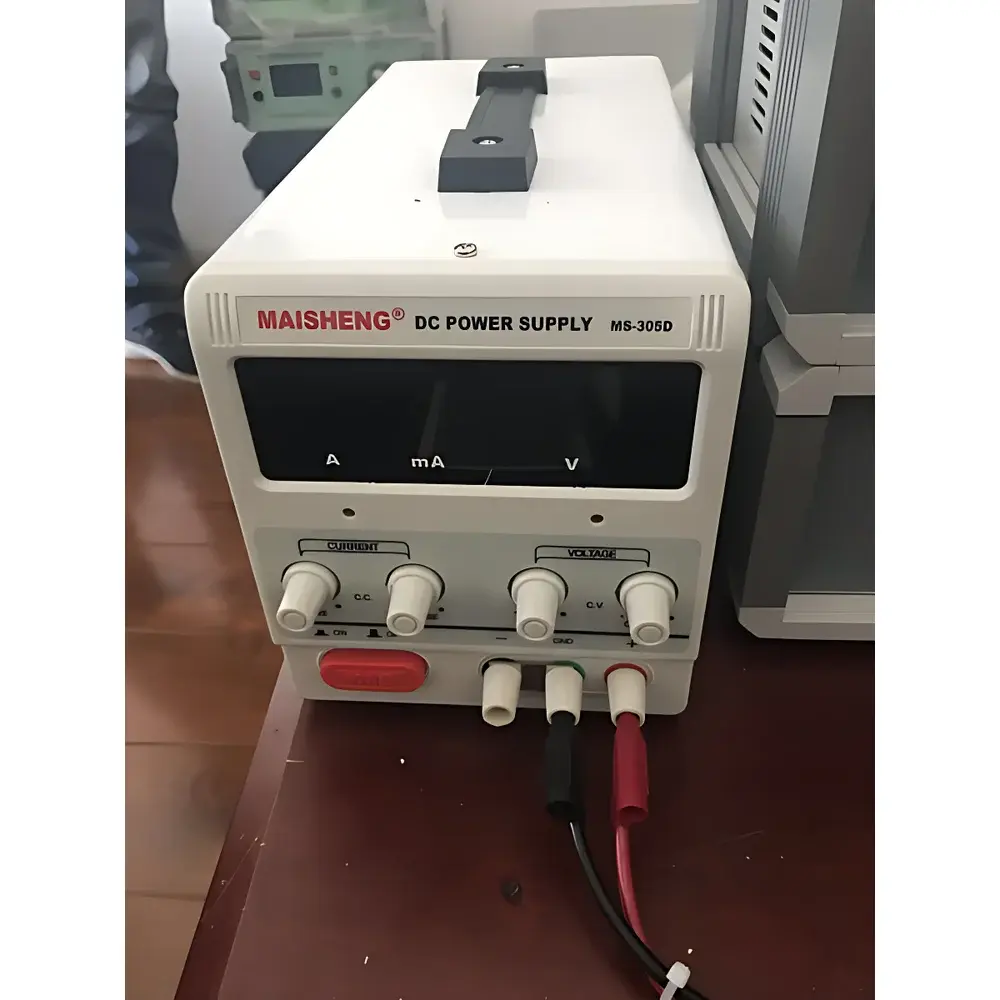
- Digitally adjustable DC voltage source (0–500 V typical; extended to 50 kV via external resistive/capacitive dividers)
- Integrated Faraday-shielded test chamber with removable, standard-compliant four-electrode fixtures (GB/ISO geometry); optional ASTM D991 electrode set available upon request
- Measurement range: 10−9 Ω·m to 1011 Ω·m (20-decade span); extendable to 1019 Ω·m using auxiliary three-electrode configurations and high-resistance accessories
- Insulating base material with volume resistivity ≥1014 Ω·m to prevent parasitic leakage paths
Sample Compatibility & Compliance
The BEST-19 accommodates solid sheet, film, and molded specimens per standardized dimensions: width 10–150 mm, length 70–150 mm, thickness 2.4–6.3 mm. It supports testing of elastomers (e.g., conductive rubber drag straps per JT 230–95), thermoplastic/elastomeric antistatic compounds, semiconductor-grade cable papers (GB/T 7971–2007), textile fabrics (GB/T 12703), and workwear (GB 12014, JIS T 8118). All measurement protocols adhere to GLP-aligned documentation requirements, including operator ID, timestamped readings, environmental conditions (temperature/humidity logging recommended), and calibration certificate traceability to NIM (National Institute of Metrology, China). The system meets functional equivalency with FDA 21 CFR Part 11 data integrity expectations when paired with validated laboratory information management systems (LIMS).
Software & Data Management
While the core BEST-19 operates as a hardware-integrated analog/digital benchtop system, its measurement outputs—voltage (V), current (I), elapsed time (t), and manual geometric inputs (A, L)—are structured for seamless export to CSV or Excel formats via RS-232 or USB interface (optional adapter). Raw data supports post-processing in MATLAB, Python (NumPy/SciPy), or commercial statistical packages for uncertainty analysis per GUM (JCGM 100:2008). Audit trails—including instrument configuration changes, calibration date stamps, and operator entries—are maintained in non-volatile memory. For regulated environments, third-party software validation packages are available to support 21 CFR Part 11 electronic signature and audit trail requirements.
Applications
- Quality control of conductive rubber formulations per GB 11210 and ISO 1853, including automotive static-dissipative drag straps (JT 230–95)
- Volume resistivity certification of ESD-safe plastics used in electronics packaging and cleanroom tooling (ISO 3915, GB/T 15662)
- Characterization of semiconductive cable papers (GB/T 7971–2007) and antistatic conveyor belting
- Charge decay and surface potential assessment of garments per GB 12014 and JIS T 8118 using integrated Faraday cup + EST103 coupling
- Triboelectric charge quantification of powders and liquids via Faraday cage integration (per GB/T 12703 Annex B)
- High-voltage insulation diagnostics using resistive or capacitive divider extensions (up to 100 kV), referenced to IEC 60270 partial discharge measurement principles
FAQ
What standards does the BEST-19 directly support without modification?
It natively complies with GB 11210, GB 2439, GB/T 15662, ISO 1853, ISO 3915, and JT 230–95 using the included four-electrode fixture. ASTM D991 compliance requires ordering the optional ASTM-configured electrode set.
Can the system measure surface resistivity?
No—the BEST-19 is optimized exclusively for volume resistivity per standardized bulk material testing protocols. Surface resistivity requires dedicated concentric ring or linear electrode geometries not provided with this model.
Is calibration traceable to national standards?
Yes—factory calibration certificates reference NIM (China) primary standards. Annual recalibration is recommended, with full uncertainty budgets available upon request.
What environmental conditions affect measurement stability?
Relative humidity below 30% RH may induce electrostatic charging artifacts; above 65% RH may increase surface conduction. Testing is recommended at 23 ± 2°C and 50 ± 5% RH per ISO 291 conditioning guidelines.
How is measurement uncertainty estimated for a given sample?
Combined standard uncertainty includes contributions from voltage reading (0.5%), current reading (0.5%), electrode spacing (±0.1 mm), thickness measurement (±0.05 mm), and area definition (±0.5%). Typical expanded uncertainty (k=2) ranges from ±2.1% to ±3.8% depending on resistivity magnitude and specimen geometry.



