
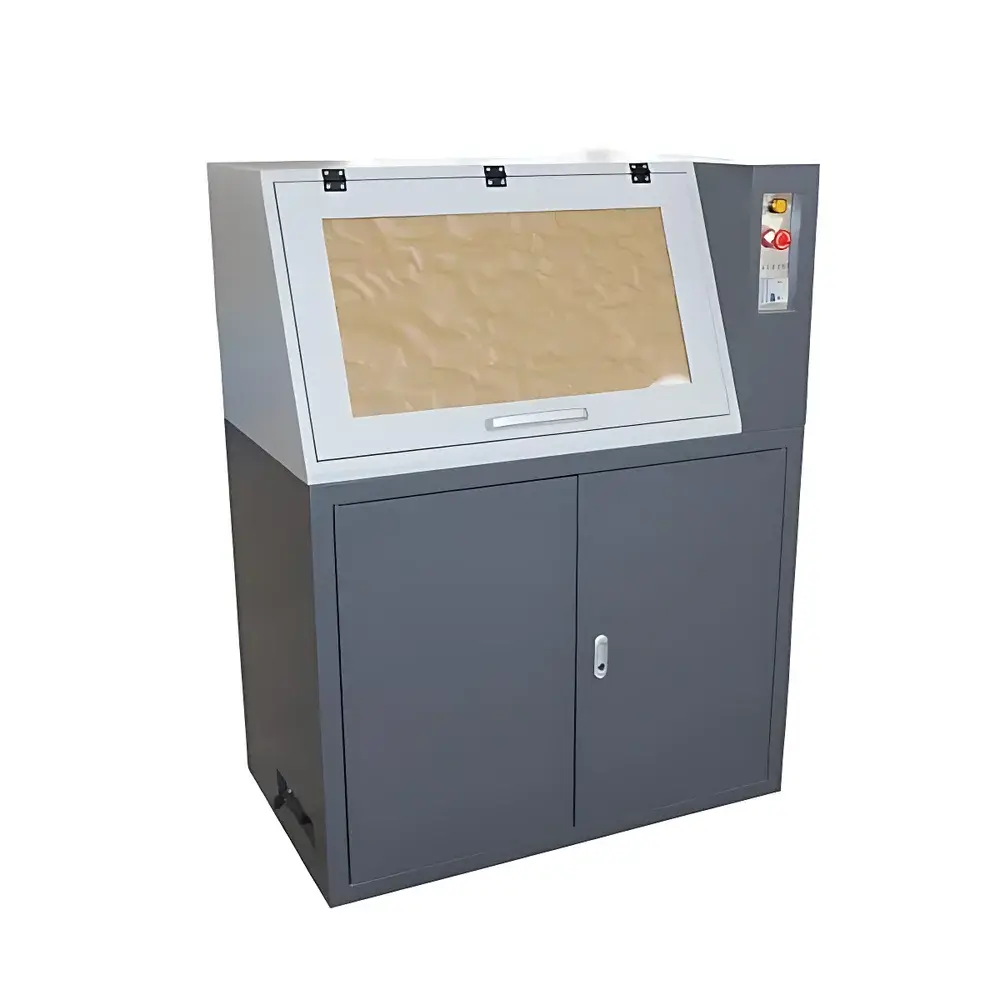
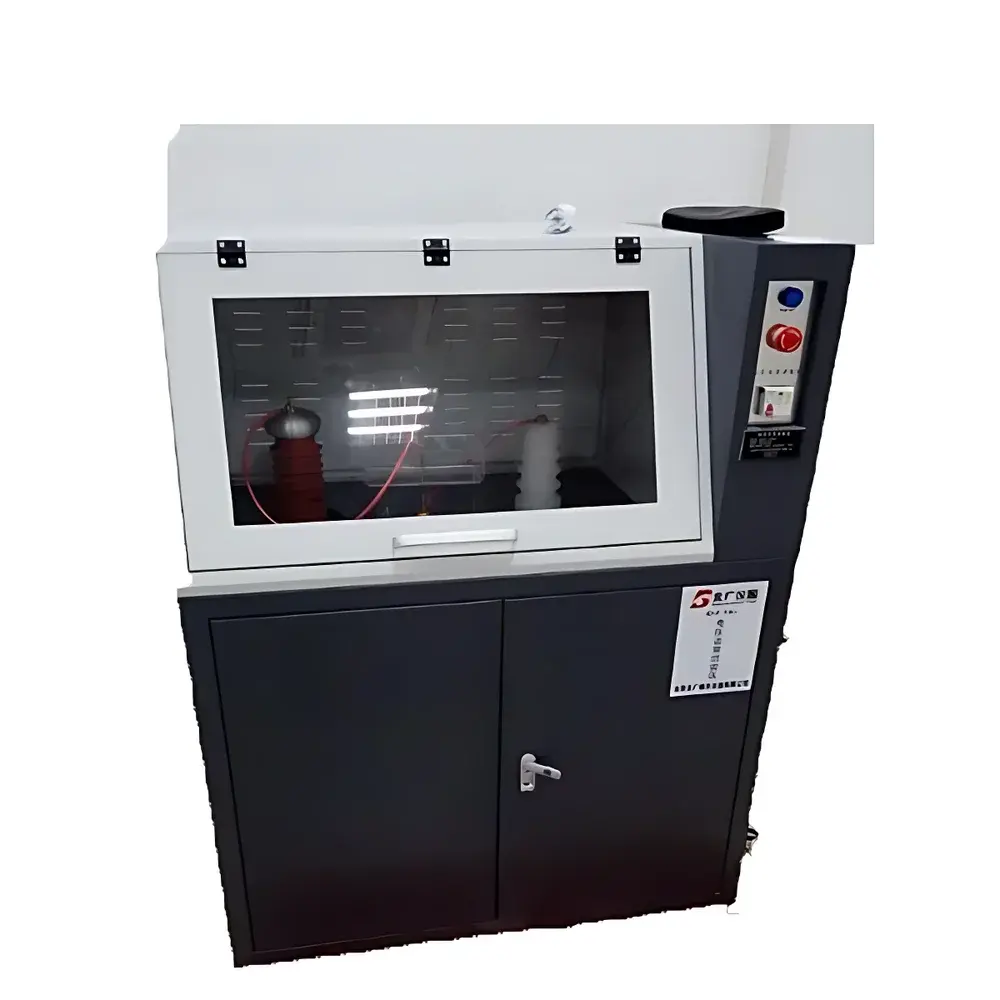
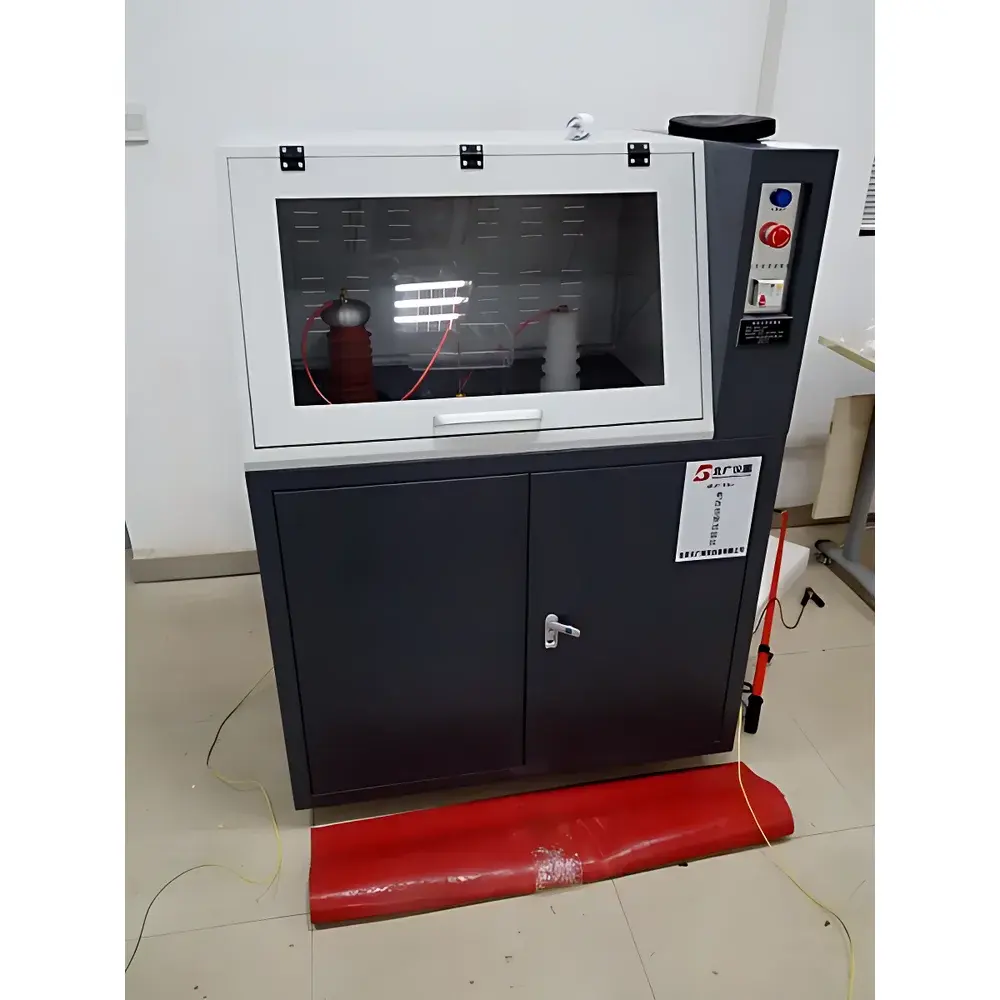
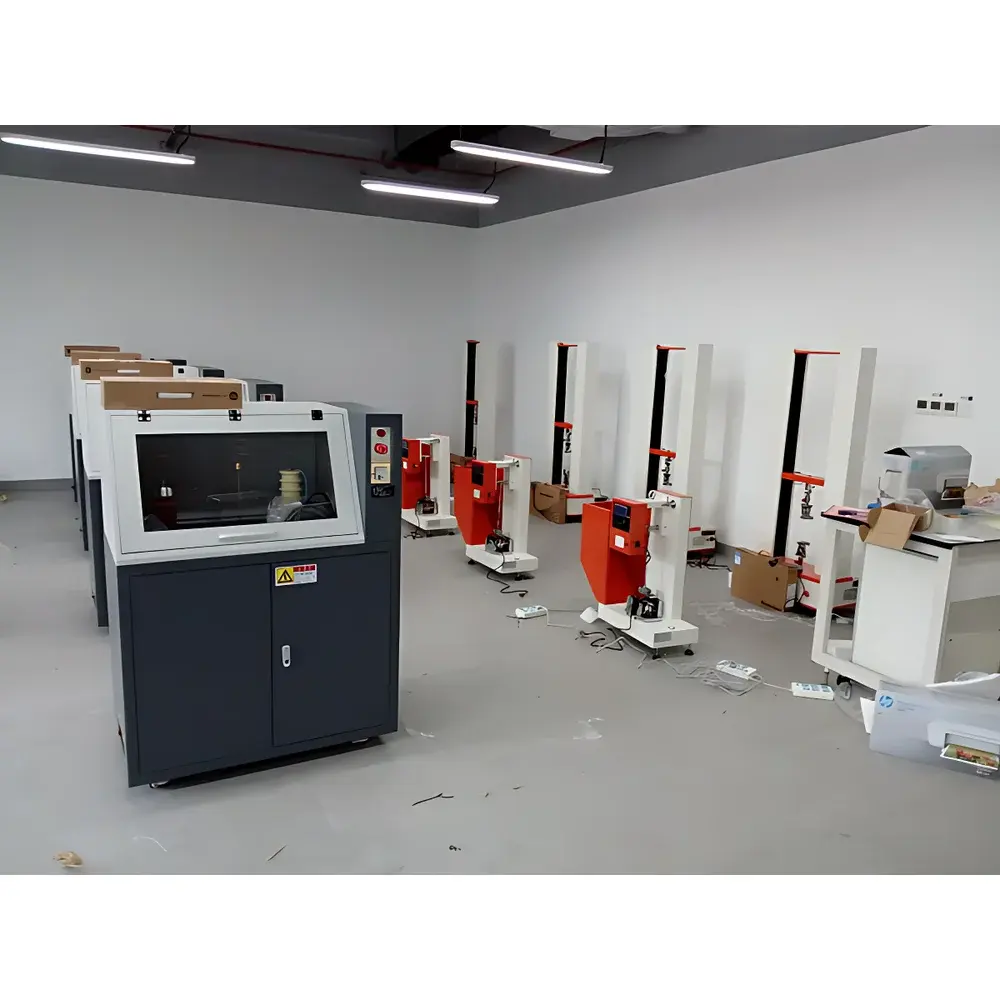
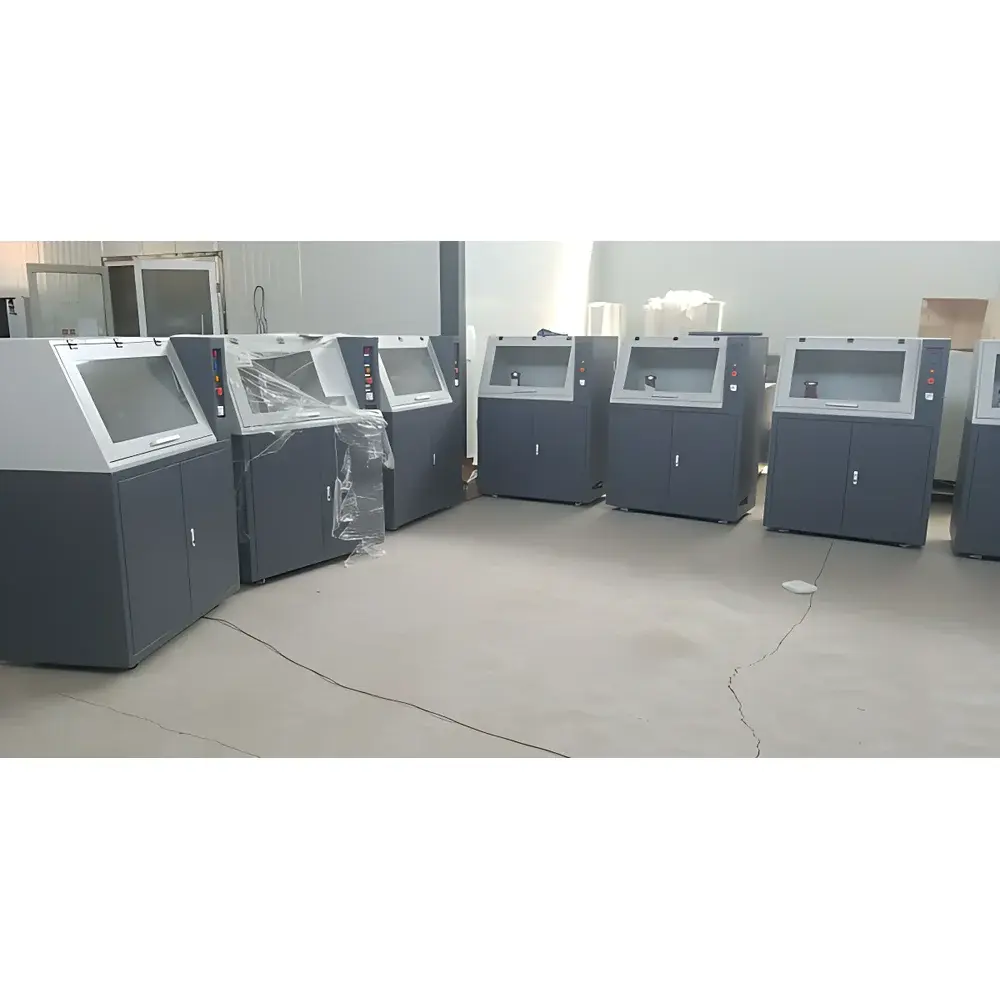
North Guang Precision BDJC Series Insulating Steel Paper Dielectric Breakdown Strength Tester
| Brand | North Guang Precision / All Precision Instrument |
|---|---|
| Origin | Beijing, China |
| Manufacturer Type | Manufacturer |
| Product Origin | Domestic (China) |
| Model | BDJC Series |
| Maximum Breakdown Voltage | 50 kV |
| Input Voltage | AC 220 V ±10%, 50 Hz ±1% |
| Output Voltage Range | AC/DC 0–50 kV (continuously adjustable) |
| Voltage Accuracy | ≤1% |
| Rise Rate Adjustment | 0.01–5 kV/s (user-selectable) |
| Test Modes | Ramp-up (short-time, slow, ultra-slow), Stepwise (20 s, 60 s), and Withstand Testing |
| Dielectric Media | Air, transformer oil (≤90 °C), overheated cylinder oil (90–300 °C) |
| Protection | Overcurrent cutoff (<0.05 s), zero-voltage alarm, dual-stage fault monitoring (local & host), Bluetooth-enabled remote control |
| Compliance | Designed to support IEC 60243-1, ASTM D149, GB/T 1408.1, and ISO 60243 test protocols |
Overview
The North Guang Precision BDJC Series Insulating Steel Paper Dielectric Breakdown Strength Tester is an engineered high-voltage testing system designed for precise determination of dielectric strength and voltage withstand performance of solid and liquid insulating materials under standardized electrical stress conditions. Based on the fundamental principle of controlled electric field application across a defined electrode geometry, the instrument subjects specimens to either AC or DC voltage in accordance with internationally recognized test methodologies—including short-time ramp, stepwise escalation, slow-ramp, and fixed-duration withstand protocols. The system integrates a digitally regulated 50 kV high-voltage generator, real-time current and voltage acquisition at milliampere resolution, and fully programmable rise rate control (0.01–5 kV/s), enabling strict adherence to IEC 60243-1, ASTM D149, GB/T 1408.1, and ISO 60243 requirements. Its architecture supports both ambient (23 ±2 °C, 50 ±5% RH) and conditioned test environments—such as elevated temperature (up to 300 °C using heated oil media) or humidity-controlled chambers—as specified in material-specific product standards.
Key Features
- 50 kV AC/DC high-voltage output with ≤1% measurement accuracy and continuous voltage adjustability from 0 to full scale
- Programmable voltage rise rates spanning three orders of magnitude: 0.01–5 kV/s, covering all standard test profiles (e.g., 500 V/s for general plastics; 2 kV/s for molded compounds per IEC 60296:2003 alignment)
- Dual-mode breakdown detection: simultaneous high-voltage threshold and leakage current monitoring (mA-level resolution), with automatic circuit interruption within 50 ms upon failure
- Modular electrode configuration compliant with GB/T 1408.1 and IEC 60243-1—includes air-gap and oil-immersion setups with optional silicone anti-flashover rings (30 mm width, 1 mm clearance)
- Integrated oil bath tank (removable) for liquid-medium testing; compatible with transformer oil (≤90 °C) and high-temperature cylinder oil (90–300 °C)
- Bluetooth-enabled wireless control architecture supporting human-machine separation up to 10 m, with redundant fail-safe mechanisms including zero-voltage lockout and interlocked test chamber door sensing
- Comprehensive safety subsystem: dedicated protective earth grounding, multi-layer overcurrent/short-circuit/loss-of-voltage protection, and audible/visual alarms synchronized between local controller and host PC
Sample Compatibility & Compliance
The BDJC Series accommodates a broad spectrum of dielectric materials, including but not limited to insulating steel paper, polymer films, laminated composites, ceramic substrates, glass insulators, impregnated fiber mats, and liquid dielectrics such as transformer oils. Specimen geometries follow standardized dimensions defined in GB/T 1408.1 and ASTM D149—typically disc-shaped (Φ25 mm or Φ50 mm) or rectangular strips with thicknesses ranging from 0.1 mm to 6 mm. Preconditioning options include thermal treatment (70 ±2 °C, <40% RH for 4 h; 105 ±2 °C, <40% RH for 1 h) and humidity conditioning (20 ±5 °C, 65 ±5% RH for ≥24 h), aligning with IEC 60216 and ISO 293 guidelines. All operational parameters—including voltage hold time (0–7 h), step dwell duration (20 s or 60 s), and final breakdown calculation (E = U/d, reported in kV/mm to one decimal place)—are traceable to national metrological standards. Optional calibration certification is available from China Academy of Aerospace Science or client-designated accredited laboratories.
Software & Data Management
The embedded test software provides full lifecycle data governance—from parameter initialization and real-time waveform capture to statistical analysis and regulatory reporting. During operation, the interface displays live voltage (kV), leakage current (mA), elapsed test time, and cumulative trial count. Post-test functions include automated median-value computation across five trials (per ASTM D149 §8.3), outlier rejection (>15% deviation triggers retest), curve overlay comparison for up to five datasets, and export to Excel (.xlsx) with timestamped metadata. Reports comply with GLP/GMP documentation expectations: audit trails record operator ID, test date/time, environmental readings, calibration status, and pass/fail determinations. Software supports 21 CFR Part 11-compliant electronic signatures when deployed with validated Windows-based host systems. Communication interfaces include USB 2.0, RS-232, and regional Ethernet ports—enabling integration into centralized QC networks.
Applications
This tester serves critical quality assurance and R&D workflows across multiple sectors: evaluation of electrical insulation integrity in wire jacketing and cable sheathing; validation of dielectric performance in printed circuit board laminates and encapsulation resins; qualification of high-temperature insulating papers used in traction motor windings; comparative assessment of nanocomposite fillers in epoxy matrices; and routine compliance verification for power transformer oils per IEC 60296. It is routinely deployed by third-party certification labs (e.g., CNAS-accredited facilities), component manufacturers supplying Tier-1 automotive and aerospace suppliers, and university research groups investigating breakdown physics in novel 2D dielectrics. Its modular design allows adaptation to specialized configurations—for instance, modified electrode spacing for thin-film characterization or custom oil bath geometries for viscosity-dependent arc propagation studies.
FAQ
What voltage ranges and waveforms does the BDJC Series support?
It delivers AC or DC output from 0 to 50 kV, continuously adjustable with ≤1% linearity error. Both sinusoidal (50 Hz) and stabilized DC modes are available.
How is dielectric strength calculated and reported?
Breakdown voltage (U, in kV) is divided by specimen thickness (d, in mm) to yield E = U/d (kV/mm). Results are reported as the median of ≥5 valid trials, rounded to one decimal place.
Does the system meet international regulatory requirements for lab accreditation?
Yes—it supports full traceability per ISO/IEC 17025, includes configurable audit logs, and accepts calibration certificates from national metrology institutes (e.g., CMA, CNAS, or NIST-traceable providers).
Can test parameters be remotely configured and monitored?
Absolutely. Bluetooth 5.0 wireless control enables parameter setting, real-time data viewing, emergency stop activation, and result export from a safe distance—eliminating direct panel interaction during high-voltage operation.
What safety interlocks prevent accidental exposure to hazardous potentials?
Mechanical door interlock disables HV output when the test chamber is open; dedicated grounding terminals reduce electromagnetic interference; and dual-stage overcurrent protection cuts power within 50 ms upon arc inception.



