
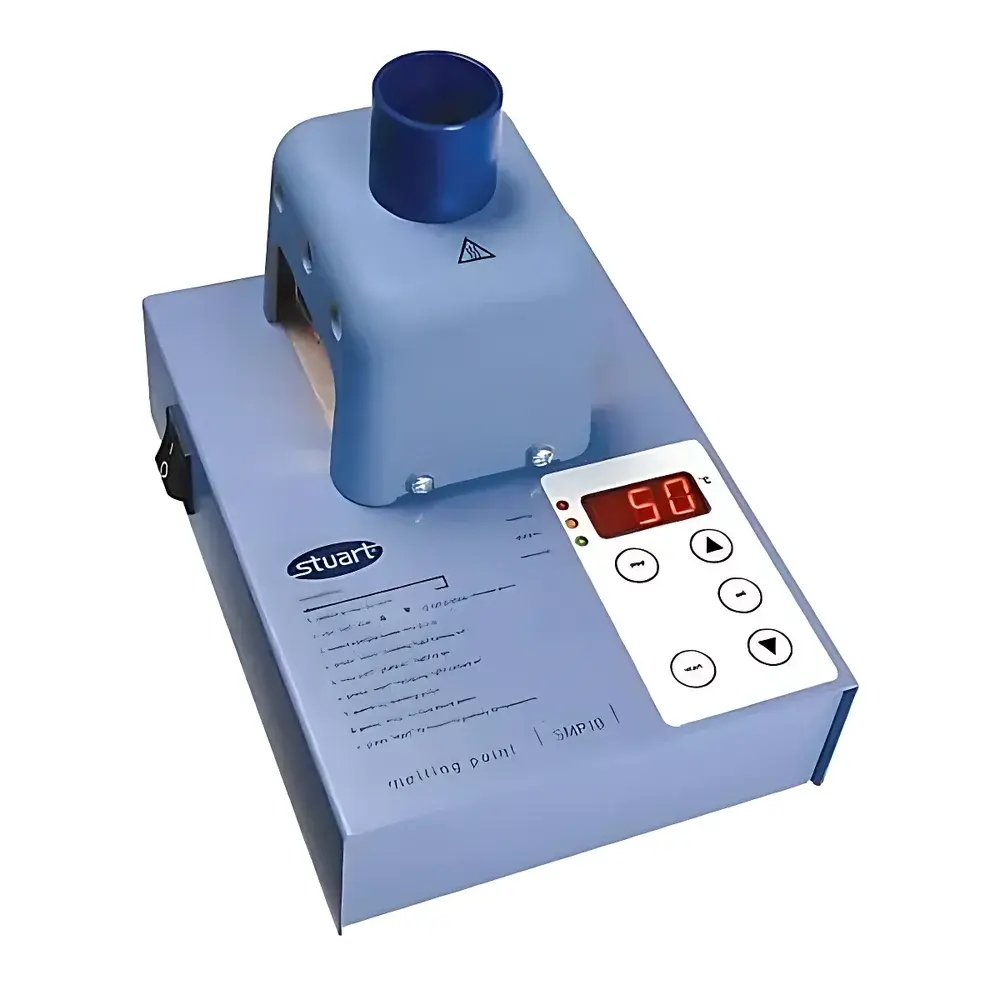
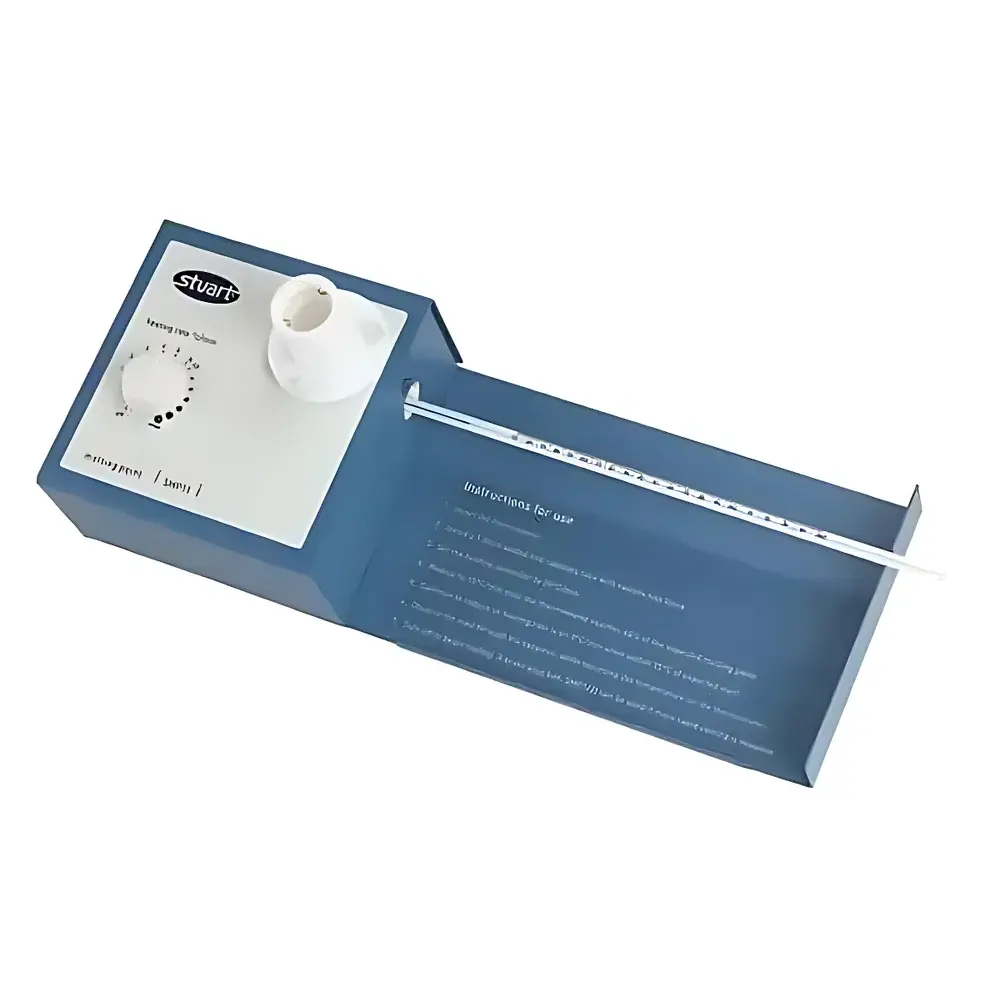
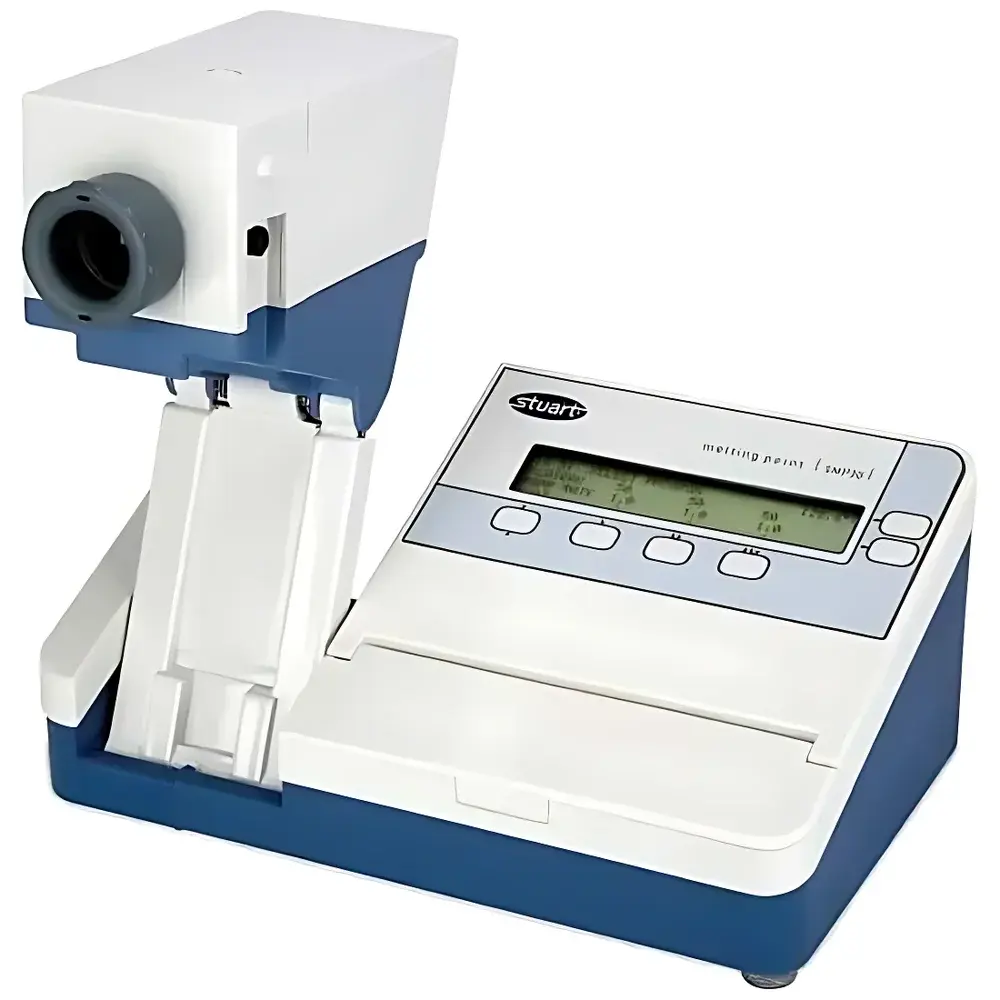
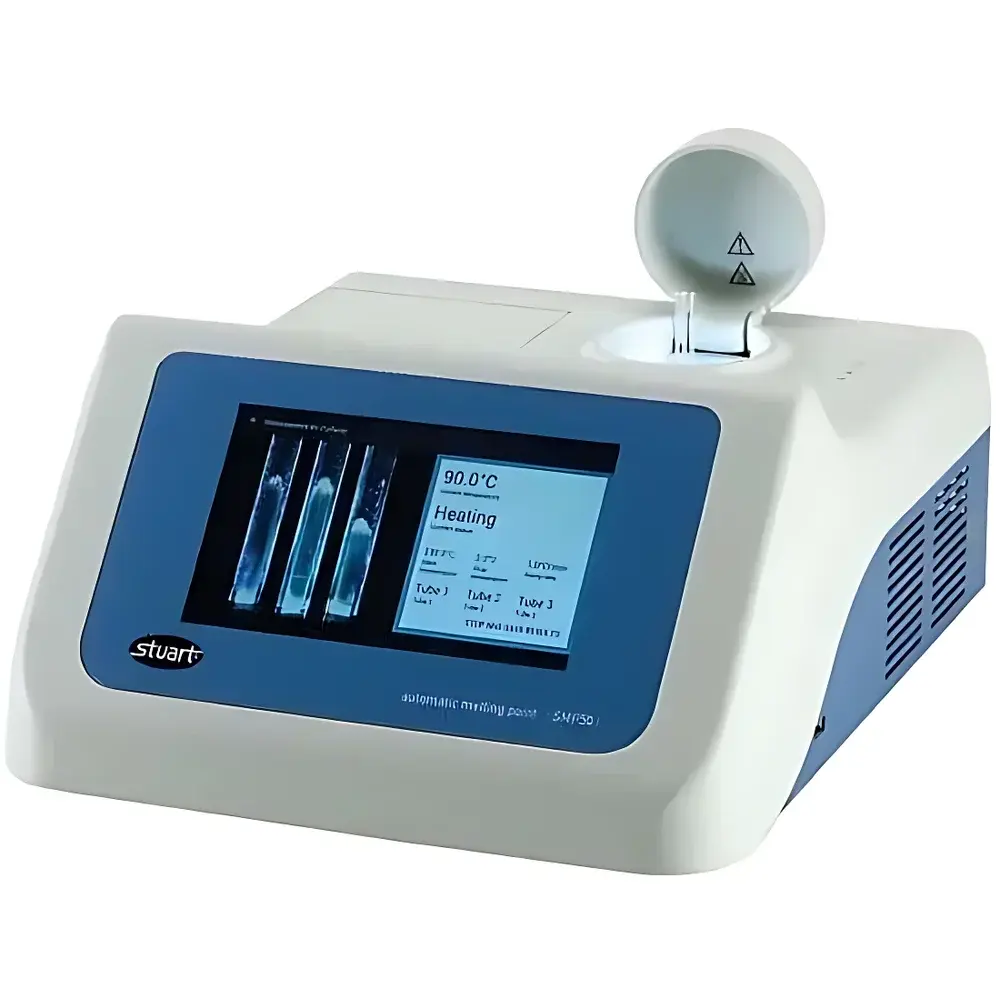
Stuart SMP10 Digital Melting Point Apparatus
| Brand | Stuart |
|---|---|
| Origin | USA |
| Model | SMP10 |
| Temperature Range | Ambient to 300°C |
| Heating Rate | 2°C/min |
| Temperature Accuracy | ±1°C |
| Capillary Length | 100 mm |
| Sample Capacity | 2 samples |
Overview
The Stuart SMP10 Digital Melting Point Apparatus is a compact, entry-level thermal analysis instrument engineered for routine quality control (QC) laboratories and educational settings requiring reliable, repeatable determination of solid-phase transition temperatures. It operates on the classical capillary tube method—where crystalline samples are loaded into standardized glass capillaries and heated under controlled conditions while visually monitored through an optical system. The SMP10 employs resistive heating with digital PID temperature regulation to deliver consistent ramp profiles, enabling precise identification of onset and clear-point melting behavior in organic compounds, pharmaceutical intermediates, polymers, and reference standards. Its design prioritizes operational simplicity, robustness, and compliance-readiness—making it suitable for environments where GLP-aligned documentation, traceability, and reproducibility are essential but full automation is not required.
Key Features
- Dual-sample capacity enables comparative analysis or replicate measurements within a single run, improving throughput and statistical confidence.
- Digitally controlled heating system with fixed 2°C/min ramp rate ensures consistent thermal profiling across users and sessions—critical for inter-laboratory comparability.
- Three-digit LED display provides real-time temperature readout with ±1°C accuracy across the full 0–300°C operating range.
- Extendable observation tube allows ergonomic positioning of the eyepiece; users can adjust viewing angle and distance for optimal focus on capillary contents.
- Integrated white LED backlighting enhances contrast during visual detection of phase transitions—especially valuable for low-contrast or translucent samples.
- Front-panel controls include Start/Stop buttons and dedicated temperature setpoint selection, minimizing training time and reducing procedural variability.
- Quick-heating mode (20°C/min) facilitates rapid preheating to target zones prior to sample insertion, optimizing workflow efficiency without compromising measurement integrity.
- All operational instructions are permanently printed on the instrument housing—eliminating reliance on external documentation and supporting ISO/IEC 17025-compliant lab practices.
Sample Compatibility & Compliance
The SMP10 accepts standard ASTM D1565-22 and USP <741>-compliant capillaries: 100 mm length, 1.3 mm internal diameter, 1.9 mm outer diameter, fabricated from borosilicate glass. Samples must be dry, finely powdered, and uniformly packed to a height of 3–5 mm in the capillary’s sealed end. The apparatus meets general requirements for thermal stability and mechanical safety per IEC 61010-1:2010. While the SMP10 itself does not incorporate electronic audit trails or user authentication, its manual operation and stable thermal performance support adherence to GMP-relevant procedures when integrated into documented QC workflows—including those aligned with FDA 21 CFR Part 11 supplementary controls (e.g., paper-based logbooks with operator signatures and timestamps). Each unit carries a unique serial number for asset tracking and calibration history management.
Software & Data Management
The SMP10 is a standalone analog-digital hybrid instrument with no embedded software, network interface, or data export capability. All temperature readings are recorded manually by the operator at the moment of observed melting onset and completion. This architecture eliminates cybersecurity risks, firmware update dependencies, and software validation overhead—making it ideal for regulated environments where simplicity, transparency, and deterministic behavior are prioritized over digital connectivity. For labs requiring electronic records, integration with external LIMS or ELN systems is achieved via manual transcription or optional barcode-assisted logging using compatible peripherals (not supplied). Calibration verification is performed using NIST-traceable reference standards (e.g., pure caffeine, indium, or potassium nitrate), with results logged in accordance with ISO/IEC 17025 clause 7.7.
Applications
- Pharmaceutical QC testing of active pharmaceutical ingredients (APIs) and excipients per USP <741> and EP 2.2.17.
- Verification of purity and identity in fine chemical synthesis, including batch release of intermediates and final products.
- Educational demonstrations of first-order phase transitions, eutectic behavior, and polymorphism in undergraduate chemistry and materials science curricula.
- Polymer characterization—determining melting ranges of thermoplastics such as polyethylene, polypropylene, and nylon derivatives.
- Food science applications, including fat and cocoa butter melting profile assessment per AOAC 971.11 and ISO 6320.
- Forensic analysis of unknown crystalline substances where thermal fingerprinting supports preliminary identification.
FAQ
What capillary dimensions are supported by the SMP10?
The SMP10 is optimized for standard 100 mm long capillaries with 1.3 mm inner diameter and 1.9 mm outer diameter, consistent with ASTM D1565 and pharmacopoeial specifications.
Does the SMP10 require annual recalibration?
Yes—routine calibration against certified reference materials is recommended before each analytical session or at least daily in high-throughput labs, per ISO/IEC 17025 Clause 6.5.
Can the SMP10 be used for decomposition point determination?
No—the SMP10 is designed exclusively for melting point analysis up to 300°C; decomposition events often occur above this range and may involve color change or gas evolution not detectable via visual melt observation.
Is the SMP10 compliant with pharmacopoeial methods?
It fulfills instrumental requirements of USP <741>, EP 2.2.17, and JP 2.60 when operated within validated parameters and paired with appropriate reference standards and SOPs.
What maintenance is required?
Routine cleaning of the observation lens and heating block with lint-free cloth and isopropyl alcohol; periodic inspection of capillary holder alignment and LED illumination uniformity.



