
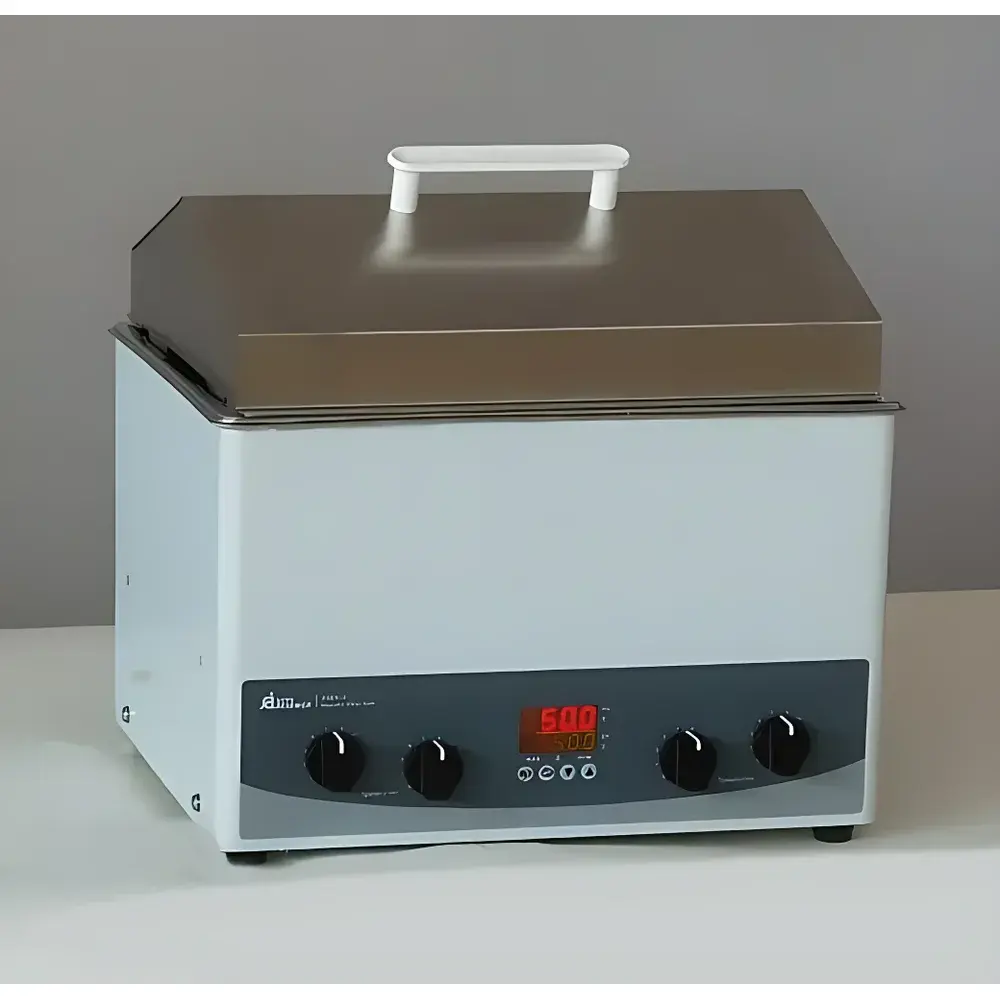
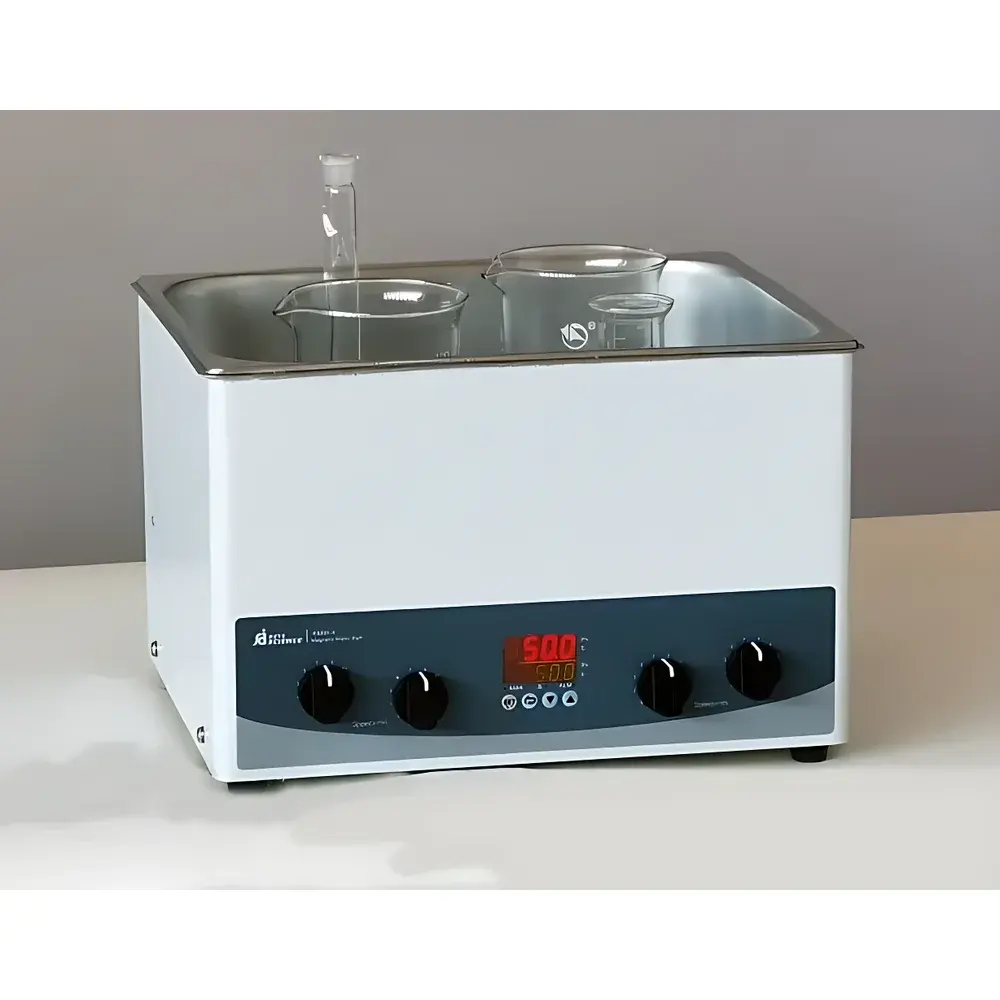
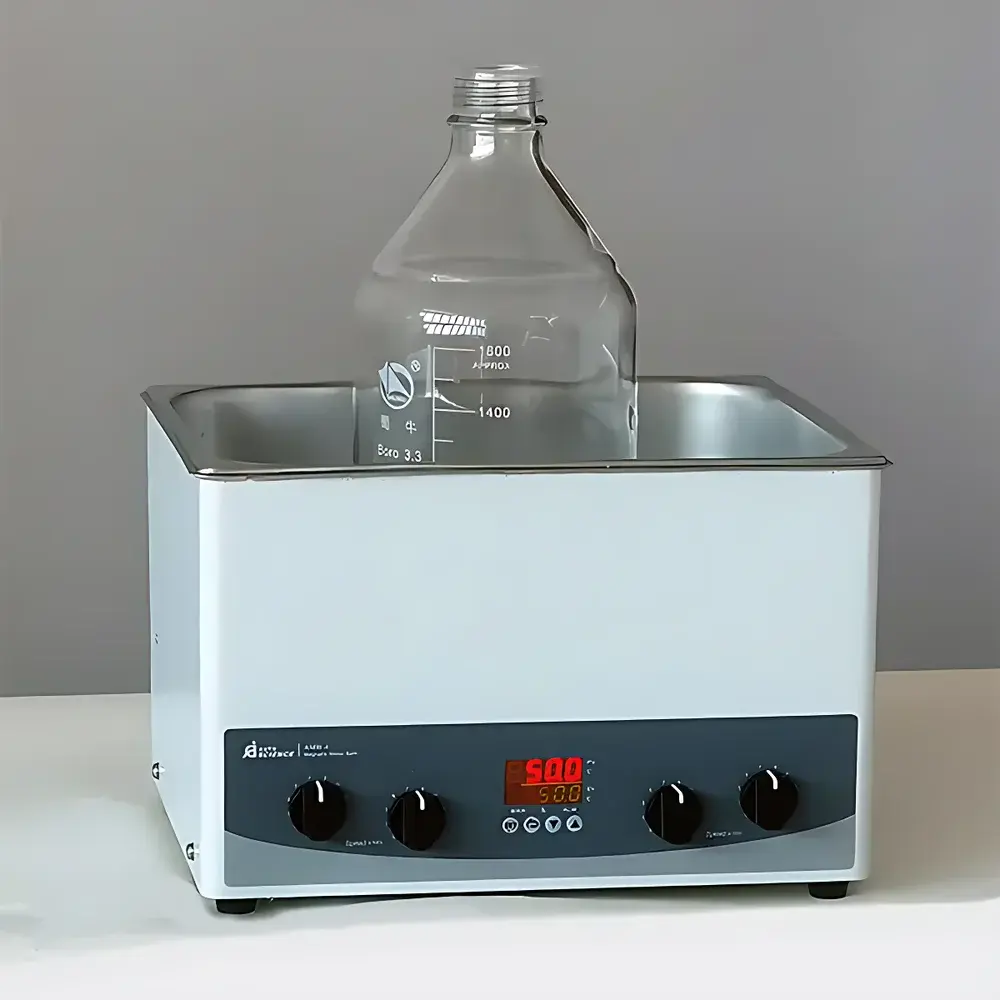
Otisience AMW Series Water-Bath Magnetic Stirrer
| Brand | Otisience |
|---|---|
| Model | AMW-1 / AMW-2 / AMW-4 / AMW-6 |
| Type | Water-Bath Magnetic Stirrer |
| Max Stirring Volume | 50–200 mL × 1–6 positions |
| Speed Range | 0–1600 rpm |
| Temperature Control Range | Ambient to 95 °C |
| External Sensor Interface | 1 port |
| Sensor Holder | 1 unit |
| Max Heating Power | 150–1000 W (model-dependent) |
| Dimensions (W×H×D, mm) | 200×172×185 (AMW-1) to 530×300×312 (AMW-6) |
Overview
The Otisience AMW Series Water-Bath Magnetic Stirrer is an integrated temperature-controlled mixing platform engineered for precise, reproducible agitation of multiple samples under uniform thermal conditions. Unlike conventional hotplate stirrers, this system employs a circulating water bath as the primary heat transfer medium—ensuring superior thermal homogeneity, reduced temperature overshoot, and enhanced stability at low-to-moderate setpoints (e.g., 25–60 °C), where air convection or solid-surface conduction often introduce spatial gradients. The device operates on the principle of magnetic coupling: rotating permanent magnets beneath the bath drive PTFE-coated stir bars immersed in sample vessels, eliminating mechanical shafts and enabling sealed, contamination-free operation. Designed for routine QC testing, buffer preparation, dissolution studies, and enzymatic reaction monitoring, the AMW series supports parallel processing across 1 to 6 independently controlled stations—each with dedicated speed and thermal regulation.
Key Features
- Multi-position modularity: Select from four standardized configurations—AMW-1 (1 station), AMW-2 (2 stations), AMW-4 (4 stations), and AMW-6 (6 stations)—to match throughput requirements without over-provisioning.
- Independent per-station control: Each stirring position features discrete speed adjustment (0–1600 rpm, continuous analog control) and shares a common yet precisely regulated water-bath temperature zone (ambient to 95 °C).
- PID-driven thermal management: Dual 4-digit LED display simultaneously shows setpoint and real-time bath temperature; built-in PID algorithm minimizes steady-state error and improves recovery time after load changes.
- External sensor compatibility: A dedicated RS-232 or analog output interface supports connection of external Pt100 or thermistor probes for third-party data logging or validation against reference standards.
- Robust thermal architecture: Heating power scales with model (150 W to 1000 W), ensuring rapid ramp rates and stable hold performance—even with full vessel loads and high-viscosity media (e.g., glycerol/water mixtures).
- Universal mounting flexibility: Includes adjustable sensor holders and interchangeable clamps compatible with round-bottom flasks (50–250 mL), beakers (50–500 mL), and custom reactor vessels.
Sample Compatibility & Compliance
The AMW series accommodates standard laboratory glassware including borosilicate beakers, Erlenmeyer flasks, and jacketed reactors. Vessel diameters ranging from 30 mm to 90 mm are supported via modular clamp kits. All wetted surfaces—including the stainless-steel bath pan and PTFE-coated stir bars—are chemically inert and autoclavable. The system meets general electrical safety requirements per IEC 61010-1:2010 (Equipment for Laboratory Use). While not certified for GMP environments out-of-the-box, its programmable PID controller, external sensor interface, and stable thermal profile support integration into GLP-compliant workflows. Traceable calibration records for temperature and speed can be generated using external metrology tools aligned with ISO/IEC 17025 practices.
Software & Data Management
The AMW series operates as a standalone instrument with no embedded software or network connectivity. However, its analog voltage output (0–5 V or 0–10 V proportional to bath temperature) and optional RS-232 serial interface enable seamless integration with third-party data acquisition systems (e.g., LabVIEW, MATLAB, or SCADA platforms). Users may log temperature and speed parameters at user-defined intervals, generate time-stamped CSV reports, and correlate agitation profiles with analytical instrument triggers—facilitating method transfer and audit readiness. For regulated environments, the external sensor input allows independent verification of thermal accuracy, satisfying documentation requirements under FDA 21 CFR Part 11 when paired with validated electronic record systems.
Applications
- Buffer and reagent equilibration prior to HPLC or electrophoresis
- Dissolution testing per USP , particularly for temperature-sensitive APIs requiring tight control at 37 °C ± 0.5 °C
- Cell culture media warming and gentle mixing to avoid shear-induced protein denaturation
- Kinetic assays involving enzyme-substrate reactions monitored by UV-Vis or fluorescence
- Standardization of viscosity reference fluids across multiple capillary viscometers
- Preparation of homogeneous nanoparticle dispersions in aqueous or polar organic solvents
FAQ
Can the AMW series maintain temperature uniformity across all six positions in the AMW-6 model?
Yes—the water bath’s forced circulation design and optimized heater placement ensure ≤ ±0.3 °C spatial deviation across the entire working area when operated within 20–80 °C.
Is it possible to calibrate the internal temperature sensor against a NIST-traceable reference?
Absolutely. The external sensor port accepts calibrated Pt100 probes; users may perform two-point calibration (e.g., at 25 °C and 60 °C) and adjust offset values via front-panel menu.
What maintenance is required to sustain long-term thermal accuracy?
Annual verification of heater response time and bath-level sensor function is recommended; deionized water should be replaced every 2–3 months to prevent mineral buildup and corrosion.
Does the system support programmable ramp-hold temperature profiles?
No—this is a manually setpoint instrument. For multi-step thermal protocols, integration with external programmable controllers or DAQ software is required.
Are replacement stir bars and clamps available as spare parts?
Yes. Otisience supplies PTFE-coated stir bars (8 mm × 30 mm, 10 mm × 40 mm), universal spring clamps, and flask-specific adapters through authorized distribution channels.



