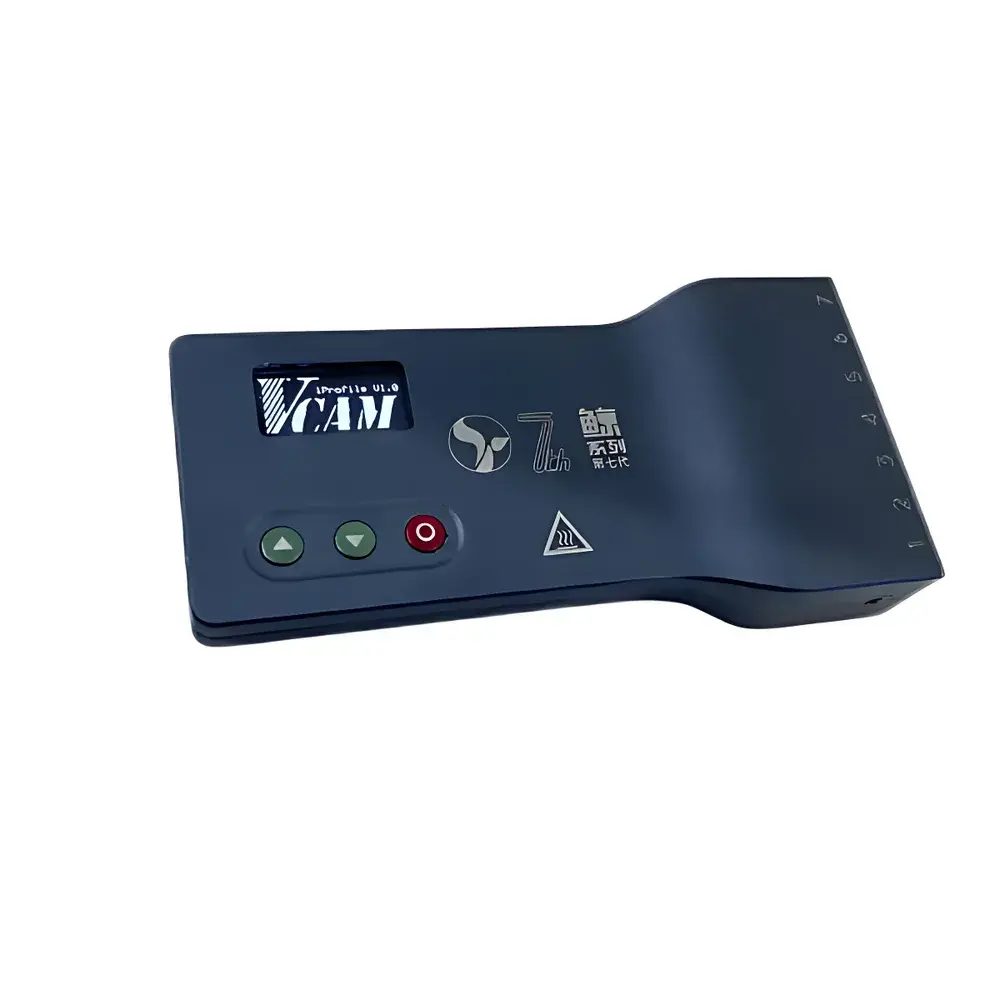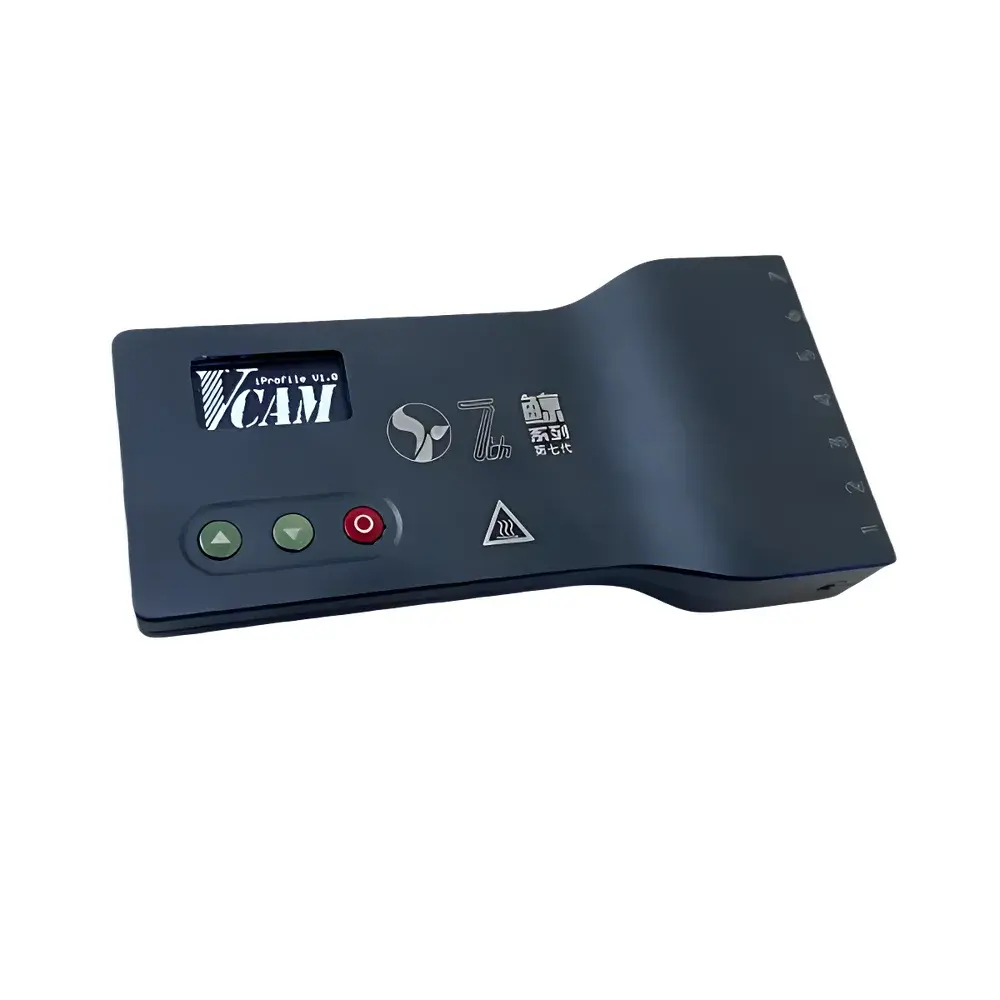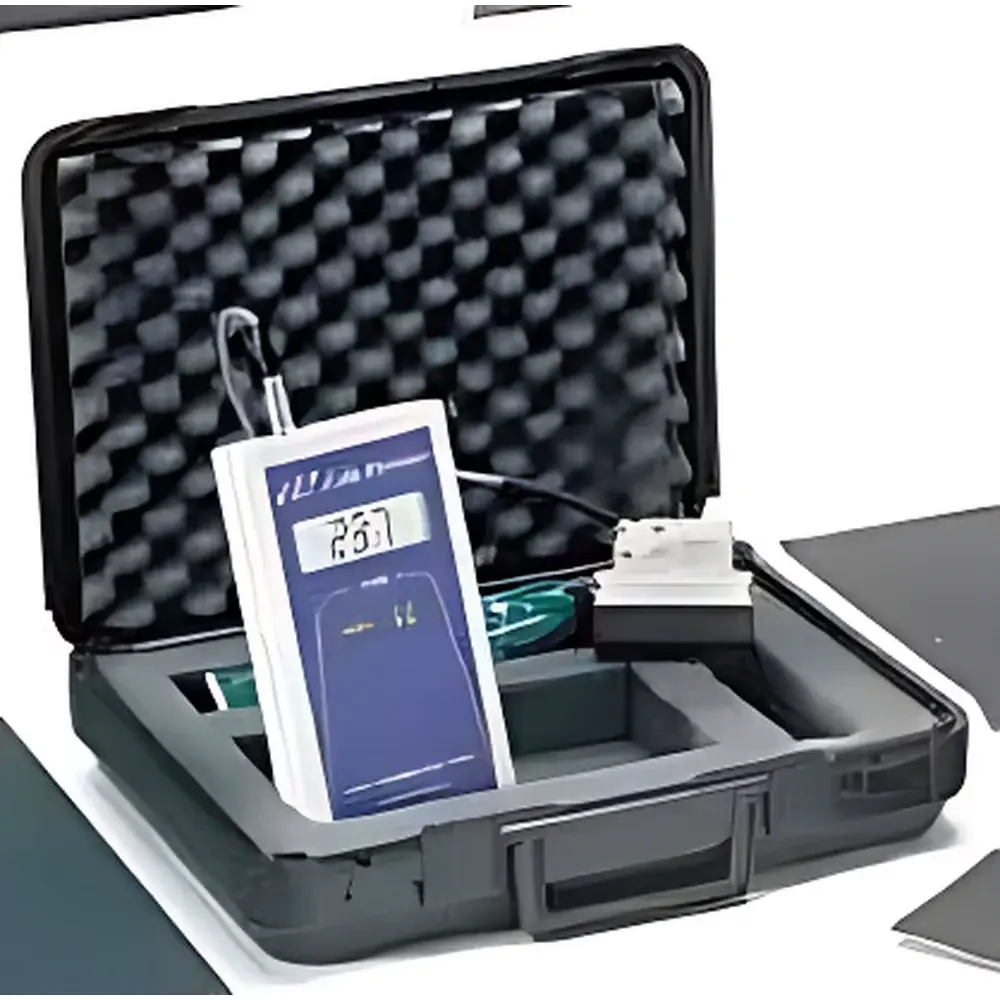
Cole-Parmer 32986-00 Handheld Doppler Flow Meter
| Brand | Cole-Parmer |
|---|---|
| Origin | USA |
| Manufacturer Type | Authorized Distributor |
| Origin Category | Imported |
| Model | 32986-00 |
| Flow Principle | Differential Pressure (Doppler Ultrasonic) |
| Fluid Compatibility | Liquids with suspended particles or entrained gas bubbles (≥100 ppm, ≥100 µm) |
| Pipe Diameter Range | 1–60 in (2.5–152.4 cm) |
| Velocity Range | 0.30–30 ft/s (0.1–9 m/s) |
| Accuracy | ±2% of full scale |
| Repeatability | ±1% of full scale |
| Operating Temperature | −20 to 60 °C (−28 to 140 °F) |
| Display | 4-digit LCD (selectable units: ft/s or m/s) |
| Power | 4 × AA alkaline batteries (included) |
| Standard Accessories | Carrying case, sensor with 6-ft (1.8-m) cable, coupling gel tube |
Overview
The Cole-Parmer 32986-00 Handheld Doppler Flow Meter is an ultrasonic transit-time independent flow measurement instrument engineered for non-invasive, real-time velocity profiling in opaque, aerated, or particulate-laden liquids. Unlike traditional differential pressure or magnetic flowmeters, this device operates on the Doppler shift principle: it emits a high-frequency ultrasonic beam (typically 1–2 MHz) into the flowing medium and detects frequency shifts in the reflected signal caused by moving scatterers—such as suspended solids, air bubbles, or emulsified droplets. This physics-based approach enables reliable quantification of average axial velocity without requiring pipe penetration, flange modification, or process shutdown. Designed specifically for field deployment in industrial environments, the unit delivers calibrated velocity output directly traceable to NIST-traceable reference standards and complies with ISO 17025-aligned calibration practices for portable instrumentation.
Key Features
- Non-intrusive clamp-on sensor design eliminates process contamination risk and avoids pressure drop or flow disturbance
- Optimized for challenging media: slurries, wastewater, pulp suspensions, food-grade emulsions, and mining tailings containing ≥100 ppm particulates ≥100 µm in diameter
- Wide pipe compatibility: validated performance across nominal diameters from 1 inch (25 mm) to 60 inches (1524 mm), including steel, PVC, stainless steel, and HDPE pipes
- Integrated signal processing algorithm with adaptive gain control and noise rejection—minimizes false echoes from pipe wall harmonics or turbulent eddies
- Backlit 4-digit LCD display with dual-unit selection (ft/s or m/s), real-time signal amplitude feedback, and battery status indicator
- Energy-efficient architecture supporting up to 30 hours of continuous measurement on four standard AA alkaline cells—no proprietary battery packs required
- Ruggedized IP65-rated housing with rubber overmold for shock absorption and resistance to moisture, dust, and incidental chemical splashes
Sample Compatibility & Compliance
This Doppler flowmeter is intended exclusively for conductive or acoustically reflective liquid streams where discrete scatterers are present at sufficient concentration and size. It is not suitable for clean, degassed water; homogenous Newtonian solvents; or highly viscous fluids lacking internal acoustic contrast. The instrument meets CE marking requirements for electromagnetic compatibility (EN 61326-1) and safety (EN 61010-1). While not certified under FDA 21 CFR Part 11, its data logging capability (when paired with optional external recording devices) supports GLP/GMP-aligned documentation workflows. Calibration certificates per ISO/IEC 17025 are available upon request for audit-ready traceability.
Software & Data Management
The 32986-00 operates as a standalone field instrument with no embedded firmware update capability or USB connectivity. All configuration—including unit selection, zero offset adjustment, and damping factor—is performed via tactile keypad interface. For long-term trending or regulatory reporting, users may manually record velocity readings alongside timestamped process conditions. When integrated into broader SCADA or LIMS ecosystems, analog output (4–20 mA) can be interfaced via third-party signal conditioners. Raw velocity values adhere to ASTM D5158-17 guidelines for ultrasonic flow measurement in heterogeneous liquids, ensuring methodological consistency across laboratories and operational sites.
Applications
- Wastewater treatment plant inflow/outflow monitoring during maintenance cycles without bypassing primary clarifiers or digesters
- In-line verification of slurry transport velocity in mineral processing pipelines to prevent sedimentation-induced blockages
- Sanitary validation of CIP rinse flow profiles in dairy and beverage production lines—compliant with 3-A Sanitary Standards for non-contact measurement
- Field verification of HVAC chilled water loop velocities during commissioning, especially in insulated or buried piping configurations
- Emergency response assessment of floodwater conveyance rates in municipal storm drain networks using existing infrastructure
- Academic research in environmental hydraulics where temporary, reversible instrumentation is mandated by ethics review boards
FAQ
Can this meter measure flow in clean water?
No. The Doppler principle requires acoustic scatterers (particles or bubbles) to generate measurable frequency shifts. Clean, filtered, or deaerated water yields insufficient signal return and will result in unstable or null readings.
Is pipe material a limiting factor?
Yes. Optimal performance is achieved on dense, homogeneous pipe walls such as carbon steel, stainless steel, or cast iron. Performance degrades significantly on fiberglass-reinforced polymer (FRP), concrete-lined, clay, or highly damped plastic pipes due to ultrasonic attenuation and mode conversion.
What is the minimum particle concentration required?
A minimum of 100 parts per million (ppm) of suspended solids ≥100 micrometers in diameter is recommended for consistent signal lock and repeatability within ±1% of full scale.
Does the device require annual recalibration?
While no mandatory annual recalibration is specified, Cole-Parmer recommends verification against a traceable flow standard every 12 months—or after any physical impact to the transducer—to maintain metrological integrity per ISO/IEC 17025 guidance.
Can the sensor be permanently mounted?
The included sensor is designed for temporary, handheld use with couplant gel application. Permanent installation is possible with optional mechanical mounting brackets and industrial-grade coupling compounds—but voids the standard warranty and requires site-specific acoustic path validation.