
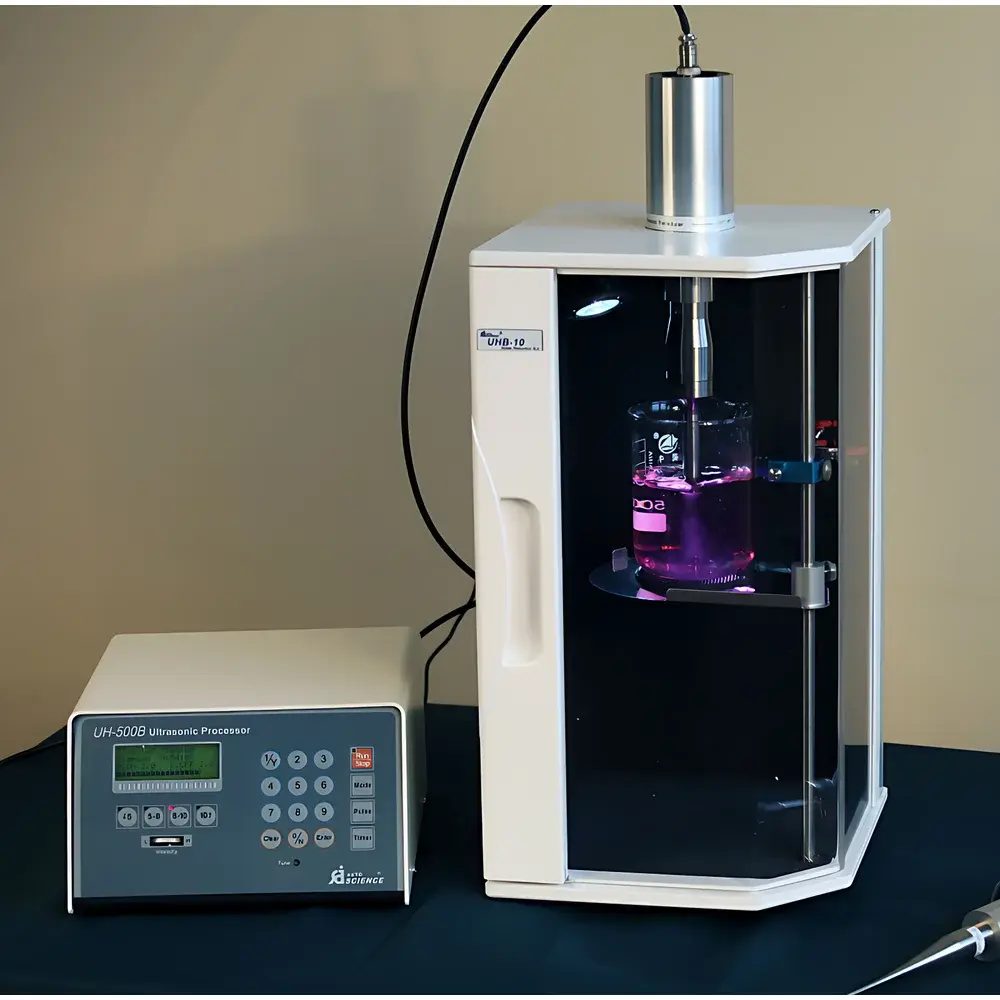
Autoscience UH-500B High-Intensity Ultrasonic Homogenizer for Cell Disruption and Sample Processing
| Brand | Autoscience |
|---|---|
| Origin | Tianjin, China |
| Model | UH-500B |
| Output Power | 500 W |
| Adjustable Amplitude Range | 20–100% |
| Pulse Duty Cycle | 1–90% |
| Sample Volume Capacity | 250 µL – 500 mL |
| Input Particle Size | <15 mm |
| Output Particle Size | <40 µm |
| Final Particle Distribution | 0.01–0.5 mm |
| Compatible Probe Sizes | 1/8", 3/16", 1/4", 1/2" |
| Operating Modes | Continuous & Pulsed |
| External Control Interface | Yes |
| Footswitch Optional | Yes |
Overview
The Autoscience UH-500B is a high-intensity ultrasonic homogenizer engineered for reliable cell disruption, tissue homogenization, nanoparticle dispersion, emulsification, and solvent-based extraction in research and quality control laboratories. It operates on the principle of piezoelectric transduction, converting electrical energy into high-frequency mechanical vibrations (typically 20 kHz) transmitted through interchangeable titanium alloy probes (sonotrodes). These vibrations generate intense cavitation—microbubble formation and collapse—in liquid media, producing localized shear forces, microstreaming, and shockwaves sufficient to lyse microbial cells, dissociate protein complexes, reduce particle size, and accelerate mass transfer in solid–liquid extractions. Designed for reproducible processing across biological, pharmaceutical, and material science workflows, the UH-500B delivers stable acoustic energy output with real-time amplitude compensation and automatic frequency tracking to maintain optimal resonance despite load variations or temperature drift.
Key Features
- 500 W nominal output power with dynamic amplitude control (20–100%), digitally displayed via LED bar graph and numeric readout
- Automatic frequency tracking circuitry ensures continuous resonance lock without manual tuning, minimizing probe wear and maximizing energy transfer efficiency
- Programmable digital timer (0–99 min 59 sec) with audible end-of-cycle alert and auto-shutdown
- Adjustable pulse mode with duty cycle from 1% to 90%, enabling precise thermal management during heat-sensitive sample processing
- Integrated safety protocols: over-current protection, over-temperature cutoff, and user-defined maximum power limit to prevent probe fracture or sample degradation
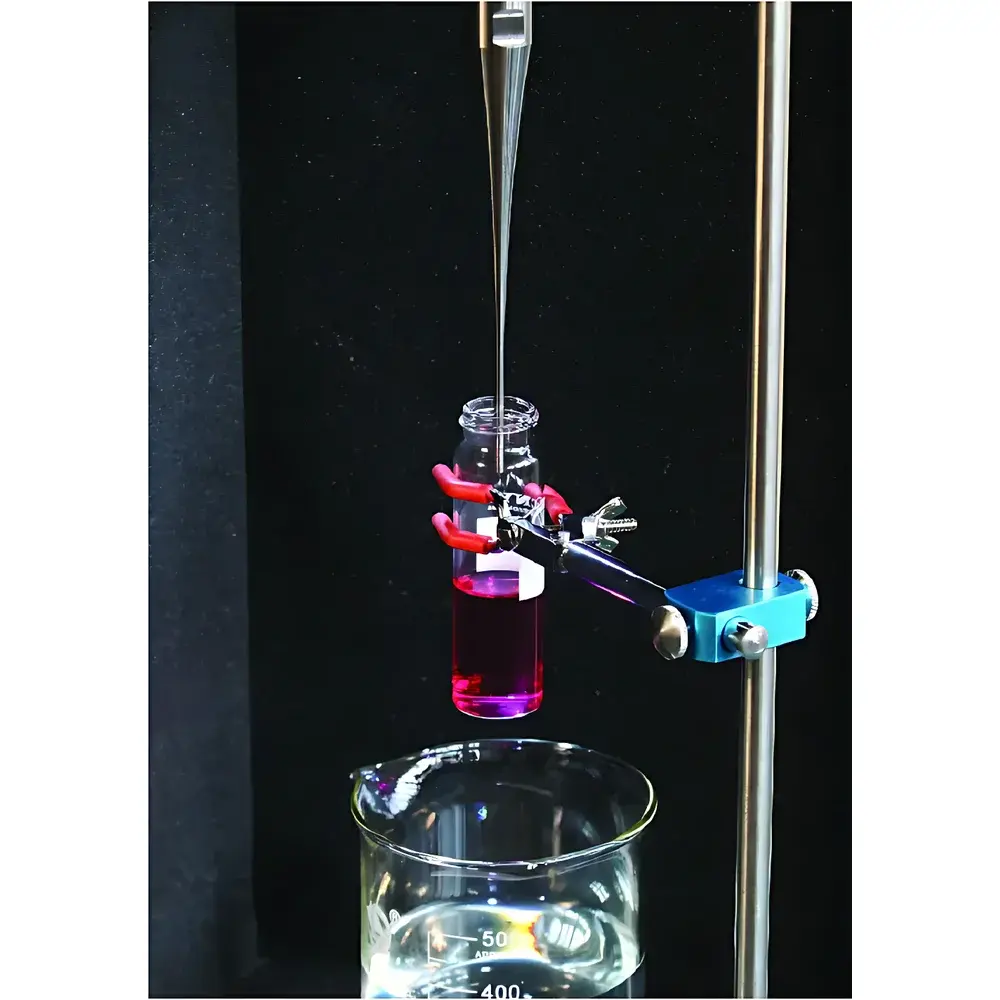
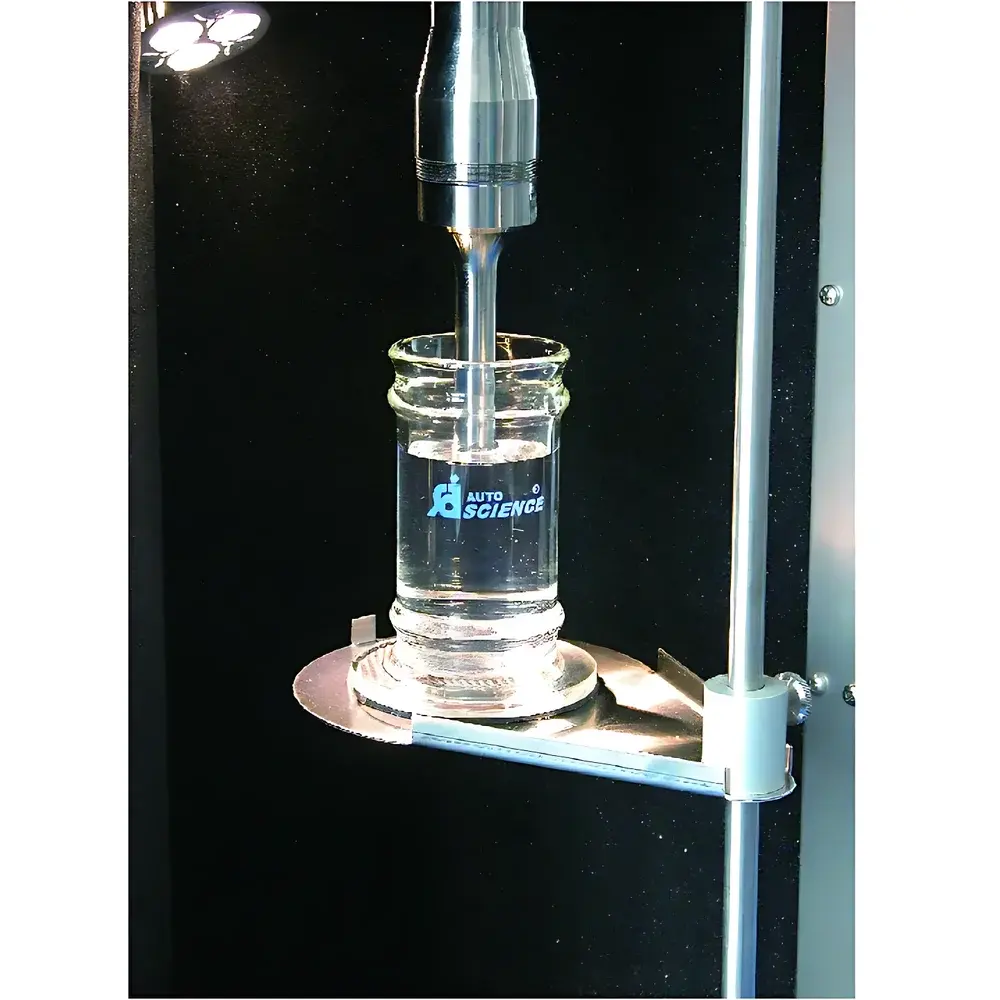
- Modular probe compatibility with standardized 1/8″, 3/16″, 1/4″, and 1/2″ tapered titanium sonotrodes—each optimized for specific volume ranges and viscosity profiles
- Front-panel external control port (TTL-compatible) and optional footswitch interface for hands-free operation in biosafety cabinets or glove boxes
Sample Compatibility & Compliance
The UH-500B accommodates soft-to-moderately viscous samples including bacterial and yeast cultures, mammalian cell suspensions, plant tissues, liposomes, polymer dispersions, and crude botanical extracts. Its scalable probe selection allows consistent performance across volumes from 250 µL (microscale lysis) to 500 mL (benchtop homogenization). The system complies with general laboratory safety standards per IEC 61010-1 for electrical equipment and meets CE marking requirements for electromagnetic compatibility (EMC Directive 2014/30/EU). While not certified for GMP manufacturing environments, its operational repeatability, amplitude linearity, and audit-ready parameter logging support GLP-aligned documentation practices. For regulated applications requiring electronic record integrity, optional RS-232 or USB data export enables integration with LIMS or validated software platforms compliant with FDA 21 CFR Part 11 when paired with appropriate validation protocols.
Software & Data Management
The UH-500B operates as a standalone instrument with embedded firmware; no proprietary software installation is required. All operating parameters—including elapsed time, set amplitude, pulse ratio, and real-time power status—are retained in non-volatile memory and visible on the front panel display. Optional serial communication (RS-232) permits remote triggering and parameter readback for automated workflows. When interfaced with third-party lab automation systems or custom Python/ LabVIEW scripts, the device supports timestamped event logging, enabling traceability of processing conditions for method validation. Users may export session metadata (start/stop time, amplitude setting, total active duration) for inclusion in analytical reports or SOP documentation.
Applications
- Microbial cell lysis for plasmid DNA, genomic DNA, and protein extraction (E. coli, Bacillus, Saccharomyces)
- Preparation of subcellular fractions (mitochondria, nuclei) from cultured mammalian cells
- Nanoparticle synthesis and deagglomeration (e.g., TiO₂, SiO₂, lipid nanoparticles)
- Accelerated solvent extraction (ASE) of phytochemicals, alkaloids, and polyphenols from dried plant matrices
- Emulsification of oil-in-water formulations for cosmetic and pharmaceutical development
- Disruption of biofilms and extracellular polymeric substances (EPS) in environmental microbiology studies
FAQ
What is the difference between nominal power rating and actual delivered acoustic power?
Nominal power (e.g., 500 W) refers to the maximum electrical input the generator can supply under optimal load. Actual acoustic output depends on probe geometry, immersion depth, medium viscosity, and temperature. As demonstrated in comparative testing, identical probe configurations in low-viscosity water yield similar cavitation intensity across different-rated units—highlighting the importance of probe selection over raw wattage alone.
Can the UH-500B be used for continuous large-volume processing?
It is designed for batch-mode operation up to 500 mL. For >1 L volumes or true continuous flow, a dedicated ultrasonic flow cell system with temperature-controlled jacketing is recommended.
Is calibration traceable to national standards?
While the UH-500B does not include factory-calibrated acoustic output measurement, amplitude linearity is verified against reference transducers during production. Users may perform in-house verification using calorimetric methods (ASTM E2810) or calibrated hydrophones per IEC 62127-1.
How often should the titanium probe be replaced?
Probe lifespan depends on usage intensity and sample abrasiveness. Under typical biological lysis conditions, a 1/4″ probe lasts ≥500 hours. Visual inspection for pitting or tip erosion—and periodic amplitude consistency checks—are recommended maintenance practices.
Does the unit support regulatory-compliant audit trails?
Native logging captures only basic operational parameters. Full 21 CFR Part 11 compliance requires integration with validated third-party software that provides electronic signatures, change history, and secure data archiving—beyond the scope of the base instrument firmware.



