
W.S. Tyler 8-inch (20 cm) Stainless Steel and Brass Test Sieve Set
| Brand | W.S. Tyler |
|---|---|
| Origin | USA |
| Model | 5189 |
| Frame Material | Stainless Steel or Brass |
| Mesh Material | Stainless Steel or Brass |
| Nominal Aperture Range | 20 µm to 25.0 mm |
| Overall Height | Full = 2-5/8" (66.7 mm), Half = 1-5/8" (41.3 mm) |
| Depth to Cloth | Full = 2" (50.8 mm), Half = 1" (25.4 mm) |
| Compliance | ASTM E11, ISO 3310-1, USP <786> |
Overview
The W.S. Tyler 8-inch (20 cm) Test Sieve Set is a precision-engineered mechanical separation tool designed for standardized dry and wet particle size analysis in laboratory, quality control, and R&D environments. Based on the fundamental principle of vibratory sieving—where particles are stratified and separated by size through controlled oscillatory motion under gravity—the sieve set serves as the physical core component of certified sieve shaker systems such as the W.S. Tyler RO-TAP® and Gilson RX-24. Each sieve conforms to internationally recognized dimensional and performance specifications, ensuring metrological traceability and inter-laboratory comparability. The 8-inch diameter provides optimal sample capacity while maintaining compatibility with standard sieve shaker clamping mechanisms across major OEM platforms.
Key Features
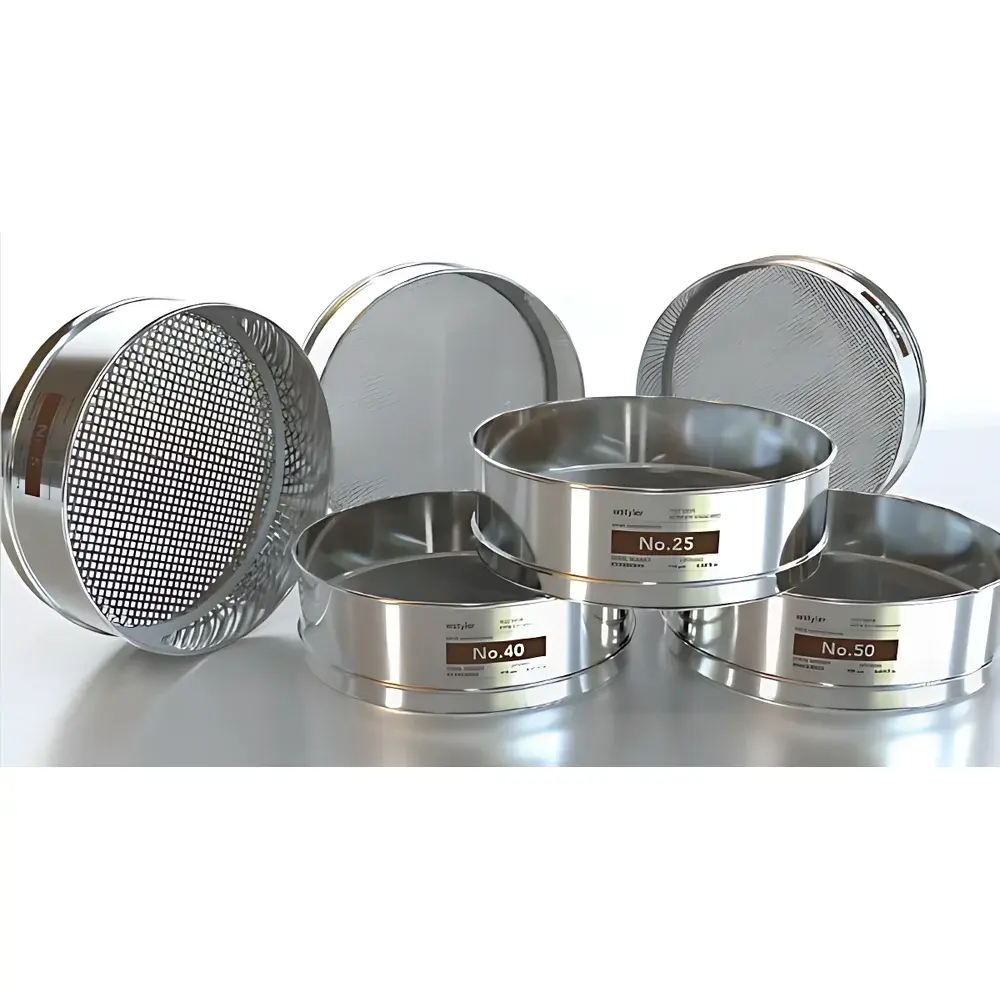
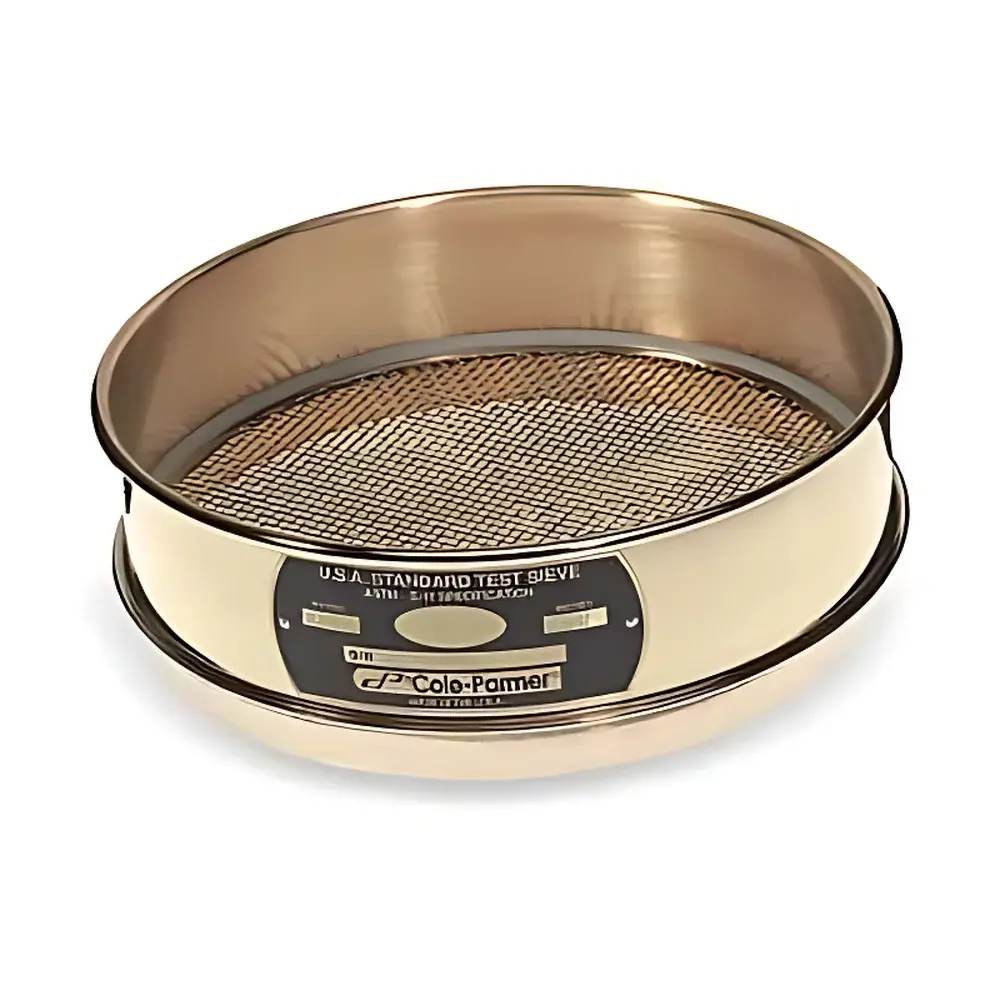
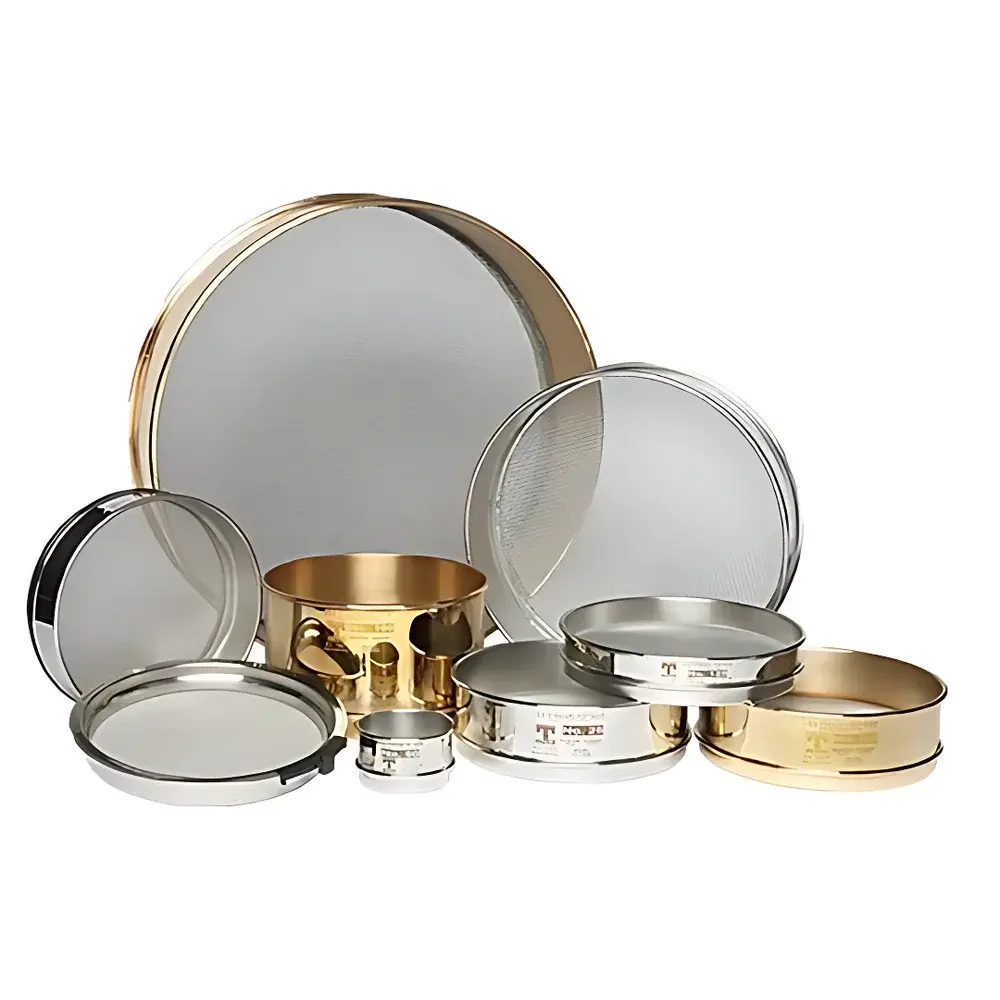
- Two-frame material options: corrosion-resistant 304 stainless steel frames paired with either stainless steel or brass woven wire cloth—enabling selection based on chemical compatibility, wear resistance, and regulatory requirements.
- Precision-woven mesh manufactured to strict tolerances per ASTM E11 and ISO 3310-1, with nominal aperture sizes ranging from 20 µm (No. 635) to 25.0 mm (4″), covering all standard Tyler, ASTM, and ISO sieve series.
- Full-height (2-5/8″) and half-height (1-5/8″) configurations available; full-height sieves provide greater sample loading volume and reduced risk of overflow during high-amplitude vibration protocols.
- Consistent depth-to-cloth dimension (2″ full / 1″ half) ensures uniform bed depth across stacked assemblies, critical for reproducible mass-based fractionation and minimizing channeling effects.
- Interchangeable design compatible with industry-standard sieve shakers—including RO-TAP®, Gilson RX-24, Endecotts AS200, and Fritsch Analysette 3—without adapter modification.
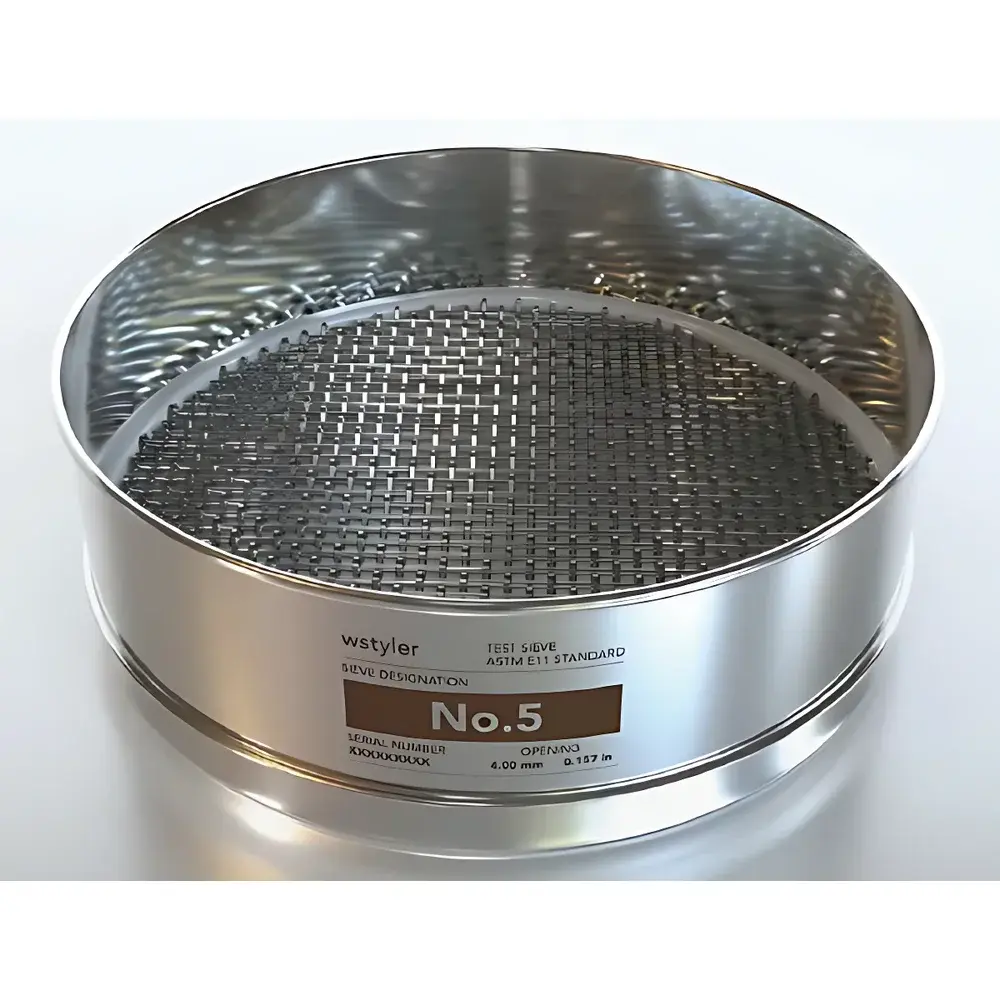
- Laser-etched identification on each frame includes model number (e.g., 5189), nominal aperture, standard designation (e.g., “No. 5”, “4.0 mm”), and compliance marking for audit-ready documentation.
Sample Compatibility & Compliance
This sieve set is validated for use with granular solids, powdered pharmaceuticals, mineral aggregates, catalysts, ceramics, food ingredients, and polymer resins—provided samples are free-flowing and non-fibrous. It supports both dry sieving (per ASTM C136, D6913, D5758) and wet sieving (ASTM C117) methodologies when used with appropriate liquid dispersion media and post-sieving drying protocols. All frames and cloths meet FDA-compliant material specifications where applicable; stainless steel variants are suitable for GMP environments requiring non-reactive surfaces. Calibration certificates traceable to NIST standards are available upon request for GLP/GMP audits.
Software & Data Management
While the sieve itself is a passive mechanical component, its integration into automated sieving workflows enables digital data capture via compatible shaker controllers (e.g., RO-TAP® e2, Gilson AutoSieve). These systems log vibration amplitude, time duration, tap count, and rotational speed—parameters directly influencing separation efficiency and repeatability. When coupled with balance-integrated fraction collection and LIMS connectivity, raw mass-per-fraction data can be exported in CSV or XML format for statistical process control (SPC), cumulative undersize distribution plotting (Rosin-Rammler or Gates-Gaudin-Schuhmann fitting), and 21 CFR Part 11–compliant electronic records.
Applications
- Pharmaceutical solid dosage development: excipient particle sizing per USP , blend uniformity assessment, and granulation endpoint determination.
- Construction materials testing: gradation analysis of fine/coarse aggregates per ASTM C136 and AASHTO T 27.
- Geotechnical engineering: soil particle-size distribution for Unified Soil Classification System (USCS) and AASHTO classification.
- Chemical manufacturing: catalyst support screening, pigment dispersion validation, and batch release testing of micronized APIs.
- Food & beverage QA: flour fineness verification (e.g., USDA Standard No. 100), spice particle consistency, and starch granularity profiling.
- Academic research: sedimentology studies, powder flow characterization, and validation of laser diffraction or image-based particle analyzers.
FAQ
What is the difference between full-height and half-height Tyler sieves?
Full-height sieves (2-5/8″ overall, 2″ depth to cloth) accommodate larger sample masses and reduce oversize particle jamming during extended sieving cycles; half-height versions (1-5/8″, 1″) are optimized for rapid screening of smaller batches or when stack height is constrained.
Can these sieves be used on non-Tyler shakers?
Yes—8-inch (20 cm) diameter is an industry-wide standard. They are mechanically compatible with Gilson, Endecotts, Fritsch, and Humboldt shakers, provided clamping force and stroke amplitude fall within recommended operational envelopes.
How often should test sieves be recalibrated or replaced?
Per ASTM E11 Section 7.2, sieves must be verified before first use, after any damage or cleaning that may distort the mesh, and at defined intervals (typically every 6–12 months) using certified reference standards or optical measurement per ISO 4787.
Is brass mesh suitable for acidic sample matrices?
Brass (Cu/Zn alloy) exhibits limited resistance to strong acids and oxidizing agents; stainless steel mesh is strongly recommended for corrosive or high-pH applications to prevent metal leaching and aperture deformation.
Does model number 5189 correspond to a specific aperture size?
Yes—model 5189 denotes a nominal aperture of 4.0 mm, designated as “No. 5” in the Tyler standard series and compliant with ISO 3310-1 R40/3 grading.



