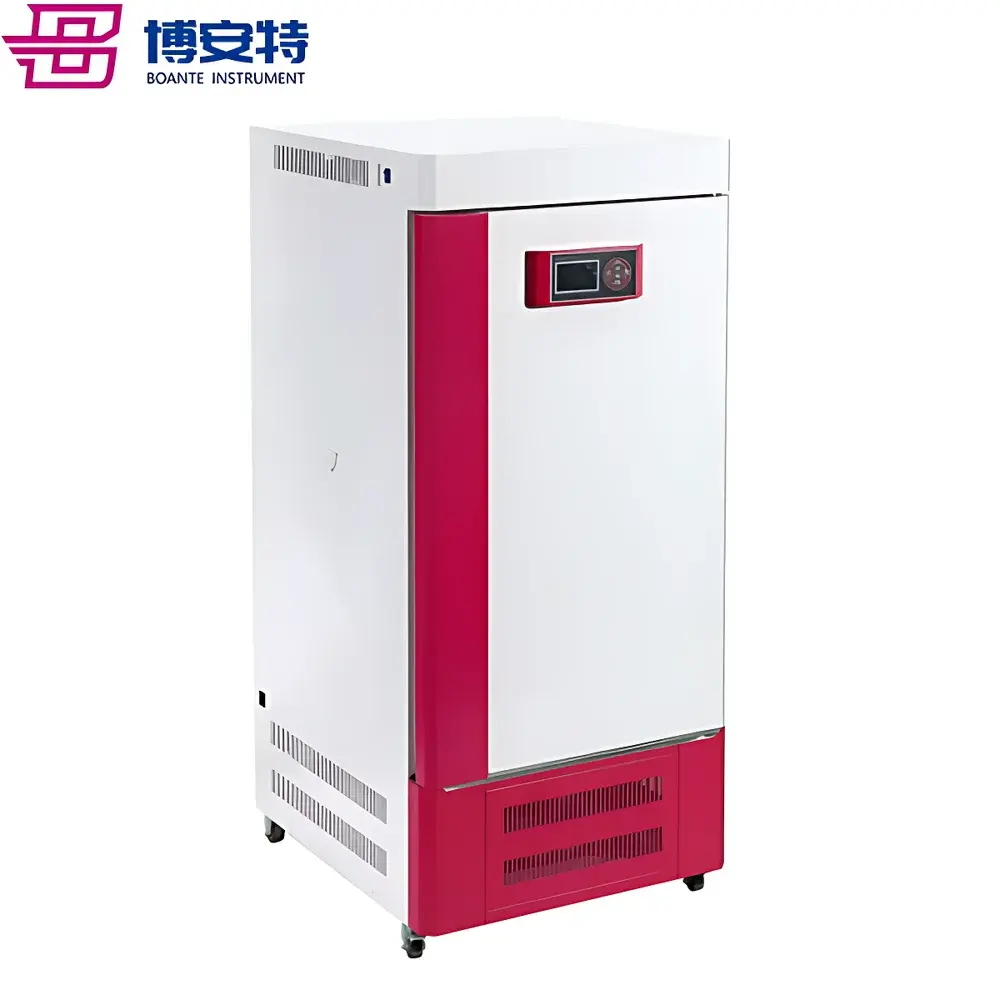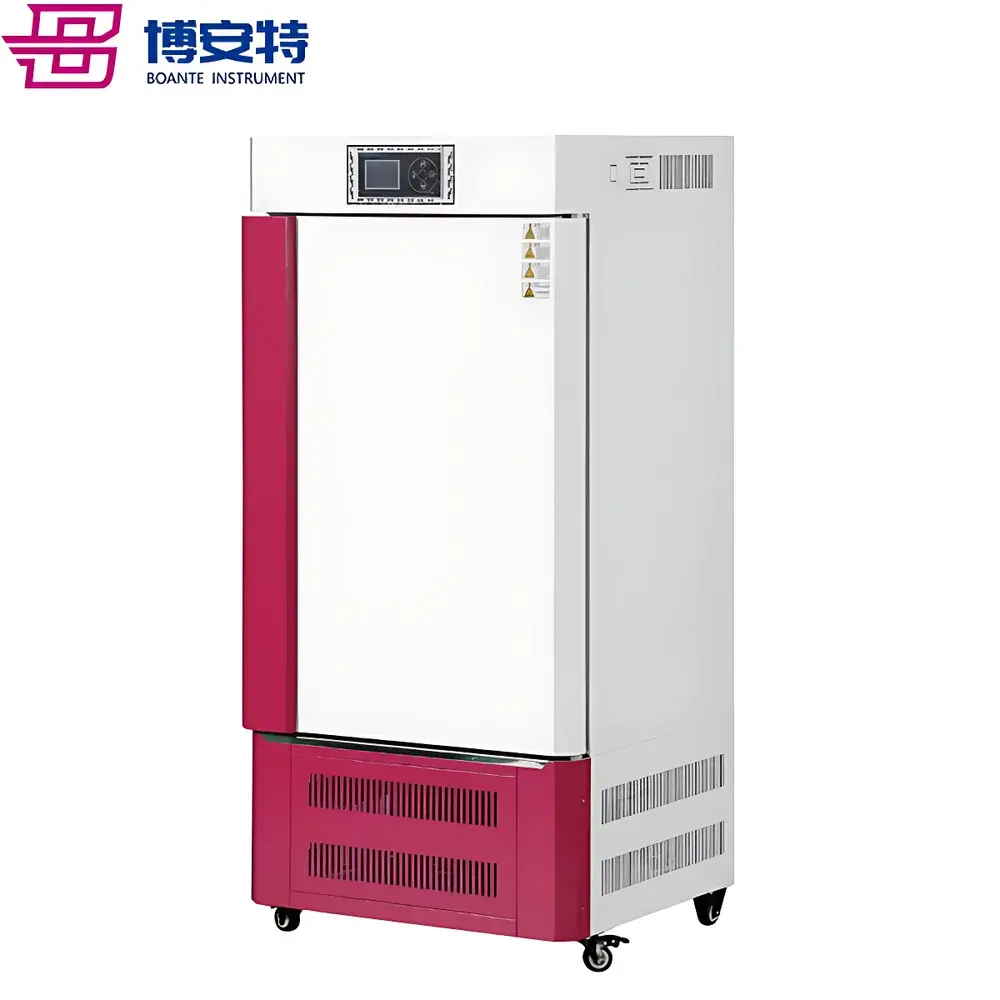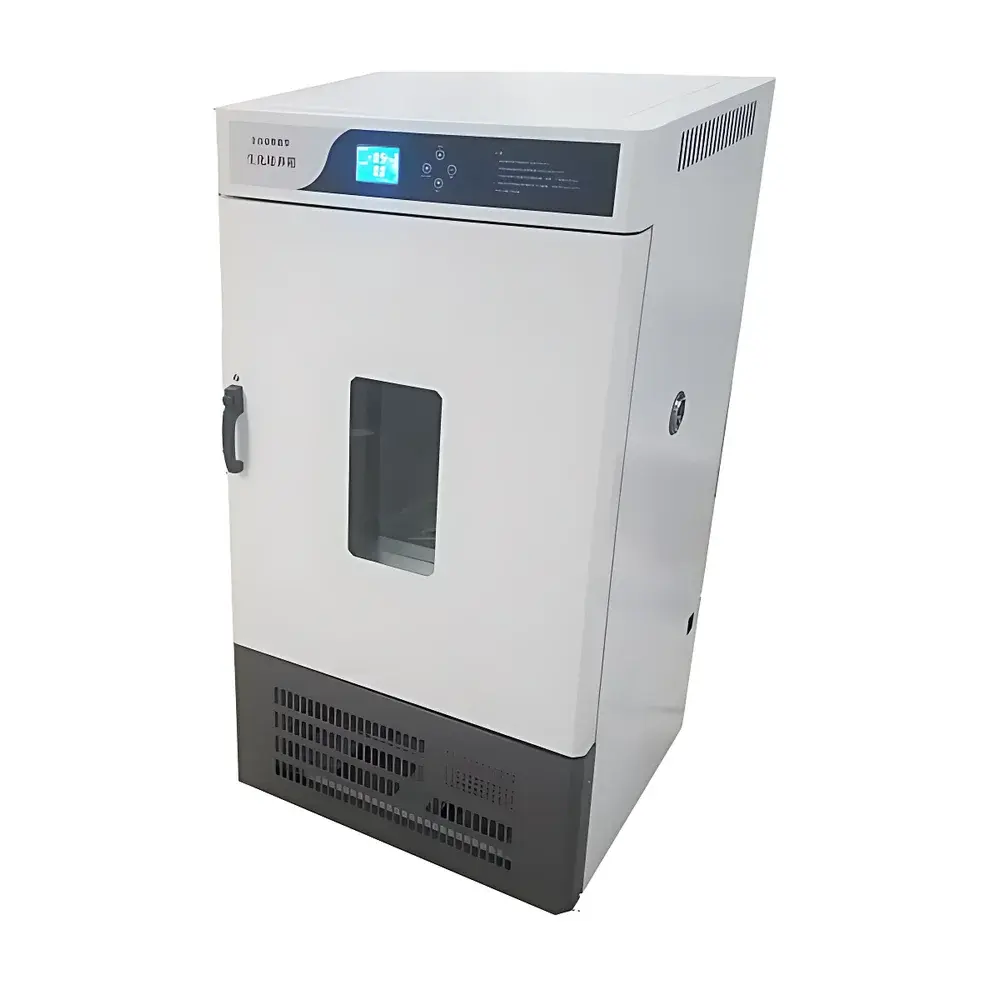
HJ MJ-100-ZD Mold Incubator
| Brand | HJ |
|---|---|
| Origin | Shanghai, China |
| Manufacturer Type | Direct Manufacturer |
| Model | MJ-100-ZD |
| Price | USD 2,050 (approx.) |
| Temperature Range | 0–70 °C |
| Temperature Uniformity | ±1 °C (at 37 °C) |
| Humidity Range | 20–95 %RH |
| Chamber Capacity | 100 L |
| Temperature Resolution | 0.1 °C |
| Temperature Fluctuation | ±0.5 °C |
| Control Method | PID with Heating/Refrigeration Balance |
| Power Supply | 220 V, 50 Hz |
| Heating Power | 0.5 kW |
| Refrigerant | R134a |
| Insulation | Flame-retardant rigid polyurethane foam + fire-resistant board |
| Interior Material | 304 Stainless Steel |
| Door | Double-door design with full-view tempered glass inner door and magnetic-seal outer door |
| Safety Features | Over-temperature alarm, compressor overheat protection, controller fault detection, power failure memory, door-open alarm |
| Optional Functions | UV sterilization lamp, internal lighting, temperature offset calibration, menu lock, programmable timing (0–9999 min), auto-defrost |
Overview
The HJ MJ-100-ZD Mold Incubator is a precision-controlled, dual-mode (heating & refrigeration) environmental chamber engineered for reliable cultivation of filamentous fungi, yeasts, dermatophytes, and other humidity- and temperature-sensitive microorganisms under standardized laboratory conditions. Designed in accordance with ISO 21527-1:2008 (microbiological methods for yeasts and molds), it maintains stable thermal and hygrometric profiles essential for mycological isolation, identification, and antifungal susceptibility testing (e.g., CLSI M38-A3). Its forced-air convection system—driven by a low-noise centrifugal fan—ensures uniform airflow distribution across the 100 L stainless-steel chamber (350 × 450 × 650 mm internal dimensions), minimizing thermal gradients and condensation-related contamination risks. The unit operates within a broad ambient-adaptive range (0–70 °C), with active cooling enabled down to 4 °C (when ambient ≤26 °C), supporting both mesophilic (e.g., Aspergillus niger, Penicillium chrysogenum) and thermotolerant mold species (e.g., Paecilomyces variotii).
Key Features
- 304 stainless-steel interior with seamless, radius-rounded corners—compliant with ISO 14644-1 Class 5 cleanroom surface requirements for ease of decontamination and microbial residue removal.
- PID-based dual-loop temperature control integrating PT100 platinum resistance sensors and pulse-width-modulated (PWM) refrigeration output—achieving ±0.5 °C stability and ±1 °C spatial uniformity at setpoints including 25 °C, 30 °C, and 37 °C.
- Humidity regulation via integrated ultrasonic humidifier and desiccant-assisted dehumidification, maintaining 20–95 %RH with ±3 %RH accuracy (calibrated per ASTM E2654-19).
- Dual-door architecture: inner tempered glass door (fully transparent, non-frosting) and outer magnetic-sealed steel door—reducing thermal loss by >40% versus single-door designs during frequent access.
- Comprehensive safety architecture: independent over-temperature cutoff (mechanical backup), compressor thermal overload relay, real-time controller diagnostics, and automatic restart with parameter retention after power interruption.
- Configurable operational modes: continuous run, timed operation (0–9999 min), programmable ramp-soak cycles, and user-defined deviation correction for traceable calibration alignment.
Sample Compatibility & Compliance
The MJ-100-ZD accommodates standard microbiological consumables—including Petri dishes (90 mm and 150 mm), slant tubes, multi-well plates (up to 6-well format), and sterile tissue culture flasks—on two adjustable 15 kg-rated stainless-steel shelves. Its chamber geometry supports simultaneous incubation of multiple strain isolates without cross-contamination risk, validated per EN 13098-2:2021 (sterility testing environments). The unit meets electrical safety requirements per IEC 61010-1:2010 and carries CE marking for laboratory equipment. While not intrinsically certified for GLP/GMP production environments, its audit-ready features—including password-protected parameter locking, electronic log export (via USB), and configurable alarm event timestamps—facilitate compliance with FDA 21 CFR Part 11 when deployed in QC microbiology labs supporting pharmaceutical or food safety testing.
Software & Data Management
The incubator employs an embedded 4.3-inch TFT-LCD interface with tactile membrane keys (optional capacitive touch panel upgrade available). All operational parameters—including setpoints, real-time readings, alarm history (last 100 events), and runtime logs—are stored locally with timestamped entries. Data export is supported via USB 2.0 port in CSV format, compatible with LIMS integration (e.g., LabWare, STARLIMS) and statistical process control (SPC) platforms. Firmware supports firmware update via USB and enables optional RS-485 Modbus RTU communication for centralized building management system (BMS) integration. Audit trail functionality includes operator ID tagging (via PIN entry), change tracking for critical parameters (e.g., temp/humidity setpoints), and immutable logging of safety-triggered events—aligning with ALCOA+ data integrity principles.
Applications
- Routine mycological culture in clinical microbiology labs (e.g., fungal isolation from sputum, nail scrapings, or environmental swabs).
- Environmental monitoring programs per ISO 14644-2:2015—incubating settle plates and air samples collected in cleanrooms and aseptic processing suites.
- Pharmaceutical stability testing of raw materials and finished products under ICH Q1A(R2) accelerated conditions (e.g., 30 °C/65 %RH, 40 °C/75 %RH).
- Agricultural research: spore germination assays, biocontrol agent propagation (e.g., Trichoderma harzianum), and plant pathogen virulence studies.
- Food safety laboratories conducting ISO 21527-2:2008 mold enumeration in dairy, cereals, and dried fruits.
- Educational use in university life science curricula for hands-on training in aseptic technique, fungal morphology, and growth kinetics.
FAQ
What is the minimum operating temperature with active refrigeration?
The unit achieves stable cooling down to 4 °C when ambient temperature remains ≤26 °C. Below this ambient threshold, refrigeration capacity declines due to condenser heat rejection limitations.
Is the humidity system validated for ISO 17025-compliant labs?
Yes—humidity sensors are factory-calibrated against NIST-traceable hygrometers; users may perform in-house verification using saturated salt solutions (e.g., LiCl, MgCl₂) per ISO 17025 Clause 5.9.
Can the incubator be integrated into a lab-wide monitoring network?
Via optional RS-485 Modbus RTU module, it supports real-time telemetry (temp/RH/alarms) to SCADA or centralized environmental monitoring systems (EMS) compliant with EU Annex 15 and FDA guidance on continuous monitoring.
Does the unit support GxP documentation requirements?
It provides electronic records meeting ALCOA+ criteria (Attributable, Legible, Contemporaneous, Original, Accurate); however, full 21 CFR Part 11 compliance requires supplemental validation protocols executed by the end user’s QA department.
What maintenance intervals are recommended?
Monthly: wipe interior with 70% ethanol; inspect door gasket integrity. Quarterly: clean condenser coil and humidifier reservoir; verify temperature/humidity sensor drift against reference standards. Annually: full calibration by accredited service provider.