
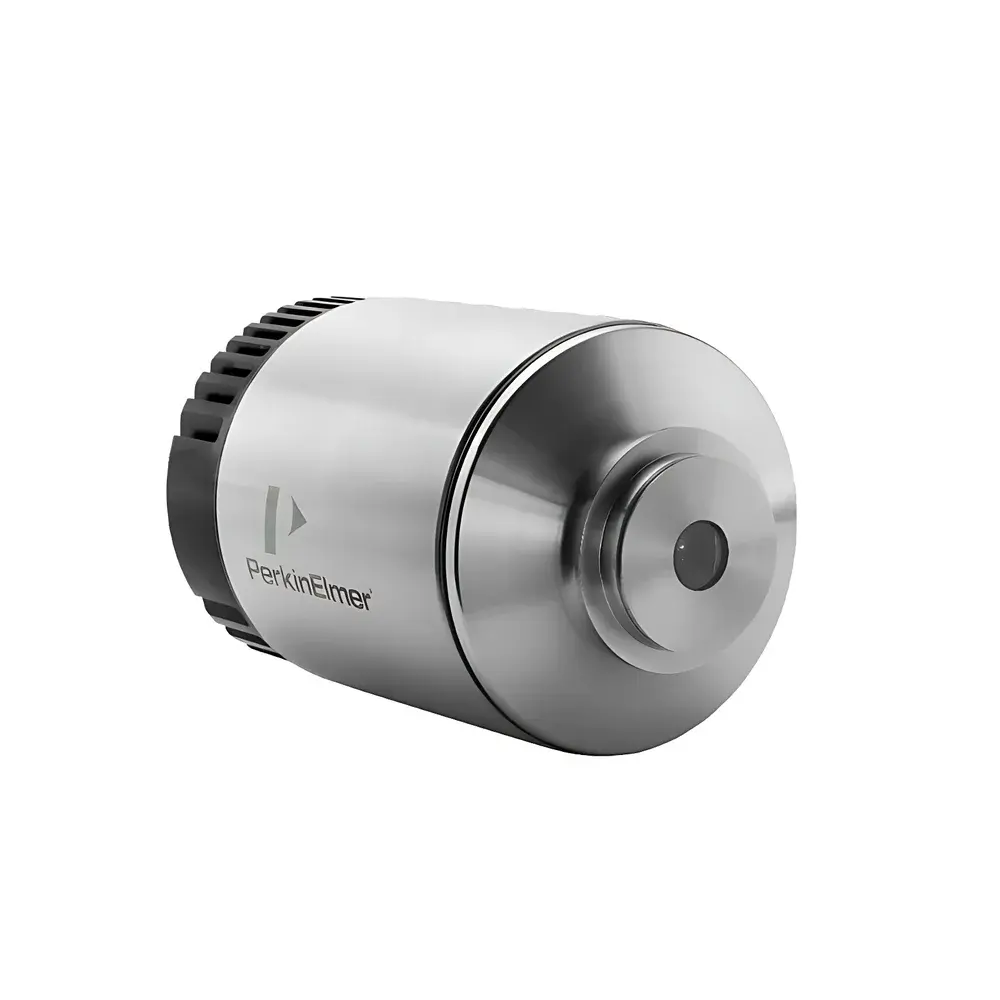
Perten DA 7350 Online Near-Infrared Spectrometer
| Brand | Perten |
|---|---|
| Origin | USA |
| Model | DA 7350 |
| Instrument Type | Online |
| Wavelength Range | 950–1650 nm |
| Scan Speed | >30 sub-spectra per second |
| Data Sampling Interval | User-Configurable |
| Measurement Modes | Near-Infrared Reflectance & Digital Color Imaging |
| Chemometrics Software | PerCAL |
| Compliance | Designed for GLP/GMP environments |
| Communication Protocols | OPC UA, PROFINET, Modbus TCP, Fieldbus |
Overview
The Perten DA 7350 Online Near-Infrared Spectrometer is an industrial-grade, real-time process analytical technology (PAT) instrument engineered for continuous, non-destructive compositional monitoring in dynamic production environments. Operating on the principle of diffuse reflectance near-infrared spectroscopy (NIRS), the DA 7350 captures spectral data across a robust 950–1650 nm range—covering key overtones and combination bands of C–H, N–H, and O–H bonds—to quantitatively determine moisture, protein, fat/oil, ash, fiber, starch, and other critical quality attributes. Unlike offline lab analysis or intermittent grab sampling, the DA 7350 delivers synchronized, high-frequency spectral acquisition (>30 sub-spectra per second) directly on-stream—enabling closed-loop process control, predictive intervention, and full-batch quality traceability. Its dual-sensor architecture integrates a high-stability NIR spectrometer with a calibrated digital color camera compliant with CIE LAB standards (L*, a*, b*), allowing concurrent chemical and physical property assessment—including particle defect detection, surface heterogeneity mapping, and color consistency verification.
Key Features
- Real-time, continuous measurement without sample preparation or interruption to production flow
- Dual-modality sensing: Simultaneous NIR spectroscopy and CIE LAB-compliant digital color imaging
- Ruggedized industrial enclosure rated for operation in high-dust, high-vibration, and temperature-variable environments (IP65-rated housing)
- Modular mounting flexibility: Compatible with installation on conveyors, mixers, dryers, feed chutes, packaging lines, and pneumatic transfer ducts
- High-speed spectral acquisition (>30 sub-spectra/sec) with user-defined sampling intervals for adaptive temporal resolution
- Embedded vision analytics for spot counting, foreign material detection, and sieve integrity monitoring (up to 16 customizable spot classes by size and contrast)
- Factory-integrated communication stack supporting OPC UA, PROFINET, Modbus TCP, and legacy Fieldbus protocols
Sample Compatibility & Compliance
The DA 7350 accommodates heterogeneous, flowing materials across diverse physical states—including granules, flakes, powders, slurries, pastes, and low-viscosity liquids—without requiring homogenization or dilution. It has been validated for use in flour milling, corn starch refining, oilseed crushing, dairy powder drying, and pet food extrusion processes. The system complies with foundational requirements for regulated manufacturing: spectral data logging includes time-stamped, immutable records with operator ID and instrument metadata; Process Plus software supports electronic signatures, role-based access control, and 21 CFR Part 11–compliant audit trails. Calibration models adhere to ASTM E1655 and ISO 12099 guidelines for NIR method validation, ensuring transferability across instruments and laboratories.
Software & Data Management
Process Plus—the DA 7350’s native Ethernet-based instrument management platform—provides a browser-accessible, zero-installation GUI for real-time visualization, alarm configuration, trend analysis, and remote diagnostics. All spectral data, color metrics, and image metadata are stored in structured HDF5 or CSV formats, enabling integration with MES, LIMS, and SCADA systems. PerCAL chemometric modeling software allows users to develop, validate, and deploy PLS, PCR, and ML-based regression models using laboratory reference data; model versioning, cross-validation statistics (RMSEC, RMSEP, R²), and bias correction tools ensure long-term predictive stability. Batch-level reports conform to GMP documentation standards, including raw spectra archives, calibration history, and deviation flags—all retrievable for regulatory audits.
Applications
- Flour Milling: Real-time ash and protein quantification for optimal break/ reduction roll settings and blend ratio control; automated detection of sieve damage via spot-count thresholds
- Corn Starch Processing: In-line moisture feedback for dryer optimization; starch/protein separation monitoring to minimize fines loss and energy consumption
- Oilseed Crushing: Continuous residual oil measurement in meal; precise hull addition control to meet protein specifications in soybean meal
- Dairy Powder Production: Moisture endpoint control in fluid bed dryers; black speck detection in infant formula; fat/water ratio monitoring in butter emulsions
- Feed & Pet Food: Ingredient authenticity screening, mycotoxin surrogate prediction, and thermal damage assessment via Maillard reaction markers
FAQ
Can the DA 7350 operate in explosive or hazardous area environments?
The standard DA 7350 is rated for Zone 2/Class I Div 2 environments; ATEX/IECEx-certified variants are available upon request.
How frequently must calibration models be updated?
Model drift is minimized by hardware stability and reference-standard tracking; annual revalidation is typical, though process-specific risk assessments may require more frequent updates.
Is it possible to integrate DA 7350 data into a DCS without custom programming?
Yes—native OPC UA server functionality enables plug-and-play connectivity to major DCS platforms (e.g., Emerson DeltaV, Honeywell Experion, Siemens PCS7) using standard information models.
Does the system support multivariate statistical process control (MSPC)?
Process Plus includes Hotelling’s T² and Q-residual charting tools, enabling real-time detection of latent process shifts beyond univariate thresholds.
What is the typical deployment timeline from order to operational readiness?
Standard configurations achieve mechanical installation and factory acceptance testing within 4–6 weeks; method development and site commissioning typically require an additional 2–3 weeks depending on reference dataset availability.




