
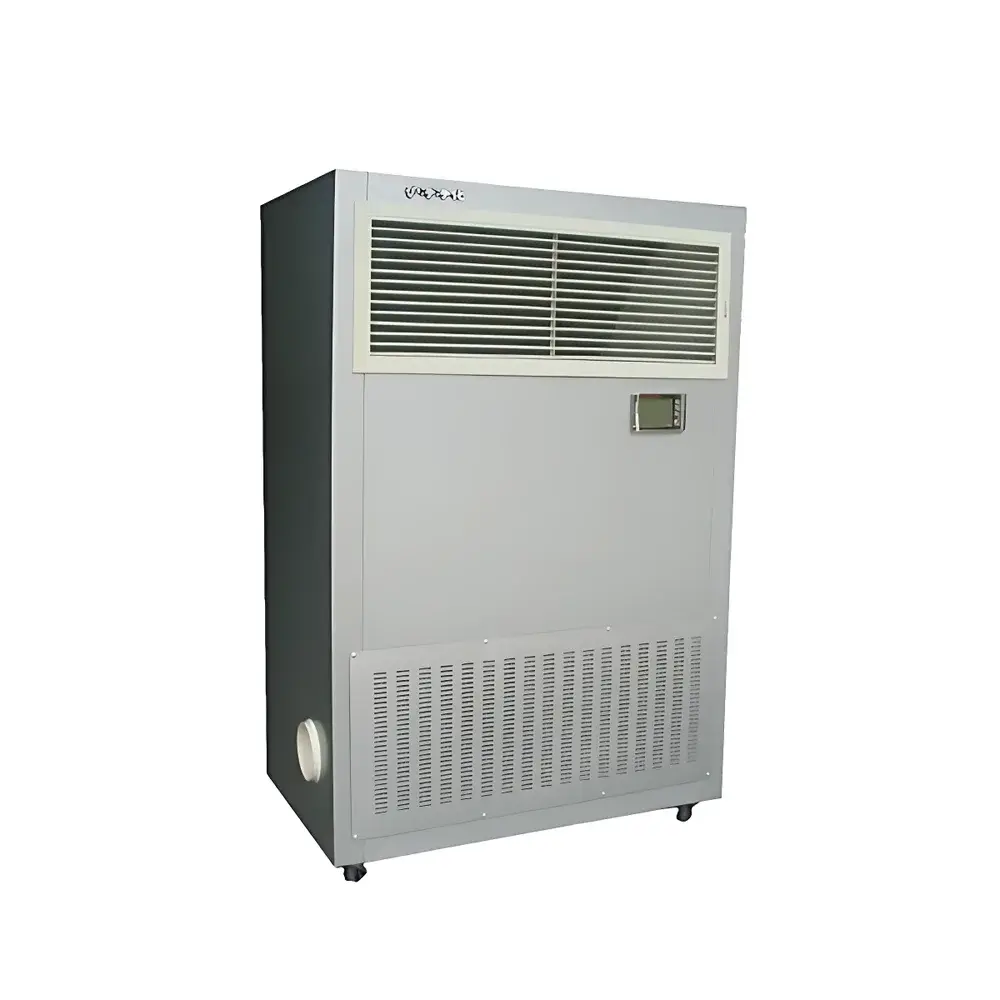
HJ PAU-1000 Mobile Air Self-Cleaning Unit
| Brand | HJ Purification |
|---|---|
| Origin | Shanghai, China |
| Manufacturer Type | OEM Manufacturer |
| Country of Origin | China |
| Model | PAU-1000 |
| Price | USD 570 (approx.) |
| Filtration Efficiency | ≥99.97% @ ≥0.5 µm |
| Airflow | 1000 m³/h (adjustable) |
| Noise Level | ≤62 dB(A) |
| Average Face Velocity | 1.5–2.0 m/s (adjustable) |
| Power Supply | AC 220 V, 50 Hz |
| Power Consumption | 200 W |
| Unit Weight | <1000 kg |
| Dimensions (W×D×H) | 850 × 550 × 1330 mm |
| HEPA Filter Specification | 760 × 610 × 38 mm (single unit) |
Overview
The HJ PAU-1000 Mobile Air Self-Cleaning Unit is an engineered local air purification system designed to establish and maintain controlled particulate environments in dynamic laboratory and light industrial settings. It operates on the principle of unidirectional airflow through a multi-stage filtration cascade—comprising a pre-filter for coarse particulates (e.g., dust, lint, hair), followed by a high-efficiency particulate air (HEPA) filter meeting ISO 14644-1 Class 5 (ISO Class 5, formerly “Class 100”) performance at the outlet, with downstream work surface conditions conforming to ISO Class 7 (formerly “Class 10,000”). The unit integrates a variable-speed centrifugal fan, a static pressure chamber, a uniform flow diffuser plate, and a single HEPA filter module housed within a rigid, electrophoretically coated color steel enclosure. Its mobility—enabled by dual swivel casters and adjustable leveling jacks—supports rapid repositioning and deployment without structural modification, making it suitable for non-permanent clean zones where spatial flexibility and operational agility are prioritized over fixed cleanroom infrastructure.
Key Features
- Modular mobility: Equipped with four heavy-duty swivel casters and height-adjustable leveling feet for precise positioning and stable operation on uneven floors.
- Variable airflow control: Three-step or continuously adjustable fan speed selection ensures consistent face velocity (1.5–2.0 m/s) across the discharge plane, optimizing particle removal efficiency while minimizing turbulence-induced contamination.
- Robust mechanical construction: All external panels fabricated from pre-painted color-coated steel with baked enamel finish—resistant to corrosion, abrasion, and routine disinfectant exposure (e.g., 70% IPA, diluted sodium hypochlorite).
- Validatable filtration performance: HEPA filter certified to EN 1822-1:2019 (H13 grade), delivering ≥99.97% particle capture efficiency for 0.5 µm aerosols under rated airflow conditions.
- Low-energy operation: Energy-efficient EC motor design maintains full-rated airflow at 200 W nominal power draw—reducing thermal load and long-term operating costs compared to fixed cleanroom HVAC systems.
- Plug-and-play integration: Single-phase 220 V / 50 Hz input eliminates need for dedicated circuits; compact footprint (0.47 m² floor area) enables placement adjacent to biosafety cabinets, analytical balances, or filling lines without spatial conflict.
Sample Compatibility & Compliance
The PAU-1000 is not intended for sterilization or microbial inactivation but serves as a physical particulate barrier compliant with core environmental control requirements in regulated environments. It supports compliance with ISO 14644-1:2015 (Cleanrooms and associated controlled environments), ISO 14644-3:2019 (Testing methods), and national food safety standards including China’s QS/SC certification framework for beverage, dairy, and packaged water production facilities. While not a medical device, its filtration architecture aligns with WHO TRS 961 Annex 2 (Good Manufacturing Practices for Sterile Pharmaceutical Products) guidance for localized air quality management in Grade C/D background areas. Units deployed in GMP-regulated food manufacturing must undergo periodic integrity testing (e.g., DOP/PAO scanning per ISO 14644-3) and documented maintenance per manufacturer-recommended intervals.
Software & Data Management
The PAU-1000 operates as a standalone electromechanical system with no embedded microprocessor, network interface, or digital data logging capability. All operational parameters—including fan speed setting, runtime, and filter service history—are manually recorded in facility logbooks or integrated into broader CMMS platforms via external asset tagging. For audit readiness, users are advised to retain filter replacement records (date, batch number, integrity test report), calibration certificates for anemometers used during velocity verification, and visual inspection logs per ISO 14644-2:2015 surveillance requirements. No firmware updates or cybersecurity protocols apply, eliminating vulnerability concerns associated with connected IoT devices in validated environments.
Applications
- Localized protection in microbiological laboratories during aseptic sampling, media preparation, or low-risk handling of non-pathogenic cultures.
- Air quality augmentation in small-volume pharmaceutical packaging rooms where full cleanroom classification is cost-prohibitive.
- Supplemental particle control upstream of reverse osmosis or UV treatment units in bottled water and beverage filling lines.
- Temporary clean zones for equipment qualification (IQ/OQ), instrument calibration, or method transfer activities requiring ISO Class 7 ambient conditions.
- Preventive engineering controls in food-grade R&D kitchens, pilot-scale fermentation suites, and dairy product stability chambers.
FAQ
Does the PAU-1000 provide germicidal or UV-C disinfection capability?
No. It is a mechanical filtration-only device and does not incorporate ultraviolet irradiation, photocatalytic oxidation, or ionization technologies.
Can multiple PAU-1000 units be synchronized for uniform airflow coverage?
Yes—units may be arranged in linear or L-shaped configurations to form contiguous laminar flow zones; however, inter-unit airflow coordination requires manual velocity balancing and is not automated.
What is the recommended HEPA filter replacement interval?
Under continuous operation in typical laboratory ambient conditions (≤20,000 particles/ft³ ≥0.5 µm), replacement is advised every 12–18 months—or sooner if differential pressure across the filter exceeds 250 Pa, as measured via built-in or external manometer.
Is the unit compatible with ISO 14644-1 Class 5 (100-level) certification protocols?
The unit achieves ISO Class 5 at the discharge face under nominal airflow; however, full room- or workstation-level certification requires additional environmental monitoring (particle counters, airflow visualization, recovery testing) per ISO 14644-3 and cannot be claimed solely based on unit specification.
Does the PAU-1000 meet FDA 21 CFR Part 11 requirements?
Not applicable—this is a non-computerized, non-auditable device with no electronic records or electronic signatures; therefore, Part 11 compliance is neither required nor achievable.
Related Products



