
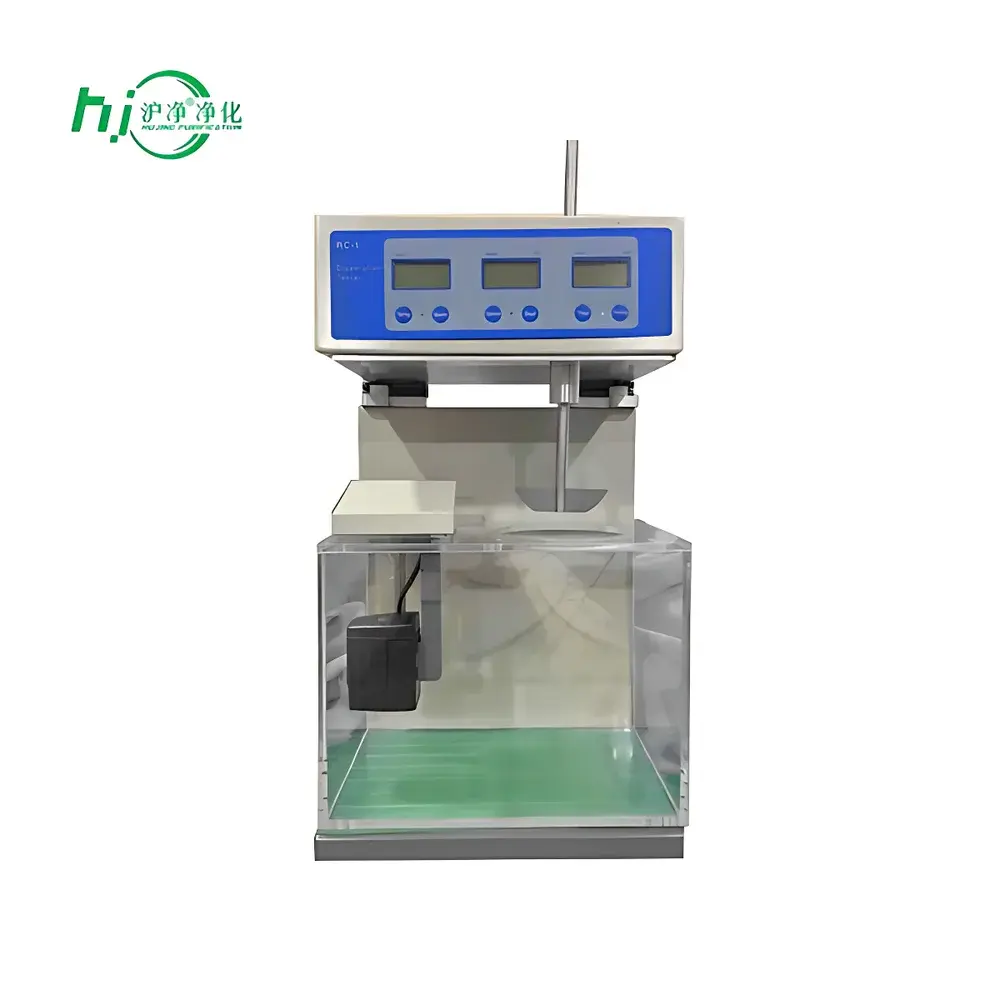
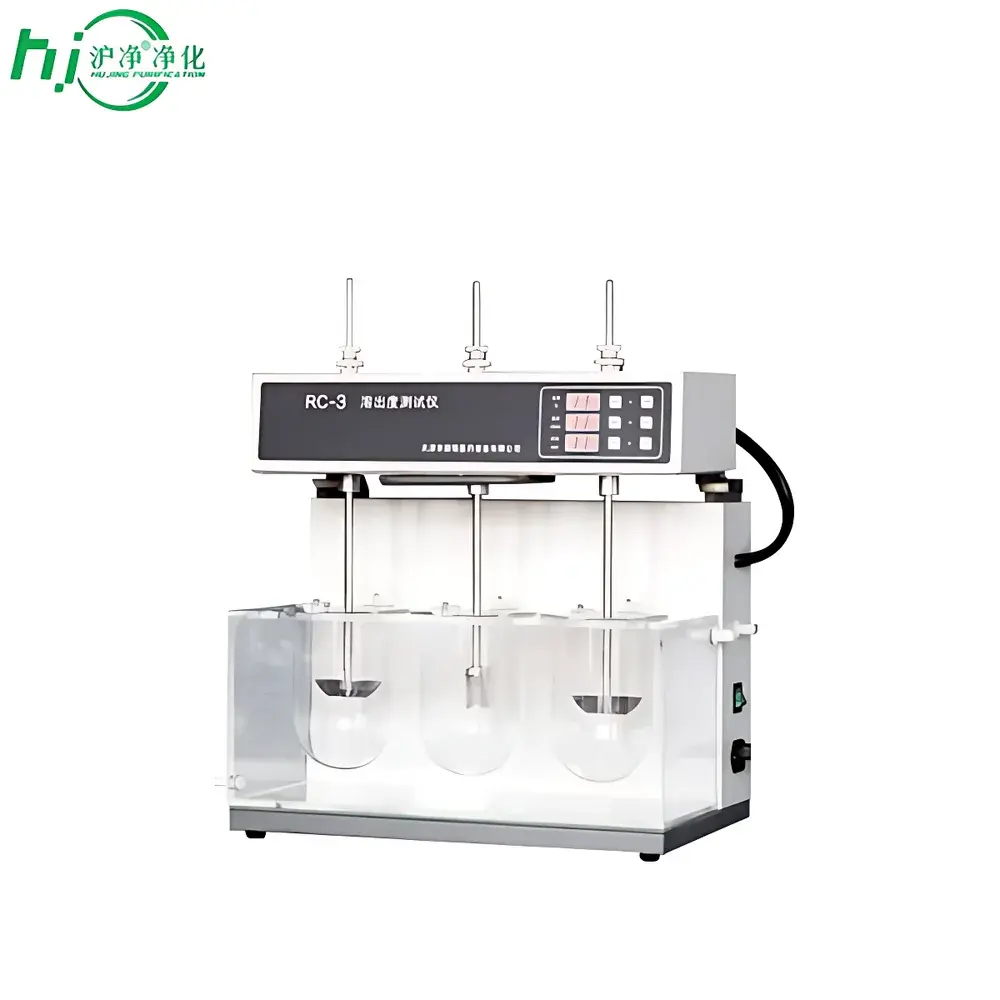
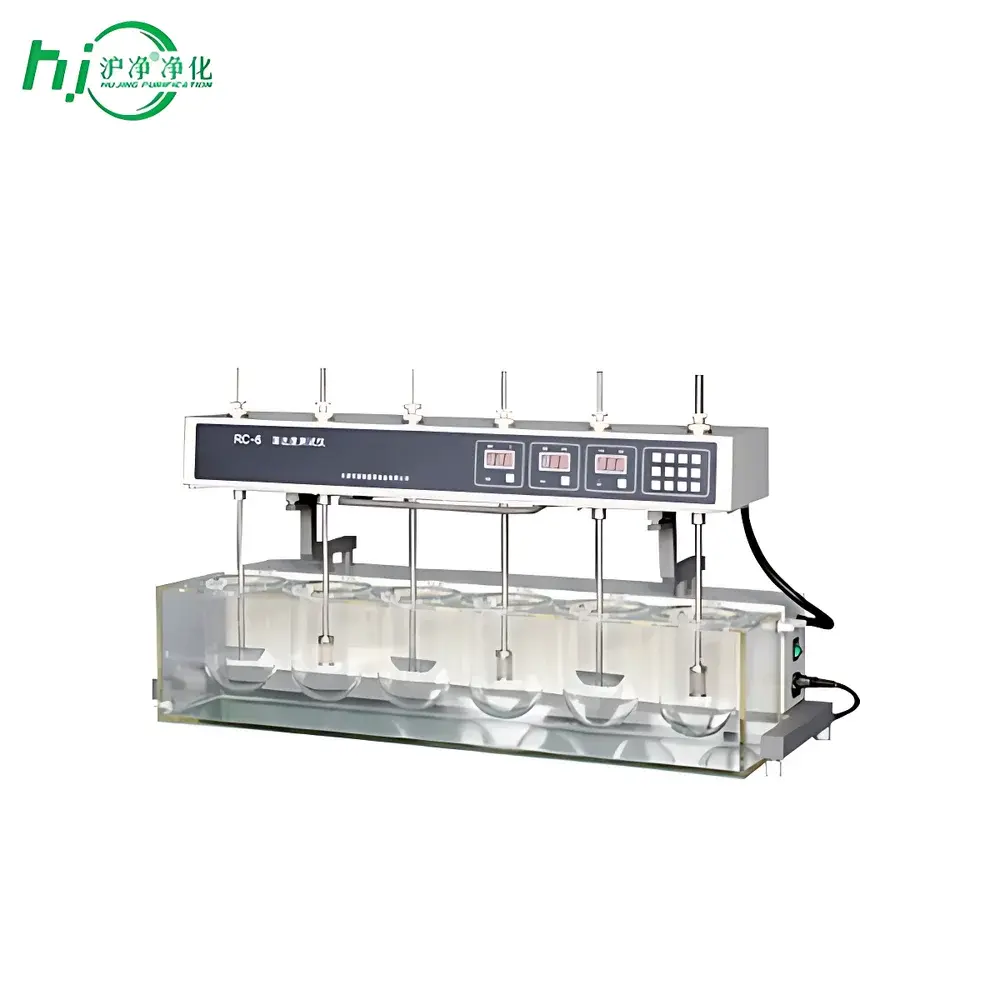
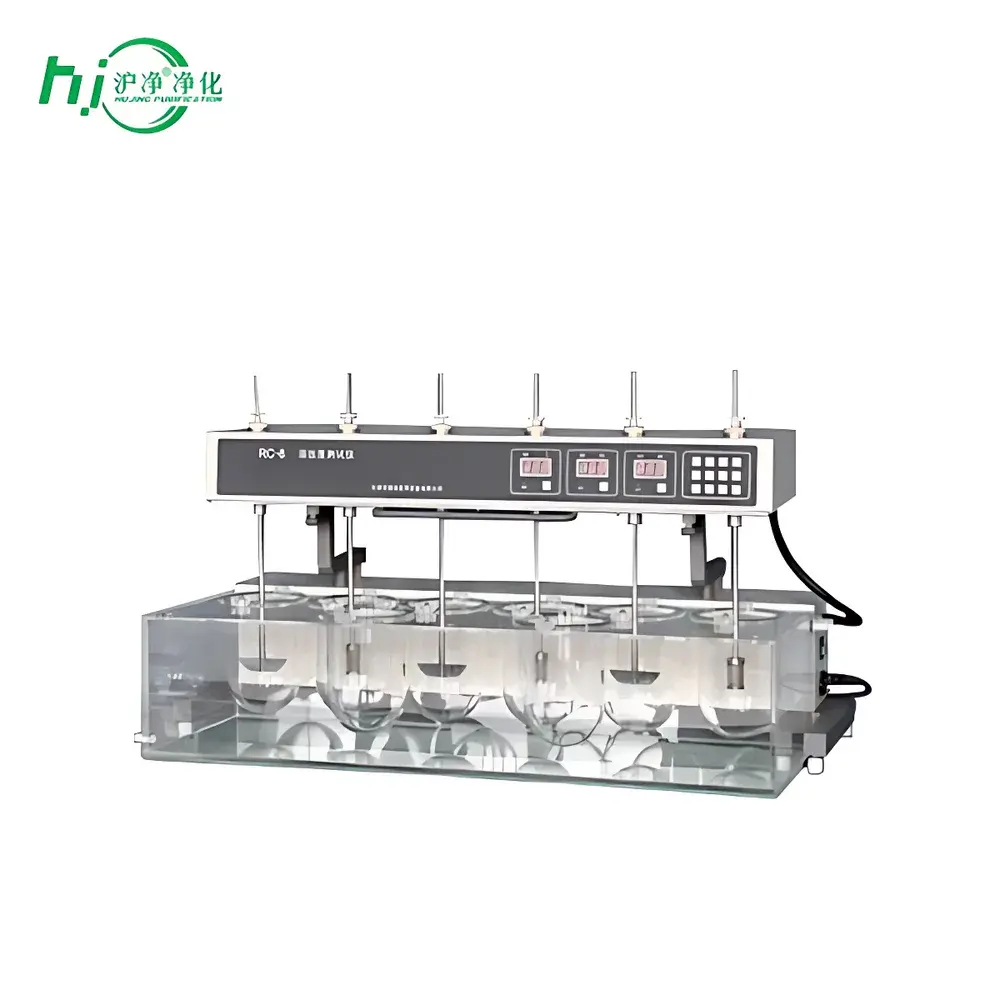
HJ RC-Series Pharmaceutical Dissolution Tester
| Brand | HJ |
|---|---|
| Origin | Shanghai, China |
| Manufacturer Type | OEM Manufacturer |
| Model | RC-1 / RC-3 / RC-6 / RC-8 |
| Drive Mechanism | Rotating Basket (USP Apparatus 1) & Paddle (USP Apparatus 2) |
| Temperature Control Range | Ambient to 45.0 °C |
| Temp. Accuracy | ±0.3 °C |
| Speed Range | 20–200 rpm |
| Speed Accuracy | ±2 rpm |
| Timer Range | 5–999 min (RC-1: up to 900 min |
| RC-3/6/8 | up to 999 min) |
| Timer Accuracy | ±0.1% |
| Basket Wobble | ±1 mm |
| Paddle Shaft Runout | ±0.5 mm |
| Shaft Eccentricity | ±2.0 mm |
| Heating Power | 500 W (RC-1/RC-3), 1000 W (RC-6/RC-8) |
| Total Power Consumption | 600 W (RC-1/RC-3), 1200 W (RC-6/RC-8) |
| Continuous Operation | >24 h |
| Power Supply | 220 V / 50 Hz |
| Construction Material | Electropolished SUS316L Stainless Steel (Baskets, Paddles, Shafts, Vessel Holders) |
| Fluid Circulation | Magnetic-drive or Micro-peristaltic Pump System |
| Compliance | Chinese Pharmacopoeia (ChP) 2015 Edition |
| Data Display | Dual-line LCD showing setpoints and real-time values |
| Automation Level | Fully Automated Parameter Control (Temp, Speed, Time), Self-Diagnosis, Fault Alerting, Audible Timing Alerts |
Overview
The HJ RC-Series Pharmaceutical Dissolution Tester is a precision-engineered platform designed for quantitative assessment of drug release kinetics from solid oral dosage forms—including tablets, capsules, and granules—under standardized hydrodynamic conditions. It operates in strict accordance with USP Apparatus 1 (rotating basket) and Apparatus 2 (paddle) configurations, enabling reproducible simulation of gastrointestinal dissolution behavior. The system complies fully with the Chinese Pharmacopoeia (ChP) 2015 Edition and supports method development and validation aligned with ICH Q5C and Q6A guidelines. Its modular architecture accommodates variable vessel counts (1, 3, 6, or 8 stations), allowing laboratories to scale throughput without compromising mechanical integrity or thermal homogeneity across the water bath.
Key Features
- Electropolished SUS316L stainless steel construction for all wetted parts—including baskets, paddles, shafts, and vessel holders—ensuring corrosion resistance, cleanability, and compliance with ISO 15378 and FDA guidance on equipment qualification.
- Independent temperature control per station via PID-regulated heating elements, coupled with magnetic-drive or micro-peristaltic pump circulation to maintain ±0.3 °C uniformity across the entire bath (measured at vessel bottom and mid-height per USP ).
- Motor-driven speed control with digital feedback loop, delivering stable rotational output from 20 to 200 rpm at ±2 rpm accuracy—verified per USP mechanical calibration protocols.
- Manual articulating head assembly with low-friction pivot mechanism, enabling smooth, repeatable vessel access while preserving alignment integrity between shafts and vessel centers.
- Multi-point programmable timer (up to 9 preset intervals on RC-6 and RC-8 models), with audible alerts and automatic transition between time points—supporting complex dissolution profiles such as delayed-release or pulsatile release testing.
- Onboard memory stores ChP 2015 dissolution parameters—including standard rotation speeds, temperature setpoints, and sampling timepoints—for rapid recall and audit-ready method consistency.
Sample Compatibility & Compliance
The RC-Series accommodates standard 1-L USP-compliant dissolution vessels and supports both immediate-release and modified-release formulations. All models meet mechanical calibration requirements outlined in USP , EP 2.9.3, and ChP General Chapter 0931. Critical geometric tolerances—including basket wobble (±1 mm), paddle shaft runout (±0.5 mm), and shaft eccentricity (±2.0 mm)—are factory-verified and documented in the Certificate of Conformance supplied with each unit. The system is suitable for GLP- and GMP-regulated environments; its parameter logging capability—when paired with optional external data acquisition software—supports 21 CFR Part 11-compliant electronic records when deployed with appropriate audit trail and user authentication controls.
Software & Data Management
While the RC-Series operates as a stand-alone instrument with embedded control logic, it features RS-232 and optional USB interfaces for integration with laboratory information management systems (LIMS) or third-party dissolution analysis platforms. Real-time display shows dual-parameter readouts: setpoint vs. actual value for temperature, speed, and elapsed time. All timing events—including start, interval transitions, and completion—are timestamped internally. For full traceability, users may export session logs (CSV format) containing timestamps, setpoints, deviations, and alarm events. When used in regulated settings, the instrument’s deterministic control architecture and non-volatile parameter storage facilitate IQ/OQ/PQ execution per ASTM E2503 and ISO/IEC 17025 requirements.
Applications
- Quality control release testing of generic and innovator drug products per ChP and ICH Q5A specifications.
- Dissolution profile comparison (f1/f2 analysis) during formulation development and post-approval changes.
- Stability-indicating method validation under varying pH, surfactant concentration, or sink condition scenarios.
- Bioequivalence support studies requiring high-precision, multi-vessel parallel testing (e.g., RC-6 and RC-8 configurations).
- Teaching and training applications in pharmaceutical sciences curricula, where mechanical reproducibility and regulatory alignment are pedagogically essential.
FAQ
Does the RC-Series comply with international pharmacopoeial standards beyond the Chinese Pharmacopoeia?
Yes—the mechanical design, dimensional tolerances, and operational parameters conform to USP , EP 2.9.3, and JP 17 General Test Chapter 2.40, enabling cross-referenced method transfer.
Can the RC-6 or RC-8 store dissolution methods other than those from ChP 2015?
The onboard memory is preloaded with ChP 2015 parameters, but users may manually configure and save custom protocols—including non-ChP speeds, temperatures, and multi-stage timers—for internal SOP adherence.
Is the water bath temperature uniformity validated across all vessel positions?
Yes—each unit undergoes thermal mapping per USP Annex 3 during factory acceptance testing, with probe placement at vessel center-bottom and mid-height across all stations; reports are available upon request.
What maintenance is required to sustain mechanical calibration over time?
Annual verification of shaft alignment, basket concentricity, and speed/timer accuracy is recommended using NIST-traceable calibrators; HJ provides certified service kits and technical documentation for in-house qualification.
Are replacement parts—such as SUS316L baskets or calibrated thermistors—available through authorized channels?
Yes—HJ maintains an inventory of OEM-certified consumables and wear components, all supplied with material traceability and dimensional inspection reports.





