
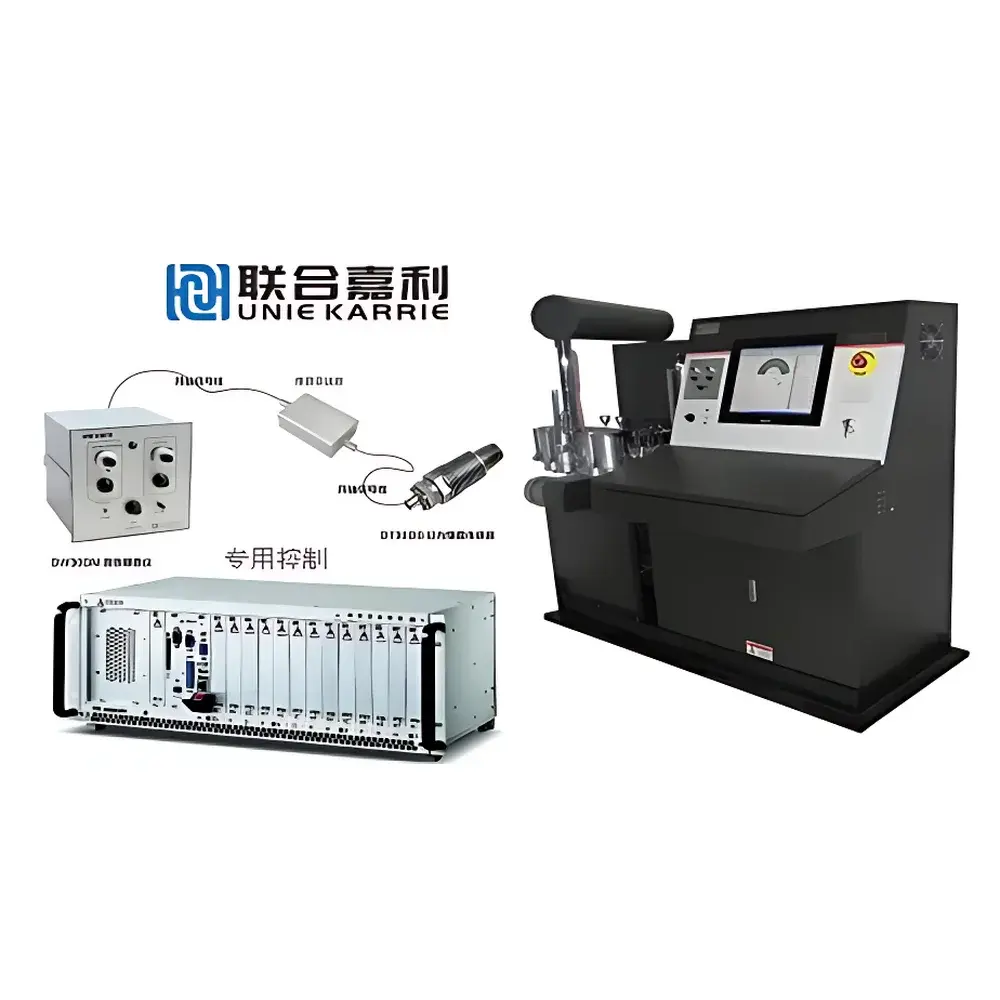
KARRIE LH20R ASTM-Compliant Motor and Research Octane Number Analyzer
| Brand | KARRIE |
|---|---|
| Origin | Shenzhen, China |
| Model | LH20R |
| Measurement Range | 50–120 ON (Octane Number) |
| Measurement Method | ASTM D2699 (RON) and ASTM D2700 (MON) |
| Sample Volume | 300 mL |
| Test Duration | 15 min per cycle |
| Compression Ratio Adjustment Range | 4:1 to 18:1 |
| Intake Air Humidity Control | 3.56–7.12 g H₂O/kg dry air |
| Intake Air Temperature Accuracy | ±1.0 °C (Research Method), ±2.0 °C (Motor Method) |
| Repeatability | ≤0.3 MON (85–90), ≤0.2 RON (85–95) |
| Reproducibility | ≤1.1 MON (85–95), ≤0.7 RON (90–100) |
| Engine Speed | 600 ±6 rpm (RON), 900 ±9 rpm (MON) |
| Cooling Water Temperature Stability | ±0.5 °C per test |
| Instrument Form Factor | Benchtop |
Overview
The KARRIE LH20R is a fully automated, benchtop octane number analyzer engineered for precise determination of Research Octane Number (RON) and Motor Octane Number (MON) in gasoline fuels according to ASTM D2699 and ASTM D2700. It employs the standardized single-cylinder cooperative fuel research engine methodology—comparing unknown samples against primary reference fuels (PRFs) composed of iso-octane and n-heptane—to quantify knock resistance under controlled combustion conditions. Designed for compliance with international regulatory frameworks—including GB/T 503 and GB/T 5487—the LH20R delivers metrologically traceable results suitable for refinery quality control, fuel certification, regulatory submission, and R&D validation. Its robust architecture integrates a variable-compression-ratio engine (4:1–18:1), precision-controlled intake conditioning, and real-time爆震 (knock) signal acquisition via calibrated piezoelectric transducers—all synchronized through an embedded industrial controller. Unlike portable or simplified correlational instruments, the LH20R performs true physical engine-based testing, satisfying the foundational requirement for statutory fuel specification compliance in North America, the EU, and APAC markets.
Key Features
- Full dual-method operation: seamless switching between RON (600 ±6 rpm, 52 °C intake air) and MON (900 ±9 rpm, 38 °C intake air) modes with automatic parameter reconfiguration.
- Dedicated knock sensing subsystem featuring interchangeable, factory-calibrated transducers and an integrated LH20R爆震 meter with 0–100 linear scale output, enabling precise knock intensity adjustment per ASTM-defined standard knock levels.
- Integrated air conditioning unit (DW30AU) with dual-stage temperature/humidity control and particulate filtration—maintaining intake air at 3.56–7.12 g H₂O/kg dry air and ±1.0 °C stability.
- Independent closed-loop cooling system (DW30CU): eliminates dependency on municipal water supply; maintains cylinder jacket temperature at 100 ±1 °C with ≤±0.5 °C drift per test cycle.
- Lubrication management module with preheating (<30 min), coarse/fine filtration, and pressure monitoring (≥0.15 MPa) to ensure consistent engine tribology across extended test sequences.
- Touchscreen ONManager® control interface with guided workflow navigation, real-time 100-second knock trend visualization, automatic runtime logging, and predictive maintenance alerts.
- Four independent fuel reservoirs supporting sequential multi-sample evaluation without manual intervention.
- Structural modularity: controller, sensor I/O, and power distribution are implemented as field-replaceable units—reducing mean time to repair (MTTR) and simplifying GLP/GMP-aligned calibration documentation.
Sample Compatibility & Compliance
The LH20R accepts conventional gasoline blends, oxygenated fuels (e.g., ethanol-gasoline mixtures up to E25), and reformulated gasoline (RFG) within the specified volatility and distillation range (T10 < 70 °C, T90 < 190 °C). It is not intended for use with diesel, jet fuel, or biofuels outside ASTM D4814 specifications. All operational parameters—including compression ratio, ignition timing (13 ±1° BTDC for RON; 24 ±1.5° BTDC for MON), valve lash (intake 0.20 mm, exhaust 0.25 mm), and spark plug gap (0.50 mm)—are maintained per ASTM procedural tolerances. The instrument supports full audit trail generation compliant with FDA 21 CFR Part 11 requirements when connected to validated LIMS environments. Routine verification includes daily reference fuel checks using certified PRF blends (e.g., 85 RON, 95 RON, 90 MON), with data retention aligned with ISO/IEC 17025 and ASTM E2500 guidelines.
Software & Data Management
ONManager® firmware provides deterministic real-time control of all engine subsystems and acquires synchronized analog/digital signals at ≥10 kHz sampling rate. Raw knock waveforms, cylinder pressure traces, and thermal profiles are timestamped and stored in HDF5 format for post-test analysis. The software implements ASTM-mandated interpolation algorithms for unknown sample rating and supports both manual compression-ratio estimation and automated curve-fitting against built-in RON/MON vs. compression ratio reference maps. Export options include CSV, PDF test reports (with digital signature), and XML-compatible structured data for LIMS integration. Audit logs record operator ID, method version, calibration status, environmental deviations, and maintenance events—enabling full traceability for internal QA reviews or external regulatory inspections.
Applications
The LH20R serves laboratories engaged in petroleum product certification (e.g., EPA Tier 3, CARB, EN 228), refinery process optimization, additive performance evaluation, and forensic fuel analysis. Its high repeatability (≤0.2 RON units in mid-range fuels) and reproducibility meet the statistical requirements for inter-laboratory proficiency testing under ASTM D6299. It is routinely deployed by national metrology institutes, third-party testing providers accredited to ISO/IEC 17025, and OEM fuel development centers requiring physical engine-based validation prior to commercialization. The system also supports method development studies involving novel hydrocarbon blends, synthetic fuels, and low-carbon alternatives where empirical knock behavior cannot be reliably predicted by surrogate modeling alone.
FAQ
Does the LH20R comply with ASTM D2699 and D2700 for regulatory reporting?
Yes—every mechanical and control parameter is designed and verified to meet the dimensional, thermodynamic, and procedural requirements defined in the latest active editions of ASTM D2699 and D2700.
Can the instrument be integrated into a centralized laboratory information management system (LIMS)?
Yes—ONManager® supports ASTM E1394 and ASTM E2500-compliant data export protocols, including secure HTTPS API endpoints and configurable database connectors.
What maintenance intervals are recommended for GLP-compliant operation?
Comprehensive preventive maintenance is scheduled every 500 test cycles or 12 months (whichever occurs first), including knock sensor recalibration, air filter replacement, oil system inspection, and compression ratio encoder verification.
Is external cooling water required?
No—the integrated DW30CU closed-loop chiller eliminates reliance on tap water or external chillers, maintaining stable jacket temperature under ambient lab conditions up to 35 °C.
How is measurement uncertainty quantified for accreditation purposes?
Uncertainty budgets follow ISO/IEC Guide 98-3 (GUM) and incorporate contributions from reference fuel purity, temperature/humidity control stability, engine speed regulation, and knock signal digitization—validated annually by NIST-traceable reference standards.



