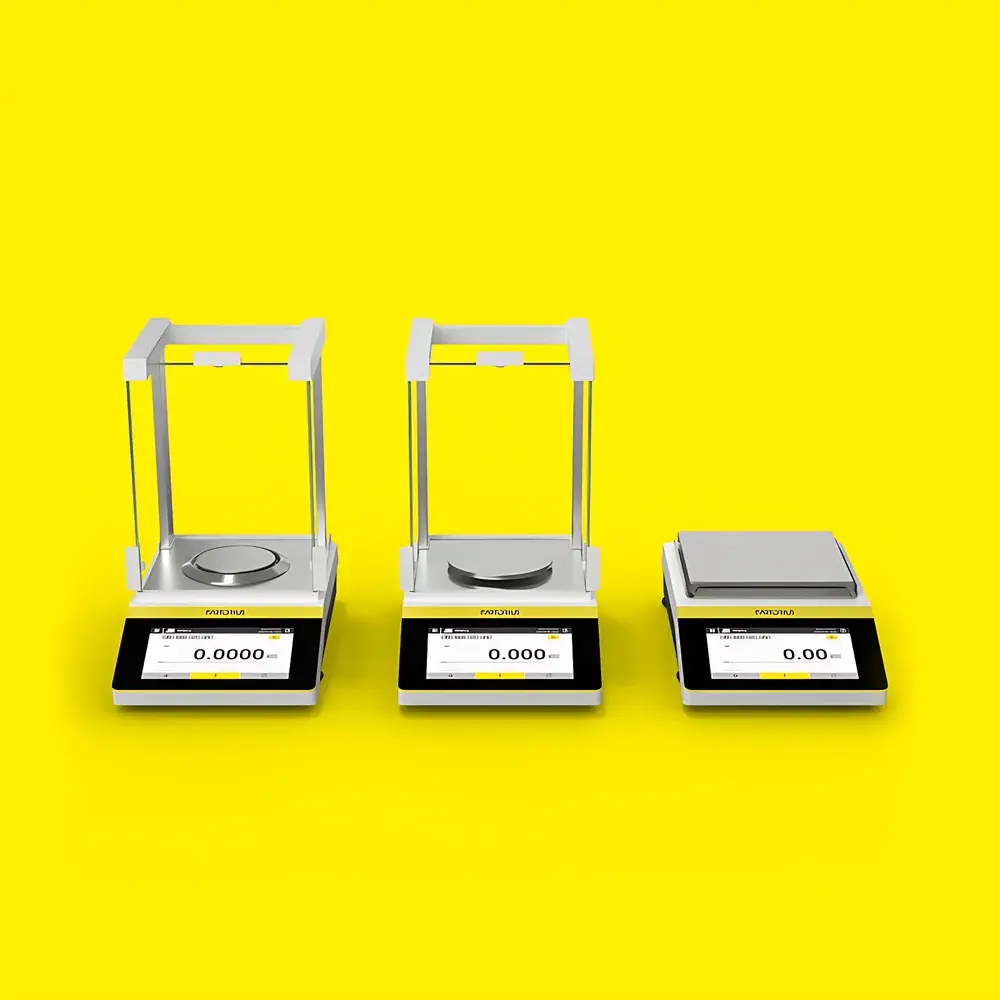
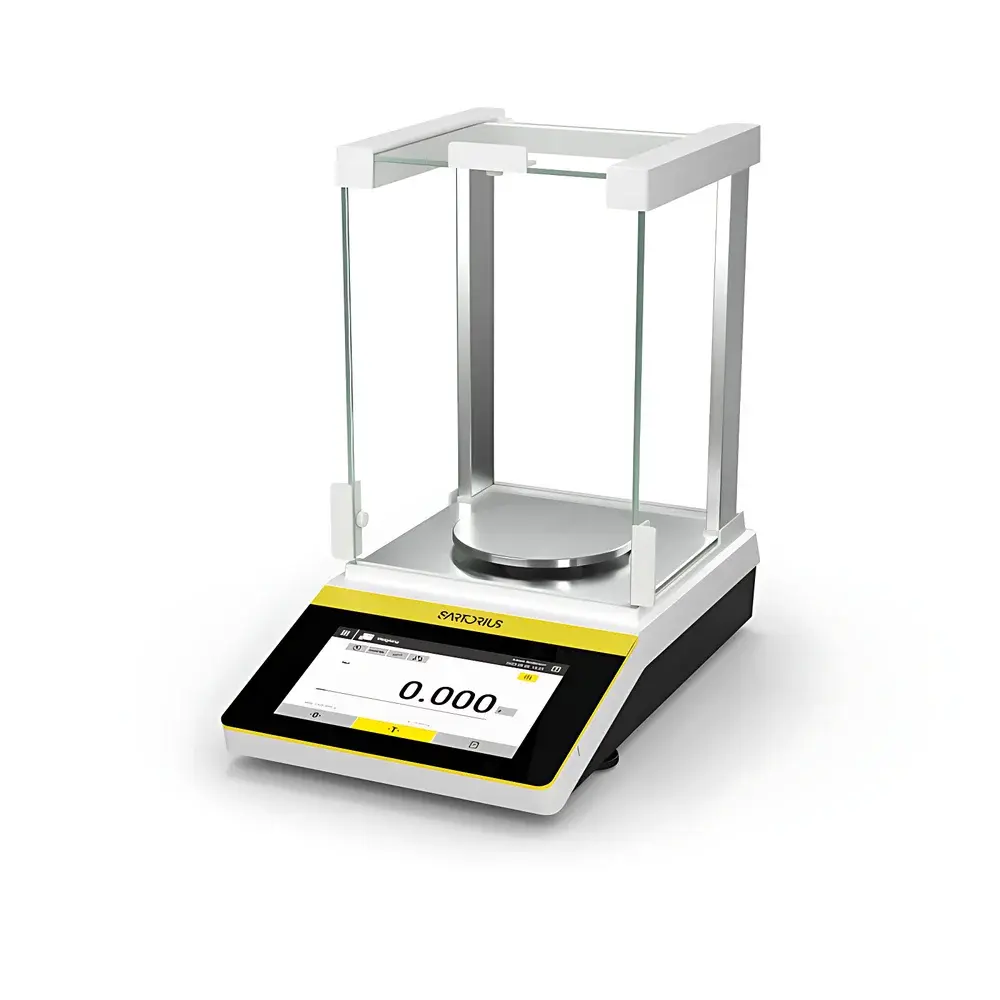
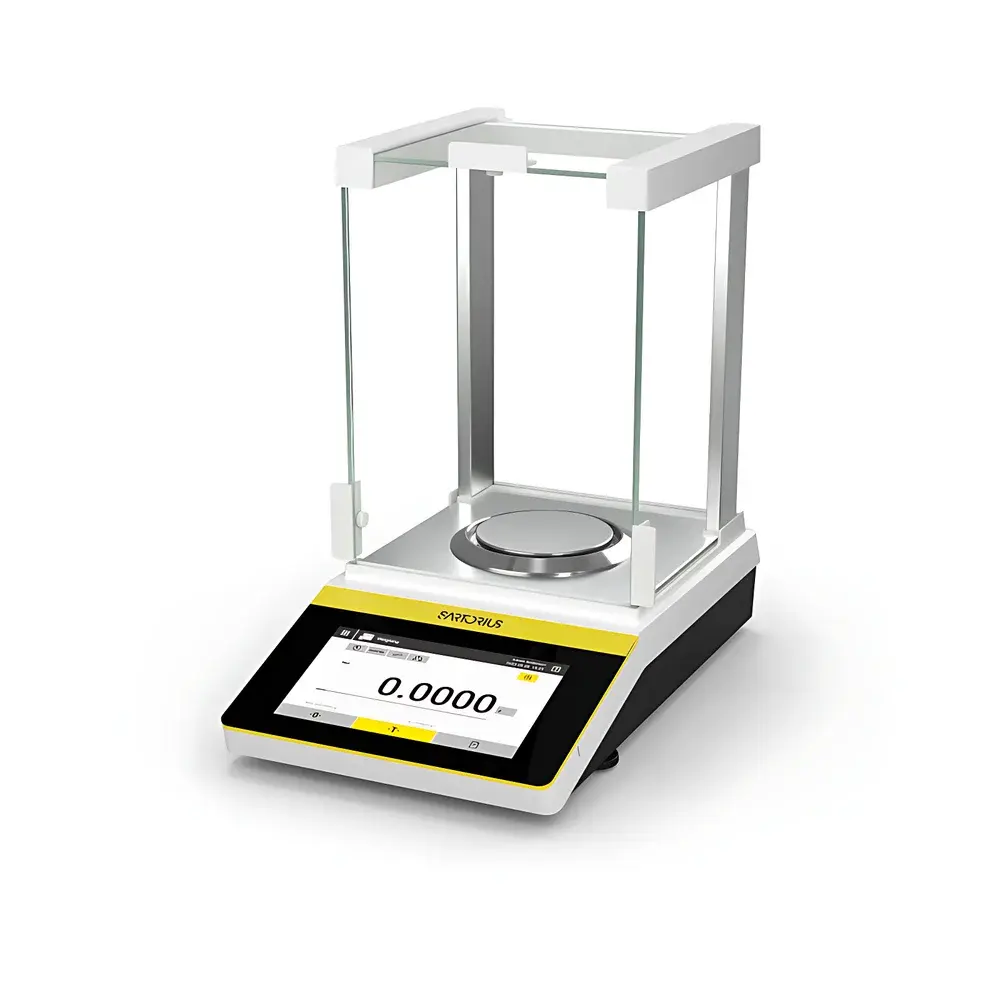
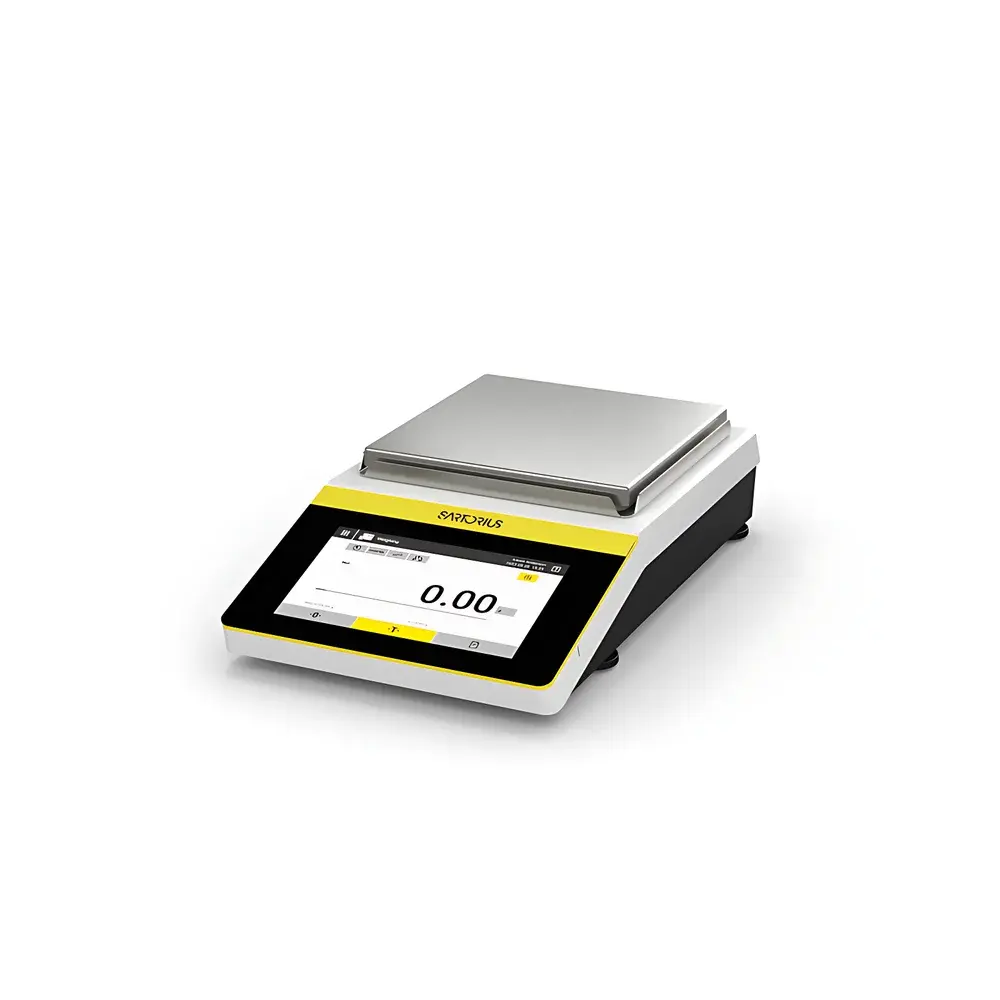
Sartorius Quintix® Pro Laboratory Balance
| Brand | Sartorius |
|---|---|
| Origin | Germany |
| Manufacturer Type | Authorized Distributor |
| Product Origin | Imported |
| Model | QTX |
| Instrument Type | Analytical Balance |
| Capacity Range | 100–200 g |
| Maximum Capacity | 12,200 g |
| Readability | 0.1 mg (highest precision) |
| Repeatability | 0.08 mg (at 0.1 mg readability) |
| Calibration | Manual and Automatic (isoCAL) |
| Display | 7-inch high-resolution capacitive touchscreen |
| Environmental Rating | Certified for ISO Class A & B cleanrooms |
| Materials | Chemical-resistant PBT housing, tempered glass draft shield, stainless steel pan and base |
| Compliance | GLP/GMP-compliant data output, FDA 21 CFR Part 11 ready (with optional software), ISO/IEC 17025 support |
Overview
The Sartorius Quintix® Pro Laboratory Balance is an analytical weighing instrument engineered for precision, reproducibility, and operational integrity in regulated and research-intensive laboratory environments. Built upon Sartorius’ decades of metrological expertise, it employs electromagnetic force compensation (EMFC) technology — the industry-standard principle for high-resolution mass measurement — to deliver stable, drift-free readings under variable ambient conditions. Designed as a universal analytical balance, the Quintix® Pro bridges the functional gap between entry-level and premium-tier instruments, offering metrologically traceable performance across diverse workflows: from routine sample preparation and formulation to quality control release testing and method validation. Its architecture supports seamless integration into modern digital lab infrastructures, with native compatibility for electronic lab notebooks (ELNs), LIMS, and enterprise resource planning (ERP) systems via standardized communication protocols.
Key Features
- 7-inch full-color capacitive touchscreen interface with intuitive icon-based navigation and context-sensitive soft keys
- isoCAL™ automatic internal calibration system with temperature and time-triggered recalibration — compliant with ISO 9001 and ASTM E899 requirements
- Adaptive Filter Algorithm (AFA) dynamically adjusts filtering parameters based on sample dynamics, environmental vibration, and draft conditions — reducing settling time without compromising accuracy
- Integrated digital user manual accessible directly from the home screen; supports offline viewing and rapid keyword search
- Multi-level user management with role-based access control (RBAC), password protection, and audit trail logging for all critical operations
- Chemical-resistant construction: PBT polymer housing, borosilicate glass draft shield, and 316 stainless steel weighing pan and base — validated for repeated exposure to solvents, acids, and bases
- Energy-optimized operation: auto-dimming display, programmable standby mode, and scheduled power-on timer — aligned with ISO 50001 energy management principles
Sample Compatibility & Compliance
The Quintix® Pro is certified for use in ISO Class A and B cleanrooms per ISO 14644-1, and has undergone rigorous qualification for inert atmosphere operation (e.g., argon, nitrogen, vacuum gloveboxes). Its sealed electronics and non-porous surfaces minimize particle generation and facilitate decontamination per USP and EU GMP Annex 15 guidelines. All firmware and software modules are designed to meet ALCOA+ data integrity criteria. When paired with Sartorius LabX® software, the system achieves full compliance with FDA 21 CFR Part 11 (electronic signatures, audit trails, system validation), EU Annex 11, and ISO/IEC 17025 clause 7.7 (data management and traceability).
Software & Data Management
Data output conforms to GLP/GMP reporting standards, including timestamped weight records, operator ID, calibration status, environmental metadata (temperature, humidity), and uncertainty estimates. USB, RS232, and Ethernet interfaces enable direct printing to thermal or dot-matrix printers with customizable report templates. Optional LabX® connectivity provides centralized instrument control, automated SOP execution, real-time data archiving, and electronic signature workflows. All data exports are structured in CSV, XML, or PDF/A-1b format — ensuring long-term readability and regulatory acceptance.
Applications
- Pharmaceutical QC/QA: Active pharmaceutical ingredient (API) dispensing, reference standard weighing, content uniformity testing per USP
- Academic and industrial R&D: Catalyst dosage, polymer synthesis stoichiometry, nanomaterial dispersion quantification
- Food and beverage testing: Nutrient labeling compliance (FDA 21 CFR 101), moisture loss determination, additive dosing
- Environmental analysis: Filter weighing for particulate matter (PM2.5/PM10) gravimetric analysis per EPA Method 201A
- Materials science: Electrode coating mass verification, battery electrode slurry formulation, thin-film deposition monitoring
FAQ
What is the maximum capacity and readability of the Quintix® Pro QTX model?
The QTX variant offers a maximum capacity of 12,200 g with 0.1 mg readability at its primary analytical range (100–200 g); higher capacities maintain 10 mg readability.
Does the Quintix® Pro support internal calibration across its full capacity range?
Yes — isoCAL™ performs automatic internal calibration at predefined intervals or upon environmental trigger (±1.5 °C change), covering both the analytical and heavy-duty weighing ranges.
Is the balance suitable for regulated environments requiring audit trails?
When used with LabX® software and properly configured user roles, it fully satisfies 21 CFR Part 11 and EU Annex 11 requirements for electronic records and signatures.
Can the Quintix® Pro operate inside a nitrogen-purged glovebox?
Yes — its IP54-rated enclosure, absence of vented components, and low outgassing materials make it qualified for inert atmosphere applications.
How does the Adaptive Filter Algorithm (AFA) improve measurement efficiency?
AFA continuously monitors mechanical stability and airflow disturbances, automatically adjusting damping and sampling rate to achieve optimal settling time — typically reducing measurement duration by 25–40% compared to fixed-filter configurations.