

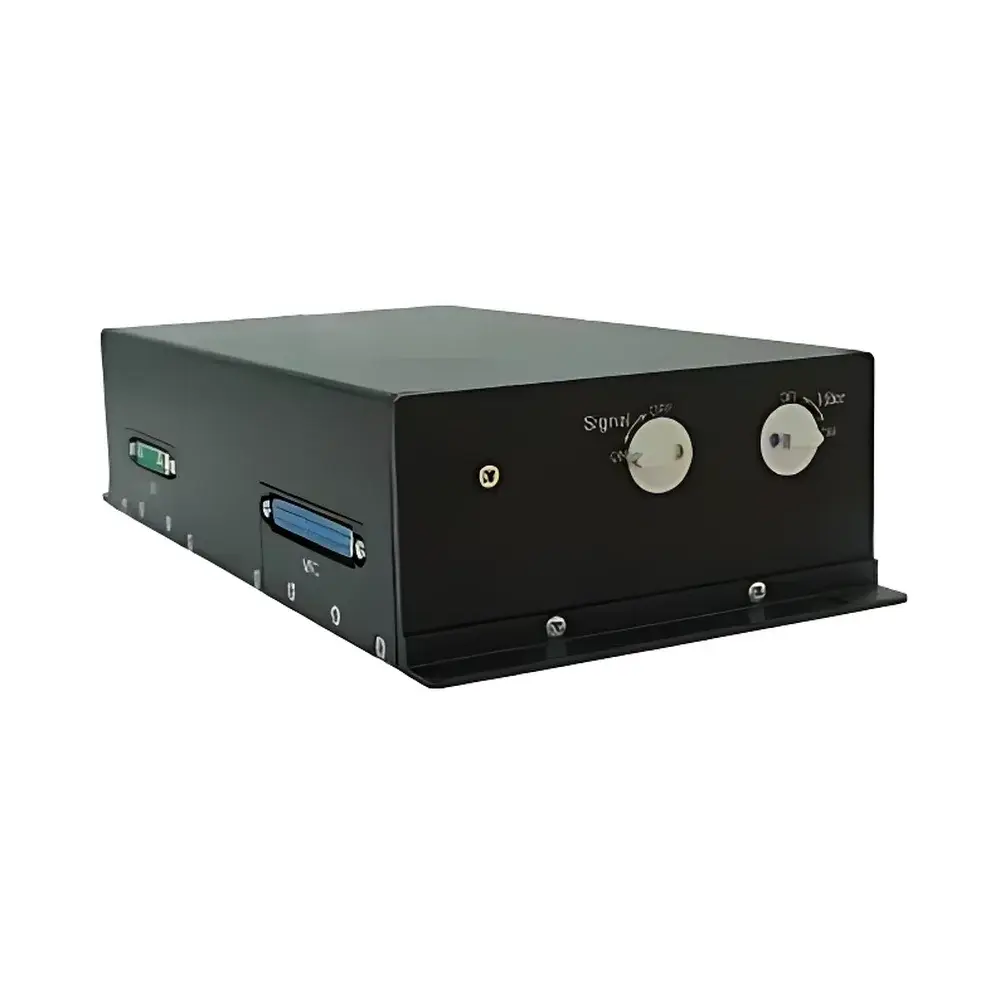
HCP 1×1 Tunable Optical Mixer Module
| Brand | HCP (Longcai Technology) |
|---|---|
| Origin | Taiwan |
| Type | 1×1 Fiber-Coupled Tunable Mixer |
| Wavelength Range | Continuously Tunable Across C-band, L-band, or C+L-band |
| Configuration | Fiber-in/Fiber-out |
| Form Factor | All-Fiber Integrated Module |
| Compliance | RoHS-compliant, Telcordia GR-1221-CORE Qualified |
Overview
The HCP 1×1 Tunable Optical Mixer Module is an all-fiber, polarization-maintaining (PM) integrated photonic component engineered for precise wavelength-selective signal routing and coherent optical processing in modern fiber-optic communication and sensing systems. Unlike bulk-optic or free-space tunable filters, this module leverages monolithic fiber-pigtailed architecture with thermally stabilized thin-film filter (TFF) or micro-electro-mechanical systems (MEMS)-actuated tunable filter elements—enabling continuous, repeatable wavelength tuning without mechanical backlash or alignment drift. Its core operating principle relies on wavelength-dependent interference and spectral filtering within a fused-fiber or planar lightwave circuit (PLC)-hybrid platform, delivering stable insertion loss and polarization-dependent loss (PDL) < 0.3 dB across the full tuning range. Designed for integration into DWDM transceivers, optical test benches, reconfigurable optical add-drop multiplexers (ROADMs), and quantum photonics setups, the module supports both analog and digital control interfaces for automated system calibration.
Key Features
- All-fiber construction with FC/APC or SC/APC connectors—no free-space alignment required
- Continuous wavelength tuning across industry-standard bands: C-band (1528–1565 nm), L-band (1570–1610 nm), or extended C+L-band (1528–1610 nm)
- Typical tuning resolution: < 0.1 nm; repeatability: ±0.05 nm over 1,000 cycles
- Insertion loss: 2.5–4.0 dB (band-dependent); return loss > 55 dB
- Thermal stability: < 0.002 nm/°C drift under constant drive current
- Control interface options: Analog voltage (0–5 V or 0–10 V) or digital I²C/SPI protocol
- Operating temperature range: –5 °C to +70 °C (commercial grade); optional extended range (–40 °C to +85 °C)
- Hermetically sealed housing compliant with IEC 61300-2-4 (vibration) and IEC 61300-2-1 (impact)
Sample Compatibility & Compliance
The HCP 1×1 Tunable Mixer is compatible with standard single-mode fiber (SMF-28® or ITU-T G.652.D), polarization-maintaining fiber (PANDA or Bow-tie), and low-PMD specialty fibers used in coherent detection and interferometric sensing. It meets Telcordia GR-1221-CORE reliability requirements for passive optical components, including 2,000-hour high-temperature/humidity aging (85 °C / 85% RH) and thermal cycling (–40 °C ↔ +85 °C, 500 cycles). The module is RoHS 2015/863/EU compliant and manufactured under ISO 9001-certified processes. While not certified for medical or aerospace applications out-of-box, its design basis aligns with IEC 60825-1 (laser safety) Class 1 requirements when integrated into end-user systems with appropriate optical power management.
Software & Data Management
The module does not include embedded firmware or standalone GUI software. Instead, it is designed for OEM integration into host platforms via standardized analog/digital control signals. Reference driver libraries (C/C++, Python, LabVIEW) are provided by HCP for common DAQ and controller hardware (e.g., National Instruments PXI, Raspberry Pi GPIO, Arduino Mega). Calibration data—including wavelength vs. drive voltage lookup tables (LUTs), temperature compensation coefficients, and IL/PDL characterization files—is delivered in IEEE Std 1671-2020-compliant Waveform Interchange Format (WIFF) and CSV. Full traceability of factory calibration is maintained per ISO/IEC 17025 guidelines, with certificate of conformance (CoC) and measurement uncertainty budgets available upon request. For GLP/GMP environments, users may implement audit-trail logging via external controllers supporting IEEE 1588 PTP or NTP-synchronized timestamping.
Applications
- Dense wavelength division multiplexing (DWDM) channel monitoring and dynamic gain equalization
- Optical coherence tomography (OCT) swept-source engine wavelength stabilization
- Fiber Bragg grating (FBG) sensor interrogation systems requiring real-time resonance tracking
- Quantum key distribution (QKD) setups requiring tunable spectral filtering of single-photon sources
- Lab-based optical spectrum analyzer (OSA) calibration and reference source generation
- Reconfigurable microwave photonics filters and true-time-delay beamforming networks
FAQ
Is this module compatible with polarization-diverse coherent receivers?
Yes—when configured with PM fiber pigtails and aligned to the slow/fast axis, the module maintains polarization extinction ratio (PER) > 20 dB across the tuning range.
Can multiple units be synchronized for multi-channel scanning?
Yes—using shared clock/timing signals and synchronized analog voltage ramps or SPI command sequencing, up to 8 modules can operate in phase-coherent tuning mode.
Does HCP provide custom wavelength calibration for non-standard bands?
Yes—custom calibration over O-band (1260–1360 nm) or U-band (1625–1675 nm) is available as a value-added service with NIST-traceable reference standards.
What is the typical lead time for volume orders?
Standard lead time is 6–8 weeks for quantities ≤ 50 units; 10–12 weeks for ≥ 100 units, subject to wafer fab scheduling.
Is repair or recalibration supported after field deployment?
Yes—HCP offers authorized recalibration and repair services at its Taichung facility, with turnaround time of ≤ 15 business days and full retest report issuance.



