
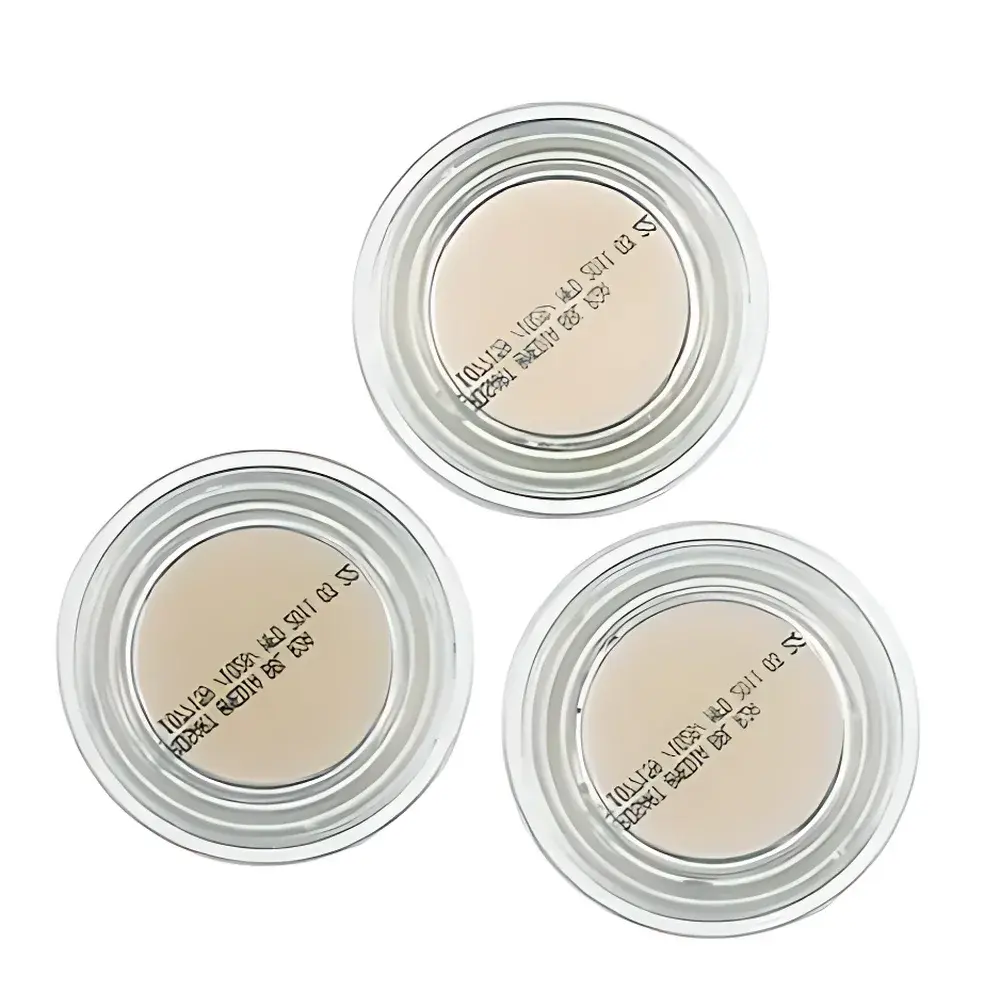
Sartorius Microsart® @media Membrane Transfer System
| Brand | Sartorius |
|---|---|
| Origin | Germany |
| Manufacturer Type | Authorized Distributor |
| Origin Category | Imported |
| Model | 14313–47–ACN |
| Instrument Type | Automated Membrane Transfer System for Microbial Limit Testing |
| Sample Throughput | Single-unit membrane transfer per cycle |
| Filter Membrane Diameter | 47 mm |
| Compatible Microorganisms | Bacteria, Yeasts, Molds |
| Agar Surface Area | 13.2 cm² |
| Dimensions | Ø68.8 mm × H14.9 mm |
| Membrane Material | Polypropylene |
| Sterilization Method | Gamma irradiation (13.9–25.0 kGy) |
| Compatible Agar Media | R2A, Tryptic Soy Agar (TSA), Sabouraud Dextrose Agar (SDA) — inhibitor-free formulations |
Overview
The Sartorius Microsart® @media Membrane Transfer System is an aseptic, touch-free solution engineered to automate and standardize the critical step of filter membrane transfer in pharmacopoeial microbial limit testing (MLT). Designed in strict alignment with USP , , EP 2.6.12, and JP 4.07 methodologies, the system eliminates manual handling of sterile filtration membranes post-filtration—thereby mitigating operator-induced contamination, variability in colony recovery, and deviations from GLP/GMP-compliant workflows. Unlike conventional forceps-based transfer techniques, Microsart® @media integrates a patented hinged lid mechanism that enables precise, gravity-assisted, contactless deposition of the used filtration membrane onto pre-poured, gamma-sterilized agar surfaces. This mechanical design ensures consistent orientation, uniform pressure distribution, and reproducible contact time—key determinants of viable colony formation and enumeration accuracy.
Key Features
- Touch-free membrane transfer via integrated spring-loaded hinged lid—no forceps, no gloves contact with membrane surface
- Pre-sterilized, ready-to-use format: gamma-irradiated (13.9–25.0 kGy) polypropylene housing with validated sterility assurance level (SAL) ≤10⁻⁶
- Optimized geometry: 47 mm nominal filter diameter accommodates standard microbiological filtration assemblies; 13.2 cm² agar contact area supports compliant colony isolation and counting per ISO 8554 and ISO 11737-1
- Compatible with inhibitor-free agar media including R2A (for environmental isolates), TSA (broad-spectrum growth), and SDA (yeast/mold-selective)
- Dimensionally stable housing (Ø68.8 mm × 14.9 mm) ensures secure placement on standard Petri dish rims without lateral slippage or misalignment
- No external power, software, or calibration required—fully passive, mechanically robust architecture suitable for ISO Class 5 laminar flow hoods and isolator environments
Sample Compatibility & Compliance
Microsart® @media is validated for use following filtration of aqueous pharmaceuticals, biologics, buffers, and non-sterile raw materials under compendial microbial limit test protocols. It accepts membranes filtered using standard 47 mm vacuum manifolds (e.g., Sartorius Minisart® NML, Millipore Millex®), provided the membrane remains intact and undisturbed during filtration. The system does not alter membrane integrity or elution characteristics and maintains compatibility with subsequent incubation conditions (e.g., 30–35°C for bacteria, 20–25°C for fungi). All components comply with EU Regulation (EC) No 1935/2004 for food contact materials and are free of detectable endotoxins (<0.03 EU/mL by LAL assay). Documentation packages include CoA, CoO, and gamma sterilization validation reports traceable to ISO/IEC 17025-accredited facilities.
Software & Data Management
As a fully mechanical, non-electronic device, Microsart® @media requires no embedded firmware, drivers, or data logging capabilities. Its operation is inherently audit-trail neutral and aligns with Annex 11 (EU GMP) and FDA 21 CFR Part 11 principles by eliminating electronic records, user authentication layers, or software validation burdens. Process consistency is ensured through physical design controls—not algorithmic logic—making it suitable for regulated QC laboratories where simplicity, traceability, and minimal validation scope are strategic priorities. Batch-level documentation (e.g., lot-specific sterilization certificates, dimensional inspection reports) is supplied with each shipment and archived per laboratory document retention policies.
Applications
- Routine microbial limit testing of non-sterile pharmaceutical dosage forms (tablets, capsules, ointments, APIs)
- Environmental monitoring support: transfer of membranes from air/surface sampling units into selective agars
- Raw material and excipient release testing per ICH Q5C and Q9 guidelines
- Method suitability verification studies requiring high inter-operator reproducibility
- Training environments where reduction of technique-dependent error is essential for junior analysts
- Contract testing laboratories seeking streamlined, low-risk MLT workflow integration without software qualification overhead
FAQ
Is Microsart® @media compatible with nitrocellulose or PVDF membranes?
Yes—provided the membrane diameter is 47 mm and it remains dimensionally stable after filtration and drying; however, hydrophilic cellulose ester membranes (e.g., mixed ester) are most commonly validated.
Can the same @media unit be reused after autoclaving?
No—units are single-use, gamma-sterilized devices; re-autoclaving compromises structural integrity and invalidates sterility claims.
Does @media affect colony morphology or growth inhibition?
Independent comparative studies show no statistically significant difference in CFU recovery or morphological fidelity versus forceps transfer when using identical agar batches and incubation parameters.
What regulatory guidance explicitly supports touch-free transfer methodology?
USP emphasizes “minimizing opportunity for contamination” during membrane handling; EP 2.6.12 recommends “aseptic techniques that avoid direct manipulation of the membrane surface”—both principles are operationally fulfilled by @media.
How is dimensional conformity verified for quality control?
Each production lot undergoes 100% automated vision inspection for outer diameter, height, lid hinge symmetry, and agar cavity depth per internal SOP-MMT-004, aligned with ISO 9001:2015 clause 8.5.1.




