
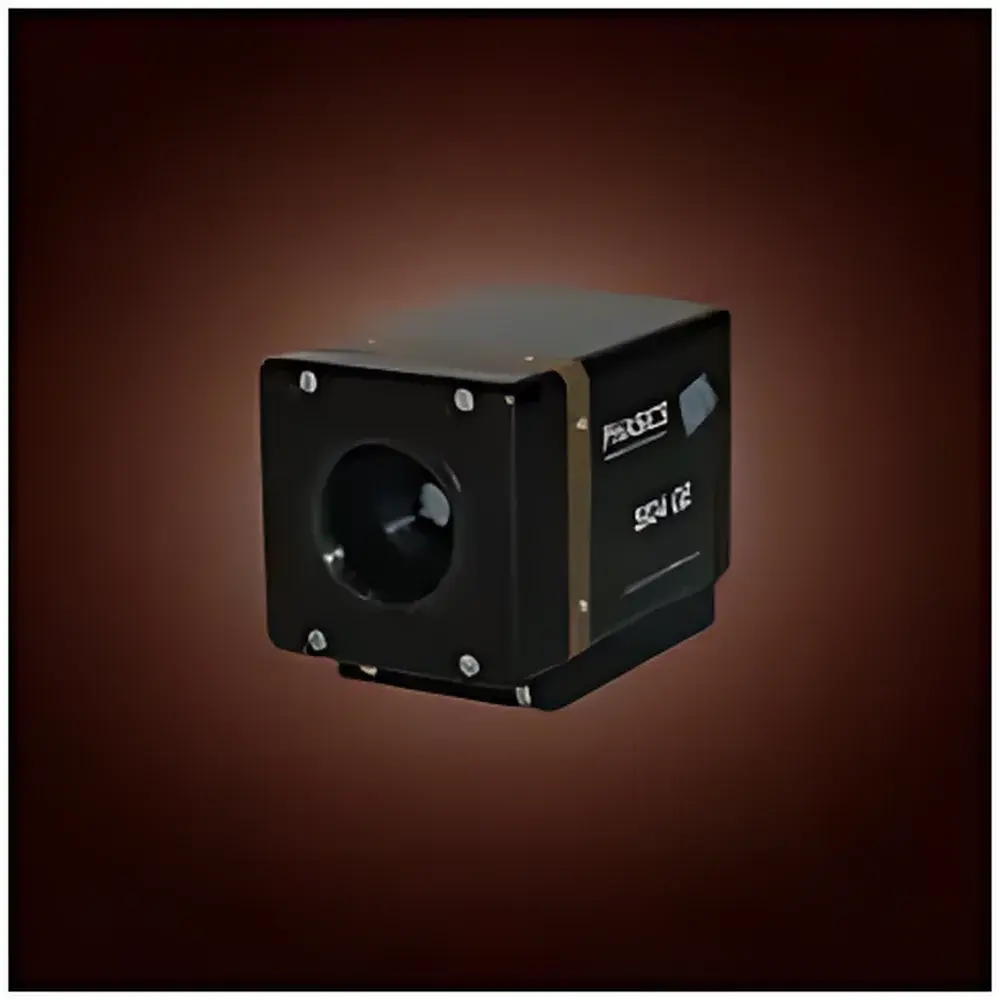
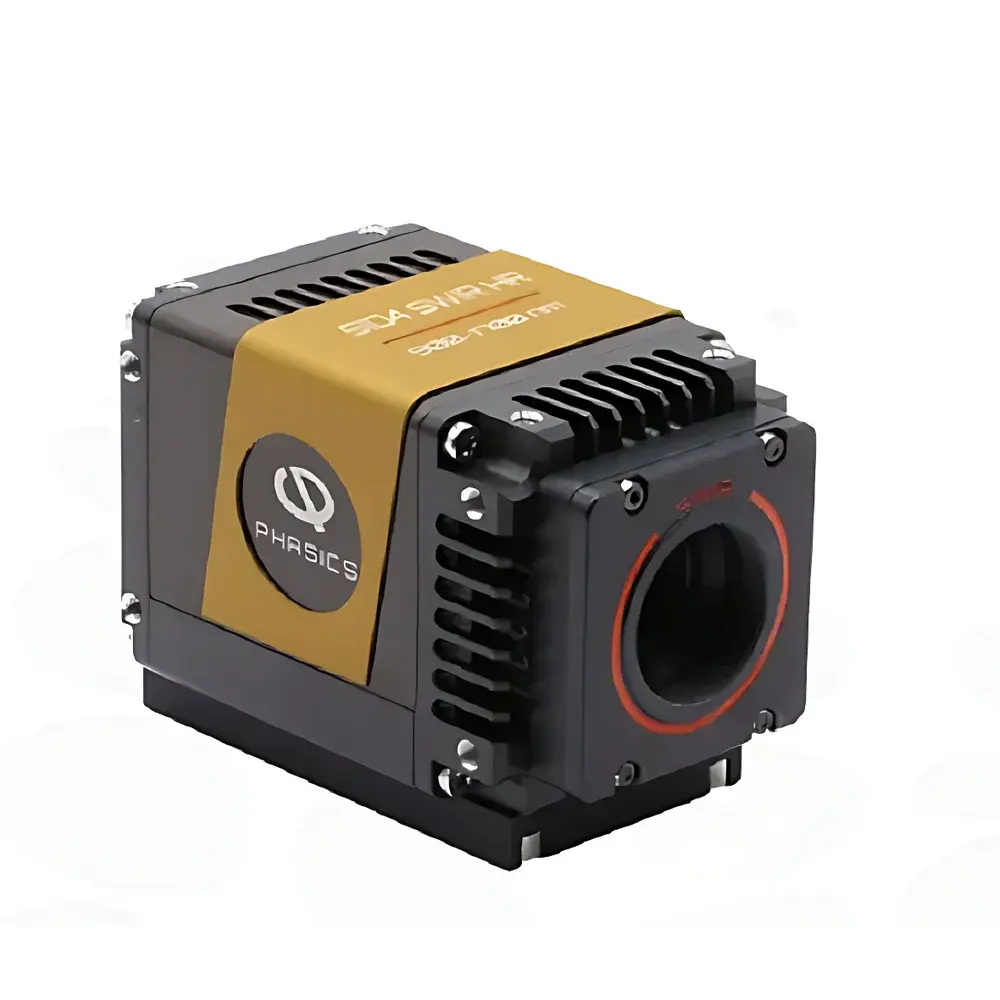
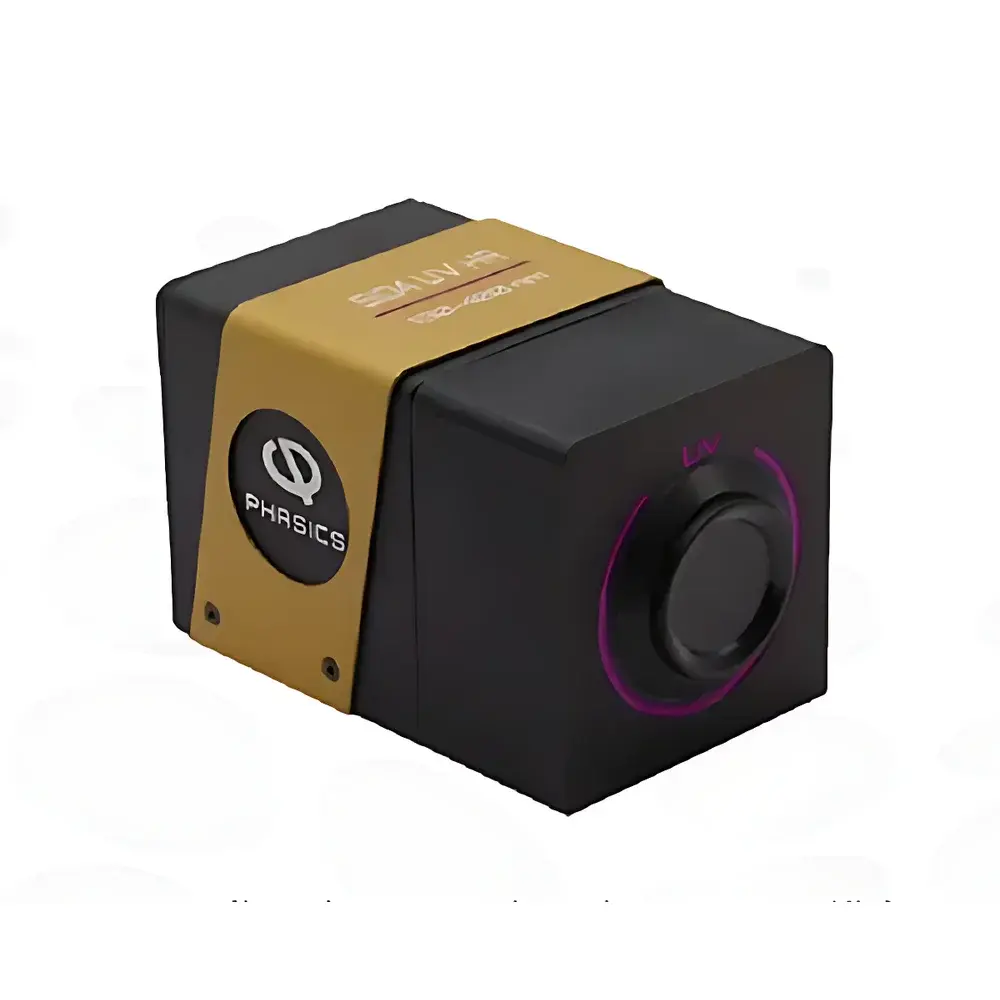
Phasics SID4 HR High-Resolution Wavefront Sensor
| Brand | Phasics |
|---|---|
| Origin | France |
| Model | SID4 UV, SID4 HR, SID4 SWIR HR, SID4 DWIR |
| Spectral Range (SID4 HR) | 350–1100 nm |
| Phase Sampling Resolution | 416 × 360 pixels |
| Active Aperture | 9.98 × 8.64 mm² |
| Max. Acceptance NA | 0.8 |
| Peak-to-Valley Dynamic Range | 500 µm |
| Phase Sensitivity | < 2 nm RMS |
| Interface | USB 3.0 |
| Compliance | CE, RoHS |
| Software | QWLS 5.x (supports ASTM E2912, ISO 10110-5, ISO 21254, and GLP/GMP audit trail logging) |
Overview
The Phasics SID4 HR is a high-resolution, quantitative wavefront sensor engineered for precision metrology in demanding optical research and industrial environments. Based on Phasics’ proprietary four-wave lateral shearing interferometry (4-WSI), the SID4 HR delivers direct, single-shot, non-scanning phase measurements without reliance on iterative reconstruction or assumptions about wavefront shape. Unlike Shack-Hartmann sensors, it offers intrinsic sub-nanometer phase sensitivity and eliminates spot centroiding errors—making it especially suited for characterizing highly aberrated, divergent, or low-SNR beams common in ultrafast laser diagnostics, adaptive optics closed-loop control, and infrared optical system validation. Its large 9.98 × 8.64 mm² active aperture and native NA = 0.8 acceptance capability enable direct measurement of uncollimated beams up to ±25° full divergence angle—eliminating the need for relay optics, beam expanders, or spatial filtering that degrade signal fidelity or introduce alignment-induced artifacts.
Key Features
- 416 × 360 high-density phase sampling grid—enabling fine-grained spatial resolution of localized aberrations (e.g., surface scratches, coating nonuniformities, thermal lensing gradients)
- 500 µm peak-to-valley dynamic range with <2 nm RMS phase noise—supporting simultaneous detection of low-order defocus/tip/tilt and high-spatial-frequency ripple
- Large-format micro-lens array integrated with scientific-grade CMOS sensor—optimized for broadband visible-to-NIR operation (350–1100 nm)
- No moving parts or mechanical scanning—ensuring long-term stability, repeatability, and suitability for vibration-sensitive environments (e.g., cleanroom metrology stations, airborne optical benches)
- Real-time wavefront reconstruction at up to 60 Hz (full resolution) via USB 3.0 interface—compatible with LabVIEW, Python (PyPhasics), MATLAB, and C/C++ SDKs
- Factory-calibrated absolute phase scale traceable to NIST-traceable reference flats—validating measurement integrity across instrument lifetime
Sample Compatibility & Compliance
The SID4 HR accepts free-space beams without intermediate collimation optics, accommodating divergent sources such as multimode laser diodes, VCSEL arrays, LED-based illumination systems, and plasma emission sources. Its high NA tolerance supports direct characterization of off-axis parabolic mirrors, aspheric lenses, and diffractive optical elements (DOEs) used in EUV lithography simulators and synchrotron beamlines. The sensor complies with CE marking requirements and conforms to RoHS Directive 2011/65/EU. Measurement data output adheres to ASTM E2912 (Standard Practice for Wavefront Aberration Measurement), ISO 10110-5 (Specification of optical components—Surface form tolerances), and ISO 21254 (Laser damage threshold testing). When operated with QWLS 5.x software under validated configurations, the system supports 21 CFR Part 11-compliant electronic records and audit trails for regulated QC/QA workflows in medical device or aerospace optics manufacturing.
Software & Data Management
The bundled QWLS 5.x software provides a modular GUI for real-time visualization, analysis, and reporting. It includes Zernike polynomial decomposition (up to 36th order), PV/RMS wavefront error calculation, MTF/PSF synthesis, through-focus analysis, and comparison against user-defined tolerancing templates. All raw interferograms and reconstructed phase maps are stored in HDF5 format with embedded metadata (wavelength, exposure time, calibration ID, operator ID, timestamp). Batch processing scripts support automated pass/fail evaluation per ISO 10110-7 specifications. Export modules generate PDF reports compliant with ISO/IEC 17025 documentation standards, including uncertainty budgets derived from sensor noise floor, calibration drift, and environmental temperature coefficients (±0.005 °C stability required).
Applications
- Laser resonator optimization and cavity mode analysis for ultrafast Ti:sapphire and fiber lasers
- Adaptive optics wavefront sensing in astronomical telescopes and retinal imaging systems
- End-to-end verification of infrared optical assemblies—including cooled MWIR/LWIR dewars and quantum cascade laser collimators
- High-NA microscope objective testing and immersion lens certification
- Plasma diagnostics in laser-induced breakdown spectroscopy (LIBS) and inertial confinement fusion experiments
- Quantitative assessment of optical thin-film uniformity and stress-induced birefringence
FAQ
Does the SID4 HR require external calibration before each measurement?
No—each unit ships with factory-applied pixel-level calibration maps for wavelength, intensity, and phase response. Recalibration is recommended annually or after mechanical shock exceeding 5 g, using the included NIST-traceable reference flat.
Can the SID4 HR measure pulsed lasers?
Yes—when synchronized via TTL trigger input, it supports single-shot acquisition down to 10 ns pulse widths (with appropriate neutral density attenuation and gated exposure control).
Is the SID4 HR compatible with vacuum or cryogenic environments?
The standard housing is rated for ambient laboratory conditions (15–30 °C, <60% RH). For vacuum or cryogenic integration, Phasics offers custom hermetic variants (SID4 HR-VAC) with CF-35 flange mounting and Invar optical bench substrate.
How does the SID4 HR compare to Shack-Hartmann sensors in terms of dynamic range?
Shack-Hartmann sensors typically saturate at ~5–10 µm PV due to spot displacement limits; the SID4 HR maintains linearity up to 500 µm PV while preserving nanometer-level sensitivity across the full range.
Can multiple SID4 sensors be synchronized for multi-aperture wavefront mapping?
Yes—using the optional QWLS Sync Module, up to four SID4 units can be hardware-triggered with <100 ns inter-unit timing jitter for coherent pupil segmentation or multi-view tomographic wavefront reconstruction.




