
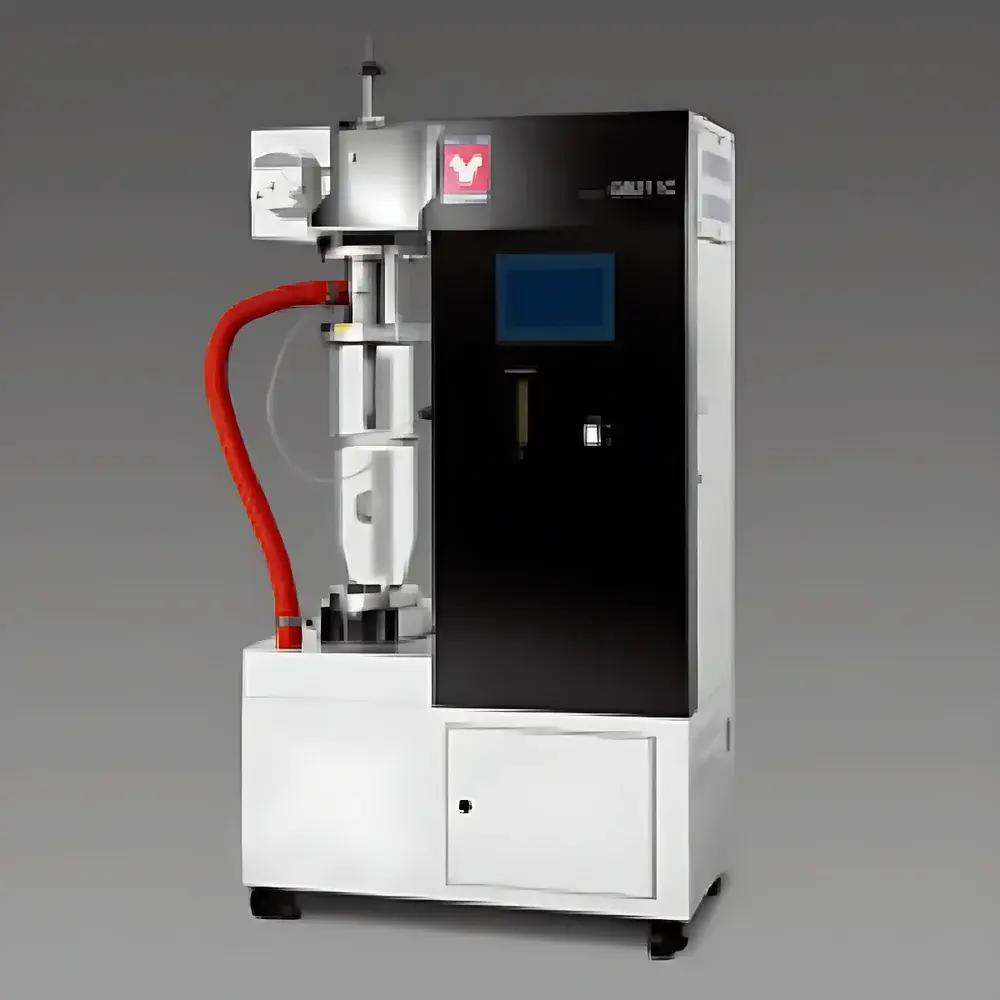
Yamato GB211C-B Fluidized Bed Spray Dryer System
| Brand | Yamato |
|---|---|
| Origin | Japan |
| Model | GB211C-B |
| Max. Feed Rate | 1500 mL/h |
| Inlet Temperature Range | 40–240 °C |
| Outlet Temperature Range | 0–100 °C |
| Temperature Control Accuracy | ±1 °C |
| Drying Air Flow | 0–1.0 m³/min |
| Atomizing Air Flow | 0–30 L/min |
| Heating Power | 3.2 kW |
| Dimensions (W×D×H) | 760×420×1350 mm |
| Weight | 110 kg |
| Power Supply | AC 220 V, 18 A, 50/60 Hz |
| Display | 7-inch Touchscreen (Chinese/Japanese/English) |
| Compliance | Designed for GLP-compliant R&D environments |
Overview
The Yamato GB211C-B is a modular, laboratory-scale fluidized bed spray drying and granulation system engineered for precision process development in pharmaceutical, food, and advanced materials research. Unlike conventional single-mode spray dryers, the GB211C-B integrates coaxial fluidization and two-stage atomization within a single platform—enabling simultaneous or sequential spray drying, fluid bed granulation, and particle coating in one instrument. Its core operation relies on concurrent control of inlet air temperature, atomizing gas pressure, fluidization velocity, and product bed dynamics—facilitating reproducible particle formation via controlled solvent evaporation and agglomeration kinetics. The transparent borosilicate glass drying chamber permits real-time visual monitoring of spray plume morphology, fluidization uniformity, and powder bed behavior—critical for method development and scale-up validation. Designed for batch processing of high-value samples (50–300 g per run), it serves as a primary tool for formulation screening, excipient compatibility testing, and amorphous solid dispersion stabilization.
Key Features
- Modular architecture: Base unit GB211C coupled with optional GF200 fluidized bed module or GF300 dual-mode spray/fluid-bed attachment—enabling flexible configuration for drying-only, granulation-only, or hybrid processes.
- High-visibility drying chamber: Ultra-hardened borosilicate glass construction with integrated lighting ensures unobstructed observation of droplet trajectory, particle suspension, and agglomerate growth.
- Precision thermal management: Multi-zone PID-controlled heating system (3.2 kW tubular heater) delivers rapid, stable inlet temperature ramping (40–240 °C) with ±1 °C accuracy; independent outlet temperature regulation (0–100 °C) supports thermolabile compound processing.
- Advanced atomization flexibility: Compatible with both two-fluid (liquid + compressed air) and three-fluid (liquid + air + auxiliary gas) nozzles; optional cooled nozzle assembly (GF411C) prevents thermal degradation at tip during prolonged operation.
- Human-centric operation: 7-inch resistive touchscreen interface with tri-lingual support (English, Japanese, Chinese); motorized lift mechanism for effortless chamber installation/removal; quick-connect fittings for cyclone, collection vessel, and air ducts.
- Process instrumentation suite: Integrated PT100 inlet/outlet temperature sensors; mass flow-controlled drying air (0–1.0 m³/min); calibrated atomizing air meter (0–30 L/min); 4–20 mA analog outputs for external SCADA integration.
Sample Compatibility & Compliance
The GB211C-B accommodates aqueous, organic, and mixed-solvent feedstocks—including polymer solutions, protein suspensions, nanoparticle colloids, and ceramic precursors. Its fluidized bed capability enables direct granulation of wet filter cakes or slurries without pre-drying, minimizing thermal history exposure. All wetted parts comply with USP Class VI biocompatibility standards; glass components meet ISO 3585 specifications for laboratory glassware. The system supports Good Laboratory Practice (GLP) workflows through optional data logging (timestamped inlet/outlet temperatures, airflow, pump speed) and audit-trail-enabled firmware—laying groundwork for future 21 CFR Part 11 compliance when paired with validated software. It meets IEC 61000-6-2/6-4 EMC requirements and incorporates dual overheat protection, earth leakage detection, and pump rotation monitoring.
Software & Data Management
While the base controller operates via embedded firmware, optional data acquisition modules enable continuous recording of up to eight process variables (inlet temp, outlet temp, air flow, atomizing pressure, pump RPM, etc.) at user-defined intervals (1–60 s). Export formats include CSV and Excel-compatible .xls for post-run statistical analysis (e.g., moisture content correlation, particle size distribution modeling). Remote monitoring is supported via Ethernet or RS-485 interfaces using Modbus RTU protocol—allowing integration into centralized lab automation networks. Optional PC-based software provides real-time trend visualization, alarm threshold configuration, and report generation aligned with internal SOP templates.
Applications
- Pharmaceutical development: Production of inhalable dry powders, taste-masked granules, hot-melt extrusion alternatives, and enteric-coated microparticles.
- Food science: Encapsulation of probiotics, vitamins, and flavors; production of instant beverage powders with controlled solubility and bulk density.
- Materials engineering: Synthesis of catalyst supports, battery electrode precursors, and functionalized metal-organic framework (MOF) composites.
- Academic research: Fundamental studies on droplet drying kinetics, crystallization inhibition, and fluidized bed agglomeration mechanisms.
- Quality control: Small-batch stability testing under varied thermal profiles to assess degradation pathways.
FAQ
What sample volumes can the GB211C-B handle per batch?
Typical feed capacity ranges from 50 g to 300 g of final dried product, corresponding to ~150–1500 mL/h liquid feed rate depending on solids concentration and solvent volatility.
Is the system suitable for heat-sensitive biologics?
Yes—by optimizing inlet temperature (as low as 40 °C), residence time, and outlet temperature control, the system achieves gentle drying while maintaining fluidization integrity; optional cooled nozzle further mitigates local thermal stress.
Can process parameters be exported for regulatory submission?
With the optional data logger, all critical process parameters are timestamped and stored in tamper-evident files; raw data exports support traceability required for IND/IMPD submissions when validated per GMP Annex 11 guidelines.
What maintenance is required for long-term reliability?
Daily cleaning of cyclone, collection vessel, and nozzle using ethanol/water rinse; quarterly calibration of PT100 sensors and airflow meters; annual inspection of heater insulation and electrical grounding integrity.
Does Yamato provide application support for method development?
Yes—Yamato’s global technical service team offers remote and on-site assistance for process optimization, including nozzle selection guidance, fluidization velocity mapping, and drying curve establishment for novel formulations.



