
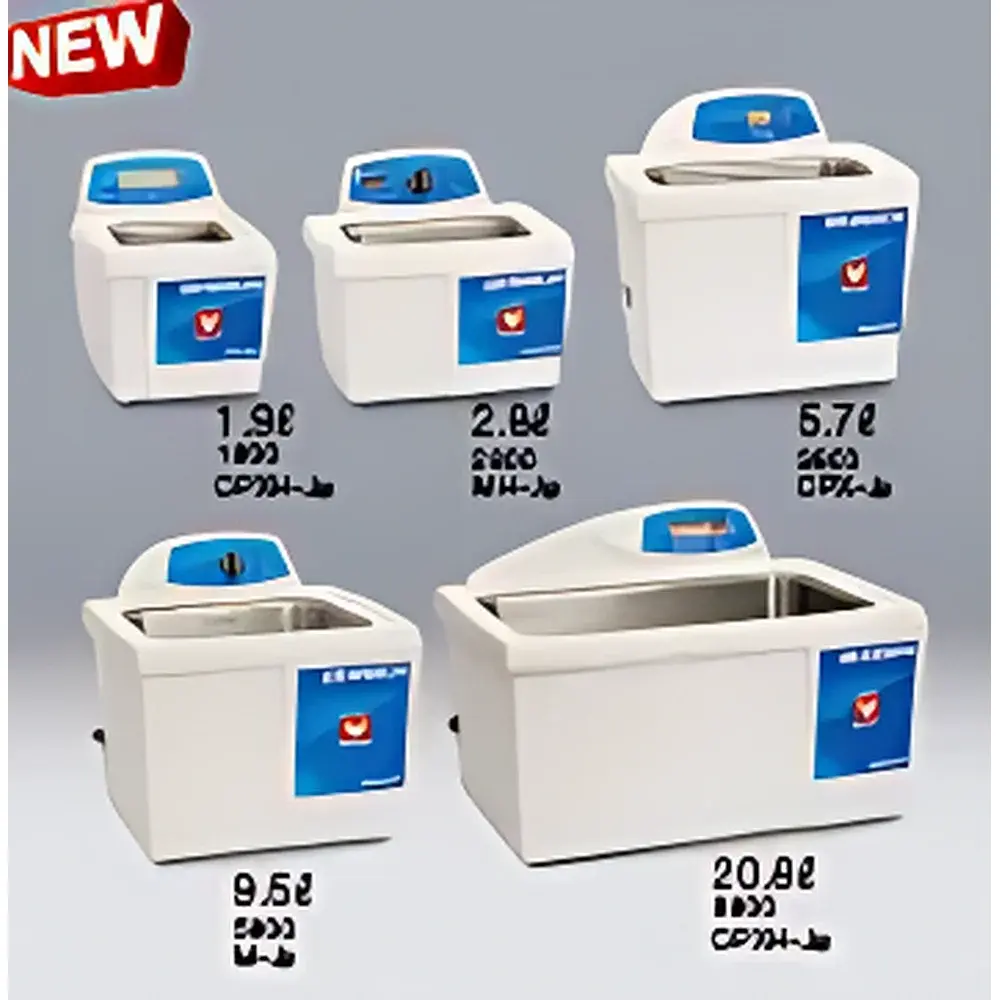
Yamato M1800H-J / CPX1800-J / CPX1800H-J Bottle Washer
| Brand | Yamato |
|---|---|
| Origin | Shanghai, China |
| Manufacturer Type | Authorized Distributor |
| Product Category | Domestic (PRC-manufactured) |
| Model | M1800H-J / CPX1800-J / CPX1800H-J |
| Pricing | Available Upon Request |
| Control Type | Mechanical Timer (M-series) or Digital Microprocessor Control (CPX-series) |
| Heating Function | Yes (H-designation) |
| Deaeration Function | Yes (CPX-series) |
| Automatic Cycle Programming | Yes (CPX-H models) |
| Timer Range | 0–60 min (M-series), 1–99 min (CPX-series) |
| Power Consumption | 450–600 W (H-models), 70–2000 W depending on model |
| Tank Capacity | 1.9–20.8 L |
| Internal Chamber Dimensions (W×D×H) | 150×137×100 mm to 495×292×150 mm |
| External Dimensions (W×D×H) | 251×302×303 mm to 596×466×391 mm |
| Weight | 3.5–11.9 kg |
Overview
The Yamato M1800H-J, CPX1800-J, and CPX1800H-J are benchtop bottle washers engineered for reproducible, residue-free cleaning of laboratory glassware—including volumetric flasks, graduated cylinders, pipettes, reagent bottles, and narrow-neck containers—under controlled thermal and mechanical conditions. These units operate on a recirculating spray-jet principle: heated detergent solution is pumped through precision nozzles to deliver targeted impingement force across internal and external surfaces, followed by multi-stage rinse cycles using deionized or purified water. Unlike ultrasonic cleaners, which rely on cavitation, Yamato bottle washers emphasize mechanical displacement of particulate and organic contaminants via calibrated flow dynamics and temperature-controlled chemistry—making them particularly suitable for applications requiring validation, traceability, and compliance with GLP/GMP environmental monitoring protocols.
Key Features
- Dual control architecture: M-series models feature robust mechanical timers with tactile feedback and fail-safe cutoff; CPX-series integrate microprocessor-based digital controllers supporting programmable cycle sequencing, real-time status display, and password-protected parameter locking.
- Integrated heating system (H-designation): Stainless steel immersion heaters maintain precise wash bath temperatures between 30°C and 95°C, accelerating detergent efficacy and enabling thermal disinfection per ISO 15883-1 guidelines.
- Deaeration function (CPX models): Vacuum-assisted air removal from solution prior to injection minimizes bubble entrapment in complex geometries—critical for cleaning serological pipettes, HPLC vials, and microcentrifuge tubes.
- Modular rack system: Interchangeable baskets with adjustable pegs accommodate diverse vessel types and orientations; all racks are constructed from electropolished 316L stainless steel to resist corrosion and ensure long-term dimensional stability.
- Energy-optimized operation: Variable-speed pump control and insulated chamber walls reduce power demand without compromising cleaning intensity; standby mode automatically lowers heater output after cycle completion.
- Compliance-ready design: All CPX-H models support audit trail generation (time-stamped cycle logs), user access levels, and optional RS-232/USB data export compatible with LIMS integration.
Sample Compatibility & Compliance
These washers accept standard laboratory vessels up to 1 L capacity (e.g., 1000 mL volumetric flasks, 500 mL NMR tubes, 250 mL Erlenmeyer flasks) and support nested loading configurations for high-throughput processing. The CPX series meets key requirements for regulated environments: wash cycle parameters—including temperature, duration, detergent concentration, and rinse volume—are fully configurable and repeatable within ±1.5% tolerance. Units comply with IEC 61000-6-3 (EMC emissions), IEC 61000-6-2 (immunity), and carry CE marking under the EU Machinery Directive 2006/42/EC. Optional documentation packages include Factory Acceptance Test (FAT) reports and IQ/OQ templates aligned with ASTM E2500-13 and ISO 9001:2015 quality management systems.
Software & Data Management
CPX-series instruments run on embedded firmware supporting up to 20 customizable cleaning programs, each storing independent settings for wash temperature, pre-rinse duration, detergent dwell time, final rinse count, and drying phase activation. Cycle execution logs record operator ID, start/end timestamps, actual temperature profiles, and fault codes—retained for ≥10,000 cycles in non-volatile memory. Data export is supported via USB flash drive (CSV format) or serial interface for integration into enterprise quality management systems (QMS). When deployed in FDA-regulated labs, CPX-H models can be configured to meet 21 CFR Part 11 requirements—including electronic signatures, audit trail integrity, and role-based access control—using validated third-party middleware solutions.
Applications
- Pre-analytical sample preparation in clinical chemistry and toxicology labs where carryover contamination must be eliminated before LC-MS/MS or ICP-MS analysis.
- Routine cleaning of reusable cell culture flasks and bioreactor accessories in academic and industrial life science facilities.
- Validation studies for cleaning process qualification (CPQ) in pharmaceutical manufacturing, supporting PDA Technical Report No. 29 and EU Annex 15 guidance.
- Environmental testing laboratories performing EPA Method 500-series analyses requiring trace-metal-clean glassware.
- University teaching labs requiring durable, low-maintenance equipment for undergraduate analytical chemistry instruction.
FAQ
What distinguishes the M-series from the CPX-series?
The M-series uses mechanical timers and manual temperature selection; CPX models offer digital control, programmable sequences, deaeration, and automated cycle logging.
Can these washers be used with enzymatic or low-foaming detergents?
Yes—both series are compatible with industry-standard neutral-pH enzymatic formulations (e.g., Alconox Tergazyme®, Liquinox®) and high-efficiency low-foam surfactants certified for labware cleaning.
Is validation support available for GxP environments?
Yamato provides IQ/OQ protocol templates and FAT documentation upon request; qualified engineers can perform on-site installation qualification and operational qualification services.
What maintenance intervals are recommended?
Daily: drain and wipe interior; weekly: inspect nozzle alignment and clean filter screen; quarterly: calibrate temperature sensor and verify pump pressure output against factory specifications.
Are spare parts and service contracts available globally?
Yes—authorized Yamato service centers in North America, Europe, and APAC stock consumables (nozzles, gaskets, baskets) and provide extended warranty and preventive maintenance agreements.
Related Products



