
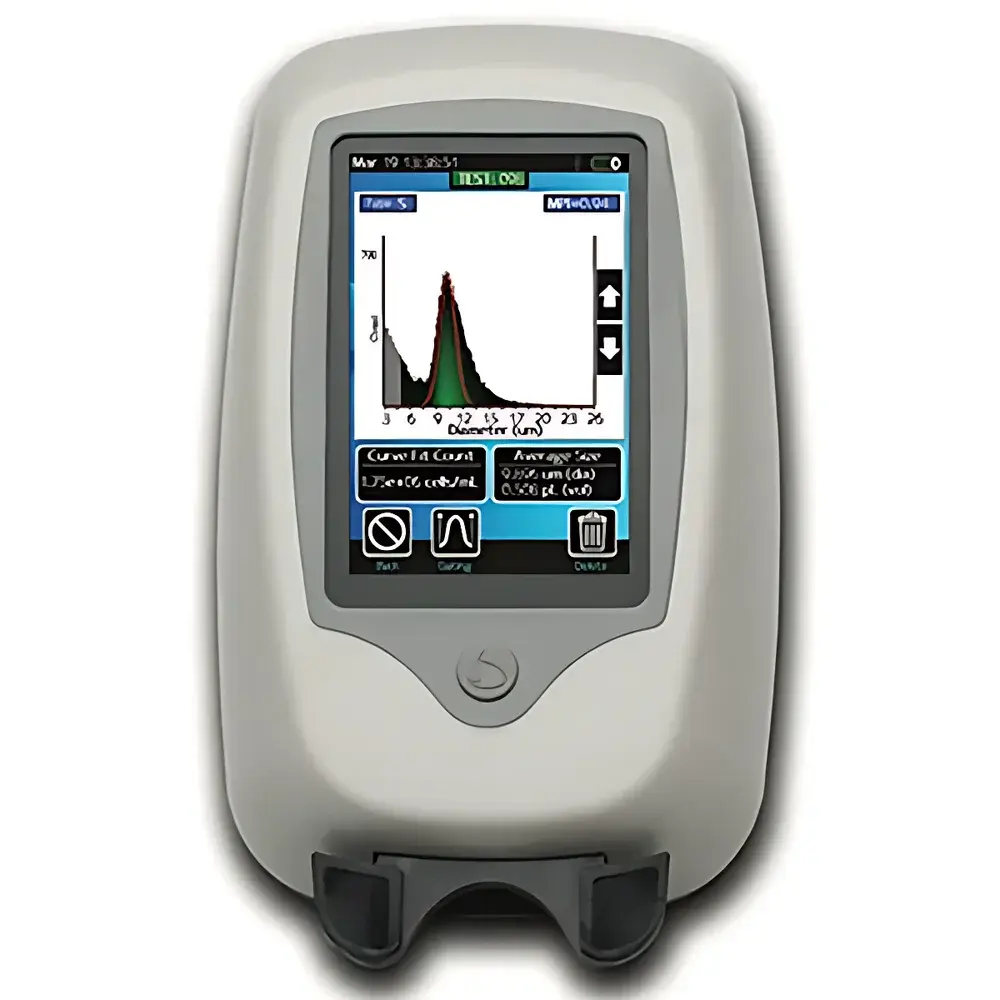
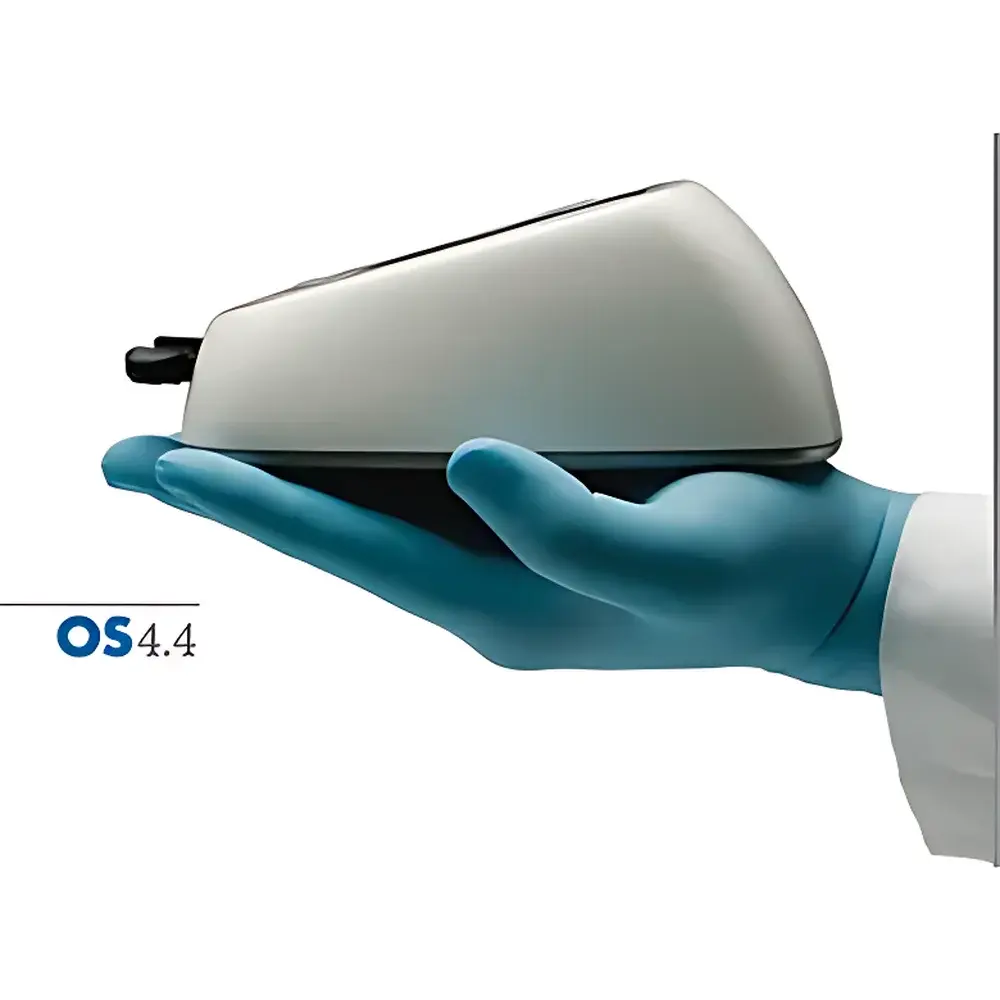
Orflo Moxi Z Coulter-Principle Cell Counter
| Brand | Orflo |
|---|---|
| Origin | USA |
| Manufacturer Type | Authorized Distributor |
| Origin Category | Imported |
| Model | Moxi Z |
| Detection Time | 8 s |
| Sample Volume | µL-range (typical 20–50 µL) |
| Measurable Cell Size Range | 3–35 µm |
| Principle | Electrical Sensing Zone (Coulter Principle) |
| Output | Cell Concentration (cells/mL), Mean Diameter (µm), CV%, Viability Index (non-dye-based) |
Overview
The Orflo Moxi Z is a benchtop, microfluidic-enabled cell counter engineered for precision and reproducibility in routine and research-grade cell analysis. It operates on the Electrical Sensing Zone (ESZ) principle—commonly known as the Coulter principle—in which cells suspended in an electrolyte solution pass individually through a micro-aperture, generating electrical pulses proportional to their displaced volume. This physics-based, label-free method delivers absolute count and volumetric size distribution without reliance on optical scattering or fluorescent dyes. Unlike image-based counters, the Moxi Z provides true volumetric sizing with high resolution across the 3–35 µm range, making it suitable for heterogeneous populations including mammalian cells, platelets, yeast, algae, and primary isolates. Its design eliminates operator subjectivity, photobleaching artifacts, and threshold-dependent segmentation errors inherent in microscopy or flow cytometry-based enumeration.
Key Features
- Label-Free Viability Assessment: Computes a non-dye-based Health Index derived from pulse amplitude distribution skewness and coefficient of variation—correlating with membrane integrity and cytoplasmic granularity without propidium iodide or trypan blue.
- High-Speed Analysis: Delivers full-count and size histogram output in ≤8 seconds per sample, enabled by integrated microfluidic cartridge and real-time pulse processing firmware.
- Low-Volume Operation: Requires only 20–50 µL of undiluted or minimally diluted suspension—critical for precious primary samples, bioreactor harvests, or low-yield transfection experiments.
- Robust Architecture: Solid-state electronics, sealed microfluidic chip (single-use, pre-calibrated), and touchscreen interface eliminate alignment drift, fluidic clogging, and optical calibration dependencies.
- Traceable Metrology: Each cartridge is factory-calibrated against NIST-traceable polystyrene standards; system performance verification is supported via daily QC check with included reference beads (10 µm & 20 µm).
Sample Compatibility & Compliance
The Moxi Z accommodates a broad spectrum of biological particles within its validated dynamic range: adherent and suspension mammalian cells (e.g., CHO, HEK293, Jurkat), human and murine platelets (2–4 µm), Saccharomyces cerevisiae and Pichia pastoris, freshwater and marine microalgae (e.g., Chlamydomonas, Nannochloropsis), and microparticles in vaccine or exosome process development. It complies with ISO 13319:2015 (particle size analysis by ESZ) and supports GLP/GMP-aligned workflows through optional audit trail logging (21 CFR Part 11–compliant software module available). No regulatory submission data are generated directly by the instrument; however, raw pulse data and histograms are exportable in CSV and PDF formats for inclusion in analytical method validation packages (e.g., ICH Q5A, USP <788>).
Software & Data Management
The Moxi Z runs embedded firmware with intuitive touch interface and local data storage (internal flash + USB export). All measurements include timestamped metadata: date/time, operator ID, sample ID, cartridge lot, and environmental temperature. Software exports support batch reporting (up to 99 samples), statistical comparison (t-test, ANOVA-ready), and histogram overlay for longitudinal monitoring. Raw pulse train files (.bin) are retained for reprocessing or third-party algorithm integration. Optional Moxi Connect cloud platform enables secure remote access, role-based permissions, and automated backup to HIPAA-compliant AWS S3 infrastructure—fully auditable for FDA inspection readiness.
Applications
- Bioprocess monitoring: Daily viable cell density and diameter tracking in upstream bioreactors (mammalian, insect, yeast)
- Vaccine & gene therapy QC: Quantification of dendritic cells, PBMC subsets, and lentiviral vector-associated particles
- Algal biotechnology: Growth phase assessment via size distribution shifts during nitrogen starvation or light stress
- Platelet transfusion quality control: Enumeration and microaggregate detection in platelet-rich plasma units
- CRISPR editing validation: Rapid post-nucleofection viability screening without dye toxicity artifacts
- Exosome & MV characterization: Distinguishing small EVs (sub-3 µm limit) from larger microvesicles and apoptotic bodies in conditioned media
FAQ
Does the Moxi Z require daily calibration or optical alignment?
No. The microfluidic cartridge is single-use and pre-calibrated at the factory. No user-performed calibration, laser alignment, or fluidic priming is required.
Can it distinguish between live and dead cells without staining?
It calculates a Health Index based on pulse shape distribution—not binary viability—but correlates strongly with membrane integrity in standard cell lines. For regulatory-grade viability, orthogonal confirmation (e.g., AO/PI staining) remains recommended.
Is the system compatible with viscous or high-protein samples like serum-containing media?
Yes. The ESZ principle is largely insensitive to optical turbidity or background fluorescence. However, samples >10% FBS should be diluted into low-conductivity buffer (e.g., PBS) to maintain optimal signal-to-noise ratio.
What is the minimum detectable concentration?
The lower limit of quantitation is ~1 × 10⁴ cells/mL for 10 µm particles under standard 20 µL load volume, validated per ISO 21501-4 Annex B protocols.
Are cartridges interchangeable between Moxi Z and Moxi Go instruments?
No. Cartridges are model-specific and not cross-compatible due to differing aperture geometry and firmware handshake protocols.





