

TCT VEMEIS1.0 Mobile Vehicle Emission Monitoring System
| Brand | TCT (Xiamen Tongchuang) |
|---|---|
| Origin | Fujian, China |
| Model | VEMEIS1.0 |
| Application | In-Use Vehicle Emission Compliance Testing (Gasoline, Diesel, Motorcycle) |
| Regulatory Compliance | GB 18285–2018, GB 3847–2018, GB 19758–2005, GB 14621–2002, GB 18352.6–2016 |
| Measurement Principles | NDIR (HC, CO, CO₂), Electrochemical (NO, NO₂, O₂), Lambda Calculation, Opacity (N, K), Charged Particle Counting (PN), Thermal & Inductive Sensing (Oil Temp, RPM) |
| Detection Range | HC 0–20,000 ppm |
| Resolution & Accuracy | As per GB standards (e.g., HC ±4 ppm or ±3% rel., Opacity ±1% abs., PN ±1% FS) |
| Data Transmission | Wireless (4G/LTE), Cloud-Ready API Interface |
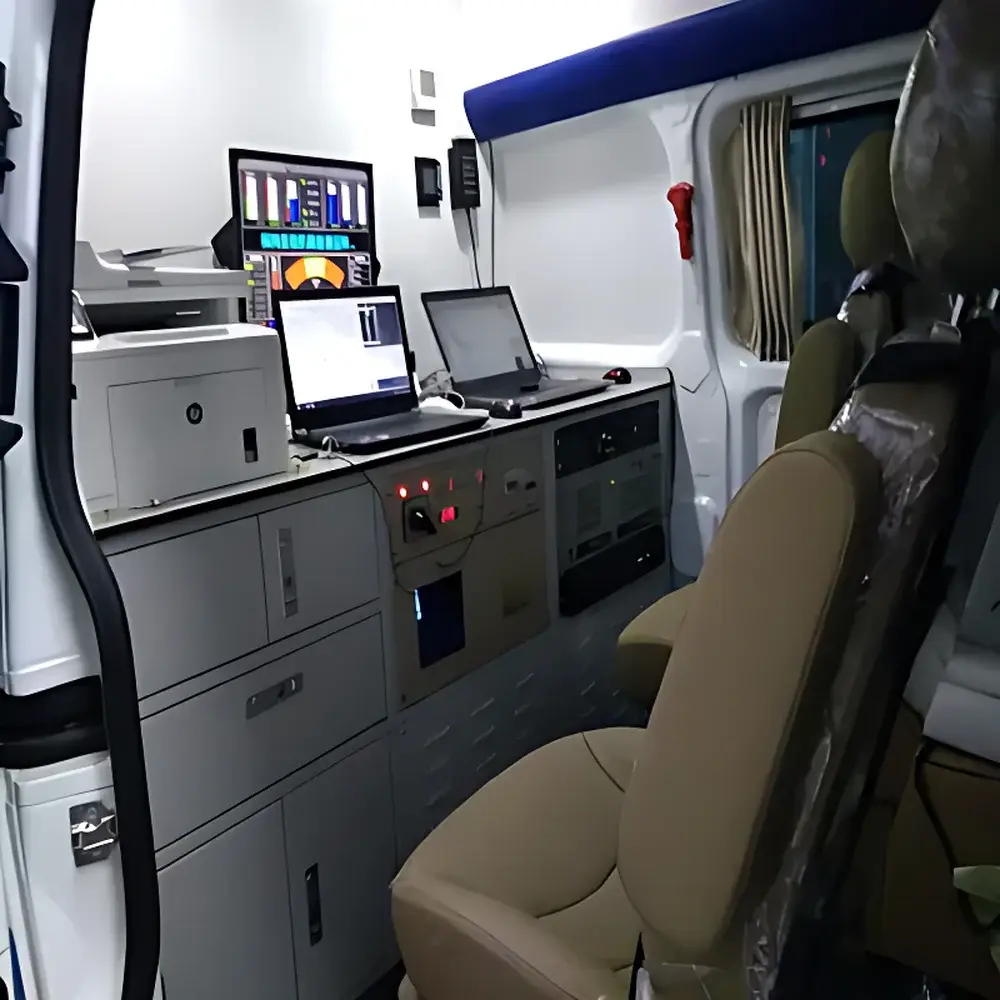
| Software | Integrated Emission Database Management, Audit-Trail Logging, GLP-Compliant Reporting |
Overview
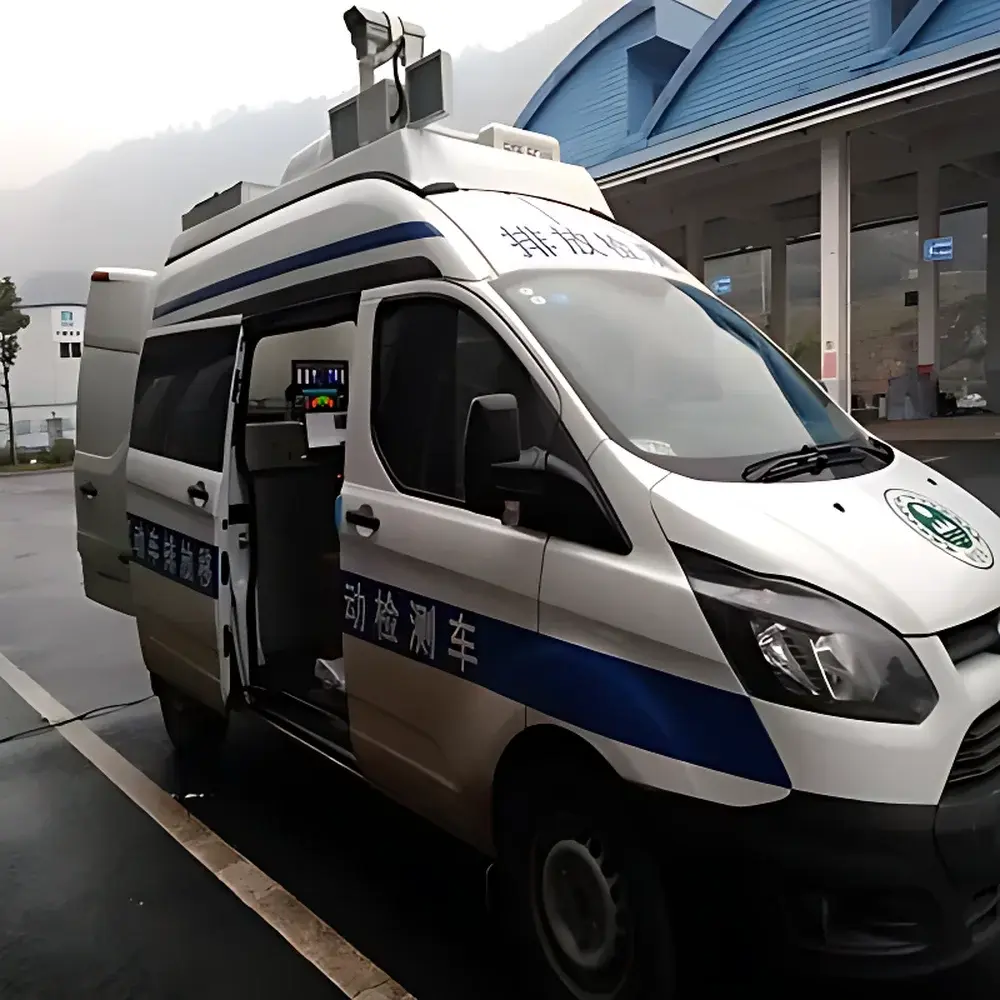
The TCT VEMEIS1.0 Mobile Vehicle Emission Monitoring System is a fully integrated, vehicle-mounted environmental instrumentation platform engineered for regulatory-grade in-use vehicle exhaust testing under real-world field conditions. Designed and validated against China’s national emission standards—including GB 18285–2018 (gasoline vehicles, dual-idle method), GB 3847–2018 (diesel vehicles, opacity-based free-acceleration test), GB 19758–2005 and GB 14621–2002 (motorcycle idle testing), and GB 18352.6–2016 (particle number concentration)—the system delivers metrologically traceable measurements across gaseous pollutants, optical smoke parameters, and ultrafine particulate matter. Its architecture integrates NDIR gas analyzers for hydrocarbons (HC), carbon monoxide (CO), and carbon dioxide (CO₂); electrochemical sensors for nitrogen oxides (NO, NO₂) and oxygen (O₂); lambda calculation modules; dual-wavelength opacity meters compliant with ISO 11614 principles for diesel smoke (N and K coefficients); and a certified charged-particle counting system for particle number (PN) measurement in the 600–1.3×10⁹ #/cm³ range, with size sensitivity extending from sub-3 nm to ~23 nm depending on voltage configuration. All subsystems are temperature-compensated, flow-stabilized, and calibrated per manufacturer-recommended intervals aligned with GB/T 3847 verification protocols.
Key Features
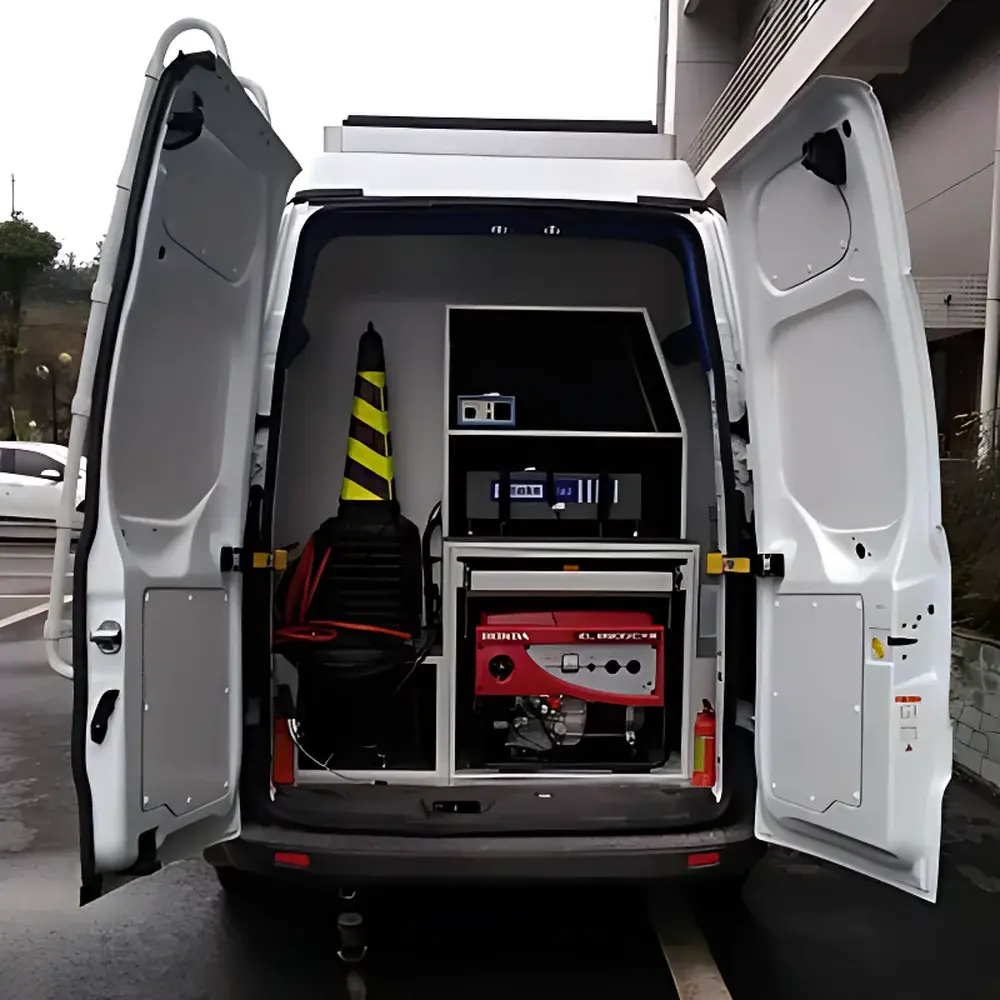
- Integrated mobile laboratory platform—fully self-contained within a modified commercial chassis, including climate-controlled operator cabin, uninterruptible power supply (UPS), and redundant data storage.
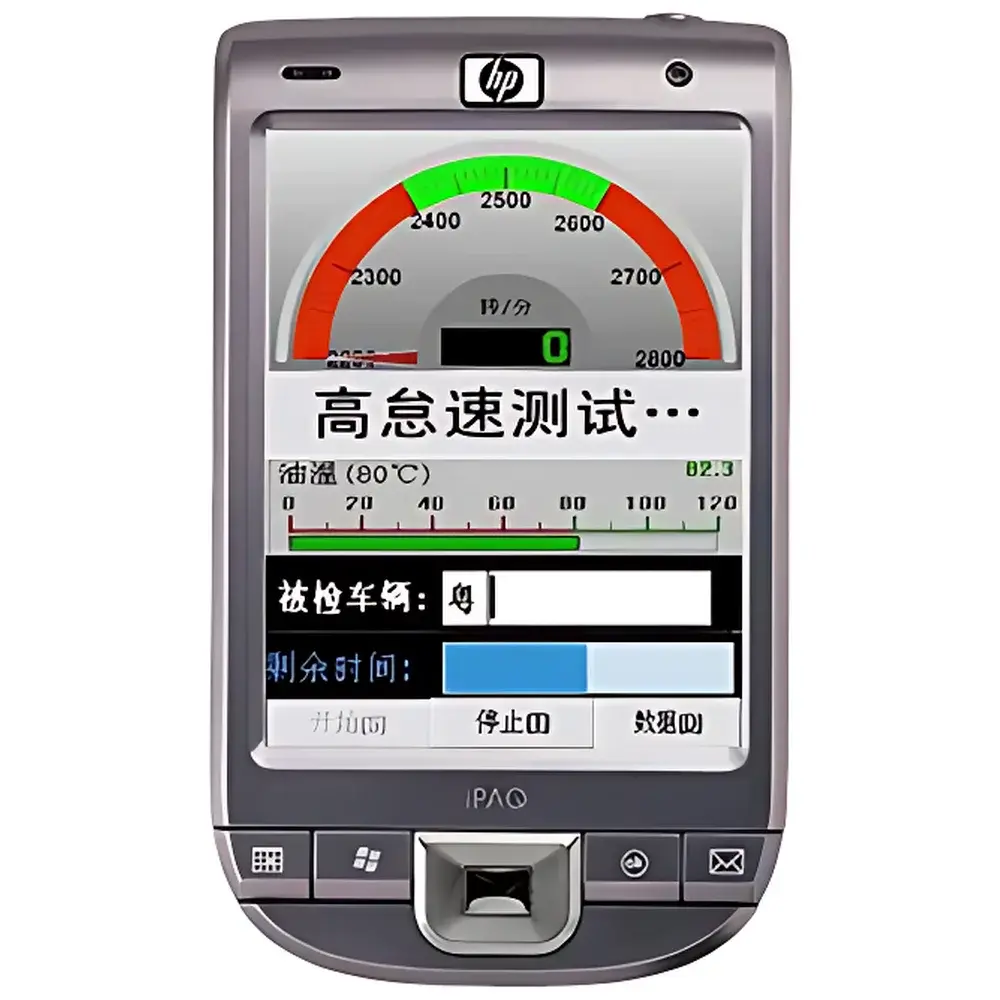
- Automated test sequence execution: engine state detection (via ignition coil induction and RPM sensing), pre-test warm-up validation, multi-point sampling, and pass/fail determination per GB thresholds—all without manual intervention.
- Real-time wireless telemetry via embedded 4G/LTE module, supporting encrypted transmission of raw sensor outputs, diagnostic logs, GPS-tagged location metadata, and timestamped compliance verdicts to central environmental monitoring platforms.
- Onboard emission database engine supporting vehicle identification via VIN decoding (optional OBD-II interface), model-year classification, fuel-type tagging, and historical trend indexing—structured for SQL-based querying and statistical reporting.
- Modular sensor architecture enabling field-swappable analyzers with factory-calibrated reference cells, minimizing downtime during maintenance or regulatory revalidation.
- GLP-aligned software audit trail: all calibration events, user logins, parameter modifications, and report generations are time-stamped, digitally signed, and immutably archived per ISO/IEC 17025 documentation requirements.
Sample Compatibility & Compliance
The VEMEIS1.0 is validated for direct exhaust sampling from light-duty gasoline vehicles (including hybrids), heavy-duty diesel trucks and buses, and two/three-wheeled motorcycles operating under ambient temperatures from −10 °C to +45 °C. Sampling interfaces comply with GB 3847–2018 duct geometry and probe insertion depth specifications. Gaseous analyzers meet GB/T 27865–2011 performance criteria for zero drift (<±2% full scale/24 h), span drift (<±2% FS/24 h), and response time (<15 s for 90% step change). The opacity meter conforms to ISO 11614 Annex B for alignment stability and photometric linearity. PN measurement follows the principle of diffusion charging and electrometer-based current integration, validated against CPC reference instruments per GB 18352.6–2016 Annex F. All measurement outputs are formatted in XML/JSON payloads compatible with provincial-level Motor Vehicle Emission Supervision Information Systems (MVESIS) and national ecological monitoring cloud infrastructures.
Software & Data Management
The embedded Linux-based control software (VEMEIS OS v3.2) provides role-based access control (RBAC), configurable test templates per vehicle category, and automated generation of GB-compliant PDF reports—including mandatory fields such as inspector ID, test date/time, license plate, measured values vs. limits, pass/fail status, and digital signature. Raw datasets are stored locally on industrial-grade SSDs with RAID 1 redundancy and synchronized hourly to secure cloud endpoints using TLS 1.3 encryption. Data schema adheres to the China National Environmental Monitoring Center’s “Motor Vehicle Emission Monitoring Data Exchange Specification” (HJ 1237–2021). Audit logs record every data modification event with user ID, IP address (if network-connected), and SHA-256 hash of affected records—supporting retrospective forensic analysis during GLP/GMP audits or legal proceedings.
Applications
The VEMEIS1.0 serves as a primary enforcement tool for municipal and provincial ecological environment bureaus conducting roadside inspections (RSD), random spot checks at vehicle registration centers, periodic emissions screening in high-pollution zones (e.g., urban cores, logistics hubs), and post-maintenance verification of retrofit devices (e.g., DPFs, SCR systems). It supports emergency response scenarios—including post-accident emission assessments and post-disaster fleet screening—where rapid deployment and autonomous operation are critical. Field units have been deployed in >12 provinces across China for annual inspection program supplementation, non-road mobile machinery screening (under supplementary protocols), and cross-jurisdictional enforcement coordination via standardized data exchange gateways.
FAQ
Does the VEMEIS1.0 support remote firmware updates and calibration validation?
Yes—secure OTA updates are delivered via authenticated HTTPS channels; calibration status is verified through automated reference gas challenges prior to each test session.
Can the system be integrated with third-party traffic management or license plate recognition (LPR) systems?
Yes—RESTful APIs support bidirectional integration with LPR platforms for auto-population of vehicle metadata and geotagged violation flagging.
Is the PN measurement module certified to PEMS (Portable Emissions Measurement Systems) equivalence per EU 2017/1151?
While designed to GB 18352.6–2016, the PN subsystem has undergone comparative testing against AVL MEXA-1300PN and TSI 3776 systems showing <5% bias across 10⁶–10⁹ #/cm³ range; formal PEMS equivalence requires site-specific type approval per local authority.
What is the mean time between failures (MTBF) for the onboard analyzers under continuous field operation?
Based on 24-month field deployment data from 47 municipal units, MTBF exceeds 4,200 hours for NDIR modules and 3,800 hours for electrochemical sensors, assuming biweekly zero/span verification.
How does the system handle data integrity during intermittent network outages?
All measurements are buffered locally with write-ahead logging; synchronization resumes automatically upon network restoration, with conflict resolution based on monotonic UTC timestamps and cryptographic hash validation.
Related Products







