
Particle Labs CVS-S Contamination Visualization System
| Brand | Particle Labs |
|---|---|
| Origin | Japan |
| Manufacturer Type | Authorized Distributor |
| Product Category | Imported Instrument |
| Model | CVS-S |
| Instrument Type | Optical Particle Visualization System |
| Detection Principle | Widefield Brightfield Microscopy with High-Sensitivity CMOS Imaging |
| Minimum Resolvable Particle Size | ~0.1 µm (in optimal contrast conditions) |
| Imaging Modality | Real-time, Non-contact, Laser-Free Visual Monitoring |
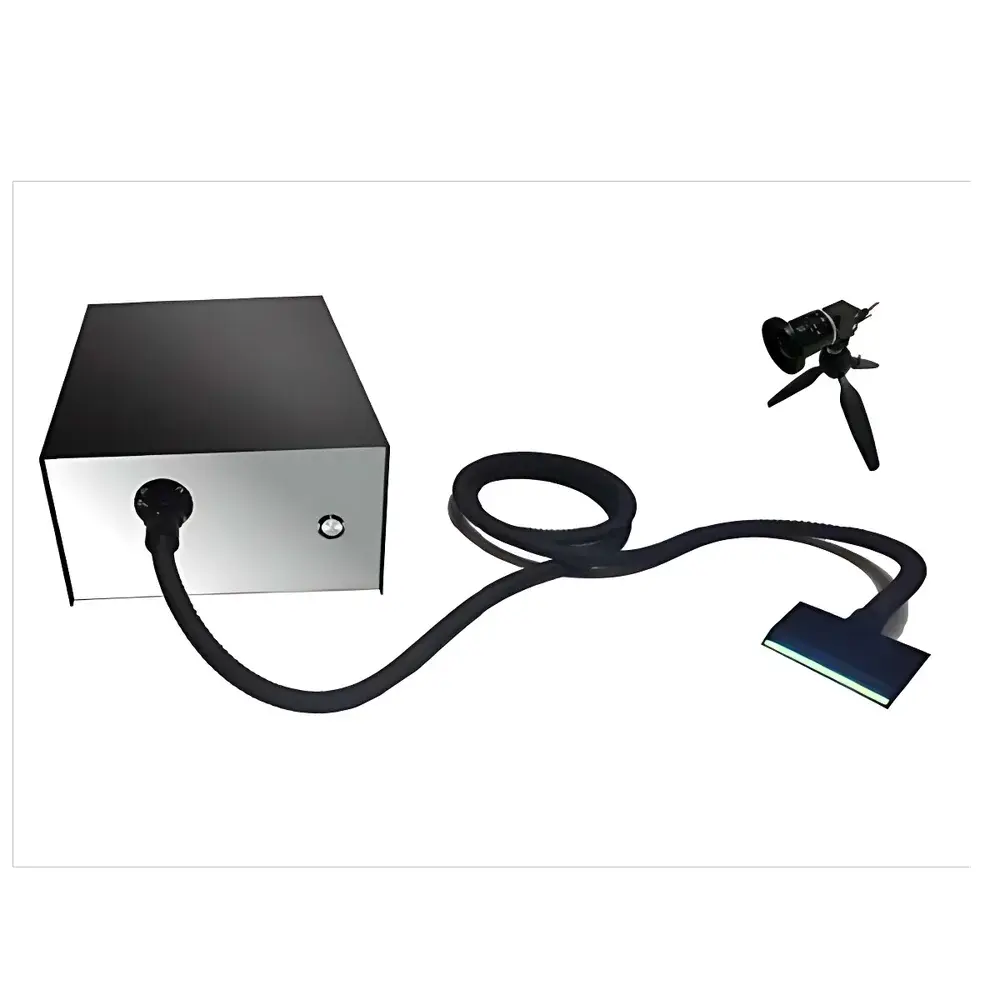
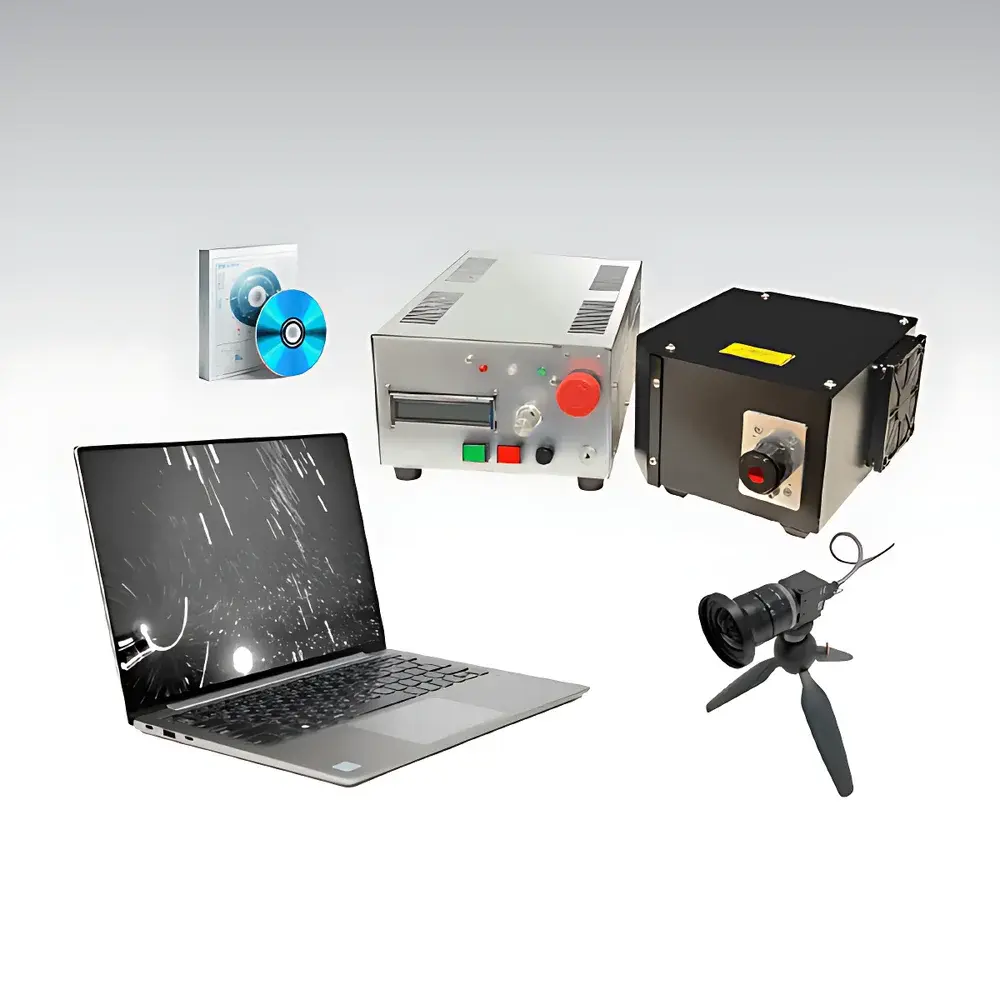
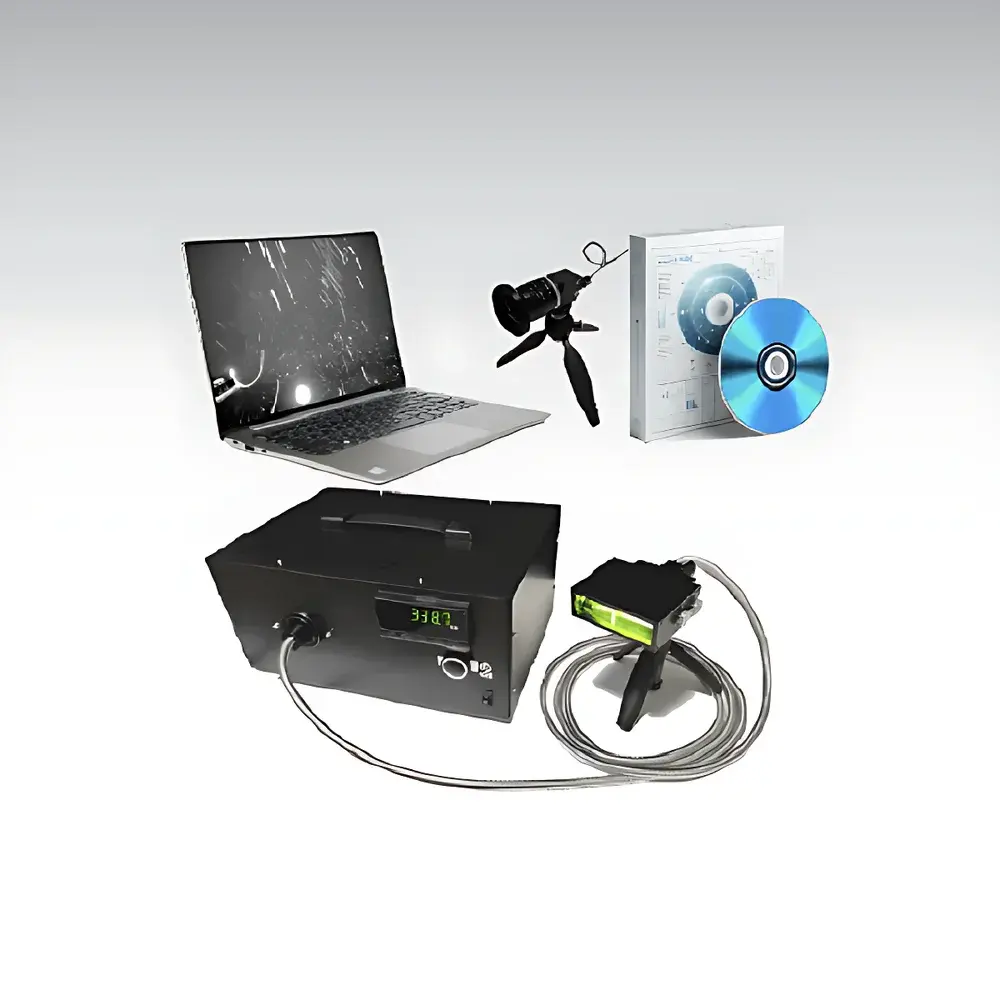
| Form Factor | Compact Illumination Unit + Integrated Camera Module |
| Compliance Context | Supports ISO 14644-1 Class 3–5 environments, ASTM E2904-21 (Standard Guide for Microscopic Particle Characterization), and GMP/GLP-aligned documentation workflows |
Overview
The Particle Labs CVS-S Contamination Visualization System is an optical particle monitoring instrument engineered for real-time, non-invasive visualization of sub-micron particulate contamination in controlled manufacturing environments. Unlike conventional optical particle counters relying on light scattering from single-point laser interrogation, the CVS-S employs widefield brightfield microscopy coupled with a high-sensitivity monochrome CMOS imaging sensor and optimized broadband illumination. This architecture enables direct spatial observation—not statistical inference—of particles as small as approximately 0.1 µm under favorable contrast conditions (e.g., on reflective or semi-transparent surfaces, or suspended in low-turbidity gas streams). The system operates without laser sources, eliminating concerns related to photobleaching, laser safety classification (IEC 60825), or interference with sensitive optoelectronic processes. Its primary engineering objective is to address critical blind spots in contamination control where traditional particle counters fail: static or slowly migrating surface-bound contaminants, low-concentration airborne clusters near equipment interfaces, and morphologically heterogeneous debris not reliably sized via Mie scattering assumptions.
Key Features
- Sub-micron visual detection capability (~0.1 µm resolution limit under optimized contrast and magnification)
- Laser-free optical design: eliminates regulatory overhead associated with Class 1M/3R laser systems and avoids interference with photolithography or optical alignment processes
- Modular, ultra-compact illumination unit and camera head—designed for direct integration onto production tools, wafer handling modules, or filling line manifolds without structural retrofitting
- Dual-mode imaging support: simultaneous acquisition and algorithmic differentiation between suspended aerosol particles and settled surface contaminants using temporal variance analysis and edge-enhanced segmentation
- Real-time image streaming at up to 30 fps with onboard buffering; metadata-tagged frames include timestamp, exposure settings, and environmental context (if integrated with external sensors)
- Embedded image processing engine implementing adaptive thresholding, noise suppression, and particle centroid tracking—enabling qualitative trend assessment without requiring offline software suites
Sample Compatibility & Compliance
The CVS-S is validated for use across semiconductor front-end and back-end processes, sterile pharmaceutical fill-finish operations, and precision automotive component assembly. It supports inspection of transparent substrates (quartz wafers, glass vials), metallic surfaces (stainless steel tooling, aluminum housings), and polymer films (PET, PI). While not a quantitative counting device per ISO 21501-4, its output serves as orthogonal verification to laser particle counters in accordance with ISO 14644-1 Annex B (supplementary monitoring methods) and ASTM E2904-21 guidance on microscopic particle characterization. Data logs comply with ALCOA+ principles when paired with validated third-party LIMS or MES integrations; audit trails—including user actions, parameter changes, and image export events—can be configured to meet FDA 21 CFR Part 11 requirements via external platform synchronization.
Software & Data Management
The system ships with ParticleView™ Lite firmware (v3.2+), providing intuitive web-based interface access via Ethernet or Wi-Fi. Image capture, annotation, region-of-interest (ROI) definition, and basic measurement (length, area, aspect ratio) are performed locally. Export formats include TIFF (lossless), JPEG2000 (wavelet-compressed), and CSV metadata files compatible with JMP, Python pandas, or MATLAB workflows. For enterprise deployment, RESTful API endpoints enable integration into existing quality management systems (QMS) for automated alerting upon detection of predefined morphological signatures (e.g., fibrous vs. spherical contaminants). All stored images retain EXIF-like headers containing device ID, firmware version, exposure time, gain setting, and UTC timestamp—ensuring traceability during internal audits or regulatory inspections.
Applications
- Root cause analysis of yield-limiting defects in 300 mm wafer fabrication, particularly in CMP slurry residue mapping and post-etch particle adhesion studies
- Verification of filter integrity and cleanroom gowning protocols through challenge testing with polystyrene latex (PSL) standards at 0.1–0.5 µm
- Monitoring of lyophilized drug product vial interiors pre-capping to detect fiber shedding from stopper liners or glove material abrasion
- In-line assessment of optical film cleanliness prior to lamination in display manufacturing, supporting ISO 10110-7 surface quality grading
- Qualitative validation of ultrasonic cleaning efficacy for microfluidic channel components used in diagnostic cartridge assembly
FAQ
Is the CVS-S compliant with ISO 21501-4 for particle counting?
No—the CVS-S is not a certified particle counter under ISO 21501-4. It is a visualization and qualitative assessment tool aligned with ISO 14644-1 Annex B and ASTM E2904-21 for complementary contamination monitoring.
Can it distinguish between organic and inorganic particles?
Not inherently—material identification requires correlative techniques such as SEM-EDS or Raman spectroscopy. However, morphology, motion behavior, and contrast response under variable illumination can support preliminary classification hypotheses.
What is the recommended maintenance interval for the optical path?
Annual calibration verification of focus repeatability and illumination uniformity is advised; no routine recalibration is required between verifications if operated within specified ambient temperature (15–25°C) and humidity (30–60% RH) ranges.
Does the system support automated pass/fail decision logic?
Yes—customizable detection rules (e.g., “>5 particles ≥0.3 µm in ROI A within 60 s”) can trigger HTTP POST alerts or digital I/O signals when deployed with optional Edge Logic Module.



