
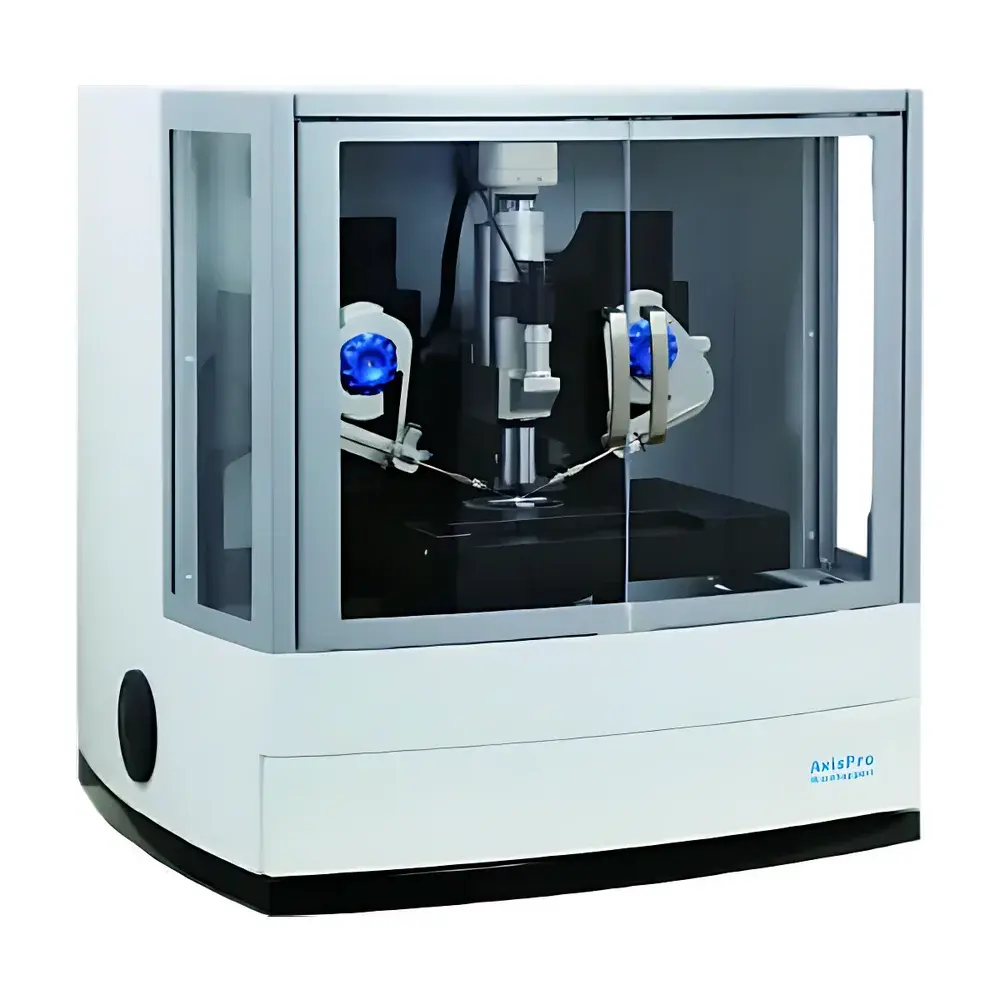
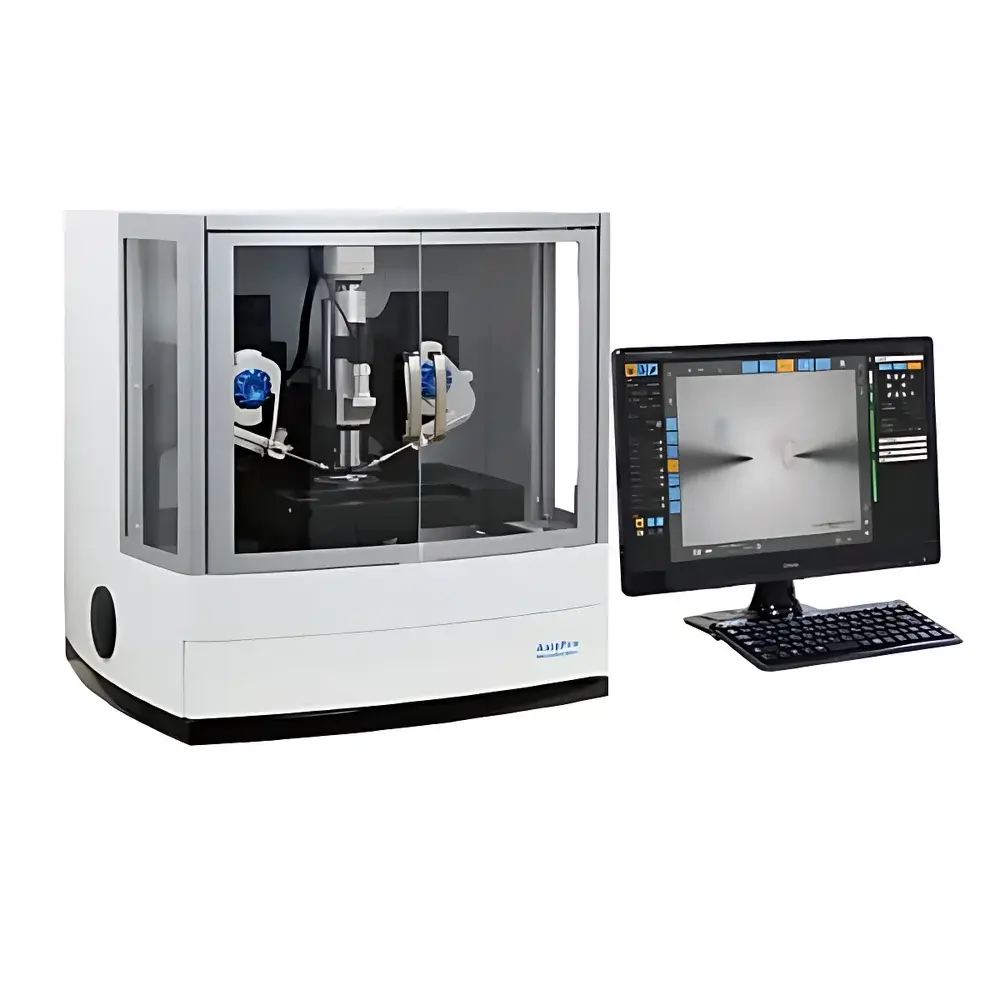
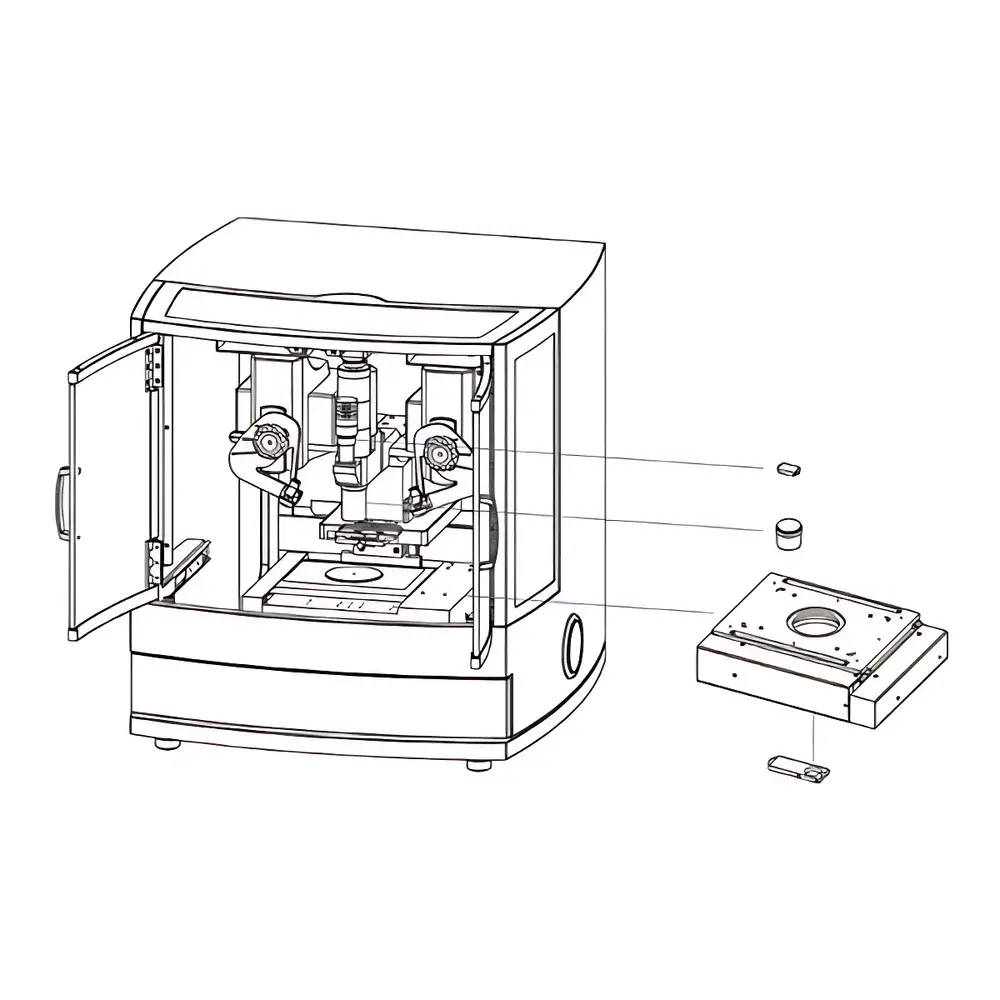
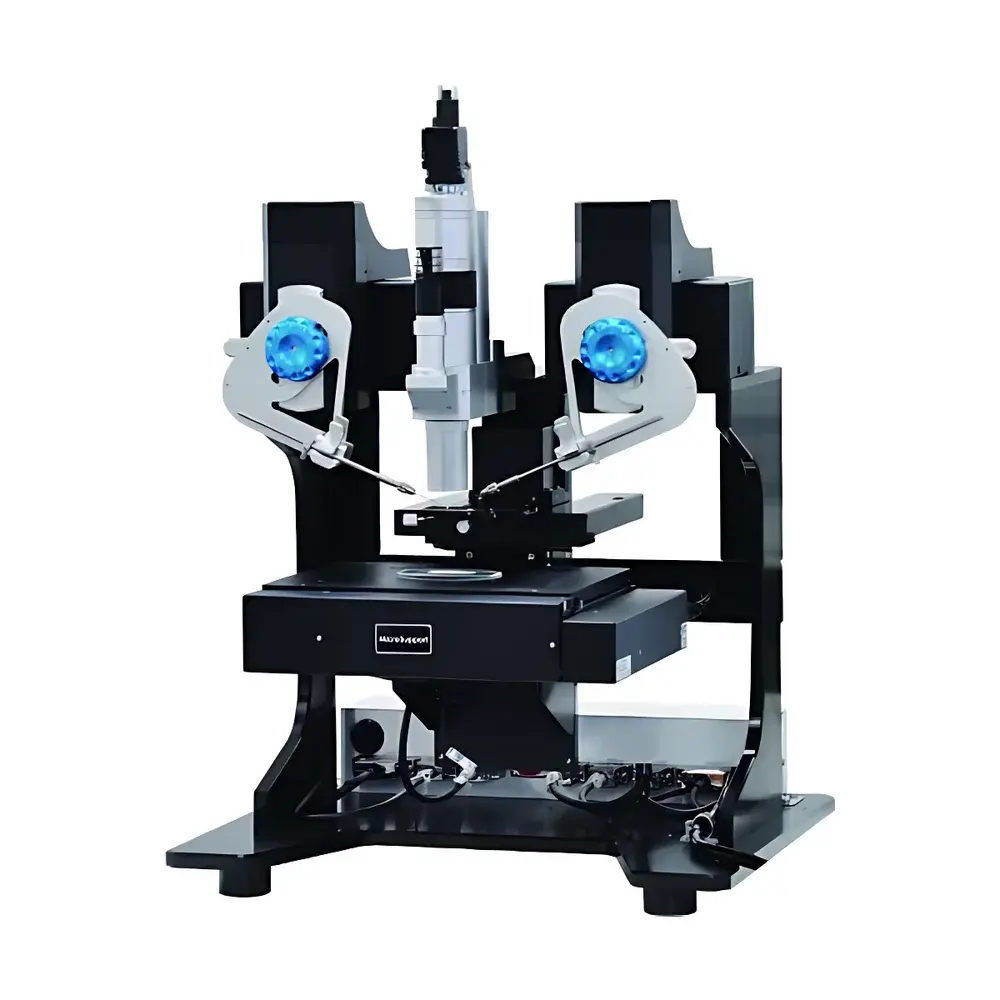
Micro Support Axis Pro Series Micro-Sampling System
| Brand | Micro Support |
|---|---|
| Origin | Japan |
| Model | Axis Pro Series |
| Category | Packaging Industry Specialized Instrument |
| Type | Automated Micro-Sampling & Sample Preparation System |
| Compliance | Designed for ISO/IEC 17025-compliant laboratories |
| Software Interface | Windows-based control with motorized stage positioning and tool actuation logging |
| Tool Compatibility | Modular tool bay supporting interchangeable micro-probes, ruby knives, ultrasonic milling heads, vacuum micro-suction nozzles, electro-mechanical micro-tweezers, and precision micro-cutting blades |
| Positioning Resolution | Sub-micron XYZ stage repeatability (typical ±0.5 µm) |
| Operating Environment | Cleanroom-compatible (Class 1000 or better), vibration-isolated bench recommended |
| Data Traceability | Audit-trail enabled operation logs (aligned with GLP/GMP documentation requirements) |
Overview
The Micro Support Axis Pro Series Micro-Sampling System is an automated, high-precision sample preparation platform engineered for micro-scale material isolation and surface exposure in analytical laboratories. It operates on a motorized XYZ translation stage integrated with real-time optical microscopy guidance (typically coupled with stereo or metallurgical microscopes up to 200× magnification), enabling precise spatial targeting of features ranging from 1 µm to several hundred micrometers in dimension. Unlike manual micro-manipulation techniques, the Axis Pro employs closed-loop stepper motor control and programmable tool actuation sequences to perform deterministic physical interventions—including selective layer removal, micro-extraction, localized ablation, and targeted specimen transfer—without introducing mechanical drift or operator-induced contamination. Its core application domain lies in preparing samples for downstream characterization by Fourier-transform infrared microspectroscopy (FTIR), Raman microspectroscopy, X-ray diffraction (XRD), scanning electron microscopy (SEM), transmission electron microscopy (TEM), and focused ion beam (FIB) sample lift-out workflows.
Key Features
- Modular tool bay architecture supporting rapid interchange of functional end-effectors: micro-probes (tungsten, stainless steel, or insulated variants), ruby-tipped micro-knives, ultrasonic micro-milling heads, vacuum micro-suction nozzles (down to 1 µm orifice), electro-mechanical micro-tweezers with force feedback, and diamond-coated micro-cutting blades.
- Motorized XYZ stage with sub-micron positional repeatability (±0.5 µm typical) and software-defined coordinate referencing for repeatable site re-access across multiple analysis sessions.
- Integrated microscope alignment interface compatible with standard C-mount or infinity-corrected optical paths; supports live video overlay of tool position relative to sample morphology.
- Tool actuation control via intuitive Windows-based GUI with scriptable macro functions for multi-step protocols (e.g., “expose → extract → transfer → label”).
- Compliance-ready data logging: timestamped operation records include tool ID, coordinates, actuation duration, applied force (where applicable), and user authentication—structured for FDA 21 CFR Part 11–compliant audit trails.
Sample Compatibility & Compliance
The Axis Pro system accommodates rigid, semi-rigid, and soft polymeric substrates—including multilayer laminates, OLED encapsulation stacks, adhesive films, printed electronics, and pharmaceutical blister packaging—without inducing delamination or thermal degradation. Sample holders accept standard SEM stubs, TEM grids, silicon wafers (up to 8-inch diameter), and custom fixtures. All tools are certified free of halogenated contaminants and meet RoHS 3 and REACH SVHC screening thresholds. The system design adheres to ISO 14644-1 Class 5 cleanroom operational guidelines and supports integration into GLP- and GMP-regulated quality control environments where traceability of sample handling steps is mandated per ICH Q5E and ASTM E2917 standards.
Software & Data Management
The proprietary AxisControl™ software provides full instrument orchestration through a validated Windows 10/11 environment. Users define sampling coordinates manually or import annotated image overlays (TIFF/PNG) with pixel-to-µm calibration. Each tool’s operational parameters—such as vacuum pressure (0–80 kPa adjustable), ultrasonic frequency (25–40 kHz), tweezer grip force (1–50 mN), and cutting speed (0.1–5 mm/s)—are stored in configurable presets. All session data—including stage coordinates, tool usage history, operator ID, and timestamped screenshots—is exported in CSV and PDF formats compliant with laboratory information management systems (LIMS). Optional API access enables bidirectional communication with enterprise ELN platforms.
Applications
- Failure analysis of display panel delamination: selective removal of top barrier layers to expose interfacial contaminants for FTIR identification.
- Foreign particle isolation from pharmaceutical blister cavities prior to SEM-EDS elemental mapping.
- Preparation of cross-sectional TEM lamellae from multilayer flexible packaging films using FIB-assisted lift-out coordination.
- Micro-extraction of cured adhesive residues from bond-line interfaces for GC-MS volatile profiling.
- Labeling and positional registration of micro-defects (<5 µm) in TFT backplane arrays for correlative optical–electron microscopy.
FAQ
Is the Axis Pro system compatible with existing laboratory microscopes?
Yes—it integrates with most commercial stereo, metallurgical, and inverted microscopes via standard C-mount adapters or trinocular port couplers.
Can tool wear be monitored during routine operation?
Tool life tracking is implemented via cumulative actuation cycle counters and optional in situ visual inspection routines triggered before critical sampling steps.
Does the system support remote operation for cleanroom or hazardous environment deployment?
Fully supported via secure RDP or VNC connections; all control signals and logs remain locally stored on the instrument PC to maintain data sovereignty.
What level of training is required for routine use?
Operators typically achieve proficiency within one full-day hands-on workshop covering coordinate referencing, tool selection logic, and audit-log generation protocols.
Are calibration certificates provided with each system shipment?
Yes—NIST-traceable stage calibration reports and tool dimensional verification documentation are included, aligned with ISO/IEC 17025 Clause 6.5 requirements.



