
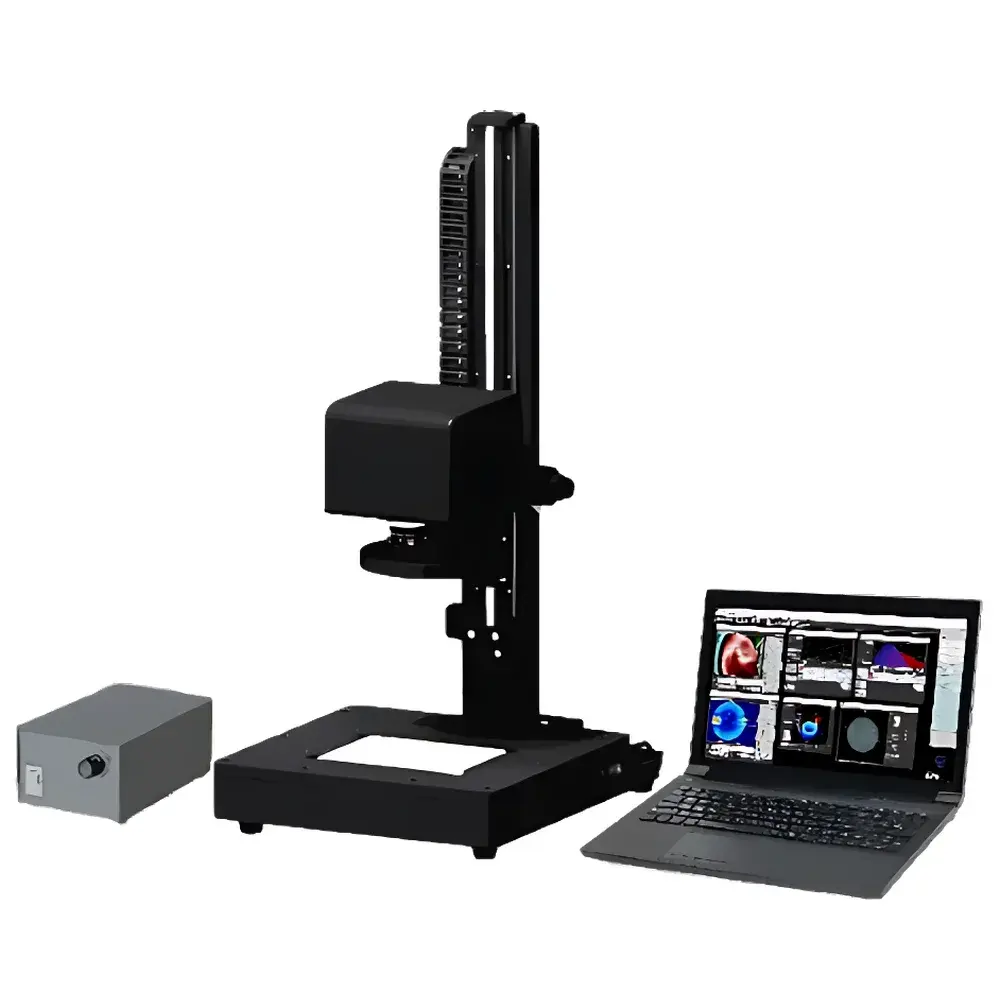
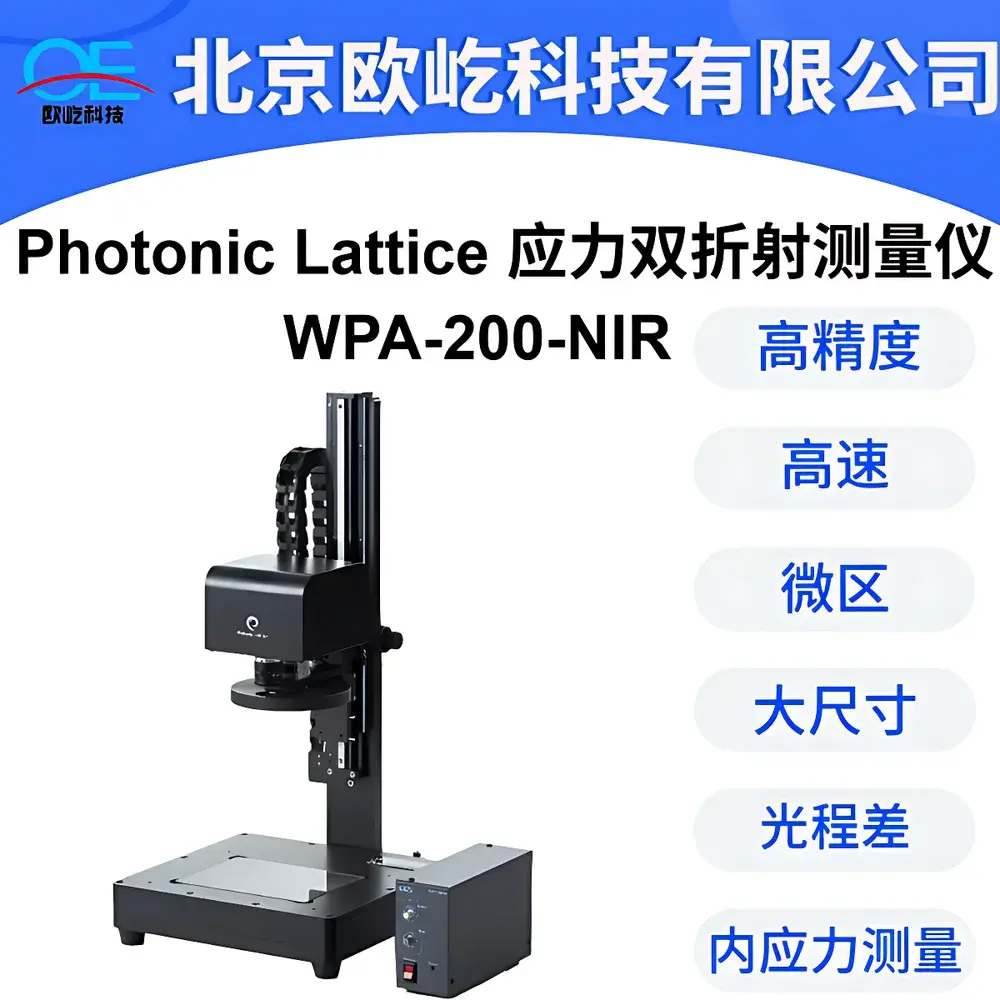
Photonic Lattice WPA-200-NIR Infrared Polarization-Based Birefringence Stress Analyzer
| Brand | Photonic Lattice |
|---|---|
| Origin | Japan |
| Model | WPA-200-NIR |
| Measurement Wavelengths | 810 nm, 850 nm, 870 nm |
| Measurement Range | 0–3500 nm |
| Repeatability | <1.0 nm |
| Field of View | 3×4 mm to 100×133 mm |
| Sensor Resolution | 384 × 288 pixels |
| Dimensions | 270 × 337 × 631 mm |
| Weight | 13 kg |
Overview
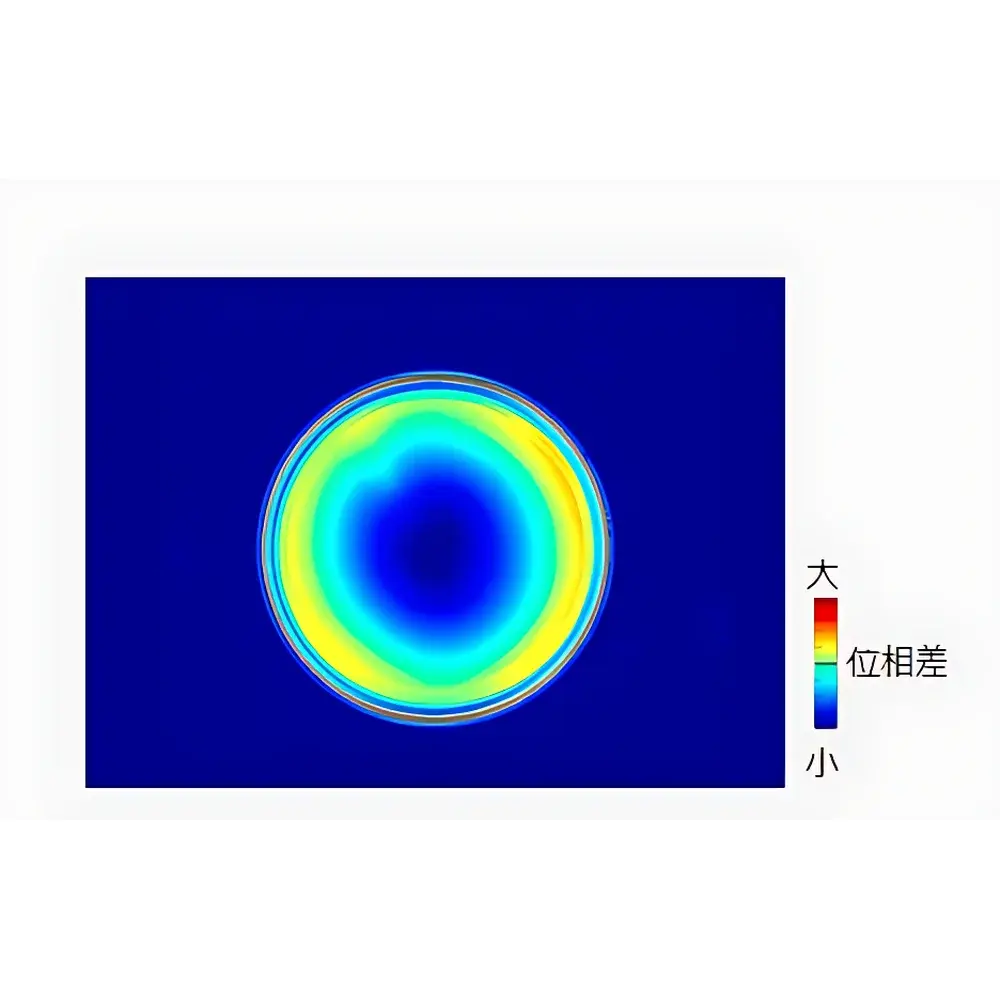
The Photonic Lattice WPA-200-NIR is a high-precision, polarization-based birefringence stress analyzer engineered for quantitative, non-contact mapping of internal stress-induced optical anisotropy in transparent and semi-transparent materials. Operating at near-infrared (NIR) wavelengths—specifically 810 nm, 850 nm, and 870 nm—the instrument leverages photoelastic principles and full-field retardation imaging to measure spatially resolved phase difference (retardation) across sample surfaces. Unlike visible-light polariscopes, the NIR spectral range enables robust characterization of materials with strong visible absorption or scattering, including chalcogenide glasses, infrared-transmitting polymers (e.g., IR-grade polycarbonate, TOPAS®, and硫系 glasses), and molded optical components where surface reflectivity or coloration would otherwise impede conventional analysis. The system employs a calibrated dual-channel polarimetric imaging architecture with motorized waveplate control and synchronized CMOS acquisition, delivering quantitative retardation maps with sub-nanometer repeatability (<1.0 nm) and high spatial fidelity across variable fields of view (3×4 mm to 100×133 mm).
Key Features
- Multi-wavelength NIR operation (810 / 850 / 870 nm) optimized for low-absorption penetration in IR-transparent materials
- Full-field birefringence mapping at 384 × 288 pixel resolution, enabling rapid acquisition of retardation distributions in seconds
- Integrated hardware-software synchronization for precise retardation quantification without manual calibration drift
- Compact benchtop design (270 × 337 × 631 mm; 13 kg) with vibration-insensitive optical path architecture
- Motorized stage compatibility and external trigger I/O interface (optional) for integration into automated production lines
- Real-time visualization of isoclinic and isochromatic patterns with on-the-fly pixel-level retardation calculation
Sample Compatibility & Compliance
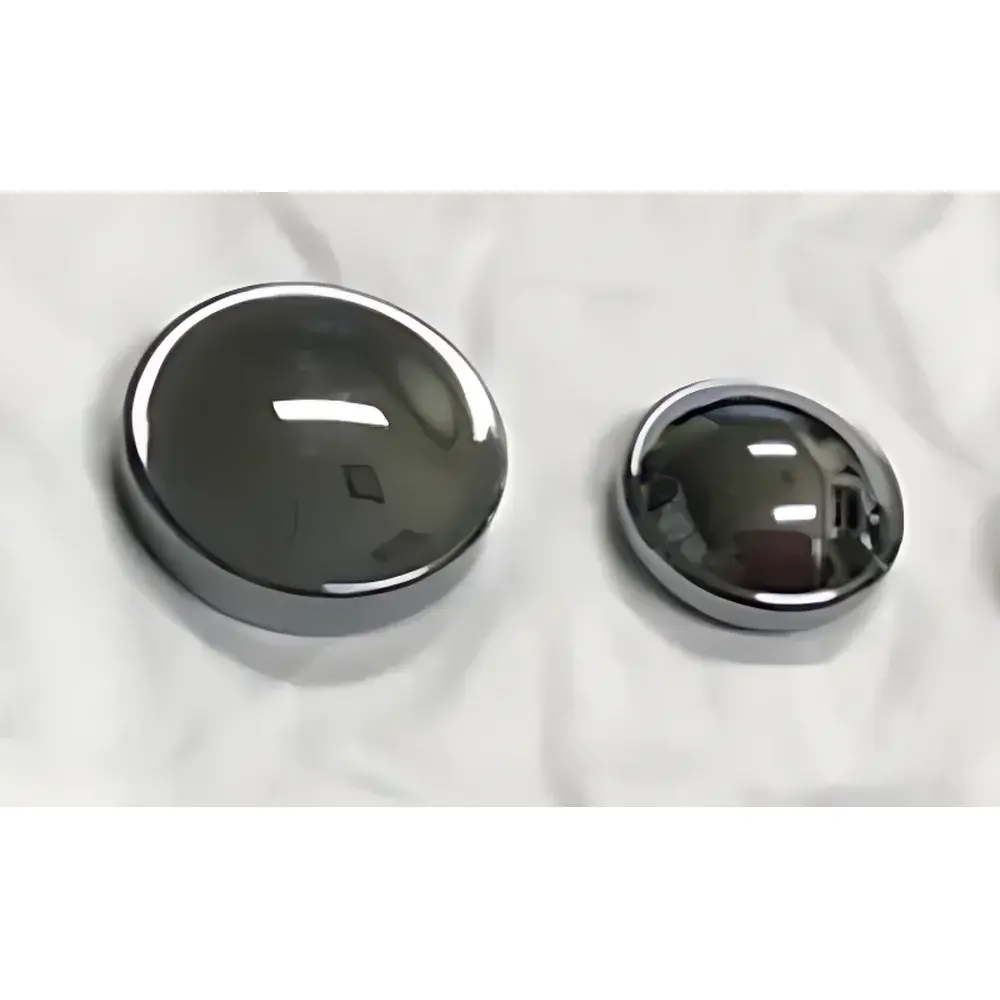
The WPA-200-NIR is validated for stress evaluation of optically isotropic and anisotropic substrates up to 133 mm in width, including molded infrared lenses, semiconductor wafer-level optics, polymer-based thermal imaging windows, and amorphous chalcogenide thin-film stacks. Its NIR sensitivity eliminates interference from pigment-related scattering or UV-induced fluorescence common in visible-range systems. All measurement protocols comply with foundational photoelastic standards referenced in ASTM E1973 (Standard Guide for Photoelastic Stress Analysis) and ISO 11146 (Lasers and laser-related equipment — Test methods for laser beam parameters). Data traceability meets GLP/GMP documentation requirements through timestamped metadata embedding, audit-ready file export, and user-access-controlled measurement logs.
Software & Data Management
WPA-View software provides a deterministic, scriptable environment for post-acquisition analysis. It supports arbitrary line-profile extraction, region-of-interest (ROI) averaging, histogram generation, and multi-sample overlay comparison—all without loss of original 16-bit dynamic range. Quantitative outputs are exportable in CSV, TIFF, and HDF5 formats for downstream statistical process control (SPC) or finite element model validation. The software architecture enforces FDA 21 CFR Part 11 compliance via electronic signature support, role-based access control, and immutable audit trails for all parameter modifications and report generations. Batch processing workflows can be defined and scheduled, enabling unattended overnight analysis of production lots.
Applications
- Residual stress mapping in injection-molded IR optics to predict thermal deformation under operational conditions
- Quality screening of chalcogenide glass wafers prior to microstructuring or anti-reflection coating deposition
- Process validation of hot-embossing and compression molding cycles for polymer-based LWIR lens arrays
- Failure root-cause analysis of delamination or crack initiation in multi-layer IR-transparent laminates
- Calibration reference generation for finite element stress simulation tools (e.g., COMSOL Multiphysics® Structural Mechanics Module)
- In-line stress monitoring during roll-to-roll fabrication of flexible IR sensor substrates
FAQ
What materials can be measured with the WPA-200-NIR?
It is suitable for any optically transparent or semi-transparent material exhibiting stress-induced birefringence in the NIR band—including chalcogenide glasses (e.g., Ge-As-Se), IR polymers (e.g., polyethylene, TOPAS®, IR-grade PC), fused silica, CaF₂, and ZnSe.
Does the system require sample coating or contact?
No. The WPA-200-NIR performs fully non-contact, transmission-mode measurements; no surface preparation, coupling agents, or vacuum environments are required.
Can measurement data be integrated into MES or SCADA systems?
Yes—via optional Ethernet-based external control module supporting Modbus TCP and custom API endpoints for real-time data streaming and remote command execution.
Is calibration traceable to national standards?
Yes. Factory calibration uses NIST-traceable retardation standards (0–3500 nm range); users receive a certificate of calibration with uncertainty budget per ISO/IEC 17025 guidelines.
How is measurement repeatability verified?
Repeatability (<1.0 nm) is validated per ISO 5725-2 using repeated measurements of certified quartz wedge standards under controlled thermal conditions (±0.5 °C).



