
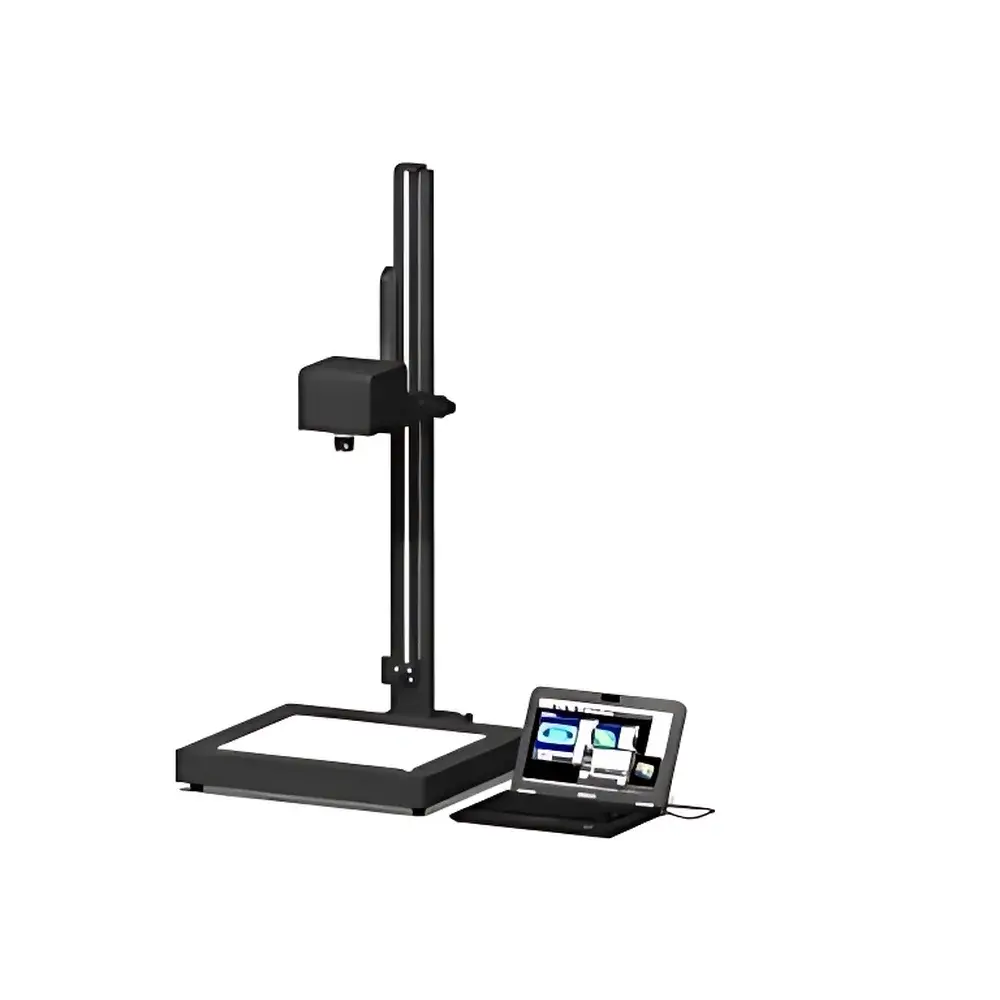
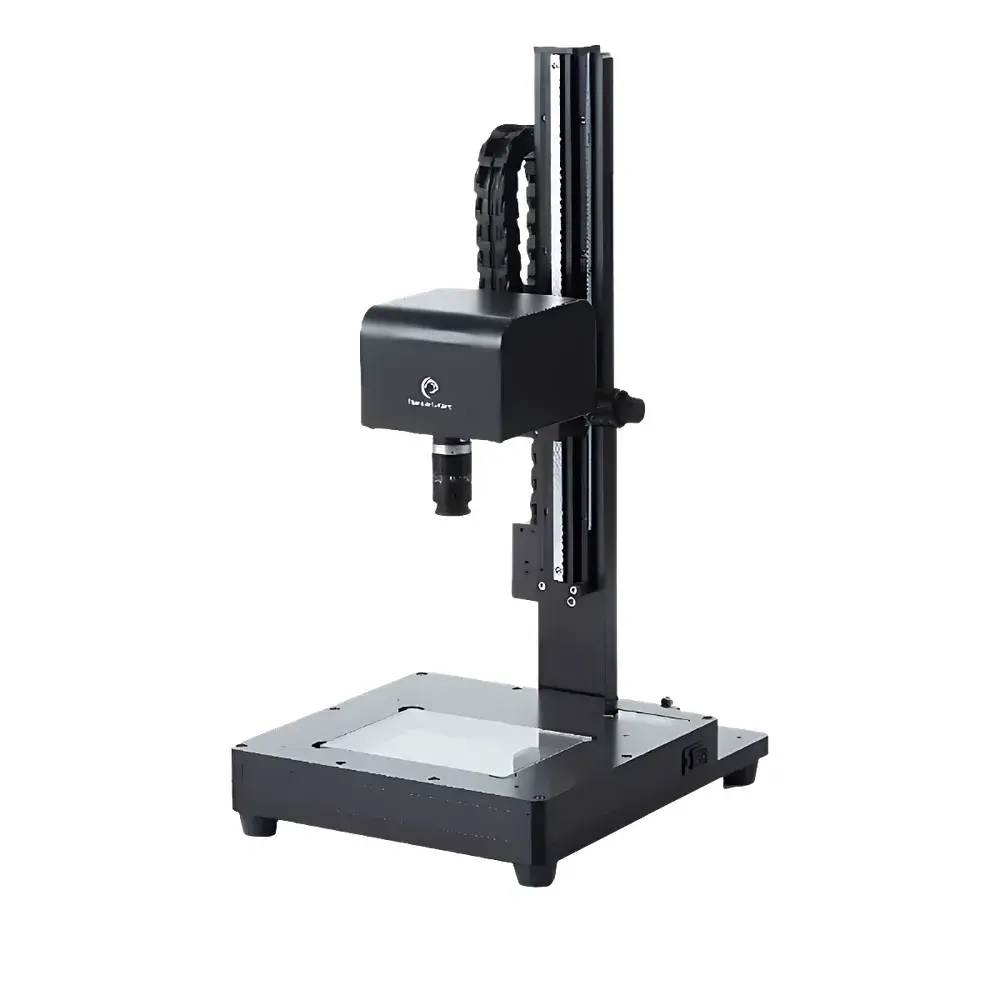
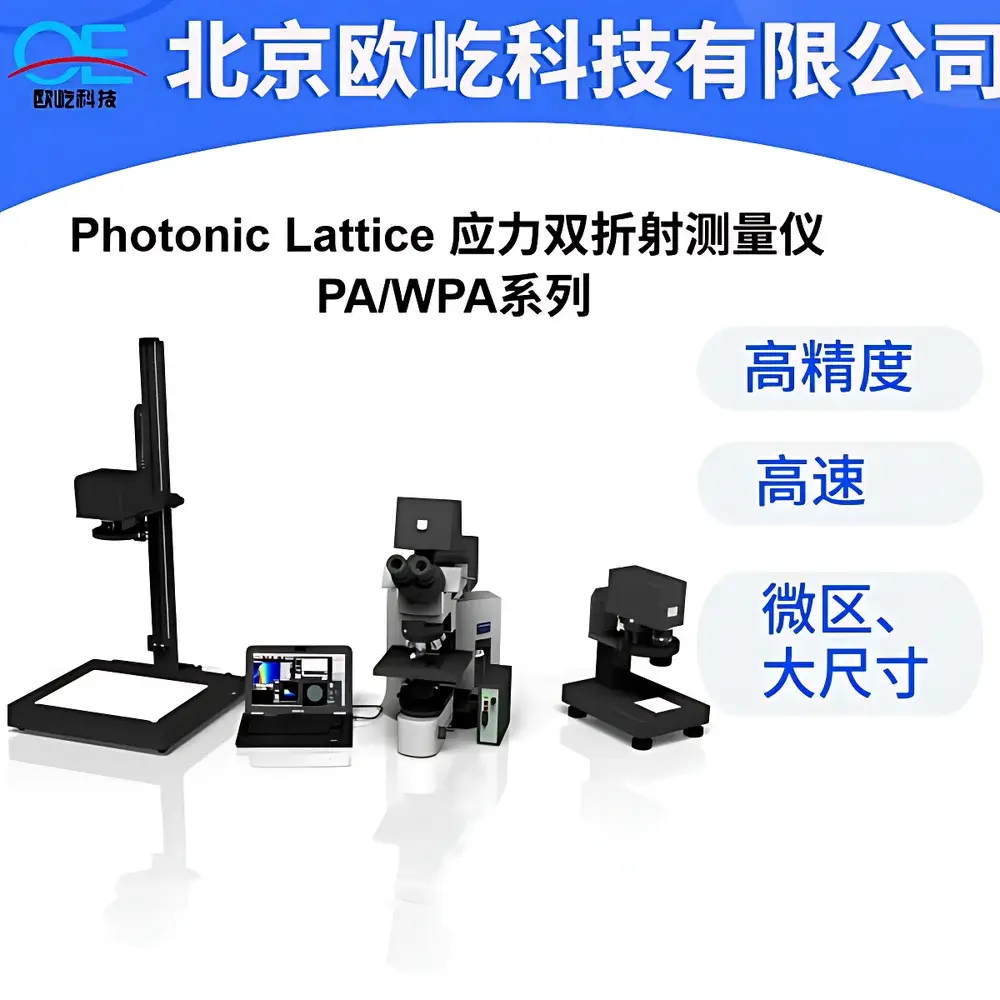
PHL PA-200-L Polarizing Stress Meter
| Brand | Photonic Lattice |
|---|---|
| Origin | Japan |
| Model | PA-200-L |
| Measurement Principle | Full-field photoelastic imaging using photonic crystal polarizer array |
| Wavelength | 520 nm |
| Birefringence Range | 0–130 nm |
| Minimum Resolution | 0.001 nm |
| Repeatability | < 0.1 nm (σ) |
| Field of View (Standard) | 27 × 36 mm to 99 × 132 mm |
| Optional FOV (with beam-expanding lens) | down to 7 × 8.4 mm |
| Camera Resolution | 2056 × 2464 pixels |
| Output Parameters | Retardation (nm), Fast Axis Orientation (°), Stress Conversion (MPa, optional) |
| Software Options | Real-time analysis module, Lens-specific analysis suite, External control interface (TCP/IP, LabVIEW SDK) |
Overview
The PHL PA-200-L Polarizing Stress Meter is a high-resolution, full-field birefringence measurement system engineered by Photonic Lattice Co., Ltd. (Japan) for quantitative stress and residual strain characterization in transparent and semi-transparent optical materials. Based on photoelastic imaging principles, the instrument utilizes a patented photonic crystal polarizer array—replacing conventional rotating waveplates or mechanical polarization modulators—to capture spatially resolved retardation and fast-axis orientation data across the entire field of view in a single exposure. This solid-state optical architecture eliminates moving parts, ensuring long-term stability, minimal maintenance, and sub-millisecond acquisition times. With a calibrated measurement wavelength of 520 nm and a dynamic birefringence range of 0–130 nm, the PA-200-L delivers nanometer-level resolution (0.001 nm) and exceptional repeatability (< 0.1 nm σ), making it suitable for both R&D metrology and high-throughput industrial quality control environments.
Key Features
- Patented photonic crystal polarizer array enabling snapshot, full-field birefringence mapping without mechanical rotation
- High-resolution polarization camera (2056 × 2464 pixels) with optimized quantum efficiency at 520 nm
- Measurement speed as fast as 3 seconds per sample—including image acquisition, computation, and visualization
- Adjustable field of view: standard range from 27 × 36 mm up to 99 × 132 mm; optional beam-expanding lenses extend flexibility down to 7 × 8.4 mm
- No moving optical components—robust design optimized for factory-floor deployment and GLP-compliant laboratories
- Simultaneous output of three primary parameters: retardation (nm), fast-axis orientation (°), and optionally stress-equivalent values (MPa) via material-specific calibration
- Embedded real-time processing engine supporting live visualization, threshold-based defect highlighting, and region-of-interest (ROI) statistics
Sample Compatibility & Compliance
The PA-200-L accommodates flat and gently curved transparent substrates ranging from <5 mm to ~500 mm in lateral dimension, including precision optical lenses, smartphone cover glass (e.g., Gorilla Glass), sapphire wafers, silicon carbide (SiC) substrates, fused silica optics, and polymer-based optical films. Its non-contact, non-destructive measurement method complies with key international standards for optical stress evaluation, including ISO 11146 (laser beam profiling reference methodology), ASTM F272 (standard practice for measuring birefringence in optical materials), and JIS R3203 (Japanese Industrial Standard for stress evaluation in glass). The system supports traceable calibration protocols and is compatible with audit-ready documentation workflows required under ISO/IEC 17025-accredited testing laboratories.
Software & Data Management
The PA-200-L ships with modular software suites designed for flexible integration into existing metrology ecosystems. Core capabilities include real-time analysis, lens-specific aberration mapping, batch comparison tools, and export to CSV, TIFF, and HDF5 formats. Optional modules enable external automation via TCP/IP commands and native LabVIEW VIs, facilitating integration with robotic handling systems or MES platforms. All software modules support timestamped metadata logging, user access control, and electronic signature functionality aligned with FDA 21 CFR Part 11 requirements for regulated industries. Audit trails record parameter changes, measurement history, and operator identity—ensuring full traceability for GMP/GLP audits.
Applications
- Residual stress mapping in precision optical lenses used in AR/VR headsets and smartphone camera modules
- In-line inspection of chemically strengthened glass substrates during display manufacturing
- Quality assurance of sapphire and SiC wafers for LED and power electronics packaging
- Development and validation of low-stress bonding processes for hybrid optical assemblies
- Failure analysis of delamination-induced birefringence in multilayer polymer films
- Calibration and verification of stress-optic coefficients for novel transparent ceramics and chalcogenide glasses
FAQ
What materials can be measured with the PA-200-L?
Transparent or semi-transparent isotropic dielectrics with measurable photoelastic response—including optical glass, fused silica, sapphire, silicon carbide, polycarbonate, PMMA, and certain crystalline substrates.
Does the system require periodic recalibration?
Yes—Photonic Lattice recommends annual traceable calibration using NIST-traceable retardation standards; field verification checks can be performed daily using supplied reference plates.
Can the PA-200-L measure curved surfaces?
It is optimized for flat or low-curvature samples (radius > 500 mm); strongly curved optics require custom mounting fixtures and may necessitate local ROI analysis rather than full-field mapping.
Is stress conversion (MPa) included by default?
Stress calculation is an optional feature requiring material-specific stress-optic coefficient input and must be enabled via software license; it is not active out-of-the-box.
How is data integrity ensured during long-term deployment?
All measurements are stored with embedded EXIF-style metadata—including instrument ID, firmware version, environmental temperature, and operator login—supporting ISO/IEC 17025 documentation requirements.



