
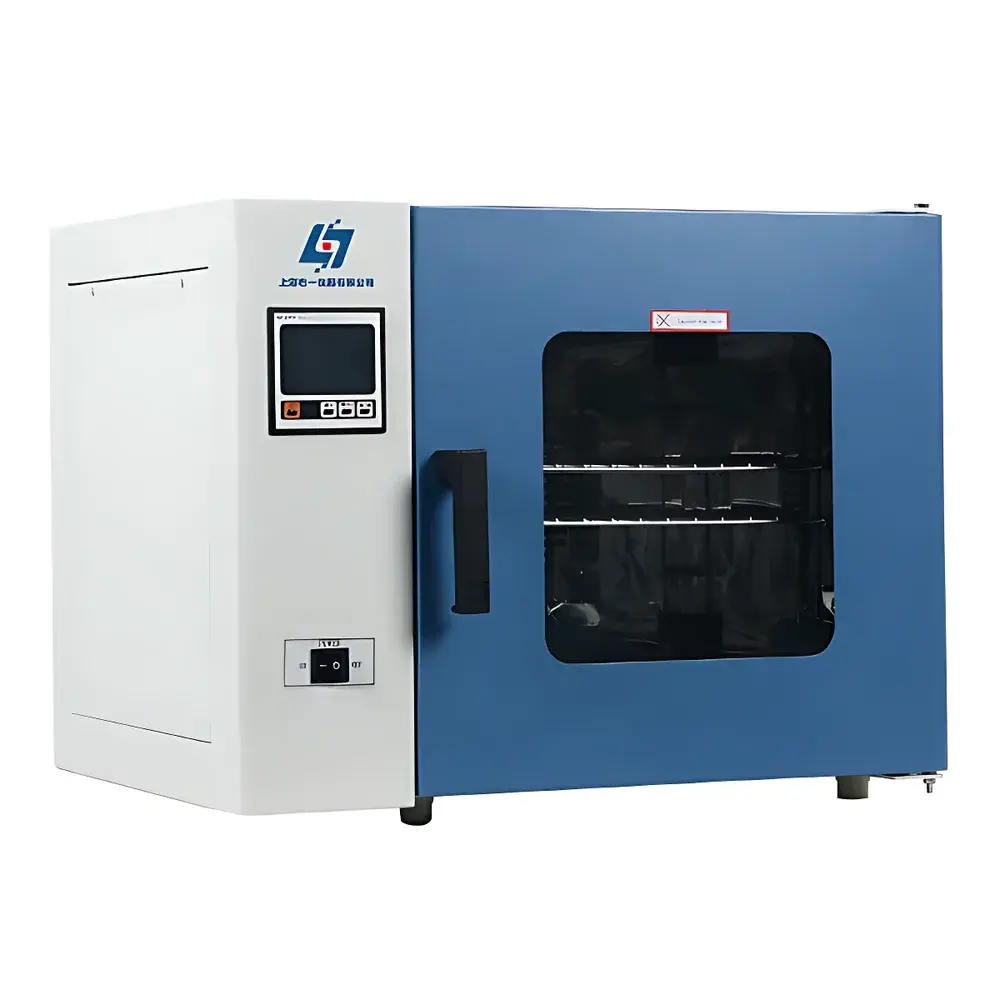
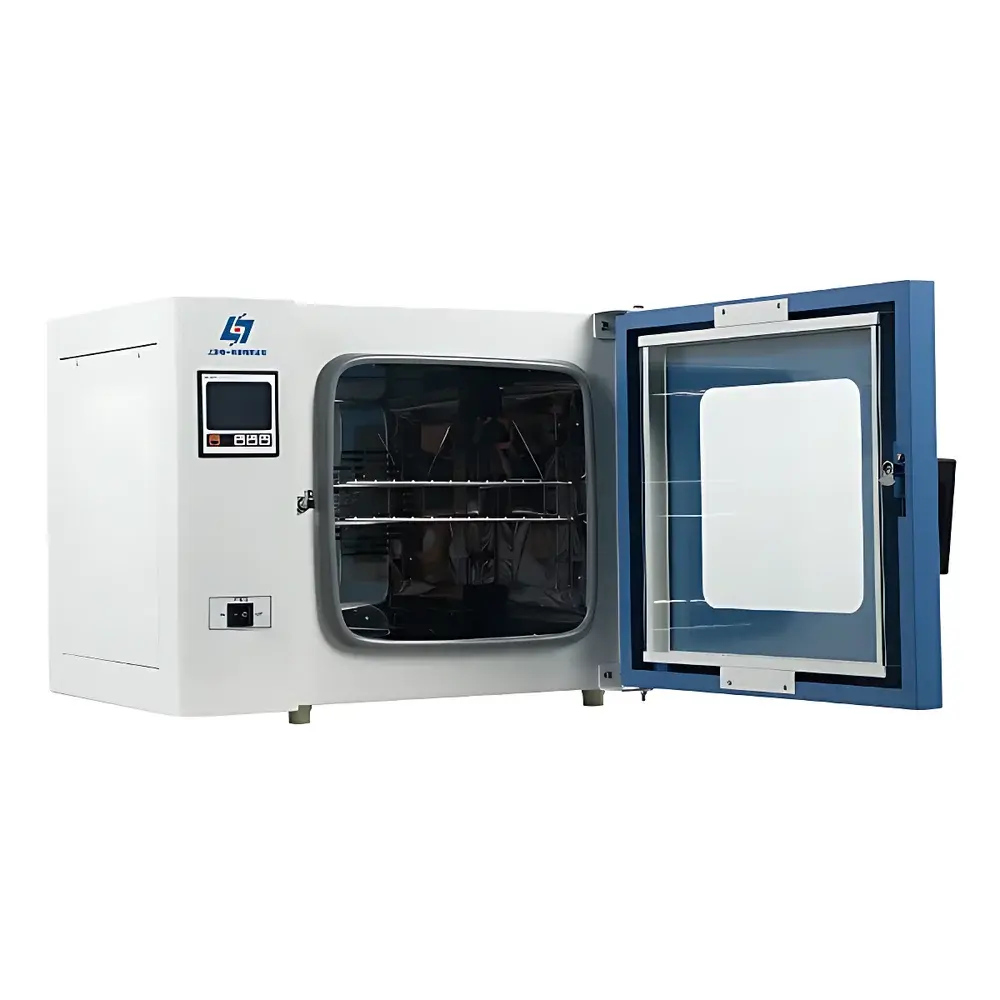
Yoyi DHG-9145A Forced-Air Constant-Temperature Drying Oven
| Brand | Yoyi |
|---|---|
| Origin | Shanghai, China |
| Manufacturer Type | Direct Manufacturer |
| Model | DHG-9145A |
| Temperature Range | RT+10°C to 300°C |
| Temperature Uniformity | ±2.5% (at 100°C) |
| Temperature Fluctuation | ±1.0°C |
| Temperature Resolution | 0.1°C |
| Internal Chamber Dimensions (W×D×H) | 550×450×550 mm |
| External Dimensions (W×D×H) | 835×670×730 mm |
| Chamber Material | Mirror-Finish Stainless Steel |
| Heating Method | Electric Resistive Heating |
| Power Consumption | 2050 W |
| Standard Compliance | GB/T 30435–2013 |
Overview
The Yoyi DHG-9145A is a microprocessor-controlled forced-air drying oven engineered for precision thermal processing in research laboratories, quality control environments, and industrial R&D settings. It operates on the principle of convection-driven heat transfer, utilizing an optimized rear-mounted air circulation system with adjustable airflow dynamics to ensure uniform thermal distribution across the entire working chamber. Designed to meet the stringent requirements of GB/T 30435–2013 (the Chinese national standard for electric heating drying ovens), this model delivers stable, repeatable performance for applications demanding controlled thermal exposure—ranging from moisture removal and polymer curing to sterilization validation and pre-conditioning of test specimens. Its robust architecture supports continuous operation at temperatures up to 300°C, with real-time monitoring and fail-safe thermal management built into the core control logic.
Key Features
- Intelligent microcomputer temperature controller with dual PID regulation, enabling precise setpoint tracking and minimal overshoot during ramp-up cycles.
- Large-view double-layer tempered glass observation window with high-temperature silicone gasket seal, permitting non-intrusive visual monitoring without compromising thermal integrity.
- Efficient forced-air circulation system featuring rear-mounted blower and directional ductwork, achieving ±2.5% temperature uniformity (measured at 100°C under no-load conditions).
- High-strength cold-rolled steel exterior with electrostatic epoxy-polyester coating; interior chamber constructed from electropolished 304 stainless steel for corrosion resistance and ease of cleaning.
- Adjustable stainless-steel shelving system (2 standard trays included), allowing flexible configuration based on sample volume and geometry.
- Comprehensive safety architecture including independent over-temperature cut-off circuitry (optional), power-loss data retention, and automatic recovery upon re-energization.
- Back-panel integrated ventilation ports with passive exhaust routing—eliminates need for manual damper adjustment while facilitating rapid vapor dissipation during high-moisture drying protocols.
Sample Compatibility & Compliance
The DHG-9145A accommodates a broad spectrum of sample types—including glassware, metal substrates, ceramic components, polymer films, biological tissue carriers, and pharmaceutical excipients—without risk of cross-contamination or material degradation. Its stainless-steel chamber and absence of organic insulation materials ensure compatibility with ISO 17025-accredited testing workflows and GLP-compliant documentation practices. While not certified to IEC 61010-1 or UL 61010B out-of-the-box, the unit conforms to fundamental electrical safety and thermal stability criteria referenced in ASTM E145 (Standard Specification for Gravity-Convection and Forced-Ventilation Ovens) and serves as a validated platform for method development aligned with USP , FDA 21 CFR Part 11 (when paired with optional RS485/data logging), and EN 60068-2-2 (environmental testing procedures).
Software & Data Management
The embedded controller supports time-based program execution with up to 9999-minute timer functionality and multi-segment ramp/soak profiles (available via optional programmable controller add-on). Optional RS485 serial interface enables integration with LabVIEW, MATLAB, or custom SCADA systems for remote parameter adjustment and real-time temperature logging. An optional embedded thermal printer provides hard-copy audit trails compliant with internal QA record-keeping policies. All configuration changes—including setpoint modifications, timer resets, and alarm acknowledgments—are timestamped and retained in non-volatile memory, supporting traceability requirements in regulated environments.
Applications
- Drying and conditioning of analytical standards, reference materials, and calibration weights prior to gravimetric analysis.
- Pre-baking of PCB assemblies and electronic components to eliminate residual solvents and moisture before soldering or encapsulation.
- Thermal aging studies of elastomers, adhesives, and composite laminates per ASTM D573 and ISO 188 protocols.
- Residue determination in food, feed, and environmental samples following AOAC 925.09 and EPA 350.1 methodologies.
- Depyrogenation of glass vials and stainless-steel tools used in aseptic pharmaceutical manufacturing (validated at ≥250°C for ≥30 min).
- Curing of powder coatings, conformal coatings, and dielectric layers in microelectronics fabrication lines.
FAQ
What is the maximum operating temperature of the DHG-9145A?
The unit is rated for continuous operation from ambient +10°C up to 300°C.
Does it support inert atmosphere processing?
Yes—an optional inert gas inlet port with calibrated rotameter is available for nitrogen or argon purging during oxygen-sensitive thermal treatments.
Can the oven be validated for GMP use?
While the base model lacks factory-installed 21 CFR Part 11 compliance features, optional RS485 connectivity, electronic audit trail logging, and independent temperature monitoring hardware enable full IQ/OQ/PQ qualification when installed under qualified environmental conditions.
Is calibration documentation provided?
Factory calibration certificates (traceable to NIM, China) are available upon request; users are advised to perform periodic verification using NIST-traceable thermocouples or PT100 probes.
What maintenance is required for long-term reliability?
Routine inspection of door gaskets, cleaning of air intake filters, and verification of fan rotation direction every 6 months are recommended to sustain specified temperature uniformity and airflow efficiency.



