
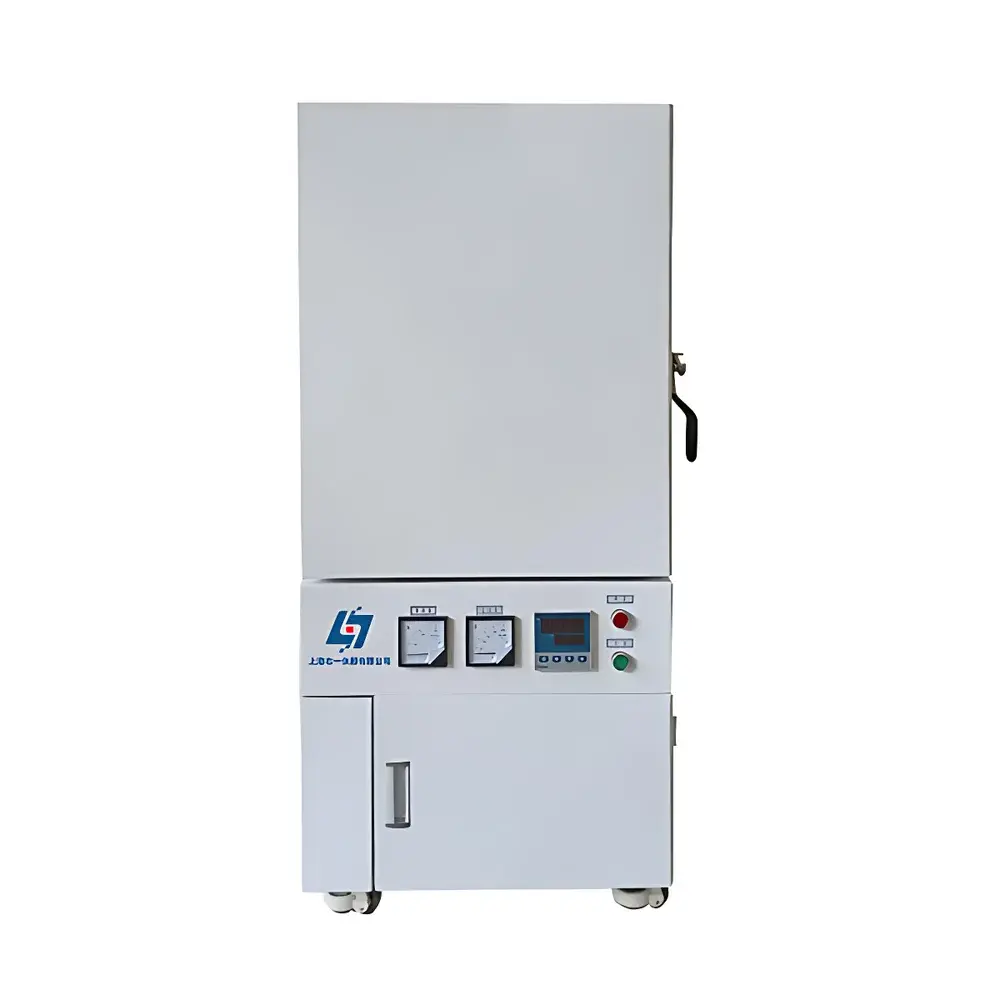
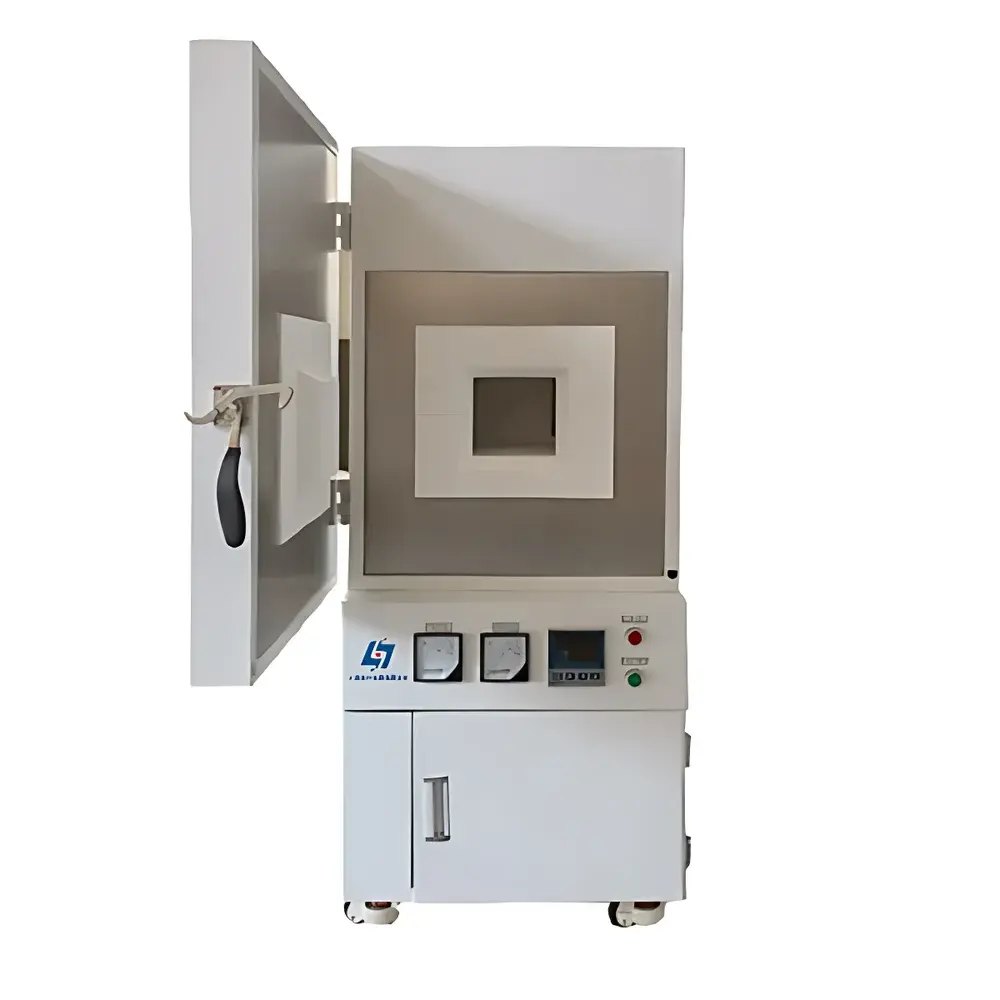
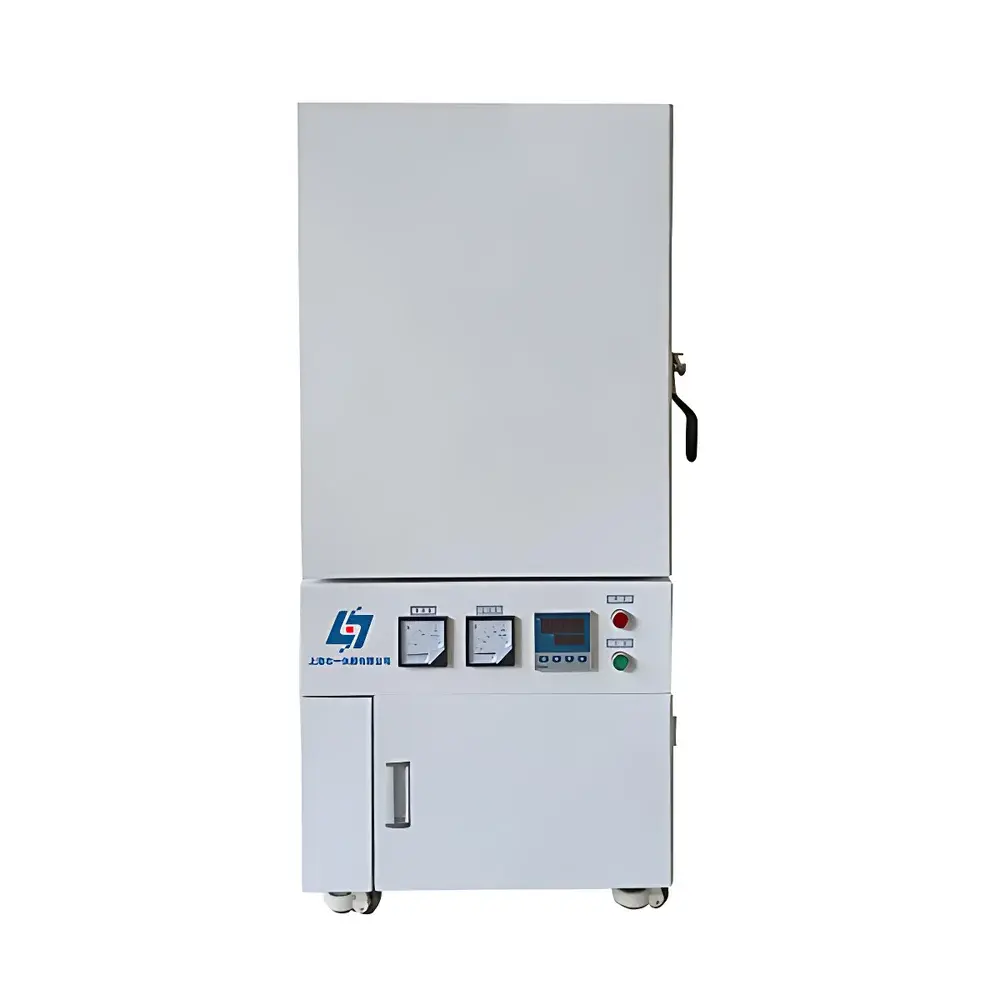
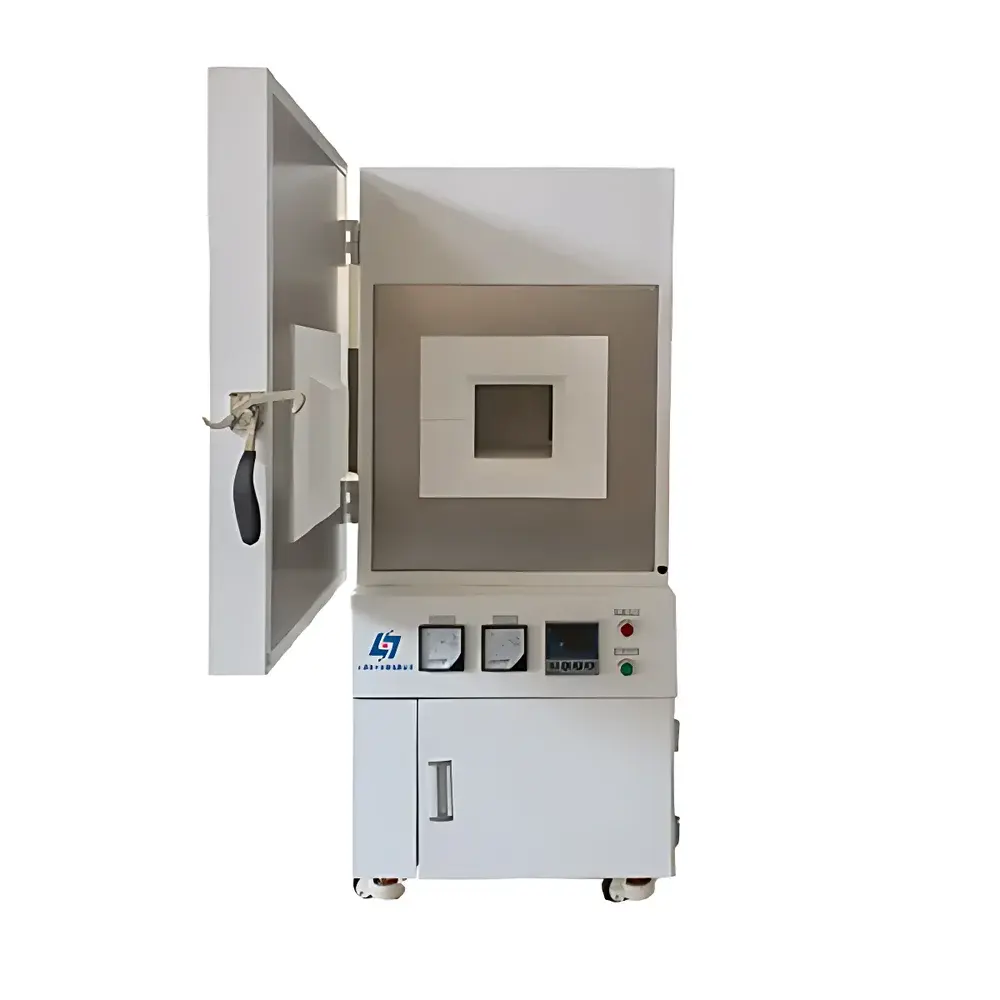
Yoyi SX2-9-17A Ceramic Fiber Box-Type Muffle Furnace (1700 °C High-Temperature Resistance Furnace)
| Brand | Yoyi |
|---|---|
| Origin | Shanghai, China |
| Manufacturer Type | Direct Manufacturer |
| Product Category | Domestic |
| Model | SX2-9-17A |
| Instrument Type | Box-Type Furnace |
| Maximum Temperature | 1700 °C |
| Temperature Control Accuracy | ±1 °C |
| Rated Power | 9 kW |
| Heating Element | Silicon-Molybdenum Rod (MoSi₂) |
| Internal Chamber Dimensions | 200 × 300 × 150 mm |
| Nominal Volume | 9 L |
Overview
The Yoyi SX2-9-17A is a high-temperature box-type muffle furnace engineered for precision thermal processing in research laboratories, materials science facilities, and industrial R&D environments. It operates on resistive heating principles using silicon-molybdenum (MoSi₂) heating elements, capable of sustained operation up to 1700 °C in air atmosphere. The furnace employs a double-layer insulated chamber architecture with high-purity ceramic fiber modules (Al₂O₃–SiO₂ composition, ≥95% alumina content), providing exceptional thermal efficiency, rapid thermal response, and low heat loss. Unlike traditional refractory brick-lined furnaces, this design eliminates thermal mass lag, enabling ramp rates exceeding 10 °C/min under controlled conditions—critical for sintering kinetics studies, phase transformation analysis, and fast-cycle thermal treatments. Its muffle configuration ensures complete thermal isolation between the heating elements and the process chamber, preventing contamination from element volatilization and supporting clean, oxidation-controlled atmospheres.
Key Features
- Ultra-lightweight ceramic fiber insulation reduces total unit mass by ~50% versus conventional brick-lined furnaces, facilitating lab relocation and benchtop integration.
- Double-wall construction with interstitial ceramic fiber board insulation maintains external surface temperature ≤50 °C at 1000 °C internal setpoint—verified per ASTM C1045 for surface safety compliance.
- Microprocessor-based PID temperature controller with 0.1 °C resolution, programmable ramp/soak profiles (up to 30 segments), and auto-tuning functionality.
- Integrated safety system includes over-temperature cutoff (independent thermocouple alarm), over-current protection, ground-fault detection, and thermal fuse backup.
- Intelligent power recovery logic retains all user-defined parameters—including setpoints, timers, and program sequences—after unexpected power interruption.
- Backlit LCD interface displays real-time chamber temperature, target temperature, elapsed time, remaining soak duration, and active program step simultaneously.
Sample Compatibility & Compliance
The SX2-9-17A accommodates crucibles and sample holders made from high-purity alumina, zirconia, silicon carbide, or platinum-group alloys—compatible with inert, oxidizing, and mildly reducing atmospheres (N₂, air, O₂). It is routinely used for ASTM C1161 (flexural strength of advanced ceramics), ISO 2738 (sintered metal density), and USP (residue on ignition). While not rated for vacuum or hydrogen service, its sealed muffle design meets GLP documentation requirements when paired with validated calibration procedures and NIST-traceable thermocouples (Type S or B). The unit conforms to IEC 61000-6-3 (EMC emission limits) and IEC 61000-6-2 (immunity to electrostatic discharge and conducted disturbances).
Software & Data Management
Optional RS485 serial interface (Modbus RTU protocol) enables bidirectional communication with SCADA systems or custom LabVIEW/Python acquisition scripts. The included PC software supports real-time temperature logging, export to CSV/Excel, alarm event timestamping, and electronic signature-capable audit trails compliant with FDA 21 CFR Part 11 when deployed on validated Windows platforms. Firmware supports configurable data sampling intervals (1–60 s), automatic report generation per test batch, and password-protected parameter lockout for SOP enforcement.
Applications
- Ceramic sintering and densification studies (e.g., BaTiO₃, YSZ, Si₃N₄) requiring precise dwell control at 1500–1700 °C.
- Thermal gravimetric analysis (TGA) pre-conditioning of catalyst supports and battery electrode precursors.
- Crystallization and annealing of optical glasses and chalcogenide thin films.
- Heat treatment of metallic powders (e.g., stainless steel, Inconel) prior to HIP or SPS consolidation.
- Residue-on-ignition (ROI) testing per pharmacopeial methods for pharmaceutical excipients and APIs.
- Calibration of thermocouples and radiation pyrometers via fixed-point reference materials (e.g., Al, Zn, Ag).
FAQ
What type of thermocouple is recommended for accurate measurement at 1700 °C?
Type B (Pt–30%Rh / Pt–6%Rh) thermocouples are standard; they provide stable output up to 1820 °C in oxidizing atmospheres and require no cold-junction compensation above 600 °C.
Can this furnace be operated under argon or nitrogen purge?
Yes—equipped with dual gas inlet ports and adjustable exhaust damper; recommended flow rate: 0.5–2 L/min to maintain positive pressure and exclude ambient oxygen.
Is the ceramic fiber lining chemically resistant to alkali vapors?
No—prolonged exposure to Na₂O/K₂O-containing fumes (e.g., during glaze firing) degrades fiber integrity; use high-alumina crucibles and minimize open-vessel operations.
What maintenance is required for the MoSi₂ heating elements?
Elements require no periodic replacement under normal use but must avoid mechanical impact, thermal shock below 800 °C, and contact with metal vapors (e.g., Zn, Pb) which accelerate oxidation.
Does the unit support GMP-compliant electronic records?
When configured with the optional RS485 module and validated software, it supports ALCOA+ data integrity principles including attributable, legible, contemporaneous, original, accurate, complete, consistent, enduring, and available records.
Related Products



