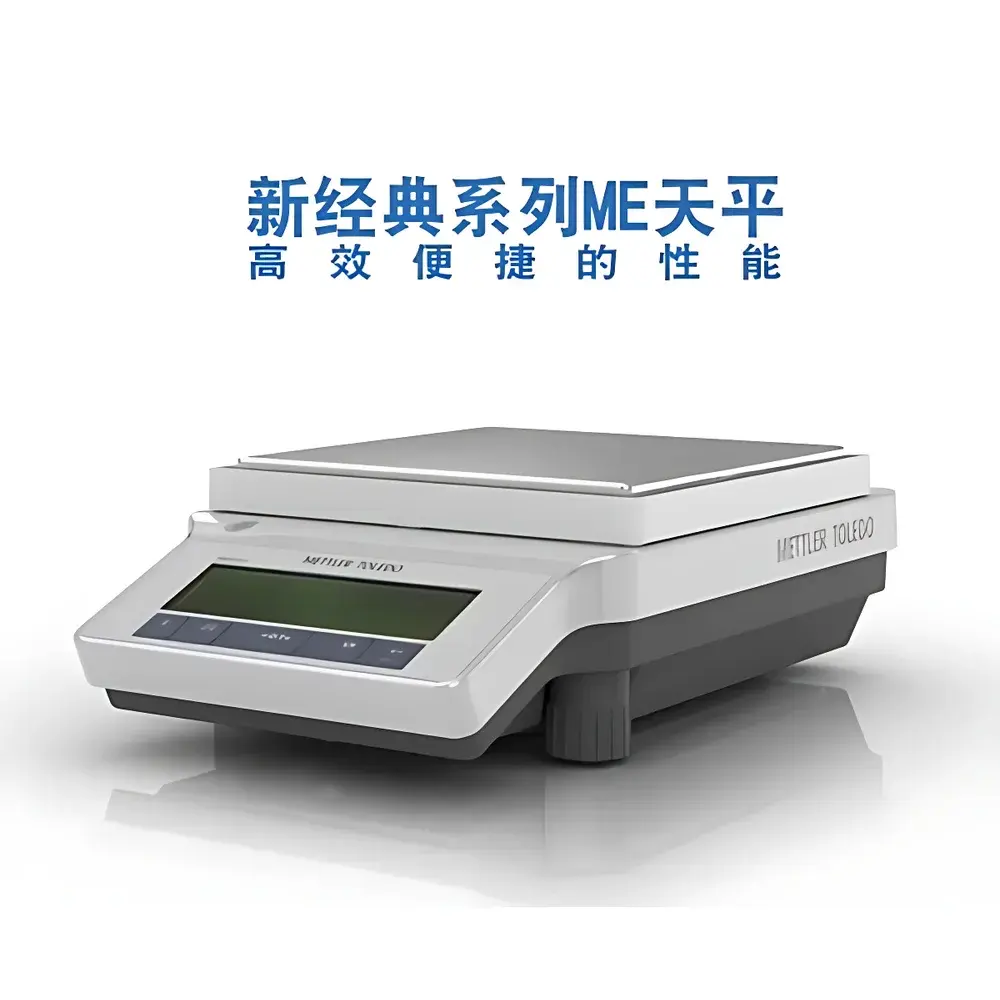
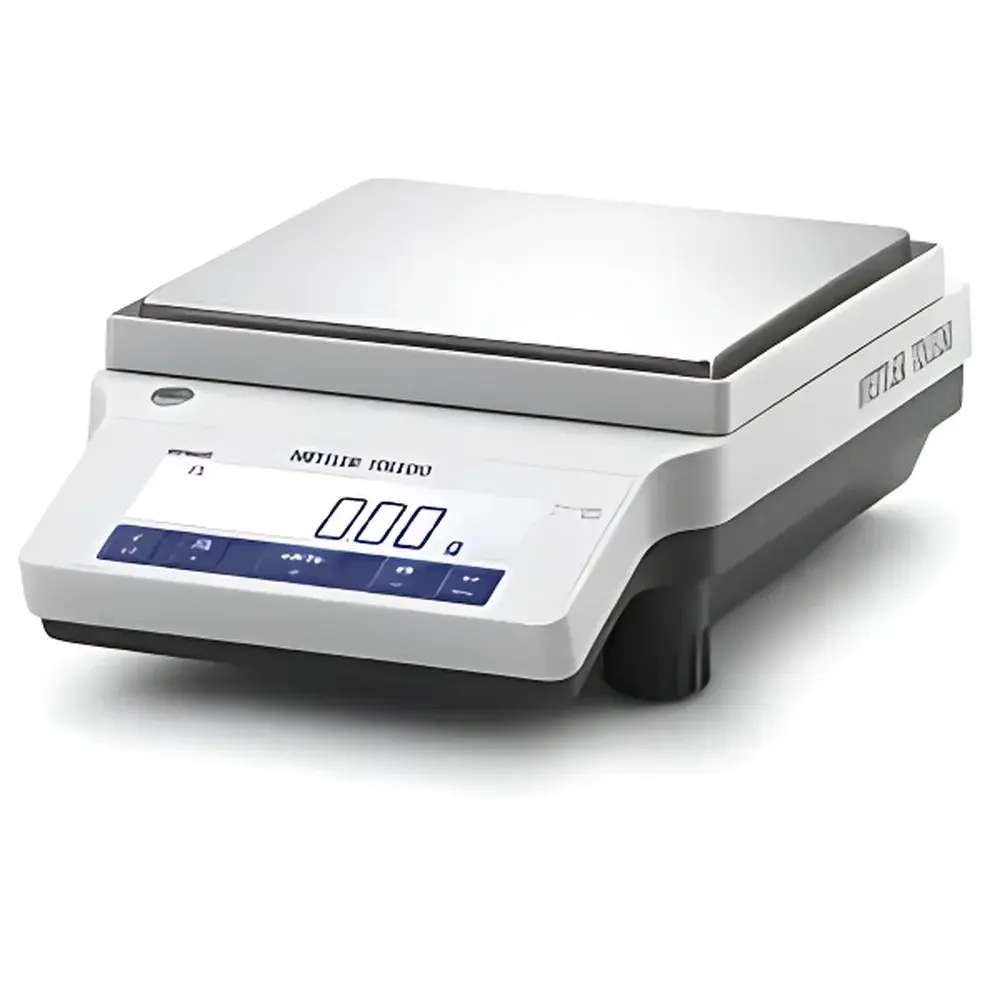
METTLER TOLEDO ME802 Precision Balance
| Brand | METTLER TOLEDO |
|---|---|
| Origin | Shanghai, China |
| Model | ME802/02 |
| Maximum Capacity | 820 g |
| Readability | 0.01 g |
| Repeatability (typ.) | 0.007 g |
| Minimum Weight (USP <0.1% RSD, k=2) | 14 g |
| Stabilization Time | 1.5 s |
| Calibration | Internal, one-touch with built-in weight |
| Interface | RS232 (integrated), optional Bluetooth |
| Weighing Pan | Stainless steel, 180 mm × 180 mm |
| Housing | Die-cast aluminum base with ABS top cover |
| Dimensions (H×W×D) | 100 mm × 200 mm × 319 mm |
| Power Supply | AC adapter (included) |
Overview
The METTLER TOLEDO ME802 Precision Balance is an entry-level analytical-grade instrument engineered for consistent, reliable mass measurement in routine laboratory, quality control, and educational environments. Based on electromagnetic force compensation (EMFC) technology, the ME802 delivers high reproducibility and long-term stability without mechanical levers or knife-edges. Its 820 g maximum capacity and 10 mg readability meet ISO/IEC 17025 traceability requirements for non-critical weighing tasks where moderate resolution suffices—such as sample preparation, formulation checks, and inventory management. The balance conforms to fundamental metrological principles defined in OIML R 76-1 and EN 45501, and its performance parameters—including repeatability (≤0.007 g), linearity error (<±0.02 g), and eccentricity error (<±0.01 g)—are validated per internal factory calibration protocols aligned with ISO 9001-certified manufacturing processes.
Key Features
- One-touch internal calibration: Integrated calibration weight enables rapid verification and adjustment without external standards—critical for labs operating under GLP or ISO 17025 workflows requiring documented calibration intervals.
- Dual-material construction: Rigid die-cast aluminum base provides vibration damping and thermal mass stability; stainless-steel weighing pan ensures corrosion resistance and easy decontamination.
- Optimized user interface: Backlit LCD display with large digits (18 mm height) ensures legibility under variable ambient lighting; intuitive button layout minimizes training time for new operators.
- Overload protection system: Mechanical and electronic safeguards prevent sensor damage during accidental overloading up to 150% of nominal capacity.
- Leveling assistance: Integrated bubble level and adjustable feet allow rapid horizontal alignment—even on uneven benchtops—reducing measurement drift caused by tilt-induced torque errors.
- RS232 serial port (standard): Enables direct connection to label printers, PCs, or LIMS for automated data capture; supports ASCII output format compatible with common laboratory software platforms.
Sample Compatibility & Compliance
The ME802 accommodates a wide range of solid and granular samples within its 180 mm × 180 mm pan area, including powders, tablets, reagents, and small hardware components. Its minimum weight threshold of 14 g (at USP <0.1% RSD, k=2) defines the lower limit for compliant pharmaceutical weighing per United States Pharmacopeia Chapter . While not certified for GMP-regulated batch release, the balance supports audit-ready documentation when paired with METTLER TOLEDO’s LabX Lite software (via RS232). It meets basic environmental requirements per IEC 61000-6-3 (EMC emission) and IEC 61000-6-2 (immunity), and operates reliably in ambient conditions of 10–40 °C and 20–80% RH (non-condensing). No regulatory certification (e.g., NIST, PTB, or UKAS) is provided with the unit; users must perform periodic verification using traceable reference weights per their internal SOPs.
Software & Data Management
Data export is supported via native RS232 protocol using standard ASCII framing (9600 baud, 8N1), allowing seamless integration with Excel, LabWare, or custom SQL-based databases. Optional Bluetooth module (part no. 30029042) enables wireless transmission to mobile devices or Windows PCs running METTLER TOLEDO’s free MT-SICS software—providing real-time graphing, statistical summaries (mean, SD, CV%), and PDF report generation. All data logs include timestamp, operator ID (if entered manually), net/gross/tare status, and environmental metadata (when connected to optional temperature/humidity sensors). While the ME802 does not support FDA 21 CFR Part 11-compliant electronic signatures or audit trails natively, it serves as a compliant data source when interfaced with validated third-party LIMS systems that enforce access controls and change history logging.
Applications
- Quality assurance: Raw material receipt inspection, in-process weight checks during tablet coating or capsule filling, and finished product sampling.
- Academic laboratories: Student experiments in general chemistry, biology, and materials science requiring repeatable mass determination at sub-centigram resolution.
- Production support: Batch component dispensing, packaging weight verification, and scrap metal reconciliation.
- Environmental testing labs: Soil sample aliquoting, filter weighing pre/post-extraction, and reagent stock solution preparation.
- Maintenance workshops: Tool calibration weight verification, bearing assembly balancing, and fastener inventory auditing.
FAQ
What is the minimum weight that can be weighed with acceptable accuracy on the ME802?
The minimum weight complying with USP criteria (0.1% RSD, k=2) is 14 g. For general-purpose use under ISO 17025, the minimum weight is 1.4 g (1% RSD, k=2), determined from repeatability testing.
Does the ME802 require external calibration weights?
No—internal calibration uses a built-in weight actuated by a single front-panel button. External weights are only required for full verification or if internal calibration fails diagnostic checks.
Can the ME802 be used in a fume hood?
Yes, provided airflow across the pan is minimized (<0.2 m/s) and the unit is installed on a vibration-isolated surface; avoid placement directly in exhaust stream paths.
Is the RS232 interface compatible with modern Windows OS versions?
Yes, using a USB-to-RS232 adapter with signed drivers; METTLER TOLEDO provides configuration guidelines for Windows 10/11 compatibility in Application Note AN301-02.
How often should internal calibration be performed?
Daily before first use is recommended for regulated environments; otherwise, perform before each critical weighing session or after significant ambient temperature shifts (>5 °C).