
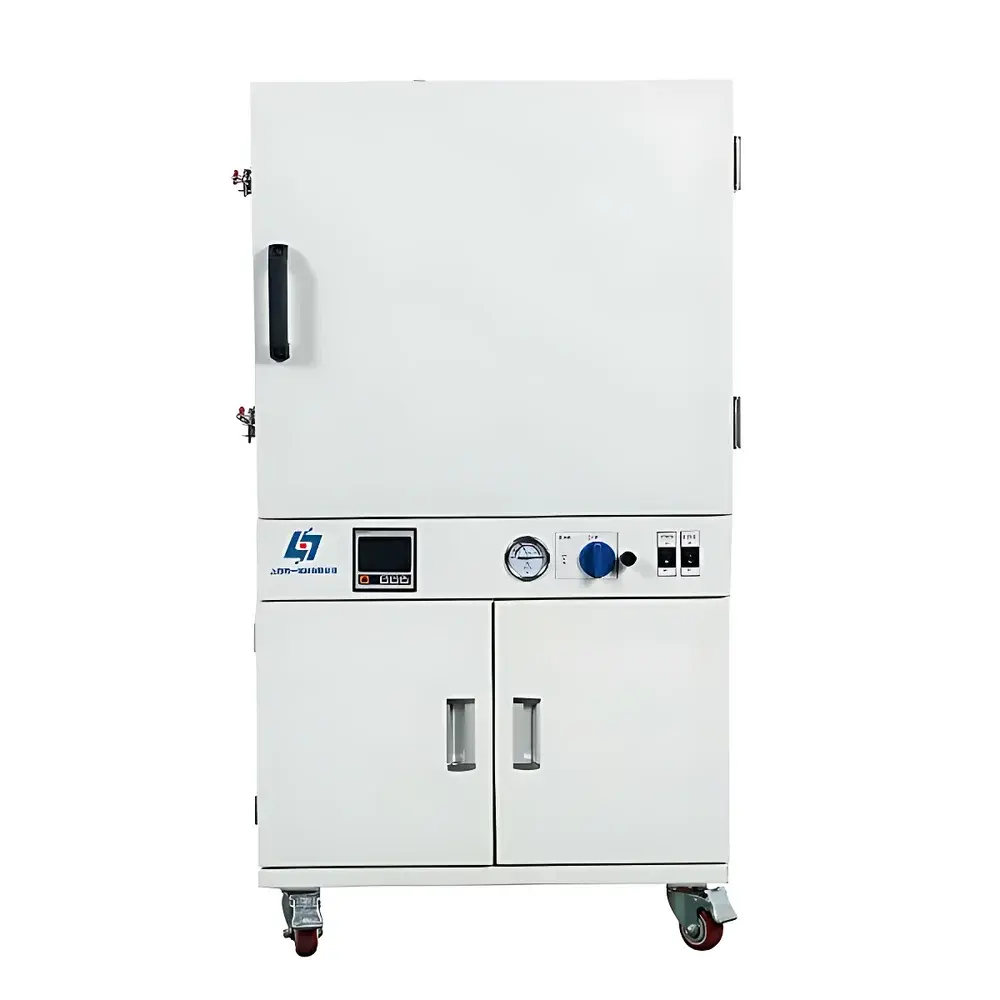
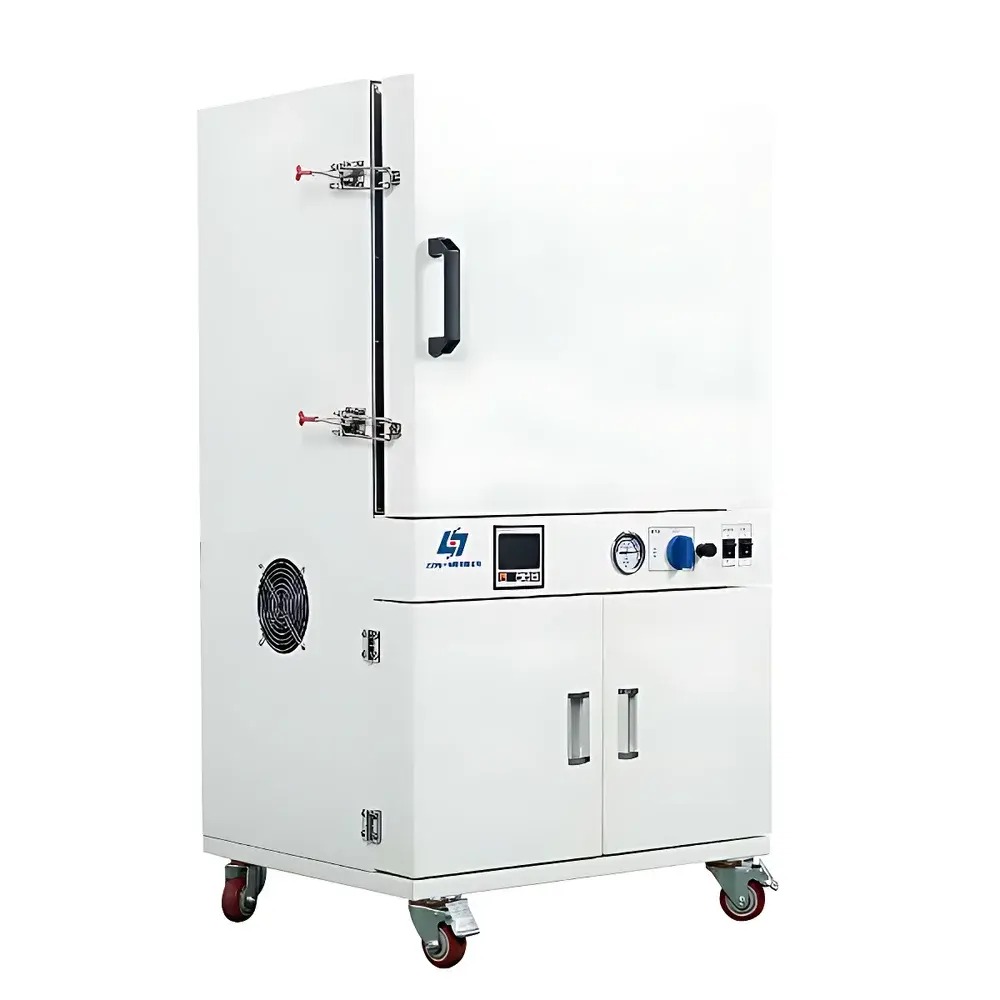
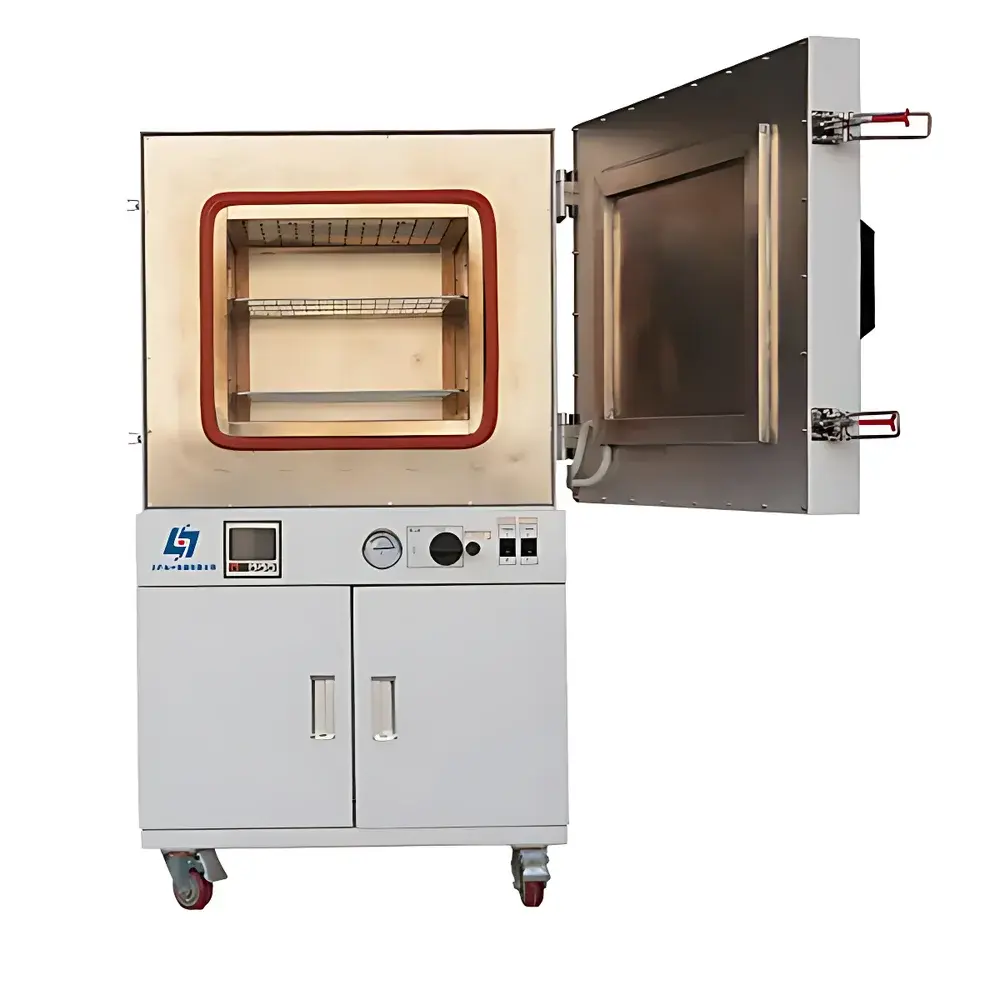
Shanghai Youyi GZF-6210BL Vertical High-Temperature Vacuum Drying Oven (500 °C, 215 L)
| Brand | Shanghai Youyi (SHYY) |
|---|---|
| Origin | Shanghai, China |
| Manufacturer Type | Direct Manufacturer |
| Instrument Type | Vacuum Drying Oven |
| Temperature Range | RT+10 °C to 500 °C |
| Temperature Uniformity | ±1 °C |
| Temperature Resolution | 0.1 °C |
| Vacuum Level | ≤133 Pa |
| Interior Dimensions | 500 × 500 × 600 mm (L×W×H) |
| Exterior Dimensions | 905 × 795 × 1570 mm (L×W×H) |
| Chamber Volume | 215 L |
| Interior Material | 304 Stainless Steel |
| Heating Method | Electric Resistance Heating |
| Power Supply | AC 380 V, 50 Hz |
| Standard Accessories | Dual stainless steel shelving, integrated vacuum pump mounting base |
Overview
The Shanghai Youyi GZF-6210BL is a vertically oriented, high-temperature vacuum drying oven engineered for precise thermal processing under reduced-pressure environments. It operates on the fundamental principle of vacuum-assisted desorption: by lowering ambient pressure inside the chamber, the boiling point of volatile components—water, solvents, or residual moisture—is significantly depressed, enabling effective drying of thermally sensitive, oxidizable, or structurally complex samples at temperatures far below their atmospheric decomposition thresholds. Designed for sustained operation up to 500 °C under vacuum, the unit integrates robust thermal insulation, inert-gas compatibility, and fail-safe thermal management to support applications in materials science, pharmaceutical development, advanced ceramics sintering pre-treatment, and analytical sample preparation where oxygen exclusion and thermal stability are critical.
Key Features
- High-temperature capability: Certified continuous operation from ambient +10 °C to 500 °C under vacuum, with thermal uniformity maintained within ±1 °C across the full 215 L working volume.
- Stainless steel construction: Seamless 304 stainless steel interior chamber and reinforced cold-rolled steel exterior with electrostatic powder coating ensure long-term corrosion resistance and vacuum integrity.
- Advanced control system: 4.3-inch LCD interface with PID-based temperature regulation, programmable ramp-soak profiles, real-time vacuum monitoring (optional digital vacuum controller with auto-pressure hold), and non-volatile memory for parameter retention after power interruption.
- Vacuum-tight sealing: One-piece molded silicone door gasket with adjustable clamping mechanism achieves and maintains ≤133 Pa vacuum level without leakage over extended cycles.
- Optimized heat transfer: Precision-stamped aluminum shelves (standard) provide rapid, uniform thermal conduction while resisting oxidation at elevated temperatures; optional inert gas inlet (N₂/Ar) enables controlled atmosphere processing.
- Safety architecture: Independent over-temperature cutoff (mechanical and electronic), grounding protection, and dual interlock systems prevent unintended chamber access during vacuum or heating phases.
Sample Compatibility & Compliance
The GZF-6210BL accommodates diverse sample formats—including powders, granules, thin-film substrates, porous ceramics, metal injection molding (MIM) green parts, lyophilized biological matrices, and precision-engineered components—with minimal risk of displacement, oxidation, or surface degradation. Its vacuum environment eliminates convective airflow, preventing particle migration common in forced-air ovens. The unit complies with general safety requirements per IEC 61010-1 for laboratory electrical equipment and supports GLP/GMP-aligned workflows through configurable audit trails (when paired with optional programmable controller). While not certified to ISO 17025 or ASTM E2041 as a standalone instrument, its performance characteristics align with test method prerequisites in ASTM D2240 (elastomer drying), USP (container closure drying validation), and ISO 12103-1 (particulate reference material conditioning).
Software & Data Management
The standard microprocessor controller logs time-stamped temperature and vacuum status data internally, supporting manual export via USB for traceability. Optional multi-segment programmable controllers enable up to 30-step temperature/vacuum profiles with hold times, ramp rates, and event-triggered actions (e.g., automatic N₂ purge upon cycle completion). When integrated with third-party SCADA or LIMS platforms via RS485 Modbus RTU protocol, the oven supports centralized monitoring, electronic batch records, and 21 CFR Part 11–compliant user authentication and audit logging—subject to site-specific validation protocols.
Applications
- Precursor drying for sol-gel synthesis and ceramic powder processing prior to sintering
- Moisture removal from hygroscopic APIs and excipients without thermal degradation
- Outgassing of optical components, vacuum chamber parts, and MEMS devices
- Pre-bake treatment of printed circuit boards and flexible electronics substrates
- Drying of heat-labile biological standards, calibration reference materials, and chromatography column packings
- Thermal stabilization of battery electrode coatings and solid-state electrolyte precursors
FAQ
What vacuum level is achievable, and how is it maintained?
The chamber consistently achieves and holds ≤133 Pa using a compatible two-stage rotary vane vacuum pump (e.g., 4 L/s capacity); maintenance relies on the integrity of the silicone gasket, chamber welds, and valve seals—no active pressure regulation is included in base configuration.
Can inert gas purging be automated?
Yes—when equipped with the optional inert gas inlet kit (N₂/Ar), the system supports manual or timer-based purge cycles; fully automated pressure-controlled inert gas dosing requires integration with an external mass flow controller.
Is the oven suitable for drying organic solvents?
It is appropriate for low-boiling, non-corrosive solvents (e.g., acetone, ethanol, hexane) under vacuum, provided proper venting, explosion-proof electrical ratings, and solvent-resistant gasket materials are confirmed per application-specific risk assessment.
How is temperature uniformity validated across the chamber?
Uniformity is verified per internal QA procedure using nine calibrated PT100 probes placed at standardized locations (center, corners, mid-walls); deviation remains within ±1 °C at setpoints between 100 °C and 500 °C under static vacuum conditions.
Are calibration certificates available?
Factory calibration reports for temperature and vacuum sensors are provided with shipment; ISO/IEC 17025-accredited third-party calibration services are available upon request and subject to separate scheduling and documentation protocols.
Related Products



