
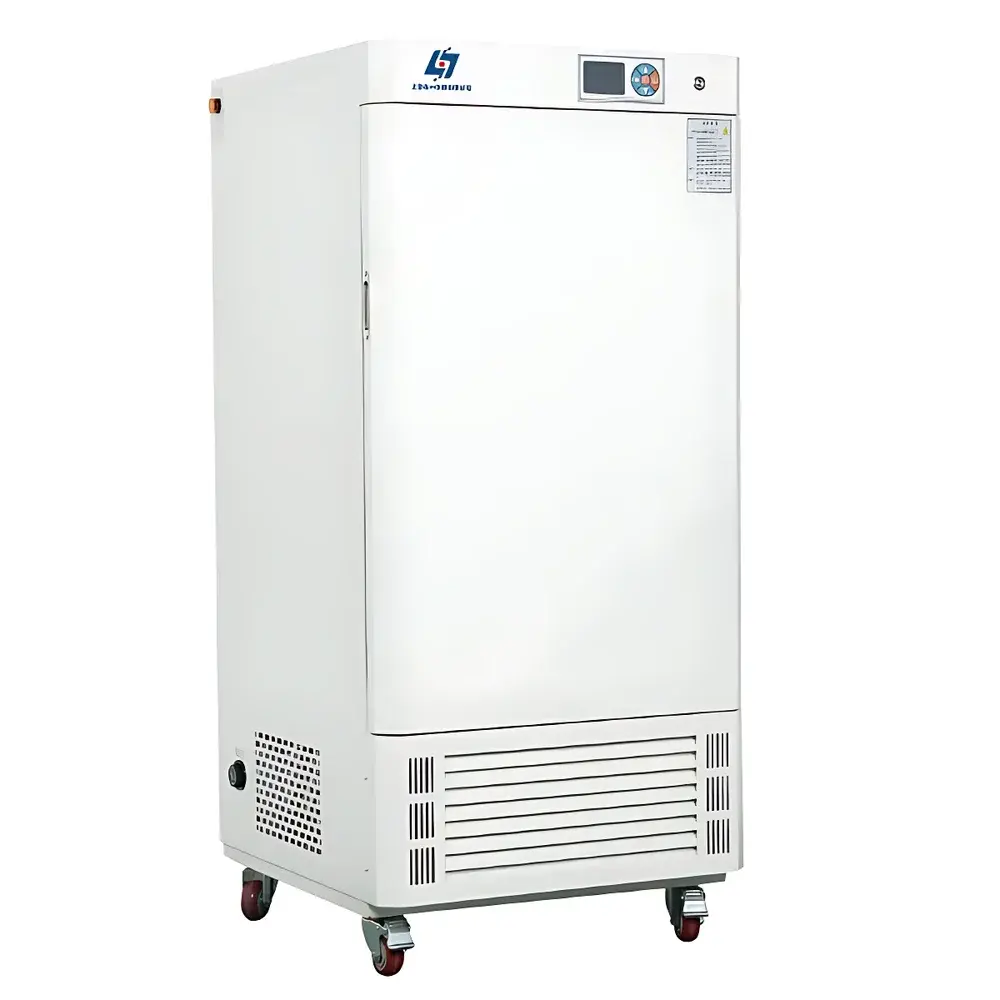
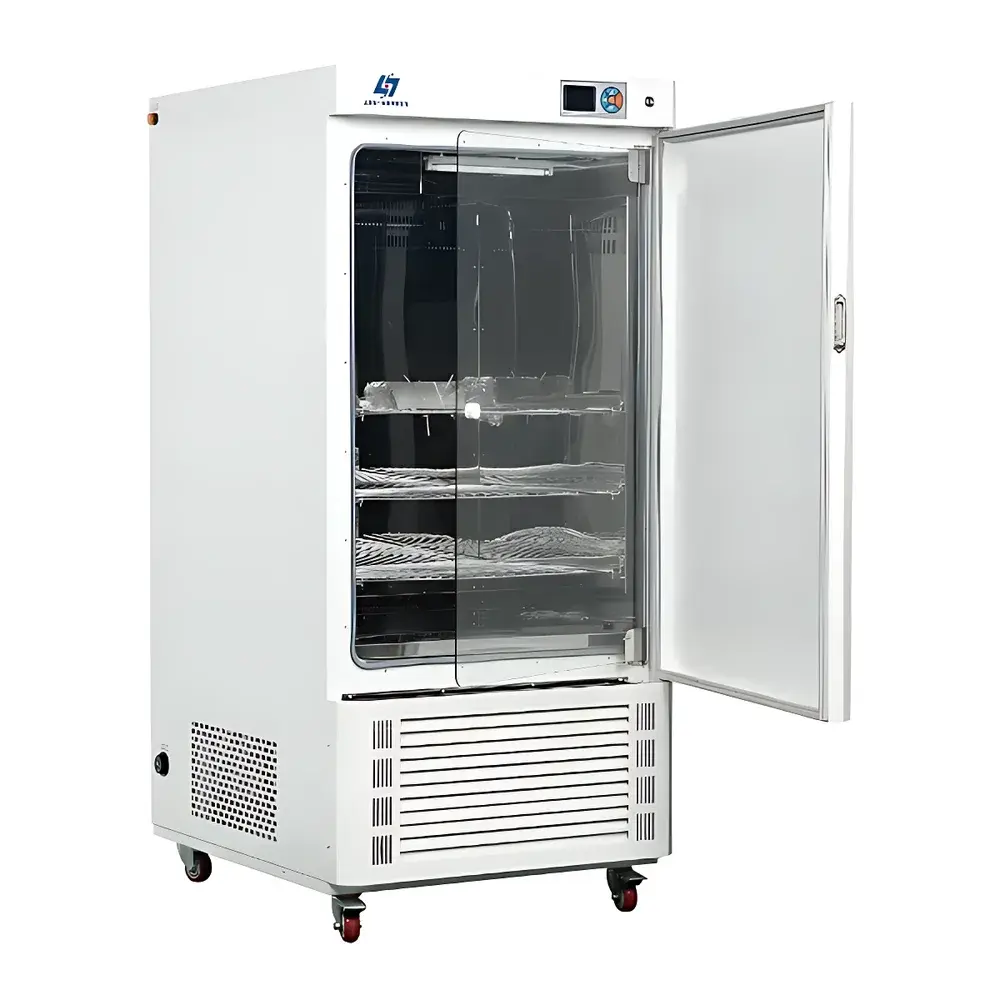
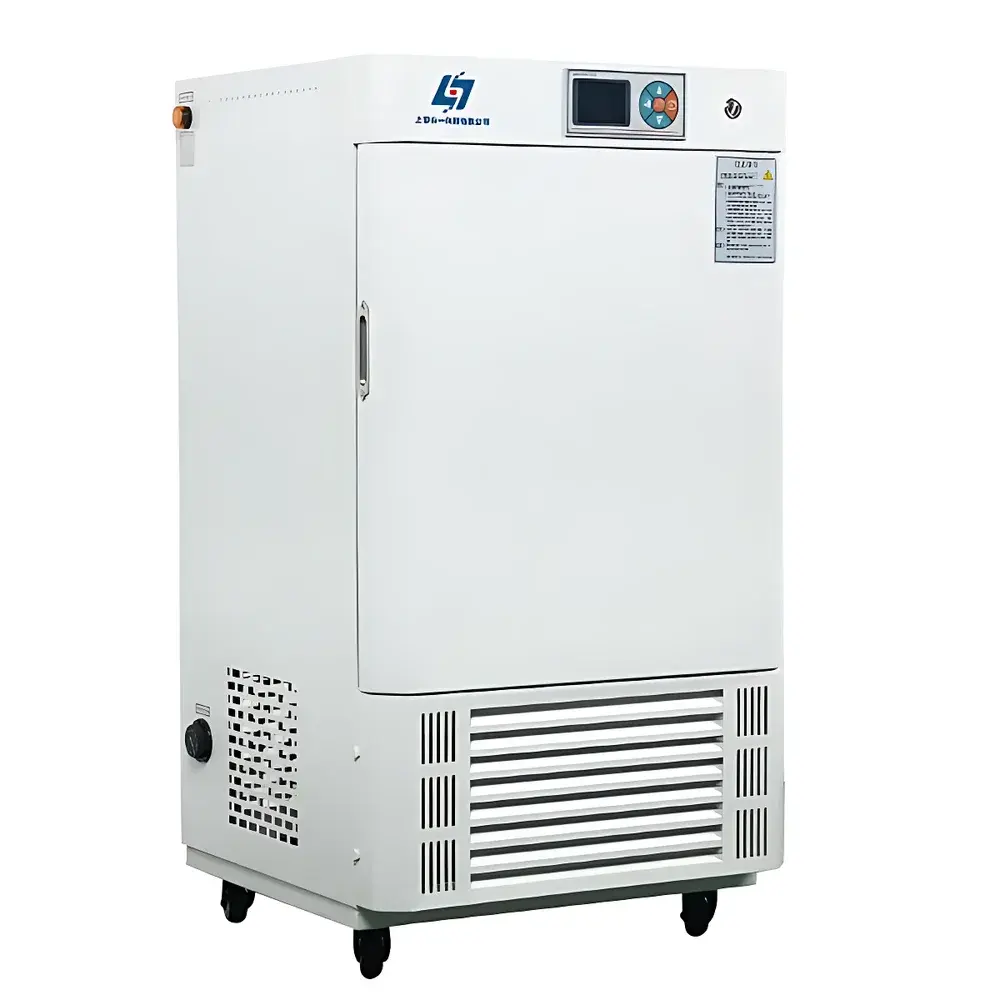
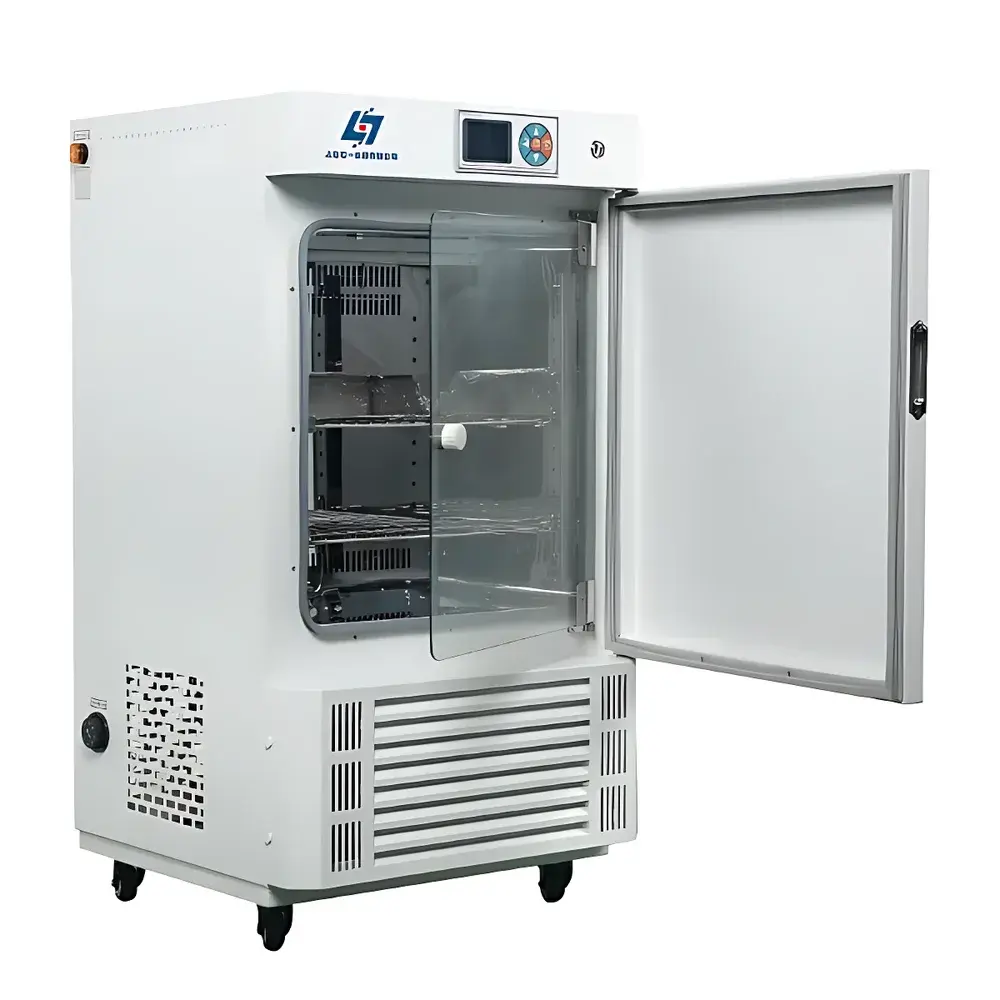
Yoyilab LRH-300 Biochemical Incubator
| Brand | Yoyilab |
|---|---|
| Origin | Shanghai, China |
| Manufacturer Type | Direct Manufacturer |
| Model | LRH-300 |
| Cooling Method | Compressor-based Refrigeration |
| Temperature Range | 0–65°C |
| Temperature Accuracy | ±0.1°C |
| Temperature Fluctuation | ±0.5°C (at high temp), ±1.0°C (at low temp) |
| Temperature Uniformity | ±1.5°C (measured at 25°C) |
| Chamber Capacity | 300 L |
| External Dimensions | 705 × 765 × 1640 mm (W×D×H) |
Overview
The Yoyilab LRH-300 Biochemical Incubator is a precision-engineered, dual-mode (heating and refrigeration) environmental chamber designed for stable, long-term cultivation and storage of microorganisms—including bacteria, yeasts, molds, and fungi—as well as for BOD (Biochemical Oxygen Demand) testing, plant tissue culture, seed germination, and physiological studies in life science laboratories. Built upon a robust thermodynamic architecture, the unit employs a high-efficiency hermetic compressor for active cooling and a PID-regulated resistive heating system for precise thermal control across its full 0–65°C operating range. Unlike passive or air-jacketed incubators, the LRH-300 integrates forced-air convection with optimized internal airflow geometry to ensure rapid temperature equilibration and minimal spatial gradient—critical for reproducible microbial growth kinetics and standardized BOD5 assays per ISO 5815-1 and ASTM D5210.
Key Features
- Microprocessor-controlled PID temperature regulation with 0.1°C resolution and real-time digital display on a 5.7-inch backlit LCD interface
- Dual independent thermal protection: primary PID control + secondary independent over-temperature cutoff (adjustable limit)
- Double-door structure with vacuum-insulated glass window and silicone gasket seal—minimizes thermal leakage during observation without disturbing chamber stability
- Polished stainless-steel interior chamber (mirror-finish 304 grade) with radius-corner design for seamless cleaning and contamination control; adjustable shelving supports flexible load configuration
- Four-point leveling system with dual-mode mobility: swivel casters (locking) + fixed anti-vibration feet for secure placement on lab benches or mobile carts
- Power failure recovery function with non-volatile memory—automatically resumes pre-interruption setpoints and timing sequences upon power restoration
- Compressor-based refrigeration using R134a (or optional R600a for F-series models), compliant with international ozone-safety standards (Montreal Protocol Annex A)
Sample Compatibility & Compliance
The LRH-300 accommodates standard microbiological containers—including Petri dishes (90–150 mm), test tubes (13–25 mm OD), Erlenmeyer flasks (up to 2 L), and multi-well plates—on up to three adjustable stainless-steel shelves (standard configuration). Its uniform temperature distribution (±1.5°C at 25°C reference point, verified per IEC 61000-4-2 and GB/T 23776-2018 protocols) meets critical requirements for GLP-compliant BOD incubation per US EPA Method 405.1 and ISO 5815-2. The unit’s operational envelope (ambient +5 to +30°C) ensures reliability in typical laboratory environments without auxiliary climate conditioning. All electrical components conform to IEC 61010-1 safety standards for laboratory equipment, and the cabinet construction satisfies IP20 ingress protection classification.
Software & Data Management
While the base LRH-300 operates via embedded firmware with local parameter logging (setpoint, actual temperature, elapsed time), optional RS485 serial interface enables integration into centralized lab monitoring systems (e.g., LabVantage, Siemens Desigo, or custom SCADA platforms) using Modbus RTU protocol. An optional data acquisition software package supports time-stamped CSV export, alarm event history (with timestamp and cause code), and configurable audit trails—facilitating compliance with FDA 21 CFR Part 11 requirements when paired with user-defined electronic signatures and role-based access control. Optional embedded thermal printer provides hard-copy record of cycle completion, deviation alerts, and calibration verification logs.
Applications
- BOD5 measurement for wastewater and surface water quality assessment (per ISO 5815, APHA 5210B)
- Standardized microbial culture maintenance (ATCC-recommended conditions for E. coli, S. aureus, C. albicans)
- Pharmaceutical stability testing (ICH Q1A–Q1E ambient/accelerated conditions)
- Agricultural seed viability and germination rate studies under controlled thermo-hygrometric profiles
- Cell line passaging support for non-CO2-dependent adherent cultures (e.g., CHO-K1, HEK293T)
- Enzyme activity assays requiring strict thermal consistency over extended durations (e.g., amylase, protease kinetics)
FAQ
What is the recommended calibration interval for the LRH-300?
Annual traceable calibration using NIST-traceable PRT probes is advised for GLP/GMP environments; semi-annual verification suffices for academic research use.
Can the LRH-300 maintain humidity control?
No—the LRH-300 is a temperature-only incubator. For humidity-dependent applications (e.g., fungal sporulation), consider the Yoyilab HLRH series with integrated humidification module.
Is the unit suitable for use in cleanroom environments (ISO Class 5–7)?
Yes, provided external HEPA-filtered air supply is ducted into the chamber via optional 25 mm or 50 mm test ports; interior finish and lack of internal fans minimize particle generation.
Does the LRH-300 support programmable ramp-and-soak temperature profiles?
Not natively—but the optional multi-segment programmable controller (sold separately) adds up to 30-step cycling capability with slope control and dwell timing.
What documentation is supplied for regulatory submissions?
Factory calibration certificate (as-tested), electrical safety report (IEC 61010-1), and material compliance statement (RoHS/REACH) are included; IQ/OQ protocols available upon request.





