
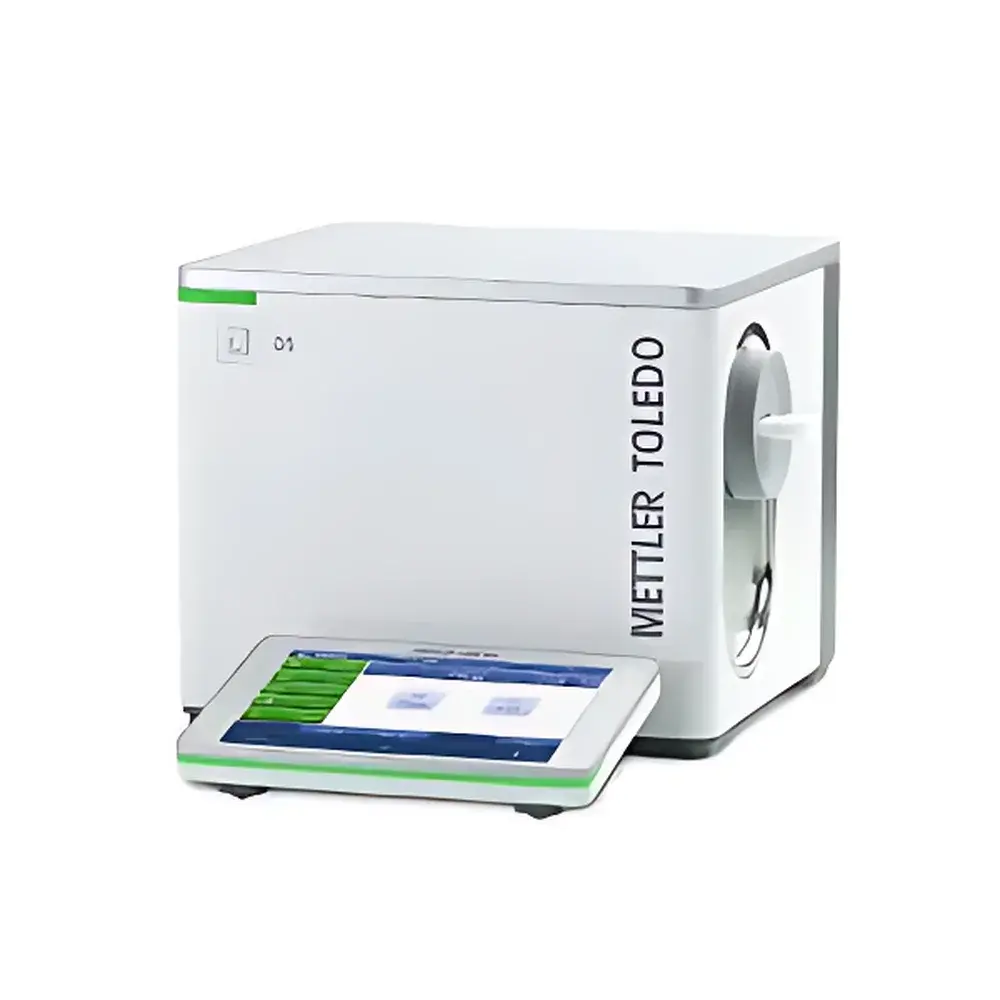
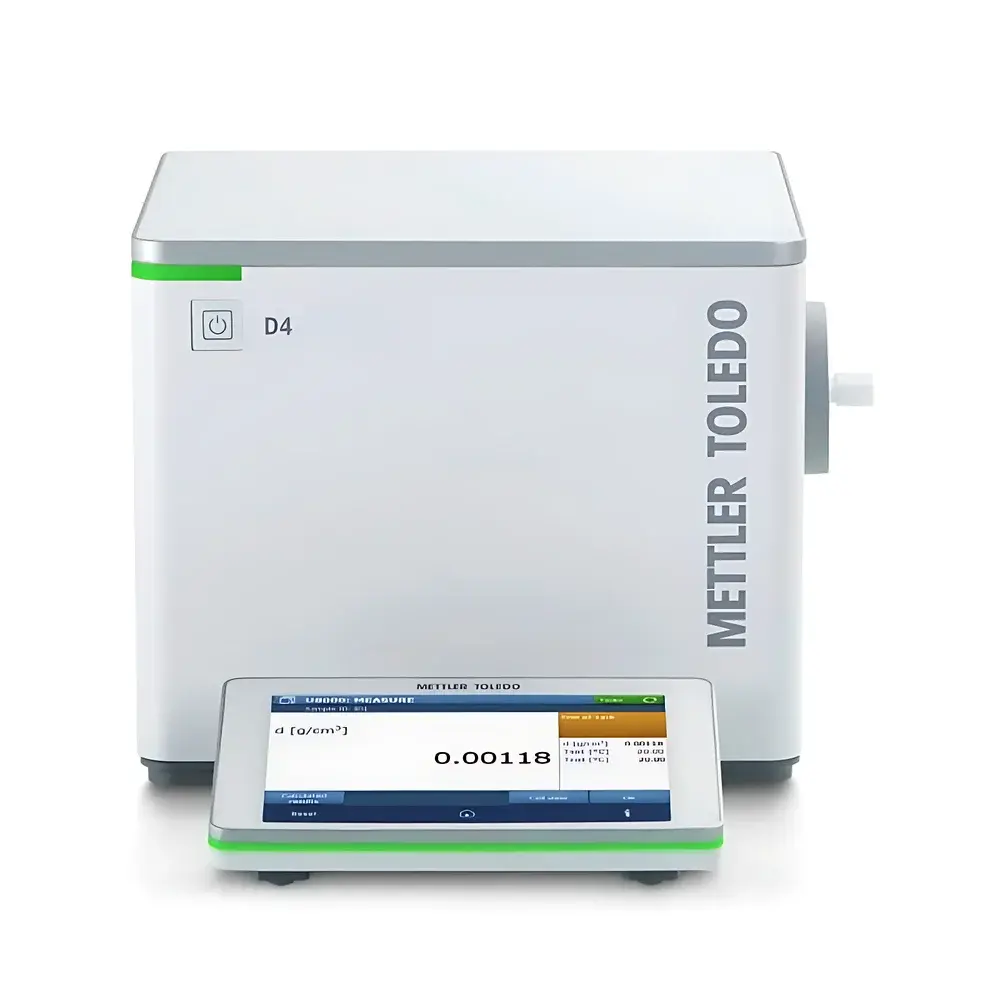
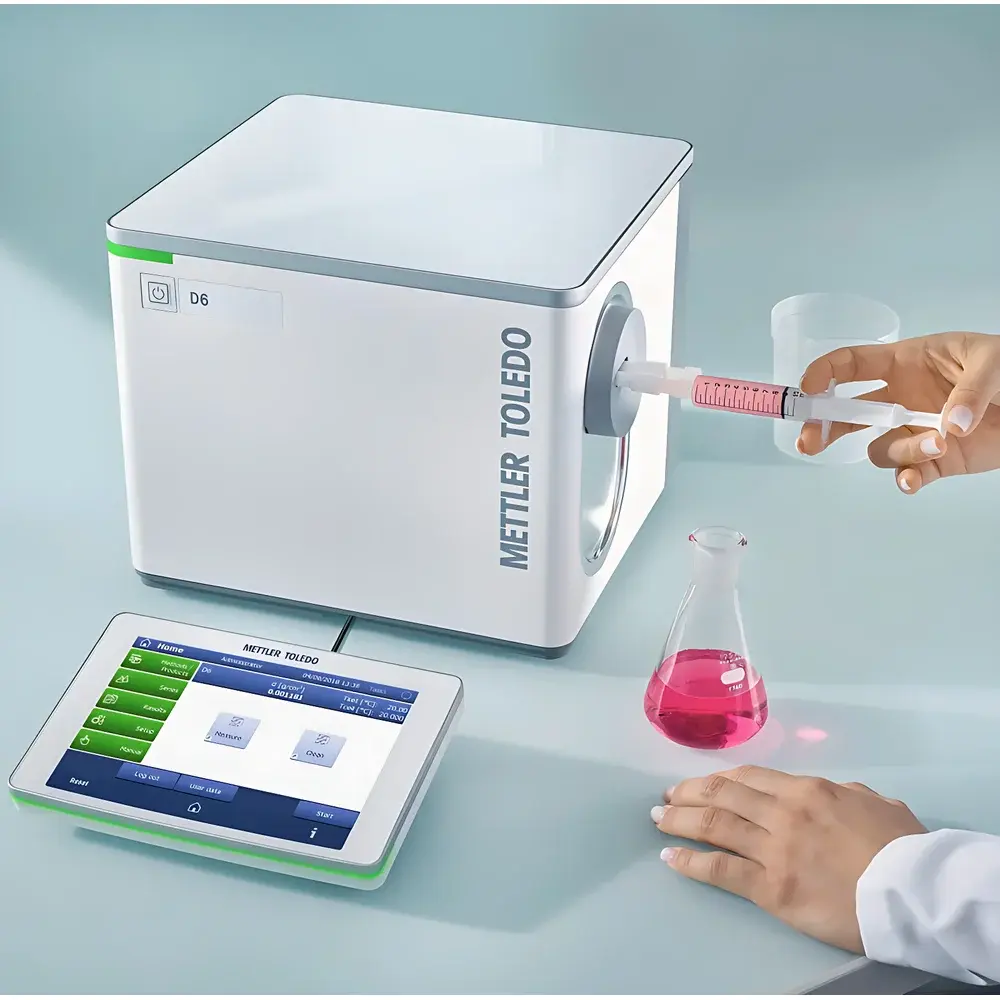
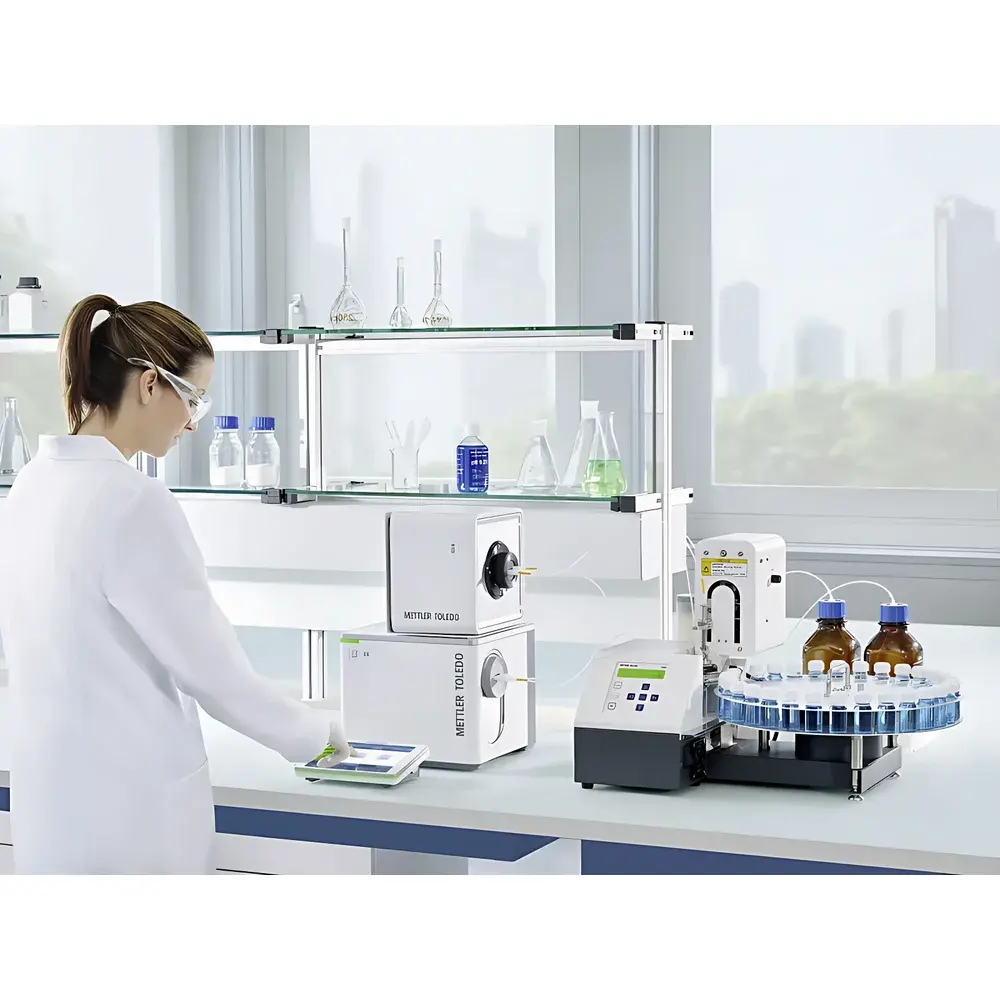
METTLER TOLEDO Density Meter Excellence Series D4/D5/D6
| Brand | METTLER TOLEDO |
|---|---|
| Origin | Switzerland |
| Model | D4/D5/D6 |
| Instrument Type | Laboratory Benchtop Digital Density Meter |
| Measurement Principle | Oscillating U-tube (ASTM D4052, ISO 12185, USP <841>) |
| Sample Type | Liquids and Low-Viscosity Solutions |
| Density Range | 0 to 3 g/cm³ |
| Density Resolution | 0.0001 g/cm³ |
| Temperature Control Range | 0 °C to 95 °C |
| Minimum Sample Volume | 1.5 mL |
| Compliance | 21 CFR Part 11 Ready (with LabX software), GLP/GMP Audit Trail Capable |
Overview
The METTLER TOLEDO Density Meter Excellence Series D4/D5/D6 is a high-precision laboratory benchtop instrument engineered for accurate, repeatable, and traceable density determination of liquid samples using the oscillating U-tube principle. This method relies on the correlation between the resonant frequency of a precisely manufactured glass U-tube filled with sample and its mass density—enabling measurement accuracy down to 0.0001 g/cm³ across a broad operational range (0–3 g/cm³). Designed in accordance with international standards—including ASTM D4052 (Standard Test Method for Density, Relative Density, and API Gravity of Crude Petroleum and Liquid Petroleum Products by Digital Density Meter), ISO 12185 (Crude petroleum and petroleum products — Determination of density — Digital density meters), and USP (Density and Specific Gravity)—the D4/D5/D6 series delivers metrologically sound results suitable for regulated environments such as pharmaceutical quality control, chemical R&D, food & beverage formulation, and petrochemical analysis.
Key Features
- Oscillating U-tube technology with temperature-controlled Peltier element ensures stable thermal equilibrium and minimizes drift during measurement cycles.
- One Click™ intuitive touchscreen interface with color display reduces operator dependency and training time; all core functions accessible via dedicated on-screen icons.
- Integrated BubbleCheck™ video-assisted air bubble detection system automatically identifies and flags entrapped gas in the measuring cell, preventing erroneous readings.
- Real-time viscosity compensation algorithm corrects for damping effects caused by non-Newtonian or moderately viscous samples without requiring manual intervention.
- Modular architecture supports seamless integration with optional refractometry, pH/conductivity, colorimetry, or titration modules—all controlled through a unified LabX software platform.
- Status LED indicators provide immediate visual feedback on instrument readiness, active measurement, or user interaction requirements.
Sample Compatibility & Compliance
The D4/D5/D6 series is optimized for liquid samples including aqueous solutions, organic solvents, alcohols, syrups, fuels, and low-viscosity suspensions. Its 1.5 mL minimum sample volume requirement enables efficient use of precious or limited-availability materials. All models comply with Good Laboratory Practice (GLP) and Good Manufacturing Practice (GMP) documentation requirements when operated with LabX software, which provides full electronic audit trails, user access control, and 21 CFR Part 11 compliance features—including digital signatures, secure data storage, and change history logging. Regulatory alignment extends to ISO/IEC 17025-accredited testing laboratories performing density-related calibrations and certifications.
Software & Data Management
LabX™ PC-based software serves as the central hub for instrument control, method development, data acquisition, and reporting. It supports customizable SOP-driven workflows, automatic report generation (PDF/Excel), and direct export to LIMS or ERP systems. Methods can be locked, version-controlled, and assigned to specific users or roles. Raw data—including oscillation frequency, temperature, viscosity-corrected density, and BubbleCheck verification logs—are stored with metadata (operator ID, timestamp, environmental conditions) to ensure full traceability. Optional remote monitoring and multi-instrument fleet management are available via LabX Network Edition.
Applications
- Alcohol content determination (ethanol % v/v) in beverages and spirits via density-to-alcohol conversion tables.
- Brix (°Bx) and specific gravity measurements in fruit juices, soft drinks, and dairy products per AOAC and ICUMSA guidelines.
- API gravity and density profiling of crude oil fractions and refined hydrocarbons.
- Concentration verification of electrolyte solutions, cleaning agents, and industrial process fluids.
- Stability assessment of emulsions and dispersions through time-resolved density tracking.
- QC release testing of active pharmaceutical ingredients (APIs) and excipients in liquid dosage forms.
FAQ
What density measurement principle does the Excellence D4/D5/D6 employ?
It uses the oscillating U-tube method, where the sample-filled tube’s natural resonant frequency is inversely proportional to its density.
Is temperature control fully automated?
Yes—the integrated Peltier system maintains setpoint temperatures from 0 °C to 95 °C with ±0.02 °C stability and ramp rates configurable in LabX.
Can the instrument measure samples with suspended particles?
Only if particles remain fully dispersed and do not settle during the measurement cycle; filtration is recommended for heterogeneous suspensions.
How is compliance with 21 CFR Part 11 achieved?
Through LabX software with role-based access, electronic signatures, immutable audit trails, and data integrity safeguards validated per GAMP 5.
What is the calibration procedure?
Two-point calibration using certified reference standards (e.g., air and water or air and sodium chloride solution) is performed automatically with user-defined frequency or triggered manually.



