
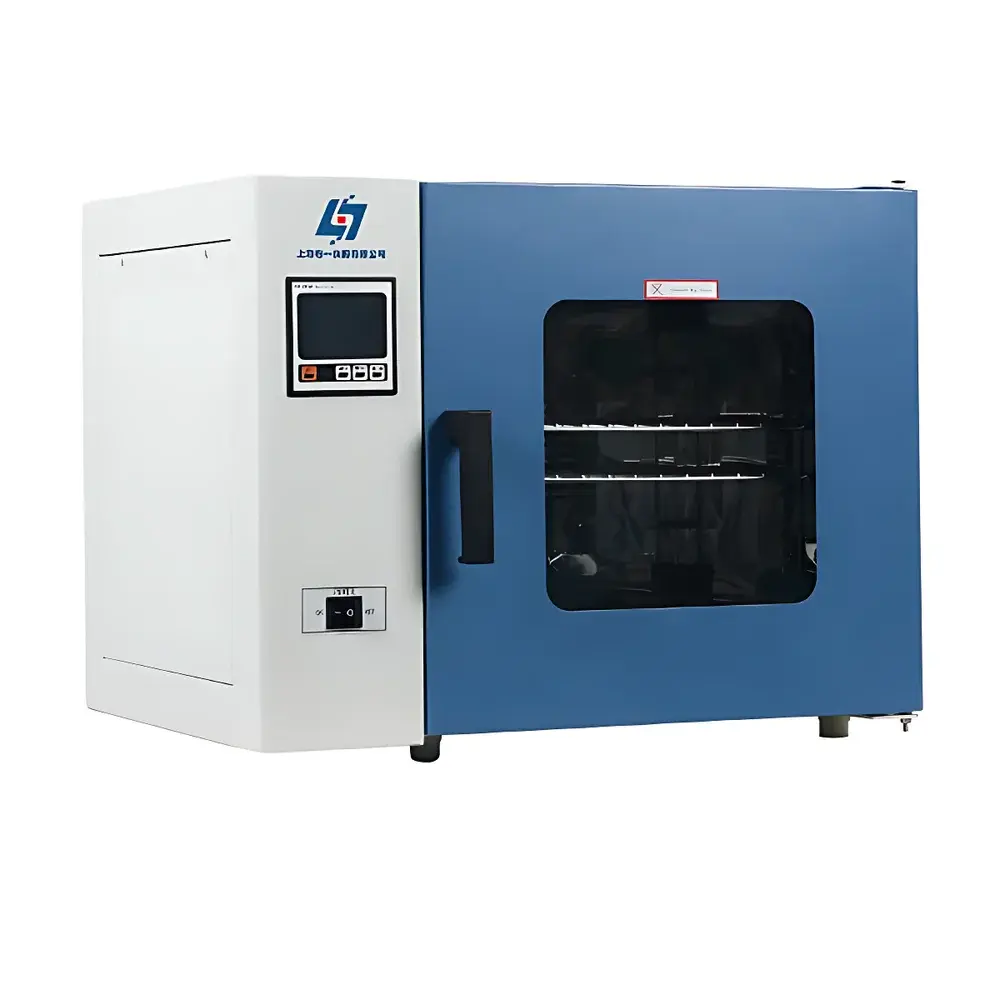
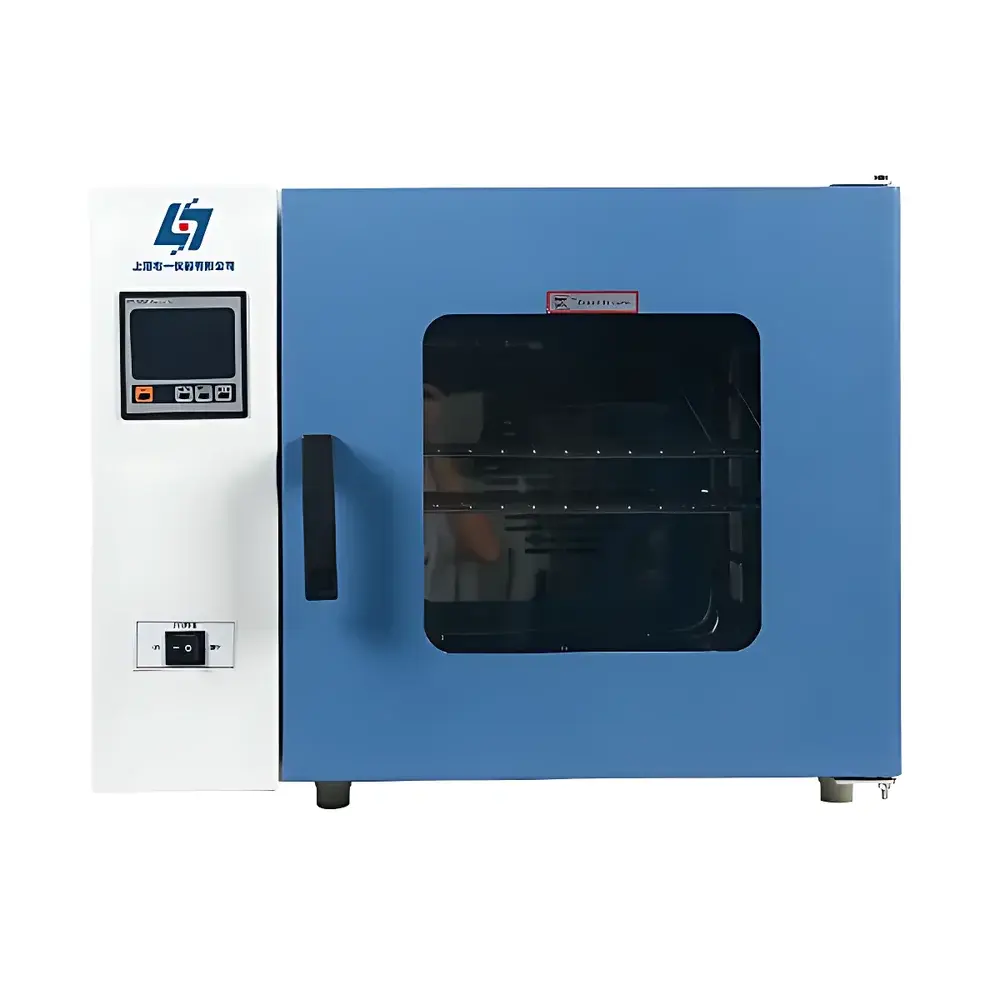
Yoyi DHG-9140C Nitrogen-Purged Precision Forced-Air Drying Oven
| Brand | Yoyi |
|---|---|
| Origin | Shanghai, China |
| Manufacturer Type | Direct Manufacturer |
| Instrument Category | Precision Drying Oven |
| Model | DHG-9140C |
| Temperature Fluctuation | ±1℃ |
| External Dimensions | 835×670×730 mm |
| Temperature Control Range | RT+10 to 250℃ |
| Internal Chamber Dimensions | 550×450×550 mm |
| Temperature Resolution | 0.1℃ |
| Chamber Material | Mirror-Finish Stainless Steel |
| Heating Method | Electric Resistance Heating |
| Temperature Uniformity | ±2.5% (at 100℃, non-purged condition) |
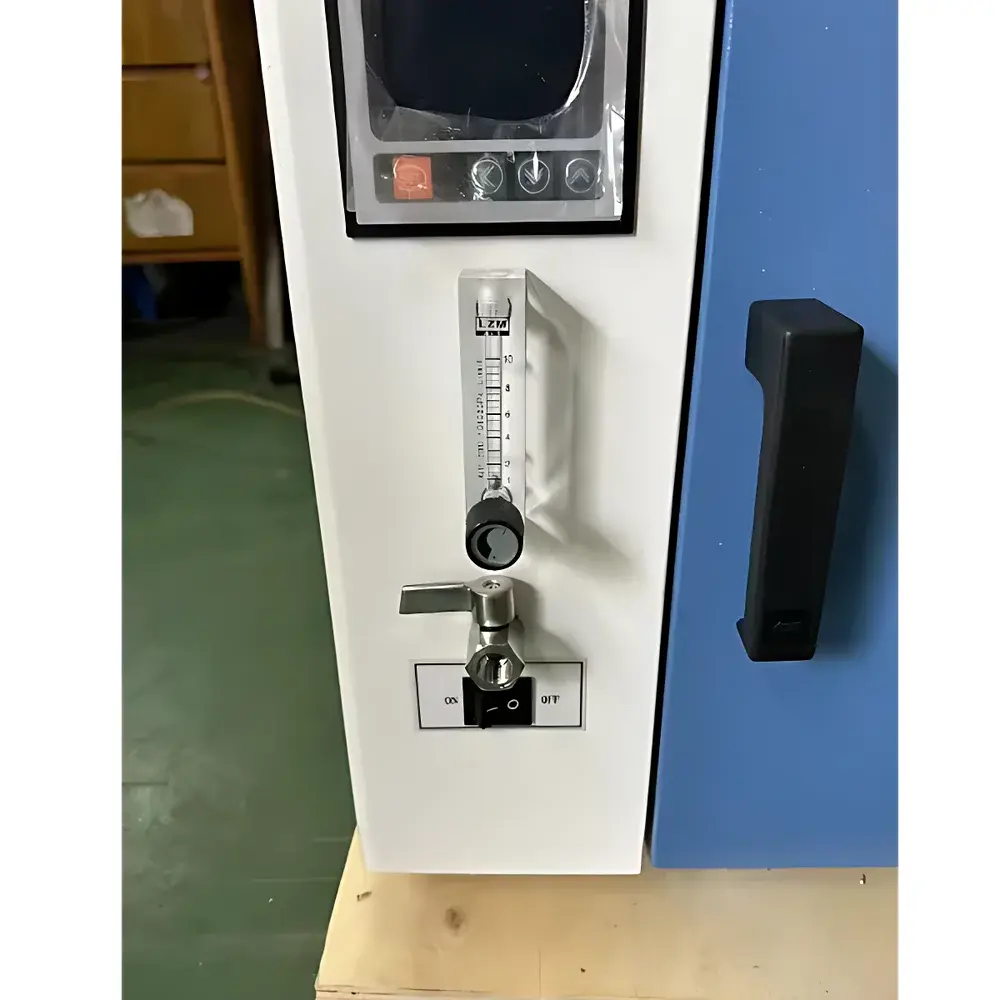
| Inert Gas Inlet | Φ10 mm |
| Gas Flow Rate Range | 0–10 L/min |
| Power Input | 2050 W |
| Working Environment | 5–40℃ ambient, ≤80% RH |
| Timer Range | 1–9999 min |
| Display | 4.3-inch LCD with Menu-Driven PID Interface |
| Air Circulation | Rear-Mounted Forced Convection with Adjustable Exhaust/Intake Ports |
Overview
The Yoyi DHG-9140C Nitrogen-Purged Precision Forced-Air Drying Oven is an engineered solution for applications requiring controlled thermal environments with reduced oxygen exposure. Designed around a robust forced-convection architecture, it employs a rear-mounted blower system and optimized air ducting to ensure consistent thermal distribution across the stainless-steel chamber. Unlike standard drying ovens, the DHG-9140C integrates a dedicated inert gas purging interface (Φ10 mm) compatible with nitrogen or argon supply lines, enabling active displacement of ambient air to minimize oxidation, moisture ingress, and volatile organic compound accumulation. This capability supports ISO 8573-compliant clean drying protocols and aligns with GMP-relevant environmental control requirements for pharmaceutical stability testing, polymer curing, and electronic component baking where atmospheric contamination must be mitigated.
Key Features
- Microprocessor-based PID temperature controller with 4.3-inch backlit LCD interface—supports simultaneous display of setpoint, real-time chamber temperature, elapsed time, and remaining hold duration
- Programmable timer with 1–9999 minute range and auto-shutdown functionality; retains user-defined parameters after power interruption via non-volatile memory
- Mirror-finish 304 stainless-steel interior chamber (550 × 450 × 550 mm) with two adjustable chrome-plated wire shelves; corrosion-resistant and easy to decontaminate
- Dual-layer tempered glass observation window with silicone-gasketed door seal—maintains integrity at elevated temperatures up to 250℃ while enabling visual monitoring without thermal loss
- Optimized airflow path with rear-mounted intake/exhaust ports and integrated baffle design—enhances convective efficiency and contributes to ±2.5% temperature uniformity (measured per ASTM E2207 at 100℃, empty chamber)
- Front-panel inert gas inlet with calibrated rotameter (0–10 L/min flow range); allows precise regulation of purge rate to balance chamber overpressure, residence time, and process repeatability
- Cold-rolled steel outer casing with epoxy-polyester powder coating—provides mechanical durability and resistance to laboratory-grade solvents and cleaning agents
Sample Compatibility & Compliance
The DHG-9140C accommodates a broad spectrum of sample formats including Petri dishes, weighing boats, crucibles, PCB assemblies, polymer films, and biological tissue cassettes. Its chamber volume (136 L) and vertical clearance support stacked configurations and multi-tiered loading without compromising airflow integrity. The unit complies with IEC 61010-1:2010 for electrical safety in laboratory equipment and meets CE marking requirements for electromagnetic compatibility (EN 61326-1). While not certified to UL 61010-1, its construction adheres to equivalent insulation, grounding, and thermal cutoff standards—including dual independent overtemperature protection circuits (mechanical and electronic). For regulated environments, optional RS485 communication and audit-trail-capable software (sold separately) facilitate integration into 21 CFR Part 11–compliant data management workflows.
Software & Data Management
The base configuration operates via embedded firmware with no external PC dependency. Optional accessories expand digital functionality: an RS485 serial interface enables Modbus RTU communication for SCADA integration; the companion software package logs timestamped temperature profiles, alarm events, and gas flow metrics with CSV export capability. A programmable multi-segment temperature controller (optional add-on) supports up to 30 ramp-hold cycles, suitable for annealing schedules or accelerated aging protocols. All firmware updates are performed via USB flash drive—no internet connectivity required—ensuring compliance with air-gapped lab network policies.
Applications
This oven serves critical roles across multiple disciplines: in pharmaceutical QC labs, it supports residual solvent removal from APIs under nitrogen blanket per USP ; in materials science, it enables controlled dehydration of hydrogels and thermal stabilization of nanocomposites; in electronics manufacturing, it performs pre-soldering moisture conditioning and post-reflow desiccation of moisture-sensitive devices (MSL-rated components); in food microbiology, it facilitates low-oxygen drying of reference standards prior to enumeration assays. Its RT+10–250℃ range and ±1℃ stability make it suitable for ASTM D792 (density), ISO 293 (thermoplastic compression molding), and EN 12697-19 (bitumen mass loss) test methods.
FAQ
What inert gases are compatible with the DHG-9140C?
Nitrogen and argon are validated for use; helium may be employed with caution due to higher diffusivity and potential pressure regulation challenges.
Is the temperature uniformity specification valid during active nitrogen purging?
The stated ±2.5% uniformity applies to non-purged conditions at 100℃; under continuous N₂ flow (≥3 L/min), uniformity typically improves by ~0.3–0.5% due to enhanced convective mixing.
Can the oven operate continuously at 250℃?
Yes—the heating elements, insulation, and door gasket are rated for uninterrupted operation at maximum setpoint, provided ambient conditions remain within 5–40℃ and relative humidity does not exceed 80% RH.
Are calibration certificates available?
NIST-traceable factory calibration reports (covering temperature sensor linearity and uniformity mapping) are available upon request at time of order.
What maintenance is required for long-term reliability?
Biannual inspection of fan bearings, verification of door seal compression force, and cleaning of air intake filters are recommended; no lubrication of internal components is required.



