
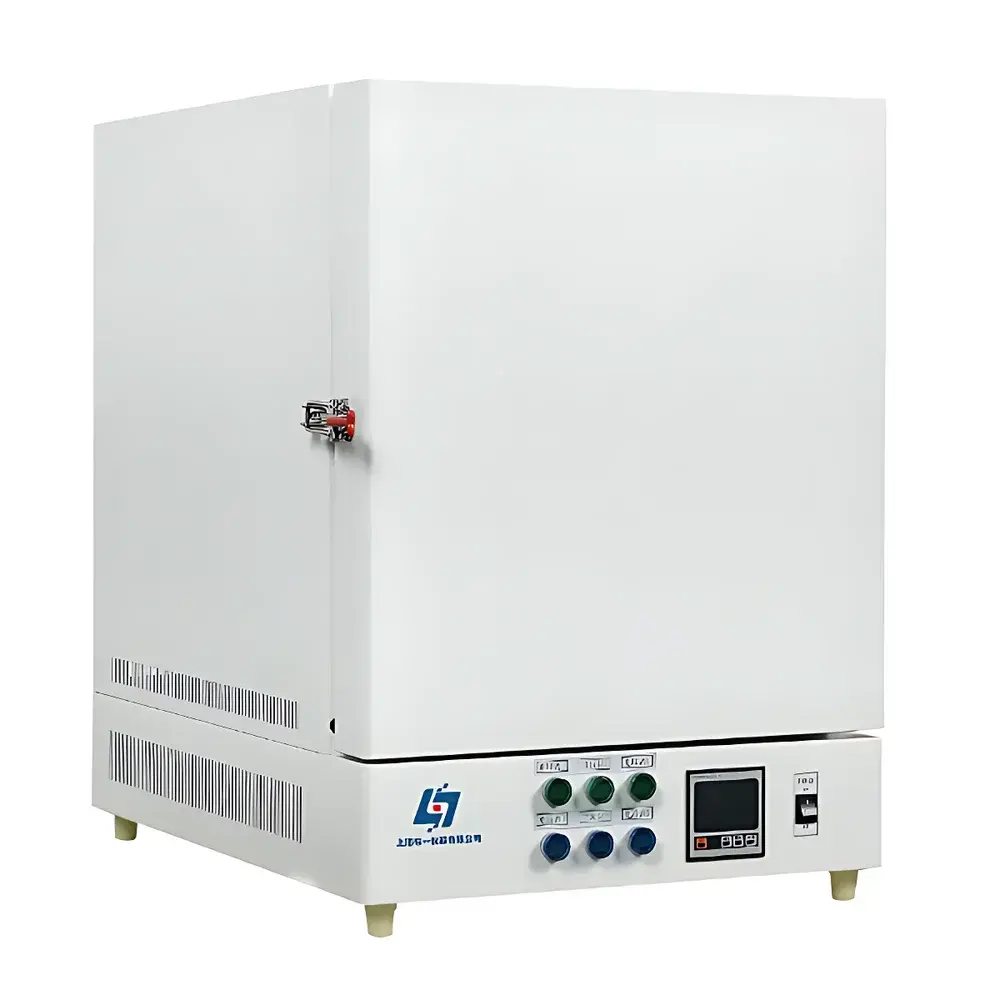
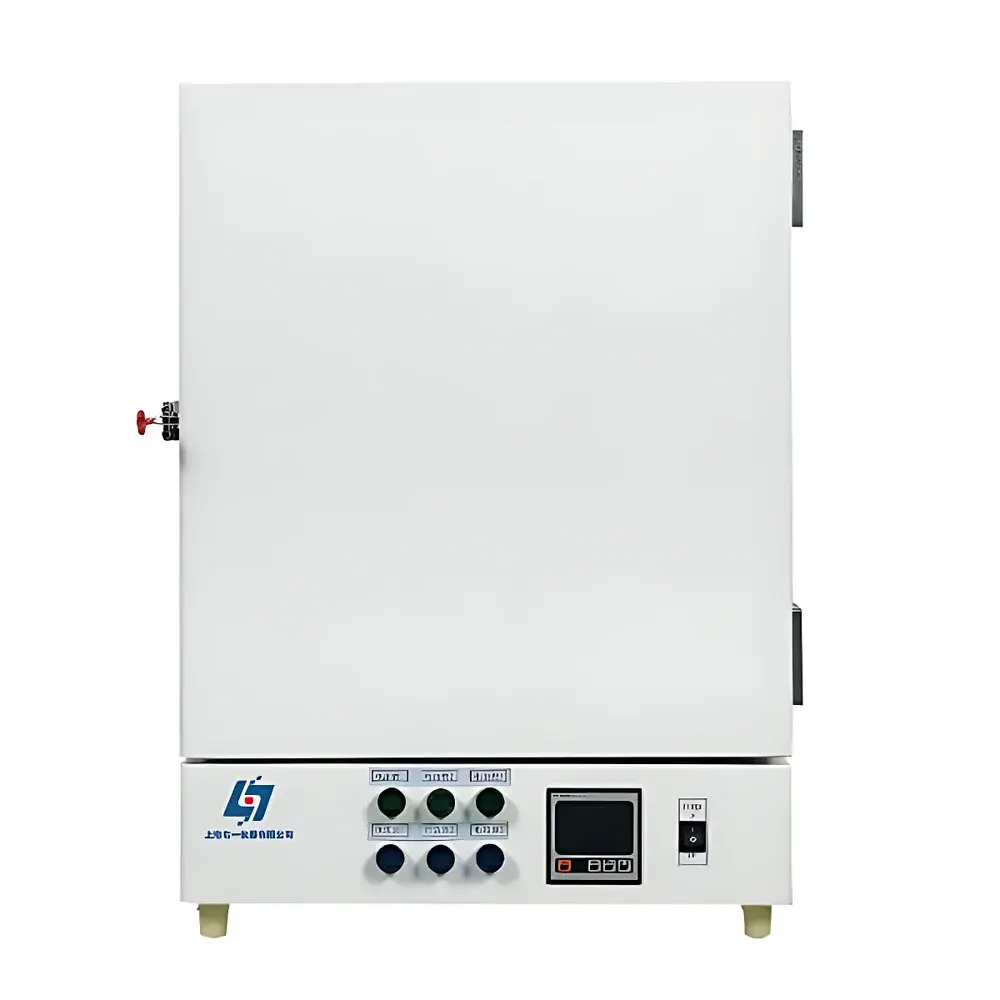
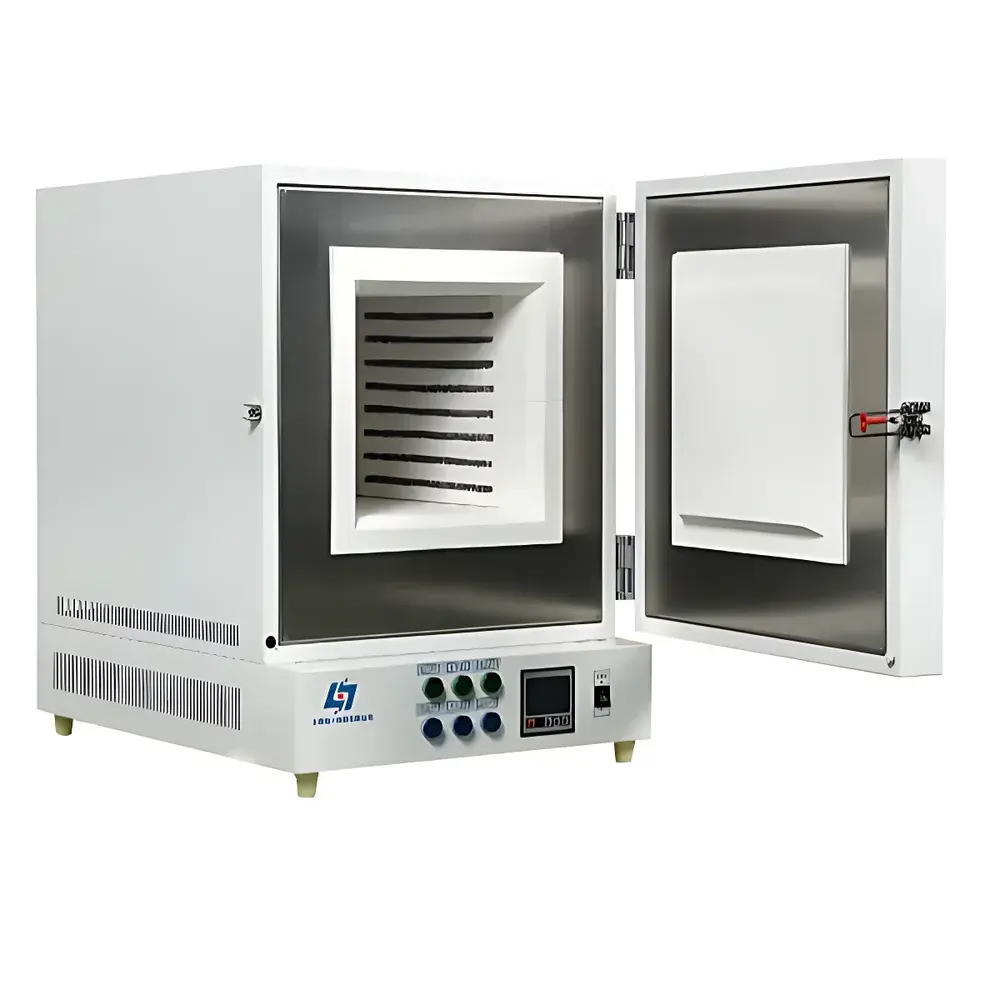
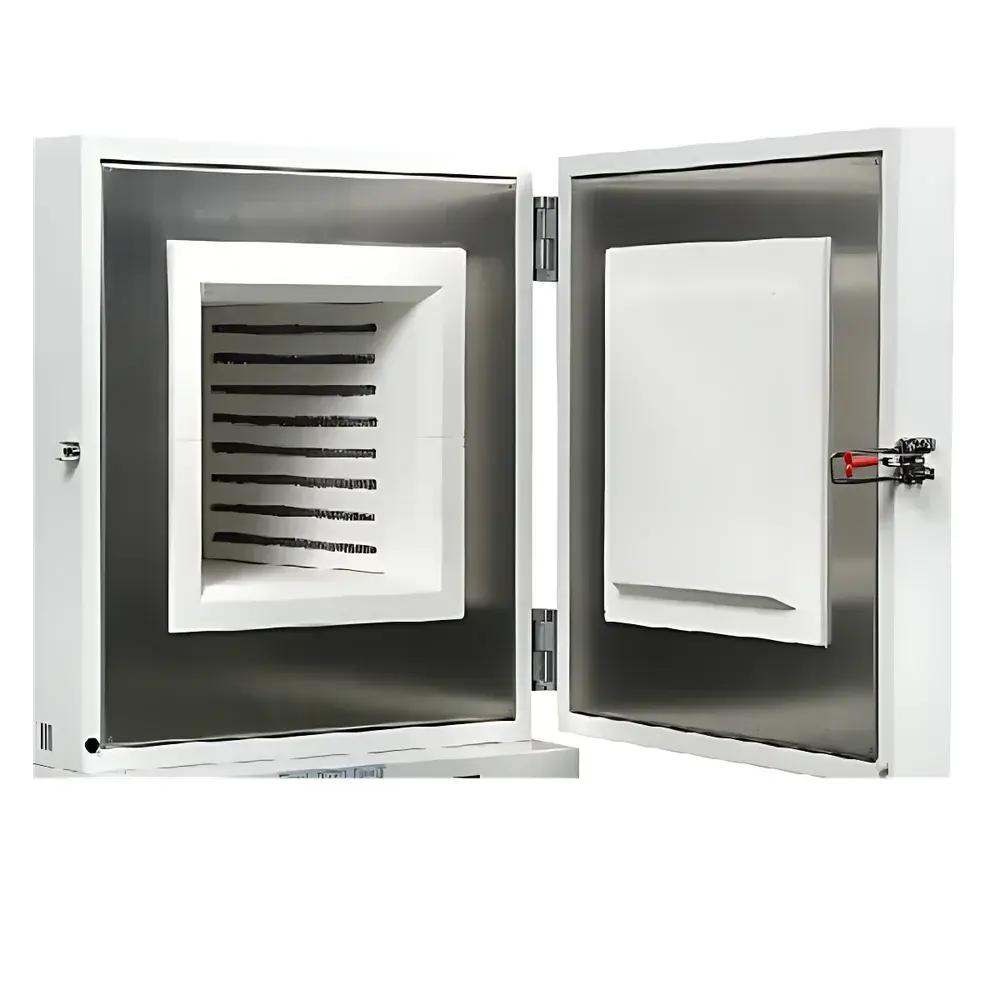
Yoyi SX2-10-12A Plus Ceramic Fiber Muffle Furnace (1200 °C, 36 L)
| Brand | Yoyi |
|---|---|
| Origin | Shanghai, China |
| Manufacturer Type | Direct Manufacturer |
| Product Category | Domestic |
| Model | SX2-10-12A Plus |
| Instrument Type | Box-Type Muffle Furnace |
| Max Temperature | 1200 °C |
| Temperature Control Accuracy | ±1 °C |
| Rated Power | 10 kW |
| Heating Element | Ni-Cr Alloy Wire (Mo-doped for 1200 °C service) |
| Internal Dimensions | 300 × 400 × 300 mm |
| Nominal Volume | 36 L |
Overview
The Yoyi SX2-10-12A Plus is a high-performance ceramic fiber box-type muffle furnace engineered for rapid, repeatable, and energy-efficient thermal processing in research laboratories and industrial R&D environments. Operating on resistive heating principles via molybdenum-doped nickel-chromium alloy wire elements, it delivers precise temperature control across a working range of ambient +50 °C to 1200 °C. Its lightweight ceramic fiber insulation—comprising low-density, high-purity alumina-silica modules—enables exceptional thermal efficiency: typical energy consumption is reduced by ~60% compared to traditional brick-lined furnaces. The furnace’s structural architecture integrates dual-layer thermal shielding (ceramic fiber board + air gap), resulting in surface temperatures ≤50 °C at 1000 °C internal setpoint—meeting ISO 13732-1 ergonomic safety thresholds for operator protection. Designed for GLP-compliant workflows, it supports critical heat treatment protocols including sintering, annealing, calcination, ashing, and controlled oxidation/reduction cycles.
Key Features
- Ultra-low thermal mass ceramic fiber chamber (density ≈ 128 kg/m³) enabling ramp rates up to 30 °C/min—approximately 2× faster than conventional refractory brick furnaces;
- Microprocessor-based PID temperature controller with 0.1 °C resolution, ±1 °C accuracy (per ASTM E220 calibration traceability), and programmable hold/soak functionality;
- Robust cold-rolled steel housing with phosphate conversion coating and electrostatic epoxy powder finish for corrosion resistance and mechanical durability;
- Comprehensive electrical safety system: over-current, over-voltage, over-temperature, ground-fault, and short-circuit protection per IEC 61000-4 EMC standards;
- Intelligent power recovery logic preserving user-defined parameters (setpoint, soak time, ramp rate) during unexpected power interruption;
- Backlit LCD interface with multi-parameter real-time display: set temperature, actual chamber temperature, elapsed time, remaining soak time, and status indicators.
Sample Compatibility & Compliance
The SX2-10-12A Plus accommodates diverse sample forms—including crucibles (alumina, quartz, graphite), ceramic green bodies, metal powders, catalyst substrates, and metallurgical specimens—within its 36 L workspace. Its uniform horizontal temperature distribution (±3 °C across the hot zone per ISO 9001 validation protocol) ensures reproducible thermal profiles required for ASTM C1171 (refractory testing), ISO 5660 (fire reaction), and USP (heavy metals residue analysis). The furnace complies with CE marking requirements (2014/35/EU Low Voltage Directive and 2014/30/EU EMC Directive) and supports audit-ready documentation for GMP/GLP environments, including configurable event logging for temperature excursions and operational state changes.
Software & Data Management
Standard configuration includes an RS485 serial interface (Modbus RTU protocol) enabling integration with SCADA systems or centralized lab management platforms. Optional communication software (sold separately) provides full remote monitoring, data export (CSV/Excel), alarm history review, and electronic signature support aligned with FDA 21 CFR Part 11 requirements. All temperature logs include timestamped metadata (operator ID, method ID, calibration certificate number) to satisfy ALCOA+ data integrity principles. Firmware supports firmware update via USB port and maintains encrypted parameter backup across power cycles.
Applications
- Ceramic engineering: sintering of oxide/non-oxide ceramics, glaze firing, and crystallization studies;
- Materials science: heat treatment of nanocomposites, pre-oxidation of SiC fibers, and phase transformation analysis;
- Metallurgy: annealing and tempering of tool steels, brazing of carbide inserts, and ash content determination per ISO 1171;
- Environmental testing: loss-on-ignition (LOI) assays for soil/sediment organic matter quantification;
- Pharmaceutical QA/QC: residual solvent removal from active pharmaceutical ingredients (APIs) and excipient drying per ICH Q5C guidelines;
- Academic research: kinetic studies of solid-state reactions, TGA-FTIR coupling, and catalyst regeneration protocols.
FAQ
What is the recommended maintenance schedule for the ceramic fiber lining?
Ceramic fiber modules require no routine replacement under normal operation; however, visual inspection for cracking or delamination is advised every 200 operating hours. Avoid thermal shock by limiting ramp rates to ≤15 °C/min below 600 °C and ≤10 °C/min above.
Can this furnace be used under inert or reducing atmospheres?
Yes—when equipped with optional quartz tube insert and gas inlet/outlet ports, it supports N₂, Ar, H₂/N₂ mixtures, and forming gas (5% H₂/95% N₂) up to 1100 °C. Standard configuration is air atmosphere only.
Is calibration certificate included with shipment?
A factory-as-built temperature uniformity report (measured at 900 °C and 1200 °C) is provided. NIST-traceable calibration certificates with uncertainty budgets are available upon request (lead time: 5 business days).
What safety certifications does the unit carry?
CE-marked per EN 61000-6-2 (immunity) and EN 61000-6-4 (emissions); meets UL 61010-1 Edition 3 requirements for laboratory electrical equipment when installed per manufacturer instructions.
How is temperature uniformity validated across the chamber?
Uniformity is verified using nine thermocouples (Type K, Class 1) positioned on a 3×3 grid at mid-height per ISO/IEC 17025-accredited procedure. Data confirms ±3 °C deviation within the central 70% volume at 1200 °C steady state.



