
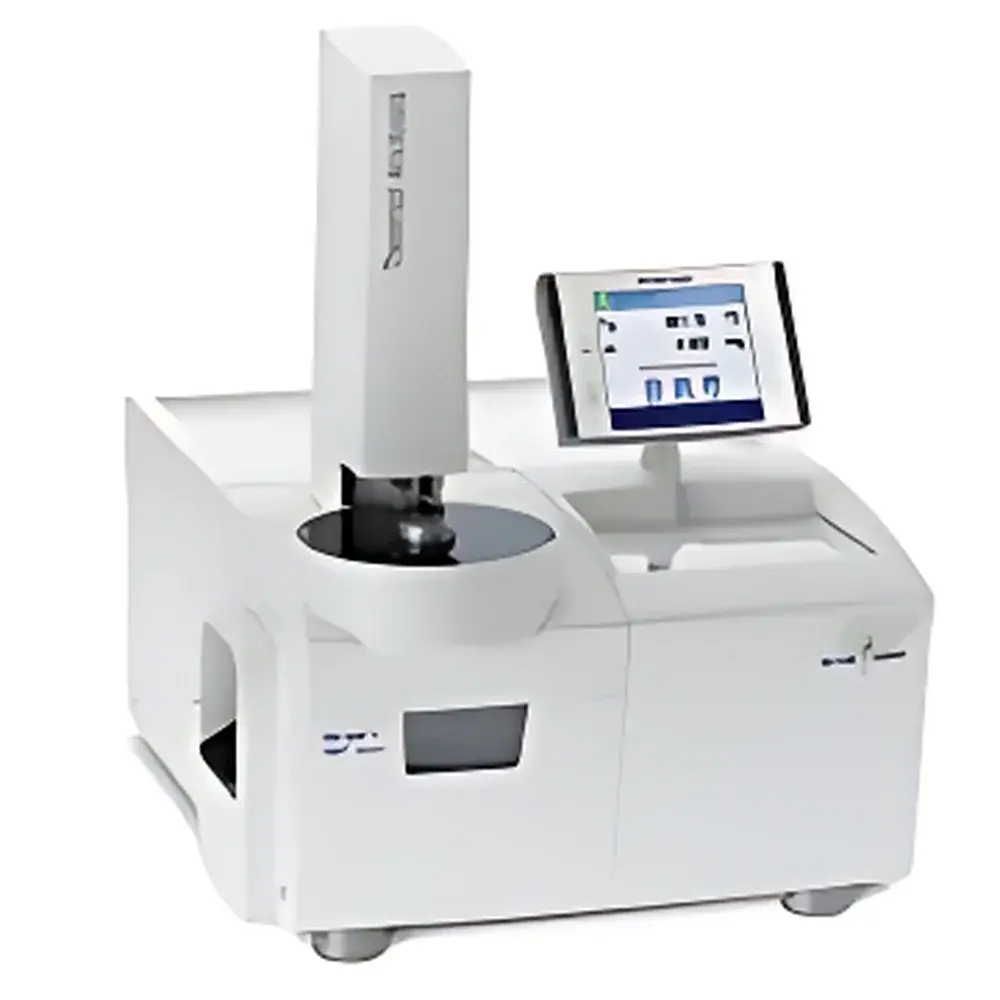
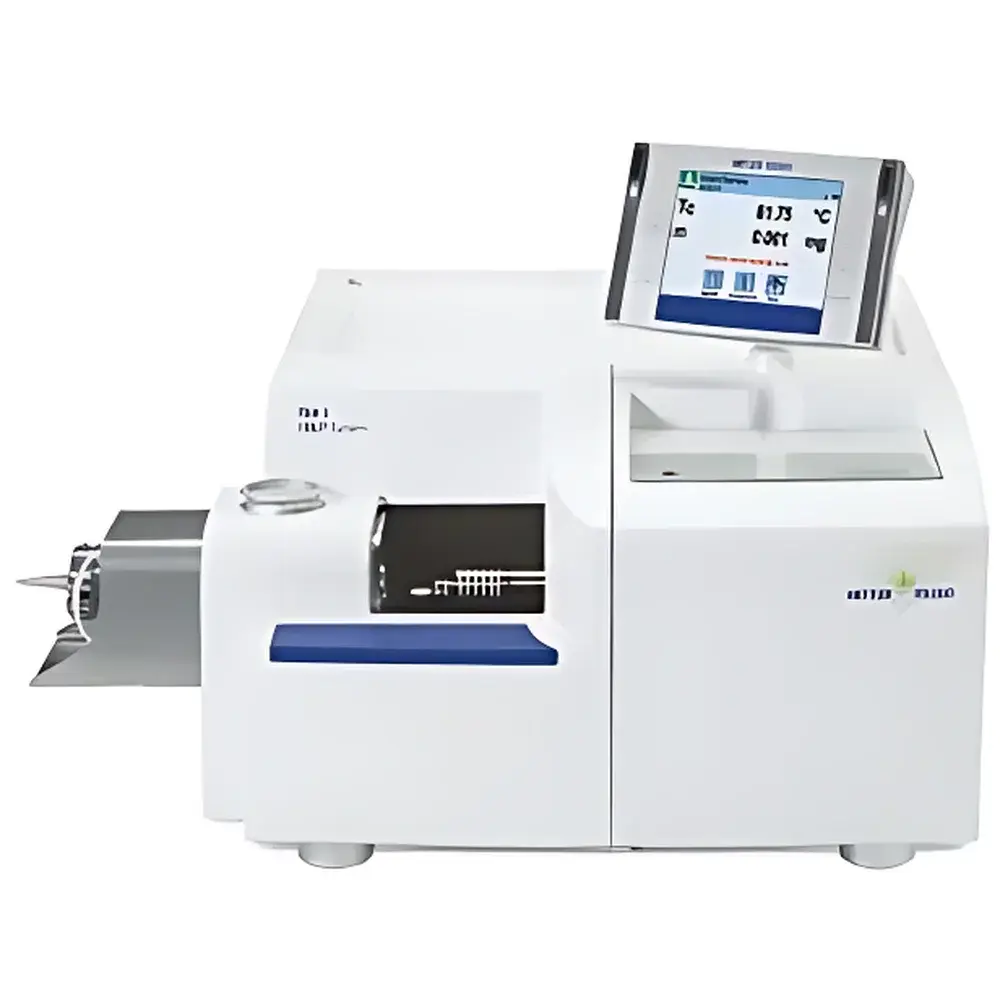
METTLER TOLEDO TGA/DSC 1/1600 High-Temperature Thermogravimetric Analyzer with Simultaneous DSC
| Brand | METTLER TOLEDO |
|---|---|
| Origin | Switzerland |
| Model | TGA/DSC 1/1600 |
| Temperature Range | Ambient to 1600 °C |
| Temperature Accuracy | ±0.5 °C |
| Balance Sensitivity | 0.1 µg or 0.01 µg |
| Baseline Repeatability | ±10 µg (full temperature range) |
| Sensor Type | Single-Pan SDTA (Simultaneous Differential Thermal Analysis) |
Overview
The METTLER TOLEDO TGA/DSC 1/1600 is a high-temperature, simultaneous thermogravimetric analyzer (TGA) and differential scanning calorimetry (DSC) instrument engineered for precision thermal stability, decomposition kinetics, compositional analysis, and phase transition characterization of advanced materials. Operating on the principle of controlled heating under defined atmospheric conditions—typically inert (N₂, Ar), oxidative (air, O₂), or reducing (H₂, CO)—the system continuously measures sample mass change (TGA) while simultaneously computing heat flow (DSC) via a single-pan SDTA sensor. This dual-signal acquisition enables direct correlation between mass loss events (e.g., dehydration, pyrolysis, oxidation) and associated thermal effects (endothermic peaks, exothermic reactions), eliminating time-lag artifacts inherent in sequential measurements. Designed and manufactured in Switzerland, the instrument builds upon METTLER TOLEDO’s legacy in thermal analysis dating back to the world’s first commercial high-temperature TGA/DTA system introduced in 1964. Its architecture integrates metrological-grade microbalance technology with high-fidelity temperature control, making it suitable for both regulated environments (e.g., pharmaceutical development under ICH Q5C, Q1E) and fundamental research requiring trace-level sensitivity.
Key Features
- Ultra-high-resolution microbalance: Dual-sensitivity options (0.1 µg or 0.01 µg) ensure detection of minute mass changes across full temperature range (ambient to 1600 °C).
- Single-Pan SDTA sensor: Enables true simultaneous TGA and DSC signal acquisition without mechanical switching—critical for kinetic modeling and precise temperature calibration using certified metal standards (e.g., In, Sn, Zn, Ag).
- Thermally isolated, hermetically sealed furnace chamber: Maintains stable gas environment (vacuum ≤10⁻² mbar optional) and minimizes convection-induced baseline drift.
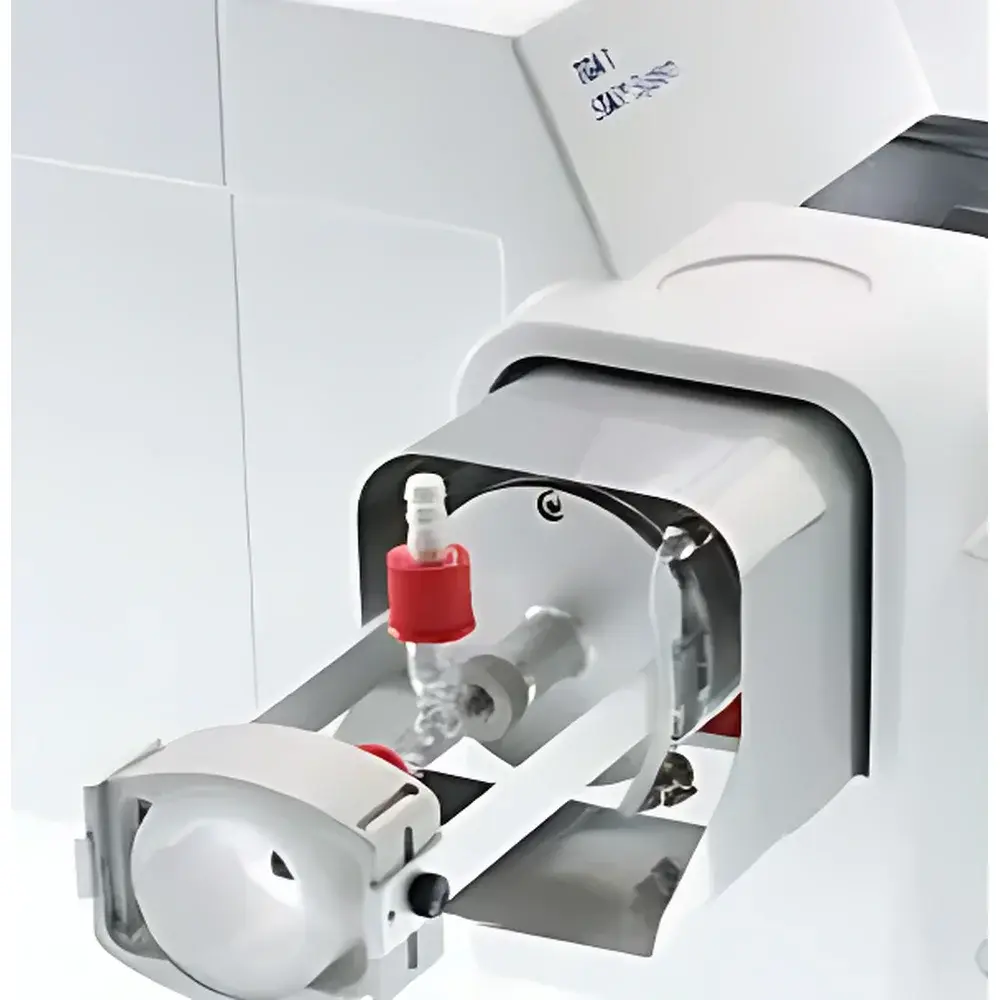
- Modular hardware expansion: Supports seamless integration with quadrupole mass spectrometry (MS), Fourier-transform infrared spectroscopy (FTIR), or combined MS/FTIR for evolved gas analysis (EGA); optional humidity generator for dynamic vapor sorption (DVS) studies.
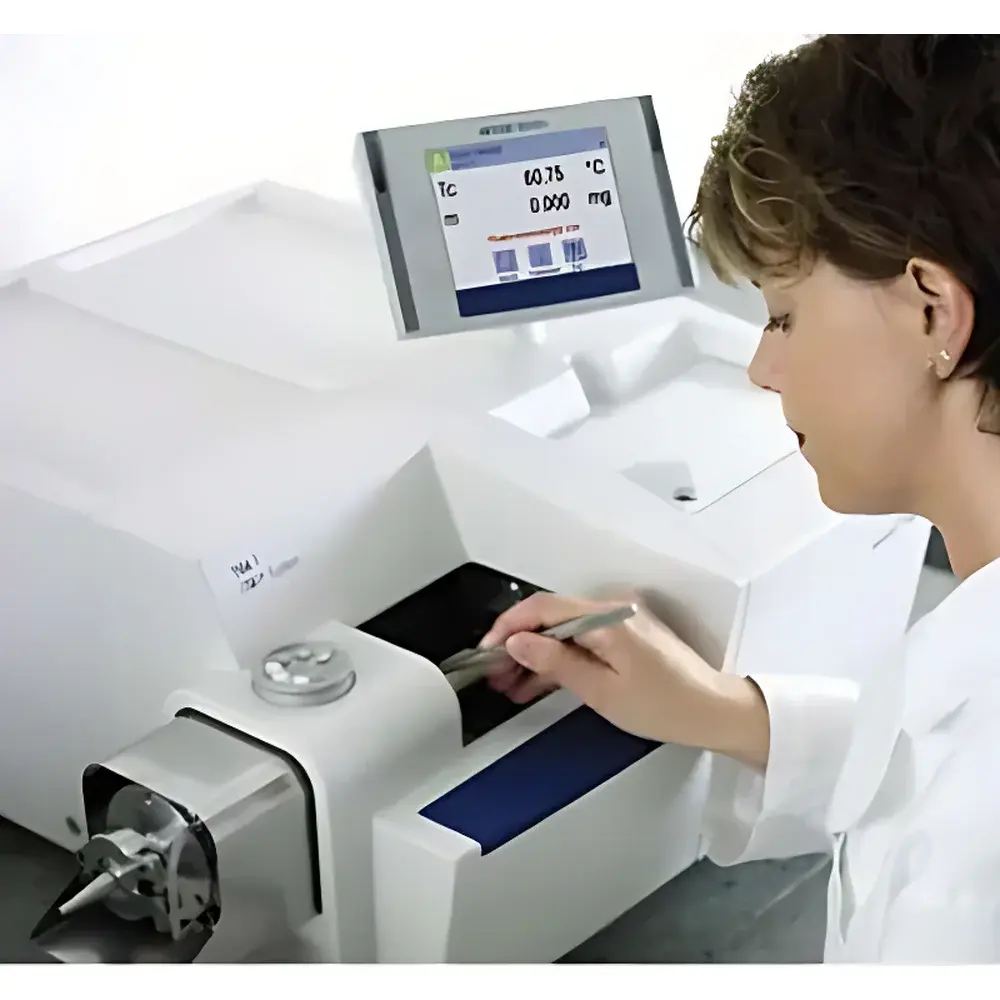
- Automated sample handling: Optional robotic autosampler accommodates up to 48 positions, enabling unattended overnight runs with programmable crucible types (Pt, Al₂O₃, graphite) and purge gas sequences.
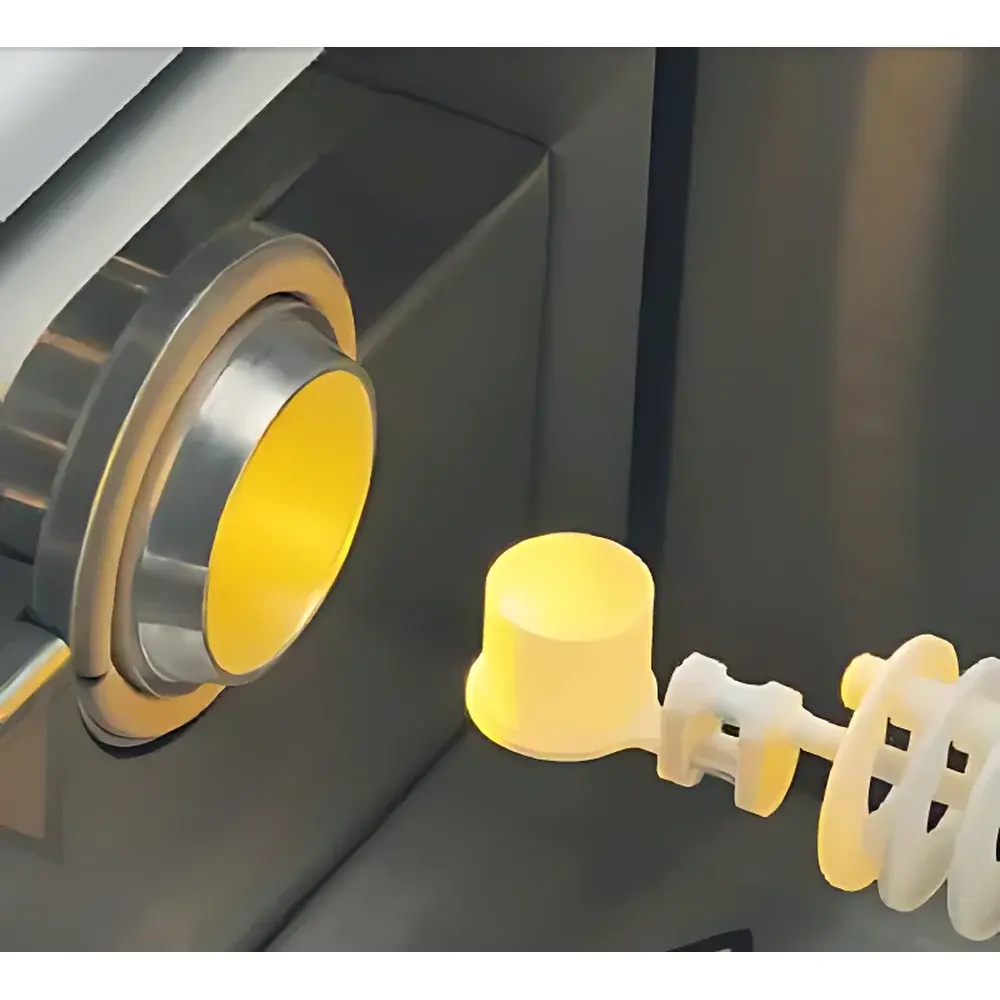
- Robust mechanical design: Ceramic furnace core, sapphire viewing window, and corrosion-resistant gas pathways ensure long-term operational stability in aggressive atmospheres (e.g., HCl, SO₂, HF).
Sample Compatibility & Compliance
The TGA/DSC 1/1600 accepts solid powders, granules, films, fibers, and small metallic specimens (≤100 mg typical). Crucible compatibility includes standard Pt, Pt/Rh, Al₂O₃, and high-temperature graphite variants—each certified for thermal inertia and gas permeability. The system complies with ASTM E1131 (standard test method for compositional analysis by TGA), ISO 11358 (polymer thermal degradation), and USP (residual solvents). When configured with audit trail, electronic signatures, and data integrity controls, it meets FDA 21 CFR Part 11 requirements for regulated laboratories. Full GLP/GMP documentation packages—including IQ/OQ/PQ protocols, calibration certificates traceable to NIST standards, and uncertainty budgets—are available upon request.
Software & Data Management
STARe (Simultaneous Thermal Analysis Evaluation) software provides intuitive workflow-driven operation—from method setup and real-time monitoring to multi-step kinetic analysis (e.g., Friedman, Ozawa-Flynn-Wall, Kissinger-Akahira-Sunose). Raw data are stored in vendor-neutral .tdms format; export options include ASCII, CSV, and XML for third-party statistical or modeling tools (e.g., MATLAB, OriginLab). Built-in reporting templates support automated generation of GMP-compliant reports with embedded metadata (operator ID, instrument serial number, environmental conditions). All data modifications are logged with timestamped audit trail, satisfying ALCOA+ principles (Attributable, Legible, Contemporaneous, Original, Accurate, Complete, Consistent, Enduring, Available).
Applications
This instrument serves critical roles across R&D, quality assurance, and production environments. In polymer science, it quantifies filler content, determines thermal degradation onset (Td₅%), evaluates flame retardant efficiency, and monitors crosslinking density. For pharmaceuticals, it assesses hydrate/solvate stoichiometry, detects polymorphic transitions, and verifies residual solvent profiles per ICH guidelines. In metallurgy and ceramics, it characterizes oxidation kinetics, sintering behavior, and phase evolution in oxide systems. Energy materials researchers use it to evaluate cathode/anode stability in Li-ion batteries under cycling-relevant heating protocols. Additionally, food scientists apply it to determine moisture, ash, and volatile organic content in compliance with AOAC methods.
FAQ
What is the maximum operating temperature and how is temperature accuracy verified?
The furnace reaches 1600 °C with ±0.5 °C accuracy, validated using certified melting point standards (e.g., high-purity silver at 961.8 °C) and traceable calibration procedures aligned with ISO/IEC 17025.
Can the system perform quantitative evolved gas analysis?
Yes—when coupled with a mass spectrometer or FTIR spectrometer, the integrated gas transfer line and heated interface enable real-time identification and semi-quantitative tracking of decomposition products (e.g., H₂O, CO₂, NH₃, VOCs).
Is the balance sensitive to vibration or air currents?
The microbalance is housed within an active vibration-damping enclosure and operates inside a sealed, laminar-flow chamber; external vibration isolation tables are recommended only in high-noise industrial settings.
How does the SDTA sensor differ from conventional dual-pan DSC designs?
Unlike traditional DSC, which relies on differential heat flow between sample and reference pans, the SDTA computes simulated DSC from the same single-pan measurement—reducing thermal lag, improving signal-to-noise ratio, and enabling absolute calibration against pure element standards.
What regulatory documentation is provided for validation in pharmaceutical labs?
Full qualification documentation (IQ/OQ/PQ), 21 CFR Part 11 readiness assessment, and raw data integrity verification reports are included as part of the delivery package or available through METTLER TOLEDO’s Regulatory Support Services.
Related Products



